Morocco: Authorities must ensure Omar Radi’s fair trial rights

A Moroccan court is today expected to hold the final appeal hearing of journalist and human rights activist Omar Radi, who was sentenced by a lower court to six years in jail on charges of rape and espionage following a grossly unfair trial, with similar flaws replicated on appeal, as documented by the organization in this detailed summary. Amnesty International’s Deputy Director for the Middle East and North Africa, Amna Guellali said:

“The Moroccan government has subjected Omar Radi to years of harassment, 19 months of detention in solitary confinement and an espionage prosecution over his journalistic work. Omar’s trial last year was marred with grave violations of due process from start to finish.  The same arbitrary denial of defense rights remained on appeal.

“All espionage convictions against Omar Radi should be quashed as these are politically motivated convictions that violate his right to freedom of expression. Only a fair trial can ensure justice for both Omar and the complainant making allegations of rape against him.  

“The Moroccan courts must ensure that fair trial violations, such as those documented by Amnesty International in Omar Radi’s case, are immediately rectified and cease to take place within the Moroccan justice system.”

Background

On 19 July 2021, the Casablanca Court of First Instance convicted Omar Radi of espionage and rape and sentenced him to six years in prison. His appeal trial started on November 2021 at the Appeals Court in Casablanca, and he has been in pretrial detention and in solitary confinement since July 2020.

Throughout Omar Radi’s first instance and appeal trial, Amnesty International has documented several breaches of fair trial guarantees, including limited access to his lawyers, denying the defence team the right to cross examine prosecution witnesses, excluding defence witnesses and refusal to admit pieces of evidence showing inconsistencies in the complainant’s statement.

Before his arrest Omar Radi had been repeatedly harassed by the Moroccan authorities because of his journalistic work criticizing human rights violations and exposing corruption. In June 2020, an Amnesty International report revealed that Omar Radi was targeted by the Moroccan authorities using spyware produced by NSO Group, an Israeli company.

The post Morocco: Authorities must ensure Omar Radi’s fair trial rights appeared first on Amnesty International.

New alliance to protect human rights in Afghanistan

A diverse array of human rights organisations have come together to establish an alliance to collectively monitor the dire human rights situation in Afghanistan and advocate for the protection of human rights and accountability for all violations and abuses.

The Alliance for Human Rights in Afghanistan members include Amnesty International, Front Line Defenders, Freedom House, Freedom Now, Human Rights Watch (HRW), MADRE, the World Organisation Against Torture (OMCT), the International Federation for Human Rights (FIDH), and the Women’s International League for Peace and Freedom (WILPF).

The situation of human rights in Afghanistan has dramatically worsened since the collapse of the Afghan government and the Taliban’s return to power on 15 August 2021. The fighting in the country has ended but serious human rights violations continue unabated. The Taliban have committed and continue to commit widespread human rights violations including extrajudicial executions, enforced disappearances, torture, arbitrary detentions, a massive rollback of the rights of women and girls, censorship of and attacks against the media, and reprisals against human rights defenders including women’s rights activists, women in high- profile roles, journalists, religious minorities, LGBTI people and members and allies of the former government. People in Afghanistan are also facing an unprecedented humanitarian crisis which is being driven by decisions and positions taken by the international community, especially the US, that have blocked Afghanistan from aid funding and access to the global financial system. 

“There has never been a greater need for human rights organisations across the world to unite and demand accountability and justice for the people of Afghanistan. People in Afghanistan are caught between the Taliban abuses and a humanitarian disaster, and the international community can and should do more to protect them”, said Samira Hamidi, Regional Campaigner, Amnesty International.

The members of the alliance aim to work jointly to seek accountability for all human rights violations and abuses in Afghanistan. The purpose of the alliance is to collectively advocate and put pressure on the Taliban to respect human rights, and on the international community to make good on their commitments to hold the Taliban accountable and to not abandon the Afghan people.

“As the world’s focus is rapidly shifting from one crisis to another, the human catastrophe continues in Afghanistan. People in Afghanistan, especially women and girls, are once again deprived of their fundamental human rights. It is urgently important to keep the world informed about the violations committed daily in Afghanistan and to hold the international community to account for the commitments they have made to Afghanistan over the last 20 years,” said Juliette Rousselot, Program Officer for West and South Asia, FIDH.

Through this alliance, the member organisations will collaborate on joint advocacy, research, awareness raising, and mobilisation, as well as on documentation and reporting of human rights violations and abuses in Afghanistan. The alliance will also engage with the international bodies such as the UN Human Rights Council and the UN Security Council, UN experts such as the Special Rapporteur on the situation of human rights in Afghanistan, and other actors to push for systematic and intensive monitoring of the human rights situation, accountability for perpetrators of human rights violations and abuses, and to seek an end to impunity.

“With the establishment of the Alliance for Human Rights in Afghanistan, we send a strong message of solidarity to people in Afghanistan. We also wish to convey to the Taliban and the international community that as international civil society organisations we will be closely monitoring the situation and will continue our efforts to advocate for a violence-free Afghanistan for all Afghans” said Gerald Staberock, OMCT Secretary General.

The post New alliance to protect human rights in Afghanistan appeared first on Amnesty International.

Algeria: Mounting repression as more human rights defenders are detained

Algerian authorities have ramped up their assault on civil society in recent weeks, with 27 human rights defenders and peaceful activists arrested in February alone, Amnesty International said today.

On 20 February, a court in the western city of Tlemcen sentenced Faleh Hammoudi, head of the local chapter of the Algerian League for the Defence of Human Rights (LADDH), to three years in prison and a fine of 100000 dinars (705 USD). Days later, on 24 February, an investigative judge in Algiers ordered the pretrial detention of Zaki Hannache, an activist known for his work monitoring the government crackdown on the Hirak, a mass protest movement calling for political change in the country since 2019.

The Algerian authorities initially tolerated some protests and limited prosecutions to targeting those carrying the Amazigh flag during demonstrations; however, they have sought to suppress Hirak protests since 2021, have arrested hundreds of activists, human rights defenders and journalists, held them in pretrial detention or sentenced them under vaguely worded charges, including terrorism. There are currently at least 290 people languishing in Algerian jails simply for peacefully expressing their opinions, according to both the National Committee for the Liberation of Detainees, a national watchdog group, and the LADDH.

“The spurious and politically motivated charges against Faleh Hammoudi and Zaki Hannache are characteristic of the intensifying crackdown on dissent by Algerian authorities, who are weaponizing the law to silence their critics,” said Amna Guellali, Amnesty International’s Deputy Director for the Middle East and North Africa.

“Three years since the Hirak protest movement began, there is no end in sight to the Algerian authorities’ escalation of repression.  We are calling for the release of all peaceful activists and human rights defenders in Algeria.”

Algerian authorities arrested Faleh Hammoudi on 19 February and sentenced him the following day, after an interview he gave to the Algerian TV channel Al Maghribiya TV in which he commented on human rights violations in Algeria. This is known as an “immediate appearance” procedure and normally applies to people caught in the act of committing a crime. He was sentenced for “offending public bodies”, “spreading fake news” that might harm national security and running an “unregistered association”. The first two charges relate to his comments in the interview, while the third charge is linked to his activities with LADDH, which the authorities are accusing of noncompliance with a draconian 2012 law on associations.

Three years since the Hirak protest movement began, there is no end in sight to the Algerian authorities’ escalation of repression.  We are calling for the release of all peaceful activists and human rights defenders in Algeria.

Amna Guellali, Amnesty International

Another eight members of LADDH are currently being prosecuted for their participation in Hirak, or for criticism of the authorities. At least four are facing charges related to terrorism, defined very vaguely under Algerian law to include “attempting to gain power or change the system of governance by unconstitutional means.”

Among them is Hassan Bouras, currently on hunger strike to protest his pretrial detention since 12 September. Kaddour Chouicha, vice President of LADDH as well as Djamila Loukil and Said Boudour, LADDH members in Oran, are also being prosecuted on terrorism-related charges since April 2021 but are not in detention.

Zaki Hannache was arrested on 19 February and is being charged with “spreading fake news” in relation to his documentation of hunger strikes by several pre-trial detainees, who were arrested for participating in Hirak protests or for criticizing the authorities. Zaki also faces a charge of “apology of terrorism” in relation to his online publications, including a post that Zaki published in February about exiled YouTuber Amir DZ, who is subject to an arrest warrant because of his activism.

In December 2021, Zaki Hannache won the Ali Boudoukha prize for his work documenting the arrests of activists, peaceful protesters and journalists. According to a lawyer with knowledge of the case, police seized the award and prize money while arresting Zaki at his home, and he is facing a further charge of receipt of money for purposes of “harming the security of the state or the normal functioning of institutions, or the national unity, or the territorial integrity or the fundamental interests of Algeria or security or public order” under Article 95 bis of the Penal Code which could result in a prison sentence of up to seven years and a fine of 700000 Algerian dinars (4943 USD).

Background

LADDH is one of the main human rights groups in Algeria. It is a member of several international non-governmental organizations such as Euromed Rights and the International Federation of Human Rights. 

Like many civil society groups in Algeria, LADDH was legally registered but faced administrative obstacles when it tried to obtain a new registration as per a 2012 law. This situation puts its members at risk of prosecution and jail for conducting activities in a “non-accredited, suspended or dissolved” association.

The post Algeria: Mounting repression as more human rights defenders are detained appeared first on Amnesty International.

Senegal will never forget March 2021

Excessive use force and firearms by security forces

How we got there

Protests and violent clashes erupted in the country after Ousmane Sonko, a leading opposition figure, was arrested on 3 March charged with disturbing public order and participating in an unauthorized demonstration while on his way to court to respond to a summons from a judge in a separate criminal case. Fourteen people died in the context of the protests and riots in 5 days. Rioters vandalized supermarkets and private residences of public figures perceived to be close to the government. One year later, the investigation into the deaths linked to the protests is still ongoing. The people responsible for these deaths are likely to escape justice.

“My son was only

20 years old”

It’s always a tragedy to lose a child. Cheikh Coly’s father had to bury his 20 years old son who had a bright future ahead of him. Discussing with Amnesty International, he tells us more about Cheikh and how he found out about his tragic death.

Cheikh Coly was a student. He was studying to pass his baccalaureate as an independent candidate. I educated him according to my values ​​and was satisfied with him. He was my only boy and he was 20 when he was killed in March 2021. He was a big fan of football and was admitted to a training center after succeeding in their tests. But he had to return to Bignona because of the COVID-19 pandemic. When he was here, at home, he was helping me with my work. I am a driver for the administration but at the same time I am a plumber and Cheikh helped me with those activities. Sometimes, it was him who did all the work, since I was only available on Saturdays and Sundays for this side job.

The day of his death, a neighbor came home on his motorbike demanding after me. When I came out to meet him, he told me that Cheikh was hit by a bullet. I thought at first that it was just a small scratch. The neighbor took me on his motorbike to the fire station where Cheikh was supposed to be. When I arrived there and asked to see my son, they told me that they already transferred him to the Bignona district hospital. When I asked the paramedic who transported him how Cheikh was, he only urged me to get to the Bignona district hospital.

When I arrived at the hospital, in front of the big gate, I heard people whispering “his father is her, his father is here”. From the look on their faces, I could tell that things were worse than I thought. I went to a doctor to ask about Cheikh. The doctor just said that Cheikh was there at the hospital. They then took me to a room where was my son’s lifeless body. He had a bullet wound in the heart. I saw it with my own eyes at the hospital.

After seeing his corpse, I just wanted to bring him back with me. The doctor then told me that I had to wait for the security forces to come and release the body. They took Cheikh’s body to the morgue and nobody called me to follow up on the matter. It took a week and a lot of struggle to get his corpse back. I went to see the prefect in order to complain about the situation and let him know that Cheikh’s family was waiting for the burial and to be able to mourn him. The prefect’s answer was that it was a legal issue and it was the Ziguinchor prosecutor who had to follow up with me. That got me out of my nerves and I started protesting. It’s a week later that they finally let us have his corpse. The worse part is that they kept his corpse and they did not do an autopsy. Nothing happened even though they kept the body for a week.

A team of investigators from the gendarmerie came once to interview me and since then there has been no follow-up. To this day I am talking to you, there has been no follow-up on the investigation into his murder.

We’ve been once brought to Dakar all expenses paid. It was to meet with the minister, Chief of Staff for the office of President Macky Sall, Mr. Mahmoud Saleh who came with Mr. Augustin Tine, former minister of Senegalese armed forces, and Mor Ngom, minister, advisor of the President. I used the occasion to tell them how much the death of our children has pained us. Those children were very dear to us. They didn’t tell us anything in return. And since this meeting, nothing has evolved. They ignore us and don’t return our calls or texts. They did not get back to us on our demands. It’s a deadlock.

You’ve killed the kid

One witness to the shooter

My son Cheikh was on his motorbike working as a moto-taxi when he was killed in downtown Bignona. And it was the security forces who shot him. There are witnesses who were there and who have seen it all. They told me directly. One of them explained that when he saw that Cheikh was hit by a bullet, he told to the shooter: “You’ve killed the kid”. He is ready to testify.

There was no legal action. It’s horrible. We have a lot of questions.

Cheikh's Father

After Cheikh’s death, the family had difficulties mourning. The day Cheikh died, my daughter, the one who comes after Cheikh, was at school. When she came back home around noon, she saw all the people in the house and was wondering what happened. When people told her that her elder brother was dead, she passed out on the spot in front of the house. She had to be brought to the dispensary. Since that day, she has been having issues with her heart. The family can’t make peace with Cheikh’s death. We can’t mourn him fully because there is no justice, no compensation. There is nothing that has been done so far by the authorities.

Cheikh used to say to me “Father, it is my foot that will build you a beautiful house, that will take you on pilgrimage, and buy you a beautiful car”. He was referring to his starting football career. He was a very good player. I miss Cheikh Ibrahima Coly immensely. His whole family misses him.

demand #Justiceforthe14

Senegalese authorities must do all in their power to bring to justice those responsible for the deaths of the 14 people killed during the March 2021 protests. #JusticeForthe14 #FreeSenegal

Senegal will never forget March 2021

“Killed by a bullet in the head

while he was working”

For the families of the 14 killed during the March 2021 protests in Senegal, it is impossible to mourn their loved ones until justice and reparations are provided. Unfortunately, that day is still yet to come.

Baye Cheikh Diop was not 17 but 16 when he was killed. His birthday was just a few days later. He would have been 17 then.

He was my eldest son. He was a mechanic and was working that day in their workshop when he was shot dead.

In April 2021, Mahmoud Saleh, Chief of Staff to President Macky Sall, and others met with us to ask us to prone the peace and to not go into confrontation with the authorities. He also told us that the state was going to seek justice for us. But since that day, we haven’t heard from them, and they don’t pick up when we call.

In the autopsy, they said that it was a tear gas grenade that killed Baye Cheikh but that is not true. All the witnesses are saying that there were no tear gas grenades fired that day.

His birthday was just a few days later.

Baye Cheikh Diop's father

We did not file a complaint to preserve the peace and avoid confrontations. We can’t fight against the authorities. And since the mediators and religious authorities have spoken, we are waiting for the authorities and expect them to do us justice.

take action

It's a been a year since the tragic death of Baye Cheikh Diop, a young mechanic, killed while at work, with a bullet in the head. Authorities promised justice but are failing to deliver it. #JusticeForthe14 #FreeSenegal

Senegal will never forget March 2021

“Wrong place, wrong time”

Famara Goudiaby was 20 years old and just passed his exam to enter the university. He had to go to his native village to take care of administrative formalities. On his way back, he decided to pay a visit to his sister who lives in Bignona. It is while he was walking on the street that a stray bullet hit him. Famara was not a protester.

time for justice to be served

Unlawfull killings must never go unpunished. Families of people who died need justice urgently. They have been patient. But now is the time for answers. #JusticeForthe14 #FreeSenegal

Senegal will never forget March 2021

My brother Cheikh was killed by a police officer
while protesting. Nearly a year on,
justice has yet to be served.

Ngoné Wade, Cheikh's twin sister

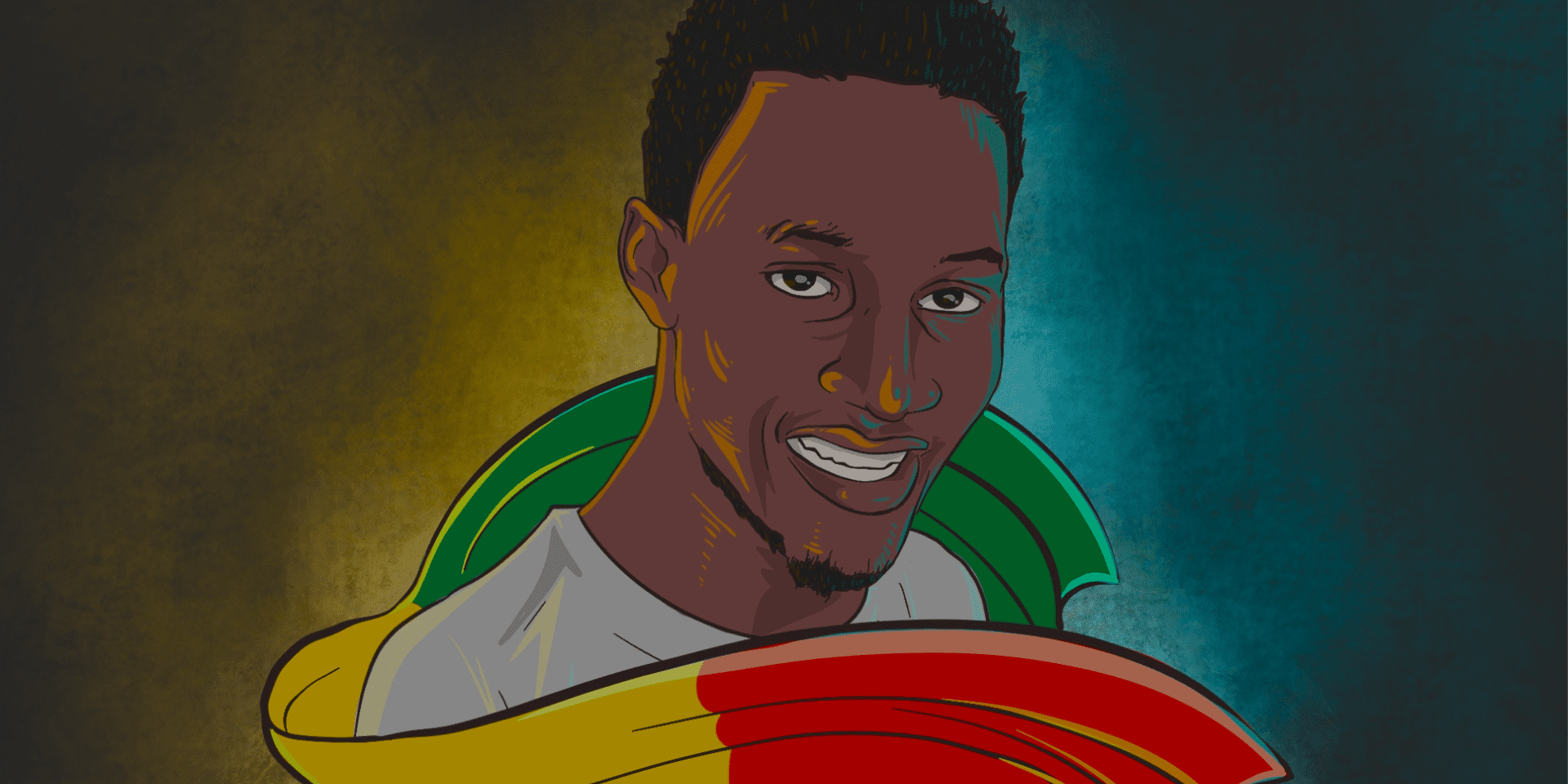
8 March 2021 remains a painful memory for Cheikh Wade’s family, whom a delegation of Amnesty International, met in the neighbourhood of Cambéréne, in the Dakar suburbs. His mother Marieme** is still affected by the brutal death of her youngest son, and desperately waiting for justice to be served. For nearly a year now, human rights organizations have been standing together with the family to say no to impunity. As part of its campaign “Join us in demanding justice for the victims of Senegal’s violent repression of protests”, Amnesty International is mobilizing its members to ensure that the perpetrators of Cheikh Wade’s murder are identified and held accountable, and that peaceful protest is no longer synonymous with the risk of death.

In an op-ed published on Cheikh’s birthday, Ngoné Wade, his twin sister, calls on the authorities to bring the perpetrators to justice.

Read the full op-ed and know more about Cheikh’s family’s fight for justice

Today is 4 February and we should have been celebrating our 33rd birthdays together but you are no longer with us!
Cheikh, my twin brother, you were one of the 14 young Senegalese who were killed in March 2021 during the protests that followed the arrest of Ousmane Sonko, a leader of the opposition. This period was marked by protests, scenes of looting, destruction of property, and clashes between demonstrators and security forces in several cities around Senegal.

YOU CAN HELP THE FAMILIES OF THOSE WHO WERE UNLAWFULLY KILLED

DURING THE PROTESTS OF MARCH 2021 OBTAIN JUSTICE

SIGN the card for The FAMILY OF Cheikh Wade

Show support and solidarity to the family of Cheikh Wade in their quest for justice

show support

SEND AN EMAIL TO THE MINISTER OF JUSTICE

Demand Justice for Cheikh Wade and the Thirteen killed during the protests of March 2021

act now

Share this campaign with your friends and family

Send a custom message to your contacts on WhatApp and prompt them to demande #JusticeForthe14

share

The post Senegal will never forget March 2021 appeared first on Amnesty International.

Russia/Ukraine: Invasion of Ukraine is an act of aggression and human rights catastrophe

Russia’s invasion of Ukraine is a manifest violation of the United Nations Charter and an act of aggression that is a crime under international law, said Amnesty International as it called for all those involved in this crime to be held accountable for those violations. Their personal, individual, and collective liability should be invoked for that, and for all the many crimes that have characterised their invasion of Ukraine thus far.

Emphasizing the gravity of the Ukraine crisis, the organisation called on UN member states to uphold and defend the UN Charter, which prohibits the use of force against the territorial integrity or political independence of any state. It noted that the only exceptions to those provisions are self-defense and such use of force as is authorized by the UN Security Council – neither of which applies to this crisis.

Amnesty further stressed that, under international law, it is incumbent on all states to settle international disputes by peaceful means and in such a manner that international peace, security, and justice, are not endangered.

The invasion has triggered a huge human rights, humanitarian, & displacement crisis that has the makings of the worst such catastrophe in recent European history. Russia is breaching the sovereignty of Ukraine & challenging the global security architecture.

Agnes Callamard, Secretary General of Amnesty International

“Russia’s invasion of Ukraine is grave, severe and defined by one characteristic only: aggression. Russia is invading into the heart of Ukraine, seeking to depose its lawfully elected government, with a real and potential massive impact on civilians’ lives, safety and well-being; its acts cannot remotely be justified on any of the grounds that Russia has offered. Yet all of this is being committed by a permanent member of the UN Security Council,” said Agnes Callamard, Secretary General of Amnesty International.

“Russia is in clear breach of its international obligations. Its actions are blatantly against the rules and principles on which the United Nations was founded. All members of the United Nations should condemn that conduct unequivocally. Russia’s flagrant disregard cannot be allowed to embolden others to follow suit and nor should the UN’s ability to contain such behaviour be undermined.”

Since the Russia invasion began on 24 February, Amnesty has been documenting the escalation in violations of humanitarian and human rights law, including deaths of civilians resulting from indiscriminate attacks on civilian areas and infrastructure. Strikes on protected objects such as hospitals and schools, the use of indiscriminate weapons such as ballistic missiles and the use of banned weapons such as cluster bombs, may all qualify as war crimes.

Amnesty International urged UN Member States to stand together in condemnation of Russia’s crimes of aggression, in providing relief and assistance to the citizens of Ukraine including those fleeing the conflict, and to ensure the consequences of Russia’s aggression are not allowed to push the world closer towards an abyss of violence, violations and insecurity.

We must ensure that the tragically increasing number of victims of war crimes in Ukraine hear a message that the international community is already determined to secure redress for their suffering.

Agnes Callamard, Secretary General of Amnesty International

“In less than a week, Russia’s invasion of Ukraine has triggered a massive human rights, humanitarian, and displacement crisis that has the makings of the worst such catastrophe in recent European history. Russia is not only breaching the sovereignty of a neighbour and its people, it is also challenging the global security architecture and exploiting its frailty, including a dysfunctional UN Security Council. There are long-lasting consequences from this for us all. We must not allow aggression and violations of international law to be their architect,” said Agnes Callamard.

Yesterday’s welcome announcement by the ICC Prosecutor that his office will seek to open an investigation in Ukraine puts all perpetrators of war crimes and crimes against humanity in Ukraine– including those in senior positions and most responsible – on notice that they will be held individually accountable.

“Amnesty International calls on all states parties to the ICC and the international community at large to cooperate with the ICC’s investigation. The ICC’s investigation cannot take place alone. Comprehensive accountability in Ukraine requires the concerted and innovative efforts of the UN and its organs, as well as initiatives at the national-level pursuant to the principle of universal jurisdiction,” said Agnes Callamard.

“At this early stage, the collection and preservation of evidence is crucial to successful future investigations. Above all, we must ensure that the tragically increasing number of victims of war crimes in Ukraine hear a message that the international community is already determined to secure redress for their suffering.”

Background

Serious violations of the rules of conflict constitute war crimes. Some of those are codified as such by the Rome Statute of the International Criminal Court. The ICC would have jurisdiction over war crimes committed in Ukraine, which made a declaration in 2015 accepting ICC jurisdiction over crimes committed on its territory since 20 February 2014. Russia signed the Rome Statute in 2000 but withdrew its signature in 2016.

The military intervention appears to meet the definition of aggression under the Rome Statute of the ICC. Art. 8bis(1) of the Rome Statute defines, in relevant part, a “crime of aggression” as “an act of aggression which, by its character, gravity and scale, constitutes a manifest violation of the Charter of the United Nations.” Although the Court, barring an unlikely Security Council referral, will not have jurisdiction over the crime of aggression in this situation a number of states, including Ukraine, have domestic laws that would allow prosecution of those responsible for this crime.

The invasion of Ukraine has already resulted in indiscriminate strikes on residential areas, medical institutions, social infrastructure and other civilian objects and infrastructure, and produced civilian deaths and injuries. It has led to mass displacement and destruction of civilian housing. In the fighting in Donetsk and Luhansk, particularly in 2014-2015, there have been extrajudicial executions, torture and other ill-treatment, enforced disappearances, and unlawful deprivation of liberty.

For more information contact Stefan Simanowitz press@amnesty.org
tel.: +44 (0) 20 7413 5566

The post Russia/Ukraine: Invasion of Ukraine is an act of aggression and human rights catastrophe appeared first on Amnesty International.