Following the re-election of Emmanuel Macron as President of the French Republic Cécile Coudriou, President of Amnesty International France said:
“President Macron’s first term has been far from exemplary on human rights and Amnesty International will continue, throughout his second term, to demand that the President’s policies respect fundamental rights and international law,”
“The egregious human rights failings that need to be addressed include France’s treatment of refugees and asylum at its borders, systemic discrimination in the form of ethnic profiling by police, disproportionate & dangerously vague counter-terror laws, curbs to the right to protest, intrusive surveillance that impacts the right to privacy, failing to uphold climate commitments and selling arms to Saudi Arabia and the United Arab Emirates.”
The political agreement on the Digital Services Act (DSA) that was reached by co-legislators is a landmark moment in the history of Internet regulation, Amnesty International has said today.
The DSA includes new rules that will require Big Tech platforms – including Facebook and Instagram (owned by Meta), and YouTube (owned by Google) – toassess and manage systemic risks posed by their services, such as advocacy of hatred and the spread of disinformation.
For the first time, Big Tech companies will also need to submit to independent yearly audits, and to give regulators and third-party researchers, including civil society, access to platform data and insights into their algorithmic ‘black boxes’ to ensure greater scrutiny and accountability.
The DSA moves us towards an online world that better respects our human rights by effectively putting the brakes on Big Tech’s unchecked power
Claudia Prettner, Legal and Policy Adviser at Amnesty Tech
“Today’s agreement on the Digital Services Act represents a watershed moment in the history of Internet regulation. The DSA moves us towards an online world that better respects our human rights by effectively putting the brakes on Big Tech’s unchecked power,” said Claudia Prettner, Legal and Policy Adviser at Amnesty Tech.
“For too long, our most intimate data has been weaponized to undermine our right to privacy, amplify disinformation, fuel racism, and even influence our own beliefs and opinions. The DSA will finally protect EU citizens from intrusive data harvesting and ads that use personal information – such as religious beliefs, political opinion or sexual preferences – in ways we would have never expected or wanted.
“It is a missed opportunity that the DSA did not go further and phase out all invasive surveillance-based advertising practices to truly uphold people’s rights to privacy, data protection and non-discrimination.
“It is now crucial that the DSA is robustly enforced so that it does not turn into a mere paper tiger. It is also vital that other jurisdictions around the world follow suit and adopt strong laws to further protect people from the harms caused by Big Tech’s surveillance-based business models.”
By taking a systemic approach to tackling abuses, the DSA will help in protecting core human values – dignity, autonomy and privacy – in the digital age. It marks a first step towards overhauling Big Tech’s dominant profit-led, surveillance-based business model to one that must finally mitigate human rights risks.
Amnesty Internationalwelcomes that the DSA will now require major platformsto consider how their algorithmic systems, advertising models and data practices contribute to systemic risks, and adapt their systems and processes accordingly where flaws are identified.
The DSA will also ensure people now have the right to choose how content is presented to them in their newsfeeds; for example, by choosing chronological order instead of algorithmic profiling that is tuned to maximize and maintain engagement.
Background
The Digital Services Act was proposed by the European Commission on 15 December 2020 to upgrade rules governing digital services in the EU. Amnesty International has campaigned and advocated for the legislation to ensure adequate protection of people’s human rights online.
Following discussions and months of advocacy and campaigning from civil society, negotiators from the European Parliament, the French Presidency of the Council of the EU, and the European Commission today reached an agreement on the DSA.
Although the final text of the law has not yet been released, the deal includes key provisions fought for by civil society, despite unprecedented lobbying efforts by tech companies.
Responding to the news that Singapore authorities have set the execution dates of Nagaenthran Dharmalingam and another Malaysian man for next week, Amnesty International’s Asia-Pacific Regional Director Erwin van der Borght said:
“The planned execution of two Malaysian men in Singapore next week, both convicted of drug-related offences, is unconscionable. But it is not too late for the authorities to grant both men clemency and cease the shameful series of unlawful executions in Singapore, following the hanging of Abdul Kahar bin Othman last month.
“Nagaenthran is set to be hanged despite multiple experts finding he had an intellectual disability which may have impacted his right to a fair trial. There are also concerns about his present mental health state, as his cognitive function appears to have been severely impaired after years in detention.
“Singapore’s prime minister Lee Hsien Loong and his cabinet must seize this last chance to spare Nagaenthran’s life. The government must also halt the execution of another man due to be hanged two days later, despite the fact he still has a legal challenge pending in court in May.
“We urge the authorities to establish an official moratorium on all executions and revise the scope of the death penalty for drug-related offences as first moves towards its full abolition. The death penalty will never solve problems associated with drugs in Singapore.”
Background
Malaysian national Nagaenthran Dharmalingam’s execution has been set for 27 April. His second petition for clemency was rejected on 31 March, as communicated by letter to his family. On 29 March, a Singapore court had upheld his death sentence, despite medical experts finding that he had an intellectual disability.
His appeal was one of his last opportunities for him to be spared execution. In the ruling, the court rejected arguments about the decline of his mental state, and they have similarly dismissed challenges based on his intellectual ability.
International human rights law and standards prohibit the imposition of the death penalty for drug-related offences and as the mandatory punishment for any offences.
The Convention on the Rights of Persons with Disabilities prohibits the execution of the death penalty on persons whose mental and intellectual disabilities may have had their effective defence impeded.
Another Malaysian man is also set to be executed on 29 April after he was sentenced to mandatory death penalty for drug-related offences, despite a legal challenge he has pending at a Singapore court, for which there is a hearing in May. International safeguards guaranteeing protections of the rights of those facing the death penalty state that executions may not be carried out pending any appeal or other recourse procedure.
Abdul Kahar bin Othman was executed on 30 March 2021 after being sentenced to the mandatory death penalty for drug-related offences – the first known execution in Singapore since November 2019.
Amnesty International opposes the death penalty unconditionally, in all cases and under any circumstances. More than two-thirds of countries all over the world have abolished the punishment in law or practice.
Responding to a new criminal investigation launched against Vladimir Kara-Murza, a member of the political opposition and critic of the Kremlin, simply for sharing information about the actions of the Russian military in Ukraine – dubbed “fake news” by the authorities – Marie Struthers, Amnesty International’s Director for Eastern Europe and Central Asia, said:
“As a consequence of Vladimir Kara-Murza’s brave criticism of the Russian authorities, he has twice suffered what appeared to be attempts to poison him. Now, he stands accused of committing a ‘crime’ that could see him jailed for over a decade simply for sharing information. This investigation is an act of political poison that seeks to terrify and silence all opponents of Vladimir Putin’s war in Ukraine.
“The Russian authorities must drop all charges against Vladimir Kara-Murza as they stem solely from his right to freedom of expression. He must be immediately and unconditionally released. The Kremlin’s repressive new law that criminalizes the sharing of ‘fake news’ about the actions of the Russian army must be abolished. The very existence of this law is an affront to human rights.”
The Russian authorities must drop all charges against Vladimir Kara-Murza as they stem solely from his right to freedom of expression
Marie Struthers, Amnesty International’s Director for Eastern Europe and Central Asia
Background
On 22 April, the Russian authorities launched a criminal investigation against Kara-Murza for sharing “fake news” about the actions of the Russian military in Ukraine, under Article 207.3 of the Criminal Code. Depending on the exact charges, he could face up to 15 years in prison if found guilty.
The politician is currently serving a 15-day prison sentence after being falsely accused of disobeying a police officer.
Kara-Murza was hospitalized twice in 2015 and 2017. On each occasion, he was in a grave condition and showed symptoms consistent with poisoning.
Bellingcat, an investigative reporting group, said Kara-Murza was followed by Russia’s Federal Security Service (FSB) before the suspected poisonings. The FSB also allegedly poisoned political activist Aleksey Navalny in August 2020.
Failure to stop violence one year after ASEAN’s adoption of its Five-Point Consensus
Activists inside Myanmar resorting to flash mobs and silent strikes to avoid crackdown
Plainclothes military forces disguise themselves as fruit sellers and trishaw drivers as part of the repressive surveillance system
Military retaliates against family members of activists
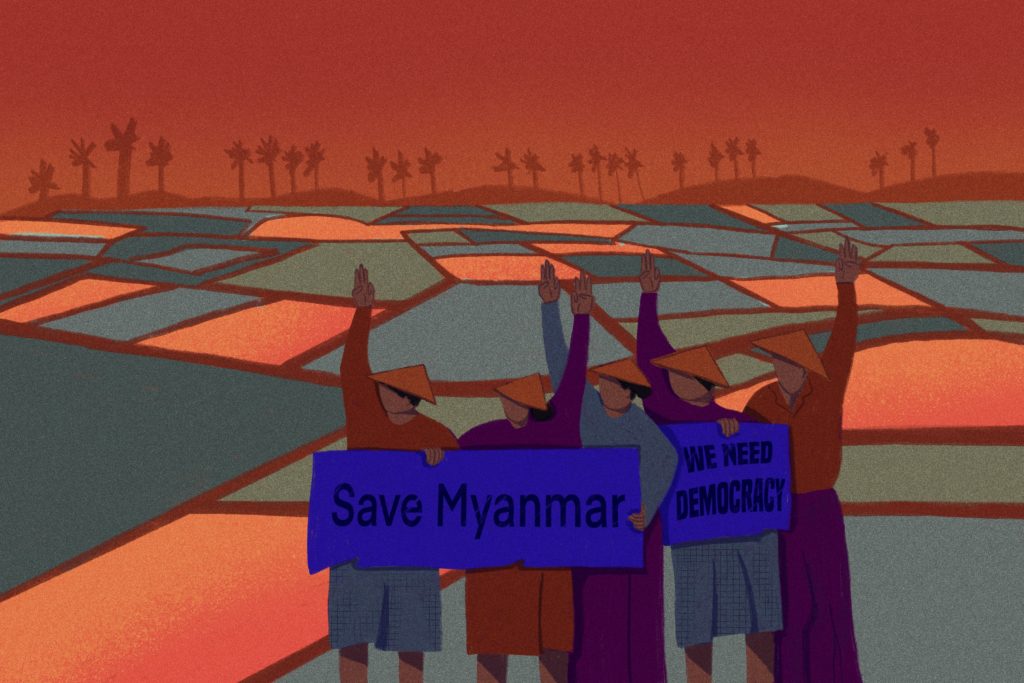
Myanmar’s brave activists are still pursuing peaceful protests despite grave danger and numerous challenges, Amnesty International said today, one year after the Association of Southeast Asian Nations (ASEAN) adopted a Five-Point Consensus that has abjectly failed to stop the violence in the country.
In recent months, Amnesty International conducted in-depth interviews with 17 people who have continued to take part in non-violent protests across five of Myanmar’s states and regions. The interviewees were from a diverse array of protest groups, including LGBTQ and women’s rights organizations.
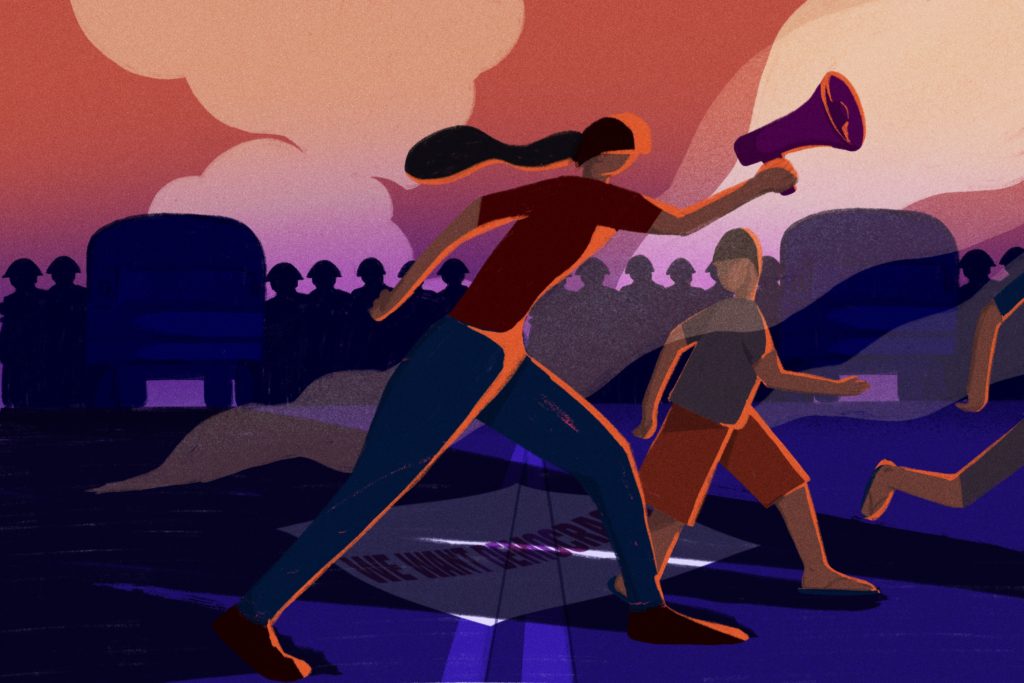
One of the most popular methods of protesting has been “flash mobs” where activists run through the streets for a few minutes before dispersing to avoid being shot, arrested or run over by military vehicles.
The public has also held “silent strikes” across the country, during which shops and businesses shut down, roads emptied, and people stayed home to show defiance to military rule.
Across Myanmar, activists and human rights defenders have been distributing pamphlets on buses, posting messages against the military on walls with stickers or spray paint, and encouraging boycotts of goods and services with ties to the military.
“These activists urgently need the support of the international community in the form of a global arms embargo to stop the Myanmar military from using weapons of warfare to kill peaceful protesters,” said Emerlynne Gil, Amnesty International’s Deputy Regional Director for Research.
These activists urgently need the support of the international community in the form of a global arms embargo to stop the Myanmar military from using weapons of warfare to kill peaceful protesters.
Emerlynne Gil, Amnesty International’s Deputy Regional Director for Research
“The ASEAN must call on the Myanmar military authorities to immediately stop all violence against peaceful protestors in line with the stalled Five-Point Consensus. It should do so now to prevent the Myanmar people from further suffering.”
“It must also continue to unequivocally condemn all human rights violations in Myanmar and call for the release of all individuals who are arbitrarily detained.”
“THEY TRIED TO HIT ME”
JC
In the days immediately following the coup, Amnesty International and many other human rights groups urged the military to stop the use of unlawful and lethal force against peaceful protesters. The violence has since prompted many to join armed resistance groups, which are active throughout the country.
Amnesty International has called on the military to exercise restraint, abide by international law, and for law enforcement duties to be fully resumed by police.
These calls have gone unheeded. More than 1,700 people have now been killed, and more than 13,000 arrested since the military took power, according to the Assistance Association for Political Prisoners.
Activists and human rights defenders interviewed by Amnesty International described witnessing or experiencing abuses by military forces while demonstrating, including shootings, beatings, and attempts to ram vehicles into protests.
The brutal response of the military had an enormous impact on the nonviolent protest movement. During the latter part of 2021, there was a noticeable decrease in the number of people who joined protests in the streets.
“We went from tens of thousands to thousands, thousands to hundreds, and hundreds to around twenty,” said Thiri*, a university student in Mandalay who said she had no interest in politics before the coup but is now one of the leaders of a women’s protest group.
We went from tens of thousands to thousands, thousands to hundreds, and hundreds to around twenty.
Thiri*, university student in Mandalay
However, the reduced number of protesters taking to the streets may also be a matter of strategy. Some of the activists that Amnesty International spoke with said they were intentionally organizing the protests in smaller groups to keep everyone safe.
Rina, a university student and member of the General Strike Committee in Yangon, said that it had become “too dangerous” to protest in large groups.
She participated in a flash mob with around 20 other people on 5 December 2021 and she recounted to Amnesty International that on that day, as they gathered, a military truck drove straight into them. “As I was running, I saw some of the other people who joined in the flash mob had been hit [by the military truck]. Some of them were rolling on the pavement.”
In the Kachin State capital of Myitkyina, a university student who has been protesting with the University of Myitkyina Students’ Union, said that they usually go out in smaller groups because “if there are too many people in the protest, it is easier to get arrested.”
Zin Mar, another university student who is a protest leader in Monywa, said that although her protest group sometimes had to reduce the number of people demonstrating for security reasons, they were determined to continue. “We will always come out whenever we can,” she said.
Min Thu, a high school student who is a leading member of the Mandalay Youth Strike Committee, has witnessed unmarked vehicles which he believes to belong to the military and police accelerate into protesters during at least three instances. In October 2021, a motorcycle nearly hit him when he was about to join a protest.
“Just before we started the protest, they tried to hit me [with the vehicle] from the front,” Min Thu said. “I escaped by going to the nearest road and then they got down from their vehicle and pointed guns at me. They didn’t shoot me because they had blocked all the angles, and they thought they would arrest me.” He told Amnesty International that he dodged onto a side street and barely escaped.
In Sagaing region’s Salingyi and Yinmarbin townships, poet and engineer Yar Zar has regularly organized people across villages to protest since March of last year, and was at two protests when soldiers and police opened fire at the crowd.
To avoid encountering soldiers, he and his team carefully prepare routes along narrow, unpaved streets. He is one of several people who told Amnesty International that they also rely on volunteers to check and make sure the route is clear before they demonstrate.
“When we protest in the village, some protesters who act as lookouts escort us so we can avoid the military. Once they have passed, we start our protest again,” said Phyu, a village protest leader in Thayetchaung township, Tanintharyi region.
Protest groups have also been distributing pamphlets and using social media to call for a boycott of goods and services with ties to the military, and have been posting anti-coup messages in public spaces.
LIFE ON THE RUN
JC
Many activists described to Amnesty International how they felt like they were constantly watched and followed by civilian informants known as dalans or by soldiers and police wearing civilian clothes and driving unmarked vehicles.
Myat Min Khant of the All Burma Federation of Student Unions said that the military and police roam streets disguised as fruit sellers or trishaw, motorcycle, or taxi drivers and embed themselves among the people to surveil anyone daring to express dissent.
There are also numerous checkpoints in towns and cities around the country. People are stopped at random, and their belongings are searched by soldiers and police. Thus, activists either leave their devices at home or delete messages and applications on devices when they go out for fear that they could be arrested.
Surveillance by the military adds to the challenges in organizing protests, according to Moe Thouk, a protest leader with the General Strike Committee in Yangon.
They use CCTV cameras to follow activists, employ dalans in every ward to gather information, and arrest activists while wearing civilian clothes, he said. “They roam around places where protests often take place. We need to carefully choose the right place [to protest] and rely on scouts for safety,” said Moe Thouk.
Most of the activists who spoke to Amnesty International said that they have left their homes for safety reasons, and several of them have not been able to be back home at all since February 2021.
“If I go back home, the military may be waiting to arrest me,” said Nan Lin of the University Students’ Union Alumni Force. “Even my family members do not know my whereabouts.”
If I go back home, the military may be waiting to arrest me…even my family members do not know my whereabouts.
Nan Lin, University Students’ Union Alumni Force
BP, a protest leader who has demonstrated on the streets of Kalay, Sagaing region every day since 7 February 2021, said that a convoy of five vehicles full of soldiers raided his family home three times in one day in September 2021. He is one of four protesters interviewed who said their homes have been raided after they have left and gone into hiding.
But while they fear going home, many of these activists said it is becoming harder and harder to find safe places to hide. BP told Amnesty International that he regularly sees strangers who he believes are plainclothes informants loitering near the vicinity where activists are staying or following them on motorbikes while carrying walkie-talkies.
U Yaw, a monk from Ayeyarwady region who has been actively protesting since the early days after the coup, had been in hiding since March 2021 when his monastery was raided. During the raid, as U Yaw hid in a toilet stall, he overheard soldiers saying that if they found him, they should “just shoot him dead and get rid of him.”
He fled to Mandalay and resumed protesting, but soldiers and police raided the monastery there where he was hiding in June. He took shelter in another monastery which was raided by soldiers and police in September 2021.
He escaped just in time, but the soldiers and police confiscated his identification documents and cash. U Yaw continued to protest despite the risks.
THREATENING FAMILY MEMBERS
JC
In many cases, soldiers and police have taken into custody family members and loved ones of activists if they were unable to find the activists and arrest them, including a politicians’ 94-year-old mother and an activist’s four-year-old daughter, according to media reports
In April 2021, soldiers and police raided the house of Arkar, an activist who had gone into hiding.
“Because they couldn’t find me and arrest me, they arrested my mother,” he said. “I got a call from the police station and I was told that I should give myself up in exchange for the freedom of my mother.”
Arkar did not turn himself in, and his relatives were able to negotiate his mother’s release the next day by paying a bribe. Arkar’s family have since moved to a new home to avoid further reprisals. Arkar is one of four people who told Amnesty International that their families were forced to leave their homes because of safety concerns.
In November 2021, the military attempted to raid the house of another protest leader who had gone into hiding. “When they arrived, they started shooting, but they went to the wrong house. They mistakenly went to our neighbor’s house and one woman was killed because of the shooting,” the activist said.
Her family was able to escape but she has not contacted them since for fear that she would be putting their lives at further risk. She is currently moving from place to place, and said she has trouble sleeping due to fear of arrest.
“We have to be vigilant 24 hours a day. We get startled even when we just hear a cat jumping onto the roof. We worry about getting arrested when we go out, and when we are in the house, we are scared they will come in and arrest us. We have completely lost our sense of security,” she said.
We have to be vigilant 24 hours a day. We get startled even when we just hear a cat jumping onto the roof.
Protest leader
She is determined, though, to continue organizing peaceful protests. “I cannot sit quietly when I see injustice,” she told Amnesty International.
A resolve to keep protesting nonviolently is shared by many of the activists.
“Despite the immense dangers and hardships, there are still many activists and human rights defenders who choose to remain in Myanmar and who are unwavering in their commitment to continue peacefully protesting and expressing their dissent,” Amnesty’s Emerlynne Gil said.
Many of them said they continue their peaceful protests to inspire more people in the country to action and to give people hope. “The main reason I continue protesting is so that the people do not become divided or lose enthusiasm, and so that they can get strength by seeing us,” said the monk in Mandalay, U Yaw.
“Although our lives are in danger, we choose to continue. We will keep asking the world to help us because people are being killed in Myanmar,” said Zin Mar, the protest leader in Monywa.
*Note to editors: In several cases pseudonyms have been used at the request of interviewees