Ukraine: Missile attack on humanitarian convoy in Zaporizhzhia further proof of Russia’s ‘utter disregard for civilian lives’

Responding to reports that at least 25 civilians were killed today by a missile strike on a humanitarian convoy in the Ukrainian city of Zaporizhzhia, Denis Krivosheev, Amnesty International’s Deputy Director for Eastern Europe and Central Asia, said:

“The fact that a humanitarian convoy was struck in this horrendous attack is further proof of Russia’s utter disregard for civilian lives in Ukraine. People delivering humanitarian aid are not military targets, and it is devastating to see more lives ruined by wanton death and destruction. All those responsible for Russia’s repeated unlawful attacks in Ukraine must be held accountable for their actions.”

The convoy was struck as it was preparing to go a Russian-occupied part of the region to deliver humanitarian aid. Intentionally directing attacks against personnel, installations, material, units or vehicles involved in a humanitarian assistance mission is a war crime.

The fact that a humanitarian convoy was struck in this horrendous attack is further proof of Russia’s utter disregard for civilian lives in Ukraine

Denis Krivosheev, Amnesty International’s Deputy Director for Eastern Europe and Central Asia

By analysing photos and video from social media, Amnesty International’s Crisis Evidence Lab confirmed that the strike hit the line of civilian vehicles as it gathered at the Avtorynok car scrapyard market on the southern outskirts of Zaporizhzhia, approximately 27.5 kilometres from the front line. A crater near the convoy measured approximately five meters wide and 2.5 metres deep, which is consistent with the warhead of a large guided missile.

According to media reports, at least 25 people were killed and 50 wounded – all of them civilians. Amnesty International was able to confirm 23 individual deaths of women and men by analysing photos and videos to identify unique clothing and distinctive features on the victims’ bodies.

Ukrainian authorities reported that 16 missiles were fired at or near Zaporizhzhia during the attack, and online records indicate that the alarm sirens of the civil defence warning system sounded at 7.11am local time, nearly simultaneously with the strike. Based on the distance inside Ukrainian controlled territory, the warning sirens, the size and type of crater, and the number of weapons simultaneously fired, Amnesty International believes this was almost certainly an attack by Russian military forces.

The strike comes as Russian President Vladimir Putin today announced the annexation of four Ukrainian territories occupied by Russian forces in the Donetsk, Kherson, Luhansk and Zaporizhzhia regions. Amnesty International has previously declared the so-called referenda that preceded the announcement illegal, and their results a “sham”, and warned that Russia’s annexation of occupied territory would violate international law.

Accountability for war crimes

Since the beginning of the conflict, Amnesty International has been documenting Russian war crimes and other violations of international humanitarian law committed during Russia’s war of aggression in Ukraine. All of Amnesty International’s outputs published to date – including news updates, reports, briefings and investigations – can be found here. 

Amnesty International has called repeatedly for members of Russian forces and officials responsible for violations to be held to account, and has welcomed the ongoing International Criminal Court investigation in Ukraine. Comprehensive accountability in Ukraine will require the concerted efforts of the UN and its organs, as well as initiatives at the national level pursuant to the principle of universal jurisdiction.

The post Ukraine: Missile attack on humanitarian convoy in Zaporizhzhia further proof of Russia’s ‘utter disregard for civilian lives’ appeared first on Amnesty International.
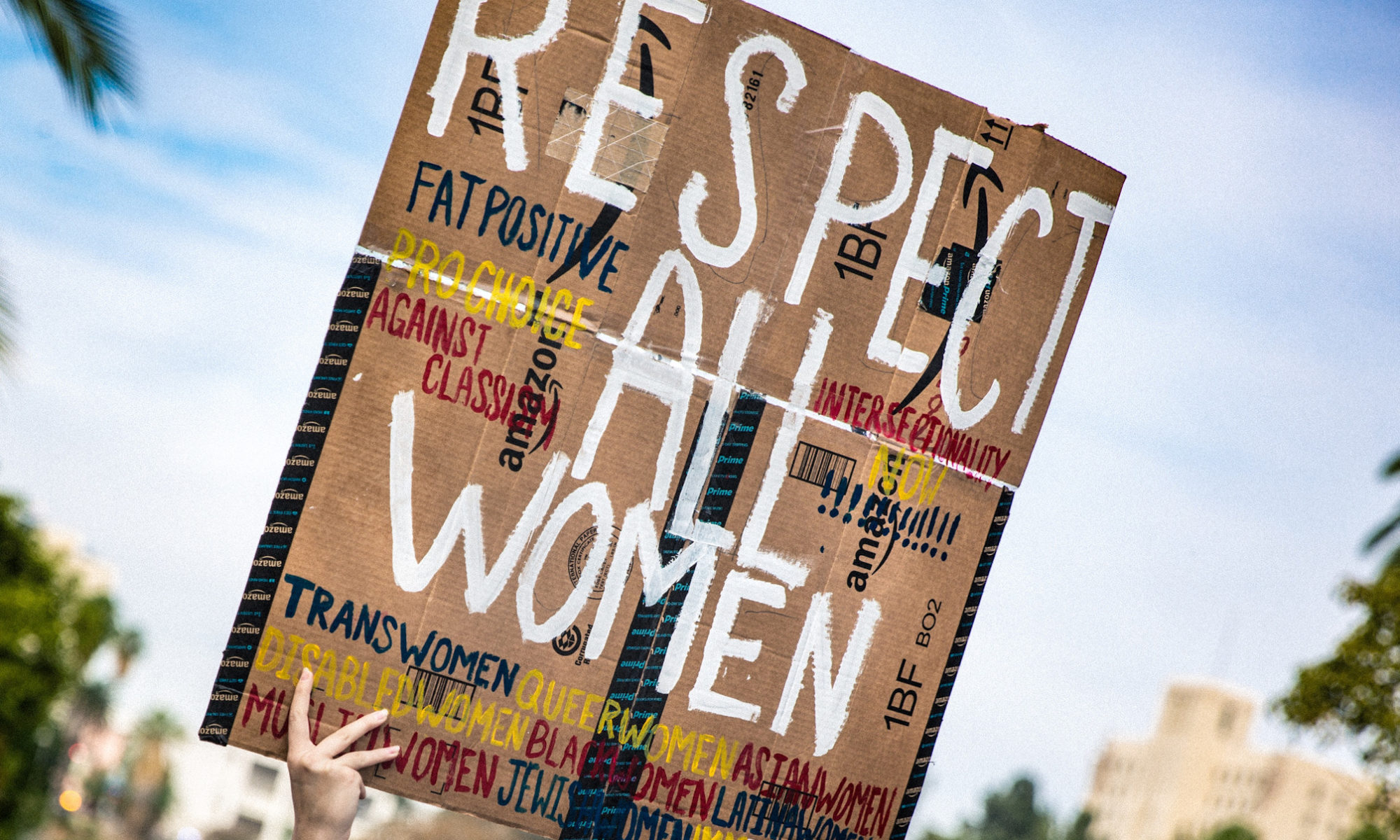
Zimbabwe: Conviction of author Tsitsi Dangarembga and Barnes for protesting economic hardship a travesty of justice

Responding to news that Zimbabwean author and activist Tsitsi Dangarembga and fellow protester Julie Barnes were each convicted for “inciting violence”, handed a six-month suspended sentence for participating on the 31 July 2020 protest against economic hardship, and fined, Lucia Masuka, Executive Director of Amnesty International Zimbabwe, said:

The conviction of Tsitsi Dangarembga and Julie Barnes for fighting for political reforms and a better country for themselves and their fellow Zimbabweans is a travesty of justice

Lucia Masuka, Executive Director of Amnesty International Zimbabwe

“The conviction of Tsitsi Dangarembga and Julie Barnes for fighting for political reforms and a better country for themselves and their fellow Zimbabweans is a travesty of justice. The conviction and sentence send a clear and chilling message that there is no space for dissenting views in Zimbabwe, and that anyone who dares to freely express themselves will face persecution.

Authorities must stop targeting opponents and critics with prosecution and long pre-trial detentions

Lucia Masuka

“The Zimbabwean authorities must uphold the rule of law and create an environment where people like Tsitsi Dangarembga and Julie Barnes can freely exercise their freedom of expression without any fear. Authorities must stop targeting opponents and critics with prosecution and long pre-trial detentions. They must end their relentless harassment and intimidation of human rights defenders and activists who have committed no crime other than to demand that the government deliver better services to the people of Zimbabwe.

“It is not a crime for people to exercise their right to protest peacefully, and Tsitsi Dangarembga and Julie Barnes are not criminals. Authorities must end the criminalizing of protests.”

Background:

Both Tsitsi Dangarembga and Julie Barnes were arrested in July 2020 after they marched in the streets of Harare, holding banners demanding reforms of the country’s institutions. They were later released on bail and their trial has been ongoing for over two years until they were convicted on 29 September.

The right to protest is under threat across all regions of the world. Amnesty International’s new global campaign “Protect the Protest” is challenging attacks on peaceful protest, standing with those targeted and supporting the causes of social movements demanding human rights change.

The post Zimbabwe: Conviction of author Tsitsi Dangarembga and Barnes for protesting economic hardship a travesty of justice appeared first on Amnesty International.
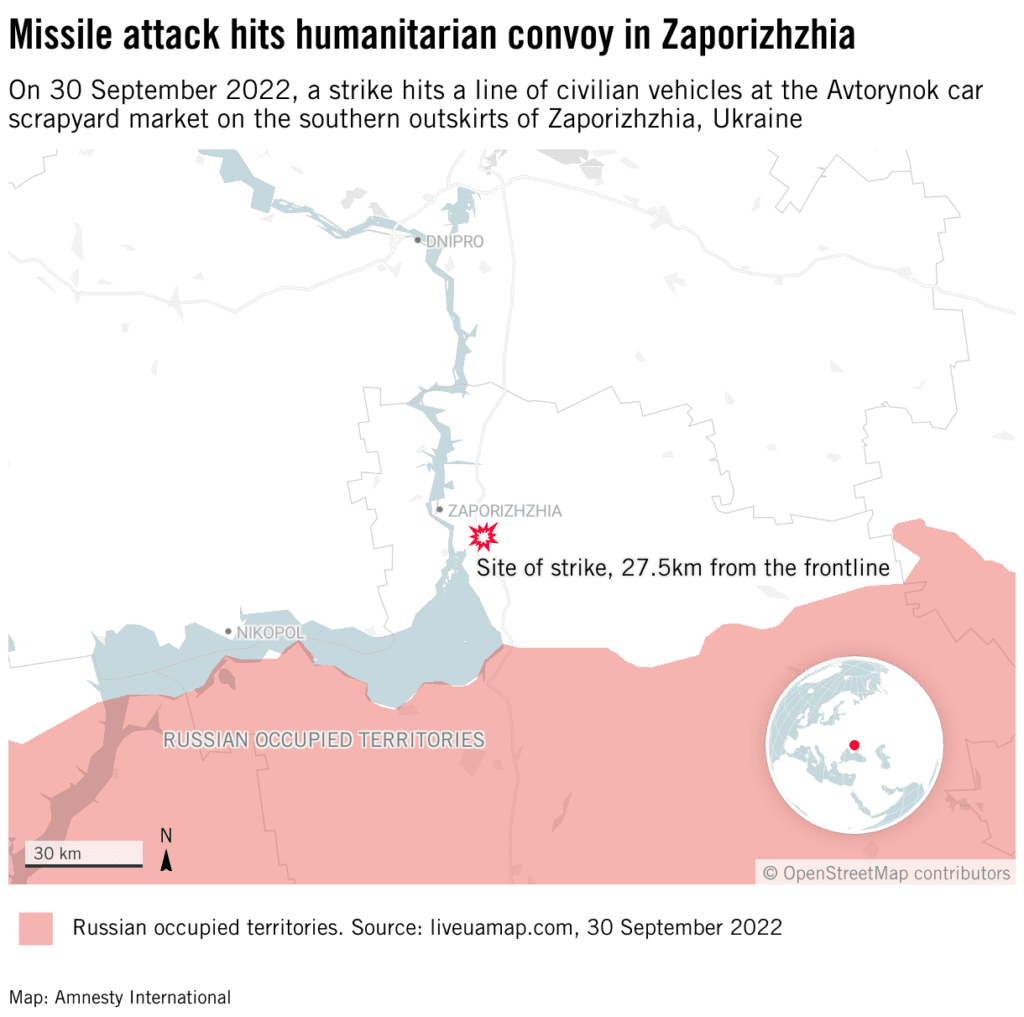
Afghanistan: Kabul blasts signal utter failure of Taliban to protect minorities

Responding to the reports of a suicide bomb attack that has left dozens dead and many more injured at an educational center in the predominantly Hazara Shiite community area of Dasht-e- Barchi in Kabul today, Samira Hamidi, Amnesty International’s South Asia Campaigner, said:

“Today’s horrific attack is just the latest in a series of attacks in areas dominated by the minority Hazara Shiite population and a shamefaced reminder of the inaptitude and utter failure of the Taliban, as de-facto authorities, to protect the people of Afghanistan. Urgent steps must be taken to ensure the safety of all people under the Taliban’s rule, especially the members of minority communities.”

Today’s horrific attack is… a shamefaced reminder of the inaptitude and utter failure of the Taliban to protect the people of Afghanistan.

Samira Hamidi, Amnesty International’s South Asia Campaigner

“Since their takeover of Afghanistan, the Taliban have done little to put in place any measures for the protection of the public, especially of Shia-Hazaras who have been systematically targeted largely by the Islamic State (IS) in schools, mosques, training centers and public places. Instead, their actions of omission and commission have only further aggravated the risk to the lives of the people of Afghanistan especially those belonging to ethnic and minority communities.”

“It is essential that the de-facto authorities immediately carry out an effective, thorough, and independent investigation into the attacks, which should be conducted in line with international law and standards. Those suspected of criminal responsibility for the suicide bombing must face justice in fair trials before ordinary civilian courts and without recourse to death penalty.”

[Taliban’s] actions of omission and commission have only further aggravated the risk to the lives of the people of Afghanistan especially those belonging to ethnic and minority communities.

Samira Hamidi

Background

The bomb blasts took place in the early morning hours on Friday at Kaaj Educational Center in west Kabul where students in packed classrooms were given mock tests in order to prepare for their college entrance exam. According to initial local media reports around 100 students and employees of this center were killed and injured, among whom at least 21 were girls. Meanwhile the Police in Kabul have reportedly said at least 19 were killed and many more injured in the attack at the time of publication of this press release.

Earlier, in April this year, bomb blasts targeted schools in the same Hazara Shiite community area of Dasht-e-Barchi in west Kabul. Amnesty International has repeatedly documented the targeted killing of ethnic minority Hazara Shiite community members following the Taliban’s takeover of Afghanistan in 2021

According to the United Nations Assistance Mission in Afghanistan (UNAMA) report (Human rights in Afghanistan: 15 August 2021 – 15 June 2022) 2106 civilian casualties (700 killed, 1406 wounded) were recorded in the country in the one year since the takeover by the Taliban.

The post Afghanistan: Kabul blasts signal utter failure of Taliban to protect minorities appeared first on Amnesty International.

Iran: Leaked documents reveal top-level orders to armed forces to ‘mercilessly confront’ protesters

Iran’s highest military body instructed the commanders of armed forces in all provinces to “severely confront” protesters who took to the streets following the death in custody of Mahsa Amini at the hands of Iran’s morality police, Amnesty International said today after obtaining leaked official documents which revealed the authorities’ plan to systematically crush the protests at any cost. The crackdown has left at least 52 identified victims dead and hundreds injured to date.

In a detailed analysis issued today, Amnesty International divulges evidence of the Iranian authorities’ plot to brutally crush the demonstrations by deploying the Revolutionary Guards, the Basij paramilitary force, the Law Enforcement Command of the Islamic Republic of Iran, riot police, and plainclothes security agents. The organization also shares evidence of the widespread use of lethal force and firearms by Iranian security forces who either intended to kill protesters or should have known with a reasonable degree of certainty that their use of firearms would result in deaths.

“The Iranian authorities knowingly decided to harm or kill people who took to the streets to express their anger at decades of repression and injustice. Amid an epidemic of systemic impunity that has long prevailed in Iran, dozens of men, women and children have been unlawfully killed in the latest round of bloodshed,” said Agnes Callamard, Amnesty International’s Secretary General.

“Without determined collective action by the international community, which needs to go beyond mere statements of condemnation, countless more face being killed, maimed, tortured, sexually assaulted or thrown behind bars solely for their participation in protests. Leaked documents obtained by Amnesty International bring into sharp focus the need for an international independent investigative and accountability mechanism.”

Based on eyewitness accounts and audio-visual evidence reviewed by Amnesty International, none of the 52 identified victims posed any imminent threat of death or serious injury that could warrant the use of firearms against them.

State denial and coverup after a week of unlawful killings

Amnesty International has obtained a leaked copy of an official document which states that, on 21 September 2022, the General Headquarters of Armed Forces issued an order to commanders in all provinces instructing them to “severely confront troublemakers and anti-revolutionaries”. Later that evening, the use of lethal force across the country escalated with dozens of men, women and children killed that night alone.

The Iranian authorities knowingly decided to harm or kill people who took to the streets to express their anger at decades of repression and injustice.

Agnes Callamard, Amnesty International

Another leaked document shows that, on 23 September, the commander of the armed forces in Mazandaran province ordered security forces in all towns and cities in the province to “confront mercilessly, going as far as causing deaths, any unrest by rioters and anti-Revolutionaries”.

Amnesty International has so far recorded the names of 52 people, including five women and at least five children, killed by Iran’s security forces between 19 September and 25 September. Two thirds of the recorded deaths (at least 34) are from 21 September. The organization believes the real death toll is far higher and is continuing its efforts to identify victims.

Amnesty International has reviewed photos and videos showing that most victims were killed by security forces firing live ammunition. At least three men and two women were killed due to security forces firing metal pellets at close range, while a 16-year-old girl Sarina Esmailzadeh died after being severely beaten in the head with batons.

In an attempt to absolve themselves of responsibility for the deaths, the Iranian authorities have shared false narratives about victims, attempting to portray them as “dangerous”, “violent individuals” or claiming that they had been killed by “rioters”. The authorities have been also intimidating and harassing victims’ families into silence or promising them financial compensation if they recorded videos attributing responsibility of their loved ones’ deaths to “rioters” working for “enemies” of the Islamic Republic of Iran.

Protesters tortured and otherwise ill-treated

Amnesty International has documented widespread patterns of torture and other ill-treatment by security forces, including severe beatings of protesters and bystanders. The organization has also documented sexual assault and other forms of gender-based and sexual violence, including cases where security forces grabbed women’s breasts or violently pulled their hair after they removed their headscarves in protest.

On 28 September, a protester from Esfahan told Amnesty International: “I have seen protesters beaten. The night before, my friends recounted how they saw one woman [protester] was yanked from her hair along the ground. Her clothes were coming off her body and the security forces kept pulling her by the hair…”

“Two nights ago”, the protester added, “several of my friends were beaten with batons. One of them, who has now got bruises on her forearm and legs, told me that security forces cornered them in an alley and beat them with batons. One member of the security forces then said, ‘let’s also shoot them in the leg’ and another security agent said, ‘no, let’s go’. They are so brutal”.

Amnesty International has seen footage and reports suggesting that some protesters have engaged in acts of violence. However, Amnesty International stresses that violent acts by a minority of protesters do not justify the use of lethal force.

According to international human rights law and standards, even if some protesters engage in violence, law enforcement officials must ensure that those who remain peaceful can continue protesting without facing undue interference or intimidation by security forces. Any force used in response to such violence must at all times comply with the principles of legality, necessity and proportionality in accordance with international law. Security forces must not use firearms except to defend themselves or others against an imminent threat of death or serious injury, and only when less extreme and harmful means are insufficient to protect life.

The post Iran: Leaked documents reveal top-level orders to armed forces to ‘mercilessly confront’ protesters appeared first on Amnesty International.

Mexico: State must guarantee truth, justice, and remembrance for families of Ayotzinapa students

  • The investigations must keep the families of the disappeared students as their central focus in the interests of transparency, due process of justice and their right to truth and remembrance
  • There can be no setbacks allowed in the investigation into the Ayotzinapa case which has been the cause of so much suffering for the families and for Mexican society, and which has highlighted the structural deficiencies of the Mexican state that lead to impunity and oblivion
  • Accusations against members of the military reinforce concerns over policy to militarize public security in the country

Amnesty International expresses grave concern over the recent events that have taken place in relation to the investigation into the disappearance of the 43 students from the Raúl Isidro Burgos Rural Training College. The resignation of the head of the Special Investigation and Litigation Unit for the Ayotzinapa Case (UEILCA), due to visible conflicts between the Unit and the Attorney General’s Office (FGR), puts the progress achieved at risk and threatens to further delay the families’ access to truth, justice, and remembrance.

The serious differences between the different authorities must be resolved in order to avoid perpetuating impunity in this case which is so emblematic for Mexico

Erika Guevara-Rosas, Americas director at Amnesty International

UEILCA prosecutor Omar Gómez Trejo resigned on 27 September 2022, condemning undue interference in the investigation after it was made public that the FGR withdrew 21 arrest warrants requested, 16 of which were against military personnel accused of having participated in the events of eight years ago.

“The problems that have arisen leave the families of the missing students, and Mexican society in general, in a situation of total uncertainty. The serious differences between the different authorities must be resolved in order to avoid perpetuating impunity in this case which is so emblematic for Mexico. It is also imperative that the students’ families be kept fully informed and at the centre of the decision-making process, not only in terms of the transparency that must be maintained, but also to guarantee their right to the truth and to full reparation for the enormous damages they have suffered over the last eight years,” said Erika Guevara-Rosas, Americas director at Amnesty International.

“We cannot tolerate any further setbacks in the investigation. The Mexican state must create the conditions necessary to progress with investigations, respect the autonomy and independence of the work of the Special Investigation Unit, and ensure that it has the necessary human and material resources to carry out its work. In addition, it must guarantee due process in order to avoid any error that could prevent legal proceedings from progressing and could jeopardise the right to justice and the punishment of those responsible for this atrocious crime,” said Edith Olivares Ferreto, executive director at Amnesty International Mexico.

Progress and setbacks

This 26 September marked eight years since the disappearance of the 43 students from the Raúl Isidro Burgos Rural Training College, yet to this day the families have still been unable to find out the truth of what happened and to access justice.

In the last four years, the Mexican state has made various efforts to shed light on what happened to the 43 students from the Isidro Burgos Rural Training College such as the creation of the Commission for Truth and Access to Justice in the Ayotzinapa Case (Covaj-Ayotzinapa) and the UEILCA, under the FGR.

Recently, Covaj-Ayotzinapa unveiled significant advances in the case, such as the acknowledgement that the events in Iguala were a state crime, as well as the probable participation of the Mexican military in the disappearance of the students.

This is in addition to the revelations made at the end of September 2022 by the US Drug Enforcement Administration (DEA) about communication between members of a criminal group and members of the army, navy, and local police in Iguala and Cocula before the disappearance of the young students.

These links, in addition to other events in which the Mexican military has been involved, raise questions about the appropriateness of the armed forces continuing to carry out public security tasks in the country, independently of other activities that are the direct responsibility of state institutions created specifically for this purpose.

The UEILCA has succeeded in arresting high-level authorities who could be responsible for the disappearances and has issued several arrest warrants against other authorities, including military personnel.

The conflicts between the UEILCA and the FGR were made public following the latter’s decision to cancel 21 of the 83 arrest warrants requested last August against former officials possibly involved in the disappearance of the 43 Ayotzinapa students. The information released also indicates the probable involvement of military forces in the disappearance of the students.

The advances in the investigation of the case were achieved thanks to the independence with which the UEILCA worked, in addition to the fact that it was made up of a team of people dedicated exclusively to the case, led by a prosecutor who was trusted by the students’ families, and was supported by the Interdisciplinary Group of Independent Experts (GIEI). Progress was also made in the case because care was taken in the way information was communicated so as not to affect any legal process and the due confidentiality that must be maintained in any type of legal investigation was respected.

Therefore, Amnesty International believes that state institutions must, as a matter of urgency, guarantee the autonomy and independence of the UEILCA and deal with the reported interference, as this, in addition to once again slowing down the investigation, serves to increase the anxiety and despair of the families of the 43 disappeared students facing constant stumbling blocks in the investigation, which increasingly delays access to the truth, justice and full reparation for the damages that we all yearn for. In addition, Amnesty International calls on the Mexican state not to retaliate against or criminalize the Special Prosecutor or the UEILCA officials who worked independently on the case.

Official figures show the close link between the increased presence of the armed forces in public security tasks and the increase in enforced disappearances in the country: 97% of the 105,000 cases of people disappeared in Mexico have been registered in the last 16 years.

We cannot tolerate any further setbacks in the investigation. The Mexican state must create the conditions necessary to progress with investigations, respect the autonomy and independence of the work of the Special Investigation Unit, and ensure that it has the necessary human and material resources to carry out its work

Edith Olivares Ferreto, executive director at Amnesty International Mexico

According to CNDH figures, from 2019 to 2022, 58 cases of enforced disappearance were reported, of which 55% were filed against military forces.

16 years after the establishment of a policy of militarization of public security in the country, the figures show that the human rights crisis is not abating.

Amnesty International also calls on the Mexican state to urgently develop and implement a plan for the orderly, progressive, and demonstrable withdrawal of military forces from public security tasks, with a view to ensuring non-repetition of events such as those that took place in Ayotzinapa.

The post Mexico: State must guarantee truth, justice, and remembrance for families of Ayotzinapa students appeared first on Amnesty International.