Uganda: Scrap draconian law aimed at suppressing freedom of expression online

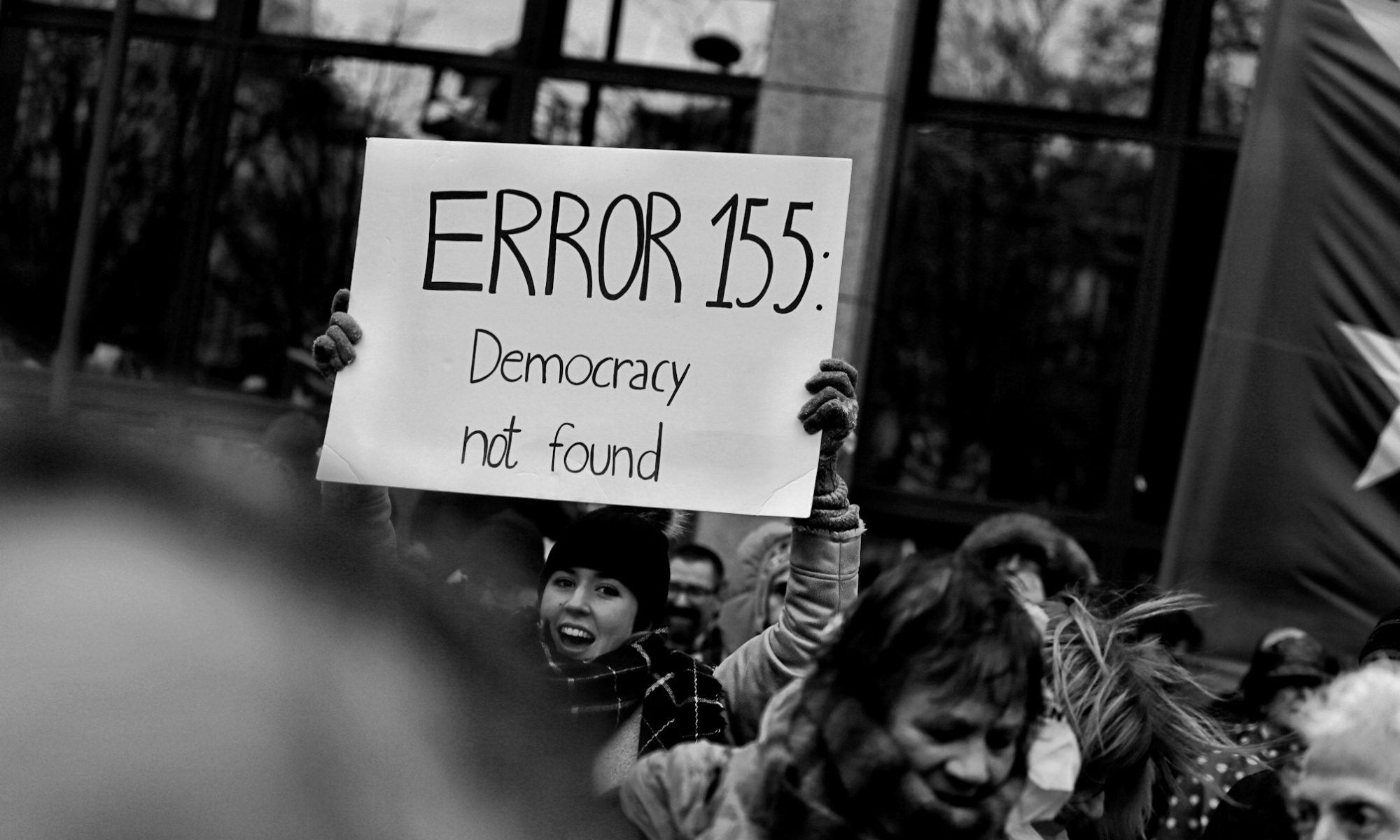
A bill signed into law by Ugandan President Yoweri Museveni on 13 October to severely restrict freedom of expression online will be weaponized against critics, including political opponents, and must be immediately reversed, Amnesty International said today.

This piece of legislation threatens the right to freedom of expression online, including the right to receive and impart information

Muleya Mwananyanda, Amnesty International's Director for East and Southern Africa

“This piece of legislation threatens the right to freedom of expression online, including the right to receive and impart information, on the pretext of outlawing unsolicited, false, malicious, hateful, and unwarranted information. It is designed to deliberately target critics of government and it will be used to silence dissent and prevent people from speaking out,” said Muleya Mwananyanda, Amnesty International’s Director for East and Southern Africa.

“While it has useful provisions regarding protection of the right to privacy, including child protection and responsible coverage of children, it introduces punitive penalties for anyone accused of so-called hate speech.”

President Museveni signed into law the Computer Misuse (Amendment) Act, which bars individuals convicted under the new legislation from holding public office for 10 years, reinforcing state control over online freedom of expression, including by political opposition groups. Leaders or public officers will also be dismissed or forced to vacate office upon conviction.

Those found to have breached the draconian law face fines of up to 15 million Ugandan shillings (about US$3,940) and imprisonment of up to seven years.

The law defines “hate speech” broadly, stipulating, in part that, “A person shall not write, send or share any information through a computer, which is likely to – (a) ridicule, degrade or demean another person, group of persons, a tribe, an ethnicity, a religion or gender; (b) create divisions among persons, a tribe, an ethnicity, a religion or gender; or (c) promote hostility against a person, group of persons, a tribe, an ethnicity, a religion or gender.”

Authorities in Uganda must repeal this piece of legislation and ensure that any future law guarantees checks and balances

Muleya Mwananyanda

The law further makes vague provisions on sharing of “unsolicited information.”

It also states that, “A person shall not send to or share with another person unsolicited information through a computer” and “A person shall not send, share or transmit any misleading or malicious information about or relating to any person through a computer.”

“Authorities in Uganda must repeal this piece of legislation and ensure that any future law guarantees checks and balances, including freedom of expression both offline and online,” said Muleya Mwananyanda.

“Ugandans must be able to exercise their right to freedom of expression without fear of being targeted by the criminal justice system.”

Background

On 9 September 2022, Uganda’s parliament passed the Computer Misuse (Amendment) Bill 2022 to amend six sections of the already repressive Computer Misuse Act, 2011.

On 10 March 2022, state authorities raided Digital TV offices in Kampala and arbitrarily arrested nine staff members and held them incommunicado for a week before unconditionally releasing seven of them. The remaining two – novelist, Norman Tumuhimbise and journalist, Farida Bikobere – were charged with offensive communication and cyberstalking President Museveni, contrary to sections 25 and 26 of the Computer Misuse Act 2011, respectively. They were also accused of using their online platform with the intention “to disturb the peace and quiet of the President of the Republic of Uganda”.

In the last three years, Amnesty International has reported that at least two activists linked with opposition parties, including Stella Nyanzi and Kakwenza Rukirabashaija who are both in exile, faced cybercrime related charges in court.

The post Uganda: Scrap draconian law aimed at suppressing freedom of expression online appeared first on Amnesty International.

Somalia: Authorities must immediately and unconditionally release journalist Abdalle Ahmed Mumin

Responding to news of the detention on 11 October of Abdalle Ahmed Mumin, Secretary General of the Somali Journalists Syndicate (SJS), Amnesty International’s Director for East and Southern Africa, Muleya Mwananyanda, said:

Abdalle Ahmed Mumin is being arbitrarily held solely for defending the right to freedom of expression in Somalia

Muleya Mwananyanda, Director for East and Southern Africa

“Abdalle Ahmed Mumin is being arbitrarily held solely for defending the right to freedom of expression in Somalia and for raising concerns over the government’s blanket ban on what it calls ‘dissemination of extremist and terrorist ideology’.

“Detaining a leading defender of human rights and press freedom on the pretext of national security sends a chilling message to journalists, human rights activists and anyone else who dares to express dissent against the Somali government. Abdalle Ahmed Mumin has committed no crime and must be immediately and unconditionally released.

Abdalle Ahmed Mumin has committed no crime and must be immediately and unconditionally released

Muleya Mwananyanda

“While the Somali authorities may have legitimate security concerns, the ban on disseminating ‘extremist ideology’ is overly broad, vague and leaves the door open to abuse by overzealous security and government officials. This highly restrictive directive is likely to lead to more arbitrary detentions and self-censorship by journalists fearful of reprisals. This is a clear attack on the right to freedom of expression that needs to be urgently reverted.”

Background

On 8 October, Somalia’s Ministry of Information issued a directive prohibiting “dissemination of extremism ideology messages both from traditional media broadcasts and social media”.

On 10 October, the Somali Journalists Syndicate (SJS) and four other media advocacy groups in Somalia issued a statement and addressed a press conference expressing concerns about the directive’s impact on media freedom and the safety of journalists.

On 11 October, Abdalle shared on Twitter footage of what appeared to be an attempted raid by armed National Intelligence Security Agency (NISA) officers on SJS offices the previous evening. Later that afternoon, he was arrested at Aden Adde International Airport and prevented from travelling to Nairobi to visit his family. He was transferred to Godka Jilaow, a notorious detention facility run by NISA in Mogadishu, where he has been denied access to his family and lawyers.

On 12 October, the Ministry of Information issued a statement confirming that Abdalle was being held in police custody for security-related issues. On 13 October, he was brought before the Banadir regional court, where prosecutors from the Attorney General’s office, reportedly accused him of defying a directive from the Ministry of Information and for spreading a “secret” video but he has not been officially charged. The court has allowed for his detention until 16 October.

The post Somalia: Authorities must immediately and unconditionally release journalist Abdalle Ahmed Mumin appeared first on Amnesty International.

India: Acquittal of human rights defender G.N. Saibaba is a triumph of justice over repression

Responding to the news of activist and Delhi University professor Gokarakonda Naga Saibaba’s acquittal by the Bombay High Court today after being in jail for more than five years under the draconian Unlawful Activities Prevention Act (UAPA), Aakar Patel, chair of board at Amnesty International India, said:

“The acquittal of G.N. Saibaba today is a positive development and triumph of justice over repression. He should have never been jailed in the first place. The Indian authorities have targeted him solely for having spoken out against the violence and discrimination faced by the Dalit and Indigenous communities in India.  

The Indian authorities must honour their international human rights obligations by providing a safe and supportive environment in which human rights defenders and activists can carry out their work without fear of reprisals.

Aakar Patel, chair of board at Amnesty International India

“The Indian authorities routinely use the anti-terror law UAPA with stringent bail provisions as a tool to intimidate, harass and target activists like G. N. Saibaba who are perceived to be critical of the authorities. Amnesty International calls for the immediate and unconditional release all other human rights defenders and activists who continue to be arbitrarily detained solely for peacefully exercising their right to freedom of expression and fearlessly standing up for the rights of the marginalized.

“The Indian authorities must honour their international human rights obligations by providing a safe and supportive environment in which human rights defenders and activists can carry out their work without fear of reprisals.”

Background:

G.N. Saibaba was initially arrested by the police in 2014 and accused of links to banned Maoist organisations. In March 2017, he was convicted by a sessions court in Gadchiroli, Maharashtra under the Unlawful Activities Prevention Act (UAPA) and sentenced to life in prison.

On 14 October, 2022 the Bombay High Court acquitted G. N. Saibaba and five other co-accused in the case and directed prison authorities to release them unless accused in other matters. One of the five, Pandu Narote, has already died in prison.

G. N. Saibaba has a disability due to polio and other severe health issues including a heart condition. His health had suffered a serious deterioration exacerbated by his detention conditions and lack of access to adequate medical care. He contracted Covid-19 twice in jail, in January 2021 and in February 2022.

The courts had denied repeated appeals for parole and even requests for medical bail.

In June 2022, Amnesty International and six other international human rights groups had in a joint statement called for the immediate release of G. N. Saibaba.

The post India: Acquittal of human rights defender G.N. Saibaba is a triumph of justice over repression appeared first on Amnesty International.

Lebanon: Stop the so-called voluntary returns of Syrian refugees

Responding to the news that Lebanon’s General Security agency will start sending Syrian refugees back to their country next week in a so-called voluntary process, Diana Semaan, Amnesty International’s Acting Deputy Director for the Middle East and North Africa, said:

“The Lebanese authorities are scaling up the so-called voluntary returns, a plan which has been in place for four years, when it is well established that Syrian refugees in Lebanon are not in a position to take a free and informed decision about their return due to restrictive government policies on movement and residency, rampant discrimination, lack of access to essential services as well as unavailability of objective and updated information about the current human rights situation in Syria. 

“In enthusiastically facilitating these returns, the Lebanese authorities are knowingly putting Syrian refugees at risk of suffering from heinous abuse and persecution upon their return to Syria

Diana Semaan, Amnesty International

“In enthusiastically facilitating these returns, the Lebanese authorities are knowingly putting Syrian refugees at risk of suffering from heinous abuse and persecution upon their return to Syria. Lebanon should respect its obligations under international law and halt its plans to return Syrian refugees en-masse.

“Amid the country’s spiralling economic crisis, the international community must continue to support more than one million Syrian refugees in Lebanon to prevent a further rise in unsafe returns.”

Background

On 12 October, Lebanese President Michel Aoun said Lebanon’s General Security agency will start sending Syrian refugees back home “in batches” from next week. On 13 October, Major General Abbas Ibrahim, head of Lebanon’s General Security, said that 1,600 Syrian refugees will be returned after the Syrian government approves.  

According to the General Security agency, refugees apply for return at the registration offices run by them across Lebanon. The agency then proceeds in compiling all the names of registered refugees and organizes transportation in buses to the Syrian border. As per the bilateral agreement, the Lebanese General Security also sends lists of names of registered refugees to the Syrian government for pre-approval before their return to Syria.

For the return of refugees to their country of origin to be truly voluntary, it must be based on their free and informed consent. However, the dire conditions in Lebanon raise doubts about the ability of Syrian refugees to provide truly free consent.

International law prohibits “constructive” refoulement, which occurs when states use indirect means to coerce individuals to return to a place where they would be at real risk of serious human rights violations.

Amnesty International believes that, in many cases, the Lebanese government’s unfair policies represent a fundamental factor in the decision to leave the country. In these cases, the refugee’s consent to repatriation cannot be considered free.

Amnesty International has previously documented how Syrian refugees have faced torture, sexual violence, enforced disappearance and arbitrary detention upon returning home. Those who left Syria at the beginning of the conflict are at grave risk of facing reprisals upon their return, due to their perceived political opinions or as a punishment for fleeing the country. 

The post Lebanon: Stop the so-called voluntary returns of Syrian refugees appeared first on Amnesty International.

USA: Biden administration must reverse decision to expand Title 42

In response to the Biden Administration’s announcement about a new process for Venezeulans seeking safety, Erika Guevara-Rosas, Americas director at Amnesty International said,

“Within days of the Interagency Coordination for Refugees and Migrants R4V revealing that there are 7.1 million Venezuelans seeking international protection, the Biden administration shamefully announced a new plan to block access to asylum for Venezuelans seeking safety at the US border. While we acknowledge the important step taken by the Biden administration in the creation of a new parole program for 24,000 Venezuelans, we are greatly alarmed at the expansion of the application of Title 42. This new policy aimed at stopping Venezuelans from seeking safety at the border is again demonstrating that Title 42 has no basis in public health and runs contrary to US and international obligations to uphold the rights of all to seek safety. All people have a right to seek safety, regardless of familial or financial ties, and any parole program should not supplant the right to seek asylum.

“We are also concerned with media reports that the Title 42 expansion is due to also include nationals of Cuba, Haiti, and Nicaragua. Last month, Amnesty International released a groundbreaking report finding that Haitians expelled under Title 42 were subject to arbitrary detention and discriminatory and humiliating ill-treatment that amounts to race-based torture. We urge the Biden administration to reconsider this and to instead work diligently to put an end to Title 42, not to expand it. Eradicating this deadly policy is a critical first step towards restoring asylum and preserving the human rights of asylum seekers; anything else is a band-aid that is not solving the issues at hand.” 

The post USA: Biden administration must reverse decision to expand Title 42 appeared first on Amnesty International.