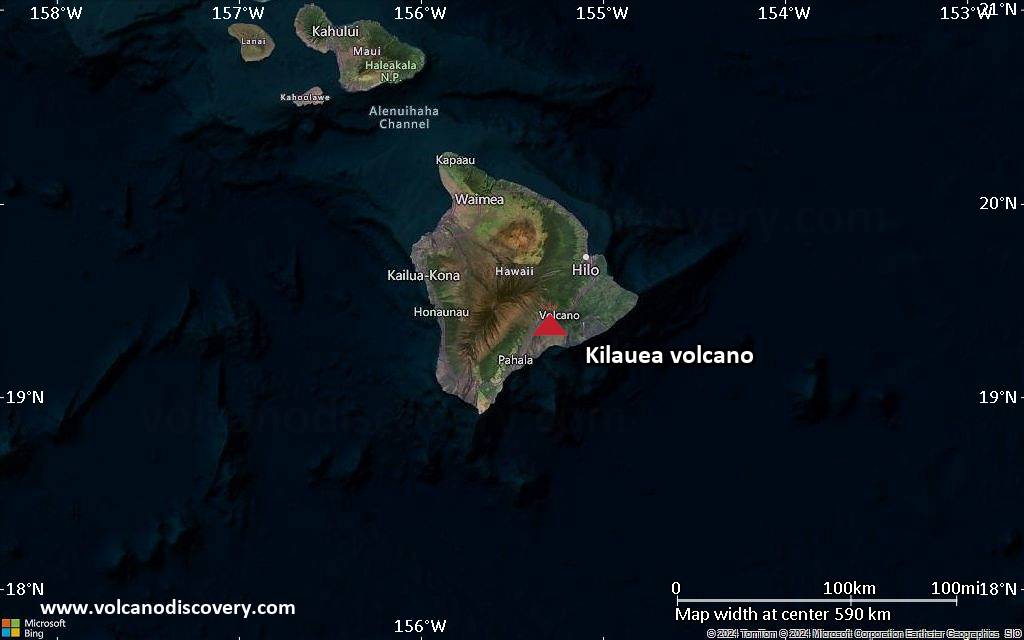
The latest episode (nr 31) of the ongoing Halemaʻumaʻu eruption ended abruptly at 2:52 a.m. HST on August 23 after 12.6 hours of continuous fountaining, the volcano observatory reported a short time ago:
„The north vent stopped erupting at approximately 2:52 a.m. HST marking the end of episode 31. The south and intermediate vents stopped erupting earlier at approximately 12:40 a.m. and 2:46 a.m. HST. Lava fountains from the north vent reached up to 325 ft (100 m) and sustained this height during most of this episode. Fountains from the south and intermediate vents remained small, less than 33 feet (10 meters) for most of the time, but the intermediate vent fountains increased to 60-100 ft (20-30 m) by the evening of August 22. Approximately 10,900,000 cubic yards (8,400,000 cubic meters) of lava were erupted at an average of 240 cubic yards per second (185 cubic meters per second) during the fountaining phase. Lava flows from this episode covered more than 75% of the floor of Halemaʻumaʻu within the southern part of Kaluapele (Kīlauea caldera) and may continue to exhibit slow movement or incandescence as they cool and solidify over the coming days.
Voluminous fountaining was preceded by continuous spattering in the north vent that began at approximately 8:30 a.m. HST and continued to increase in intensity until 11:45 a.m. HST, when sustained lava overflows began. During this period, a cone was built inside the north vent sealing off part of the old vent.
Fountaining in the north vent began increasing significantly at 2:04 p.m. HST accompanied by deflationary tilt and increasing tremor. The north vent transitioned to an arcuate fountain approximately 100 feet (30 meters) high feeding multiple lava streams at 2:18 p.m. HST corresponding with the change to steep deflation and high tremor. Sometime around 4-5 p.m. HST, low spatter fountains began to feed a small flow from the south vent. At 7:23 p.m. HST, a new intermediate vent opened up in the area of glowing cracks between the north and south vents.
Volcanic gas emissions have greatly decreased since the end of the episode.
The Uēkahuna tiltmeter (UWD) recorded about 22 microradians of deflationary tilt during this episode. The end of the eruption was coincident with a rapid change from deflation to inflation at the summit and a decrease in seismic tremor intensity.“ (source: HVO / USGS)