Explosive activity continues. Volcanic Ash Advisory Center (VAAC) Buenos Aires warned about a volcanic ash plume that rose up to estimated 22000 ft (6700 m) altitude or flight level 220 and is moving at 15 kts in SW direction. The full report is as follows:
FVAG01 at 13:23 UTC, 02/05/26 from SABM VA ADVISORY DTG: 20260502/1330Z
Volcanic Ash Advisory Center Tokyo (VAAC) issued the following report:
FVFE01 at 07:59 UTC, 02/05/26 from RJTD VA ADVISORY DTG: 20260502/0759Z VAAC: TOKYO VOLCANO: MAYON 273030 PSN: N1315 E12341 AREA: PHILIPPINES SOURCE ELEV: 2462M AMSL ADVISORY NR: 2026/554 INFO SOURCE: HIMAWARI-9 PHIVOLCS ERUPTION DETAILS: ERUPTION AT 20260502/0729Z FL060 EXTD WSW REPORTED OBS VA DTG: 02/0740Z OBS VA CLD: VA NOT IDENTIFIABLE FM SATELLITE DATA WIND FL060 080/15KT
FCST VA CLD +6 HR: NOT AVBL FCST VA CLD +12 HR: NOT AVBL FCST VA CLD +18 HR: NOT AVBL RMK: WE WILL ISSUE FURTHER ADVISORY IF VA IS DETECTED IN SATELLITE IMAGERY. NXT ADVISORY: NO FURTHER ADVISORIES=
Volcanic Ash Advisory Center Darwin (VAAC) issued the following report:
FVAU01 at 23:31 UTC, 01/05/26 from ADRM VA ADVISORY DTG: 20260501/2330Z VAAC: DARWIN VOLCANO: IBU 268030 PSN: N0129 E12738 AREA: INDONESIA SOURCE ELEV: 1325M AMSL ADVISORY NR: 2026/493 INFO SOURCE: HIMAWARI-9, CVGHM ERUPTION DETAILS: VA ERUPTION REPORTED AT 01/2159Z EST VA DTG: 01/2310Z EST VA CLD: SFC/FL070 N0127 E12733 – N0134 E12733 – N0156 E12746 – N0139 E12802 – N0115 E12751 MOV E 05KT FCST VA CLD +6 HR: 02/0510Z SFC/FL070 N0127 E12733 – N0134 E12733 – N0146 E12800 – N0121 E12807 – N0107 E12745 FCST VA CLD +12 HR: 02/1110Z SFC/FL070 N0134 E12733 – N0138 E12803 – N0121 E12807 – N0106 E12753 – N0107 E12733 FCST VA CLD +18 HR: 02/1710Z SFC/FL070 N0134 E12733 – N0153 E12756 – N0132 E12808 – N0111 E12801 – N0105 E12737 RMK: VA NOT IDENTIFIABLE ON SATELLITE IMAGERY DUE TO MET CLOUD. RECENT GROUND REPORTS INDICATE DISCRETE EMISSIONS ARE ONGOING. HEIGHT AND MOVEMENT BASED ON GROUND REPORTS AND MODEL GUIDANCE. NXT ADVISORY: NO LATER THAN 20260502/0530Z=
Canlaon (Central Philippines): The Philippine Institute of Volcanology and Seismology (PHIVOLCS) reported that the eruption continued at Kanlaon on 30 April 2026 (local). Plume(s) rose to a maximum of 150 m (492 ft) above the vent. Volcanic seismicity was recorded 4 times. Sulfur dioxide (SO₂) emissions averaged 1,697 tonnes per day on 30 April. The alert level remained at „1 – Low-Level Unrest“ (on a 0–5 level scale). Activity also included: inflationary deformation, volcanic seismicity. Source: Philippine Institute of Volcanology and Seismology (PHIVOLCS) … [read more] … [show less] Current Alerts: Observatory alert level: „1 – Low-Level Unrest“ (on a 0–5 level scale)
Taal (Luzon, Philippines): The Philippine Institute of Volcanology and Seismology (PHIVOLCS) reported that the eruption continued at Taal on 30 April 2026 (local). Plume(s) rose to a maximum of 400 m (1,312 ft) above the vent. The alert level remained at „2 – Moderate Level of Volcanic Unrest“ (on a 0–5 level scale). Activity also included: inflationary deformation. Source: Philippine Institute of Volcanology and Seismology (PHIVOLCS) … [read more] … [show less] Current Alerts: Observatory alert level: „2 – Moderate Level of Volcanic Unrest“ (on a 0–5 level scale)
Mayon (Luzon Island, Philippines): Volcanic Ash Advisory Center Tokyo (VAAC) issued the following report: ERUPTION AT 20260501/2016Z VA CLD UNKNOWN REPORTED OBS VA DTG:01/2020Z …1 May: The Philippine Institute of Volcanology and Seismology (PHIVOLCS) reported that the eruption continued at Mayon on 30 April 2026 (local). Lava effusion continued from the summit crater. As of 30 April, lava flow lengths remained at 3.8 km in the Basud Gully (E flank), 3.2 km in the Bonga Gully (SE flank), and 1.6 km in the Mi-isi Gully (S flank). Minor episodic Strombolian activity was recorded at 0901 and 2302 on 30 April. Short-lived lava fountaining was observed between 0215 and 0217 on 30 April. Plume(s) rose to a maximum of 400 m (1,312 ft) above the vent. Volcanic seismicity was recorded 28 times. Tremor episodes were recorded 13 times. There were 221 seismically detected rockfalls. Seismicity related to pyroclastic density currents was recorded 3 times. Crater glow was visible to the naked eye. Sulfur dioxide (SO₂) emissions averaged 1,657 tonnes per day on 30 April. Ground deformation indicated short-term deflation across the volcanic edifice, with shorter-term inflation localized on the NE flank. The alert level remained at „3 – Increased Tendency Towards Hazardous Eruption“ (on a 0–5 level scale). Activity also included: seismically detected pyroclastic density current(s) (PDCs), tremor, volcanic seismicity. Source: Philippine Institute of Volcanology and Seismology (PHIVOLCS) … [read more] … [show less] Current Alerts: Observatory alert level: „3 – Increased Tendency Towards Hazardous Eruption“ (on a 0–5 level scale)
Bulusan (Luzon Island, Philippines): The Philippine Institute of Volcanology and Seismology (PHIVOLCS) reported that unrest continued at Bulusan on 30 April 2026 (local). Plume(s) were reported. Volcanic seismicity was recorded 92 times. The alert level remained at „1 – Low Level of Volcanic Unrest“ (on a 0–5 level scale). Activity also included: inflationary deformation, volcanic seismicity. Source: Philippine Institute of Volcanology and Seismology (PHIVOLCS) … [read more] … [show less] Current Alerts: Observatory alert level: „1 – Low Level of Volcanic Unrest“ (on a 0–5 level scale)
Telong (northern Sumatra, Indonesia): The Center for Volcanology and Geological Hazard/Pusat Vulkanologi dan Mitigasi Bencana Geologi (CVGHM/PVMBG) reported that unrest continued at Telong, Bur ni on 30 April 2026 (local). The alert level remained at „Level 2 – Alert“ (on a 4-level scale). Source: Center for Volcanology and Geological Hazard/Pusat Vulkanologi dan Mitigasi Bencana Geologi (CVGHM/PVMBG) … [read more] … [show less] Current Alerts: Observatory alert level: „Level 2 – Alert“ (on a 4-level scale)
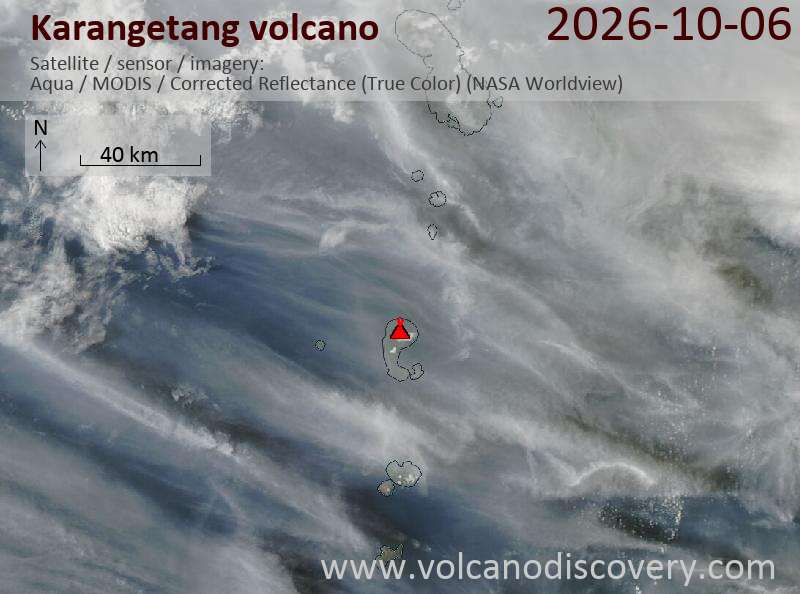
Karangetang (Siau Island, Sangihe Islands, Indonesia): The Center for Volcanology and Geological Hazard/Pusat Vulkanologi dan Mitigasi Bencana Geologi (CVGHM/PVMBG) reported that unrest continued at Karangetang on 30 April 2026 (local). Gas and vapor plume(s) rose to a maximum of 400 m (1,312 ft) above the vent. Gas emission seismicity was recorded 7 times. The alert level remained at „Level 2 – Alert“ (on a 4-level scale). Activity also included: gas emission seismicity. Source: Center for Volcanology and Geological Hazard/Pusat Vulkanologi dan Mitigasi Bencana Geologi (CVGHM/PVMBG) … [read more] … [show less] Current Alerts: Observatory alert level: „Level 2 – Alert“ (on a 4-level scale)
Raung (East Java): The Center for Volcanology and Geological Hazard/Pusat Vulkanologi dan Mitigasi Bencana Geologi (CVGHM/PVMBG) reported that unrest continued at Raung on 30 April 2026 (local). The alert level remained at „Level 2 – Alert“ (on a 4-level scale). Source: Center for Volcanology and Geological Hazard/Pusat Vulkanologi dan Mitigasi Bencana Geologi (CVGHM/PVMBG) … [read more] … [show less] Current Alerts: Observatory alert level: „Level 2 – Alert“ (on a 4-level scale)
Gamalama (Halmahera): The Center for Volcanology and Geological Hazard/Pusat Vulkanologi dan Mitigasi Bencana Geologi (CVGHM/PVMBG) reported that unrest continued at Gamalama on 30 April 2026 (local). The alert level remained at „Level 2 – Alert“ (on a 4-level scale). Source: Center for Volcanology and Geological Hazard/Pusat Vulkanologi dan Mitigasi Bencana Geologi (CVGHM/PVMBG) … [read more] … [show less] Current Alerts: Observatory alert level: „Level 2 – Alert“ (on a 4-level scale)
Slamet (Central Java, Indonesia): The Center for Volcanology and Geological Hazard/Pusat Vulkanologi dan Mitigasi Bencana Geologi (CVGHM/PVMBG) reported that unrest continued at Slamet on 30 April 2026 (local). Gas and vapor plume(s) rose to a maximum of 100 m (328 ft) above the vent. The alert level remained at „Level 2 – Alert“ (on a 4-level scale). Source: Center for Volcanology and Geological Hazard/Pusat Vulkanologi dan Mitigasi Bencana Geologi (CVGHM/PVMBG) … [read more] … [show less] Current Alerts: Observatory alert level: „Level 2 – Alert“ (on a 4-level scale)
Ibu (Halmahera, Indonesia): Explosive activity continues. Volcanic Ash Advisory Center (VAAC) Darwin warned about a volcanic ash plume that rose up to estimated 7000 ft (2100 m) altitude or flight level 070 and is moving at 05 kts in NE direction. The full report is as follows: VA TO FL070 OBS AT 01/0330Z EST VA DTG:01/1110Z to 7000 ft (2100 m) …1 May: The Center for Volcanology and Geological Hazard/Pusat Vulkanologi dan Mitigasi Bencana Geologi (CVGHM/PVMBG) reported that the eruption continued at Ibu on 30 April 2026 (local). Gas and vapor plume(s) rose to a maximum of 200 m (656 ft) above the vent. There were 103 explosions reported, with plumes rising to a maximum of 500 m (1,640 ft) above the vent. The alert level remained at „Level 2 – Alert“ (on a 4-level scale). Source: Center for Volcanology and Geological Hazard/Pusat Vulkanologi dan Mitigasi Bencana Geologi (CVGHM/PVMBG) … [read more] … [show less] Current Alerts: Observatory alert level: „Level 2 – Alert“ (on a 4-level scale)
Tangkubanparahu (West Java): The Center for Volcanology and Geological Hazard/Pusat Vulkanologi dan Mitigasi Bencana Geologi (CVGHM/PVMBG) issued a report for Tangkuban Parahu on 30 April 2026 (local). Gas and vapor plume(s) were reported. The alert level remained at „Level 1 – Normal“ (on a 4-level scale). Source: Center for Volcanology and Geological Hazard/Pusat Vulkanologi dan Mitigasi Bencana Geologi (CVGHM/PVMBG) … [read more] … [show less] Current Alerts: Observatory alert level: „Level 1 – Normal“ (on a 4-level scale)
Tambora (Sumbawa): The Center for Volcanology and Geological Hazard/Pusat Vulkanologi dan Mitigasi Bencana Geologi (CVGHM/PVMBG) reported that unrest continued at Tambora on 30 April 2026 (local). There was 1 seismically detected rockfall. The alert level remained at „Level 2 – Alert“ (on a 4-level scale). Source: Center for Volcanology and Geological Hazard/Pusat Vulkanologi dan Mitigasi Bencana Geologi (CVGHM/PVMBG) … [read more] … [show less] Current Alerts: Observatory alert level: „Level 2 – Alert“ (on a 4-level scale)
Lewotobi (Flores): The Center for Volcanology and Geological Hazard/Pusat Vulkanologi dan Mitigasi Bencana Geologi (CVGHM/PVMBG) reported that the eruption continued at Lewotobi (Laki-Laki) on 30 April 2026 (local). Gas and vapor plume(s) rose to a maximum of 100 m (328 ft) above the vent. The alert level remained at „Level 2 – Alert“ (on a 4-level scale). Source: Center for Volcanology and Geological Hazard/Pusat Vulkanologi dan Mitigasi Bencana Geologi (CVGHM/PVMBG) … [read more] … [show less] Current Alerts: Observatory alert level: „Level 2 – Alert“ (on a 4-level scale)
Soputan (North Sulawesi, Indonesia): The Center for Volcanology and Geological Hazard/Pusat Vulkanologi dan Mitigasi Bencana Geologi (CVGHM/PVMBG) reported that unrest continued at Soputan on 30 April 2026 (local). The alert level remained at „Level 2 – Alert“ (on a 4-level scale). Source: Center for Volcanology and Geological Hazard/Pusat Vulkanologi dan Mitigasi Bencana Geologi (CVGHM/PVMBG) … [read more] … [show less] Current Alerts: Observatory alert level: „Level 2 – Alert“ (on a 4-level scale)
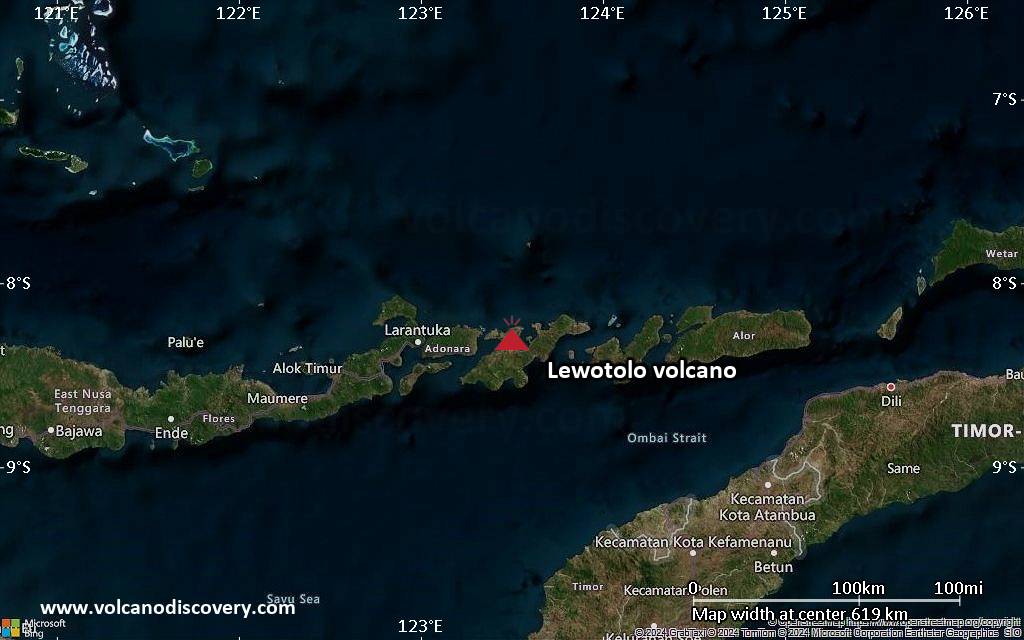
Lewotolo (Lesser Sunda Islands): The Center for Volcanology and Geological Hazard/Pusat Vulkanologi dan Mitigasi Bencana Geologi (CVGHM/PVMBG) reported that the eruption continued at Lewotolok on 30 April 2026 (local). Gas and vapor plume(s) rose to a maximum of 200 m (656 ft) above the vent. There were 25 seismically detected explosions reported. There was 1 seismically detected rockfall. The alert level remained at „Level 2 – Alert“ (on a 4-level scale). Source: Center for Volcanology and Geological Hazard/Pusat Vulkanologi dan Mitigasi Bencana Geologi (CVGHM/PVMBG) … [read more] … [show less] Current Alerts: Observatory alert level: „Level 2 – Alert“ (on a 4-level scale)
Sorikmarapi (Sumatra): The Center for Volcanology and Geological Hazard/Pusat Vulkanologi dan Mitigasi Bencana Geologi (CVGHM/PVMBG) reported that unrest continued at Sorikmarapi on 30 April 2026 (local). Gas and vapor plume(s) rose to a maximum of 25 m (82 ft) above the vent. The alert level remained at „Level 2 – Alert“ (on a 4-level scale). Source: Center for Volcanology and Geological Hazard/Pusat Vulkanologi dan Mitigasi Bencana Geologi (CVGHM/PVMBG) … [read more] … [show less] Current Alerts: Observatory alert level: „Level 2 – Alert“ (on a 4-level scale)
Krakatau (Sunda Strait, Indonesia): The Center for Volcanology and Geological Hazard/Pusat Vulkanologi dan Mitigasi Bencana Geologi (CVGHM/PVMBG) reported that unrest continued at Krakatau on 30 April 2026 (local). Gas plume(s) rose to a maximum of 5 m (16 ft) above the vent. The alert level remained at „Level 2 – Alert“ (on a 4-level scale). Source: Center for Volcanology and Geological Hazard/Pusat Vulkanologi dan Mitigasi Bencana Geologi (CVGHM/PVMBG) … [read more] … [show less] Current Alerts: Observatory alert level: „Level 2 – Alert“ (on a 4-level scale)
Merapi (Central Java, Indonesia): The Center for Volcanology and Geological Hazard/Pusat Vulkanologi dan Mitigasi Bencana Geologi (CVGHM/PVMBG) reported that the eruption continued at Merapi on 30 April 2026 (local). Gas and vapor plume(s) rose to a maximum of 200 m (656 ft) above the vent. Two pyroclastic density currents (PDCs), or pyroclastic flows, were observed traveling 1,200 m along Kali Boyong. Seismicity related to pyroclastic density currents was recorded 1 times. There were 8 hot rockfalls, traveling up to 1,900 m. There were 124 seismically detected rockfalls. The alert level remained at „Level 3 – Standby“ (on a 4-level scale). Activity also included: seismically detected pyroclastic density current(s) (PDCs). Source: Center for Volcanology and Geological Hazard/Pusat Vulkanologi dan Mitigasi Bencana Geologi (CVGHM/PVMBG) … [read more] … [show less] Current Alerts: Observatory alert level: „Level 3 – Standby“ (on a 4-level scale)
Semeru (East Java, Indonesia): Volcanic Ash Advisory Center Darwin (VAAC) issued the following report: ERUPTION REPORTED AT 01/0650Z EST VA DTG:01/1030Z …1 May: The Center for Volcanology and Geological Hazard/Pusat Vulkanologi dan Mitigasi Bencana Geologi (CVGHM/PVMBG) reported that the eruption continued at Semeru on 30 April 2026 (local). There were 67 explosions reported, with plumes rising to a maximum of 600 m (1,969 ft) above the vent. There was 1 seismically detected rockfall. Seismically detected flowage events were recorded 1 times. The alert level remained at „Level 3 – Standby“ (on a 4-level scale). Activity also included: seismically detected flowage event(s). Source: Center for Volcanology and Geological Hazard/Pusat Vulkanologi dan Mitigasi Bencana Geologi (CVGHM/PVMBG) … [read more] … [show less] Current Alerts: Observatory alert level: „Level 3 – Standby“ (on a 4-level scale)
Marapi (Western Sumatra, Indonesia): The Center for Volcanology and Geological Hazard/Pusat Vulkanologi dan Mitigasi Bencana Geologi (CVGHM/PVMBG) reported that the eruption continued at Marapi on 30 April 2026 (local). Gas and vapor plume(s) rose to a maximum of 400 m (1,312 ft) above the vent. The alert level remained at „Level 2 – Alert“ (on a 4-level scale). Source: Center for Volcanology and Geological Hazard/Pusat Vulkanologi dan Mitigasi Bencana Geologi (CVGHM/PVMBG) … [read more] … [show less] Current Alerts: Observatory alert level: „Level 2 – Alert“ (on a 4-level scale)
Dempo (Sumatra): The Center for Volcanology and Geological Hazard/Pusat Vulkanologi dan Mitigasi Bencana Geologi (CVGHM/PVMBG) reported that unrest continued at Dempo on 30 April 2026 (local). The alert level remained at „Level 2 – Alert“ (on a 4-level scale). Source: Center for Volcanology and Geological Hazard/Pusat Vulkanologi dan Mitigasi Bencana Geologi (CVGHM/PVMBG) … [read more] … [show less] Current Alerts: Observatory alert level: „Level 2 – Alert“ (on a 4-level scale)
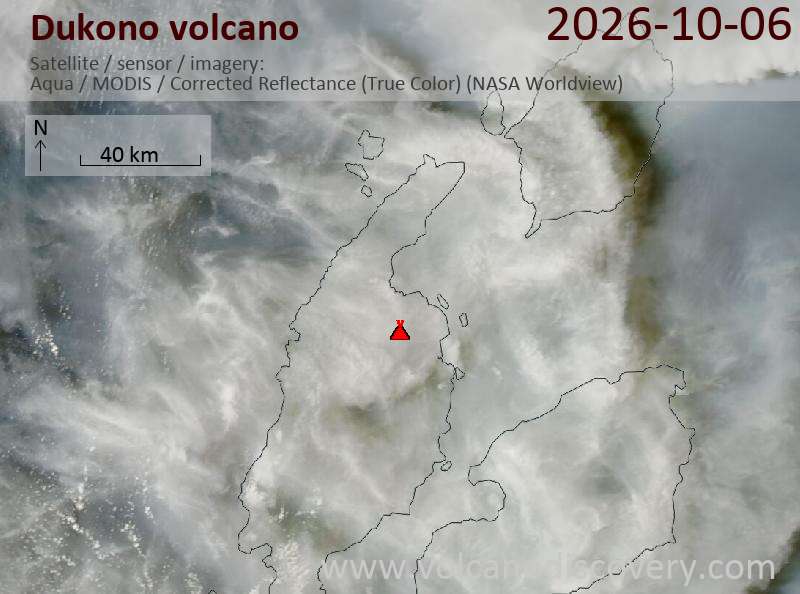
Dukono (Halmahera): Explosive activity continues. Volcanic Ash Advisory Center (VAAC) Darwin warned about a volcanic ash plume that rose up to estimated 7000 ft (2100 m) altitude or flight level 070 . The full report is as follows: VA TO FL070 OBS AT 01/0900Z MOV NW EST VA DTG:01/1240Z to 7000 ft (2100 m) …1 May: The Center for Volcanology and Geological Hazard/Pusat Vulkanologi dan Mitigasi Bencana Geologi (CVGHM/PVMBG) reported that the eruption continued at Dukono on 30 April 2026 (local). There were 64 explosions reported, with plumes rising to a maximum of 1,200 m (3,937 ft) above the vent. The alert level remained at „Level 2 – Alert“ (on a 4-level scale). Source: Center for Volcanology and Geological Hazard/Pusat Vulkanologi dan Mitigasi Bencana Geologi (CVGHM/PVMBG) … [read more] … [show less] Current Alerts: Observatory alert level: „Level 2 – Alert“ (on a 4-level scale)
Kerinci (Sumatra): The Center for Volcanology and Geological Hazard/Pusat Vulkanologi dan Mitigasi Bencana Geologi (CVGHM/PVMBG) reported that unrest continued at Kerinci on 30 April 2026 (local). Gas and vapor plume(s) rose to a maximum of 150 m (492 ft) above the vent. The alert level remained at „Level 2 – Alert“ (on a 4-level scale). Source: Center for Volcanology and Geological Hazard/Pusat Vulkanologi dan Mitigasi Bencana Geologi (CVGHM/PVMBG) … [read more] … [show less] Current Alerts: Observatory alert level: „Level 2 – Alert“ (on a 4-level scale)
Iya (Flores): (1 May) Explosive activity continues. Volcanic Ash Advisory Center (VAAC) Darwin warned about a volcanic ash plume that rose up to estimated 3000 ft (900 m) altitude or flight level 030 and is moving at 10 kts in NW direction. The full report is as follows: VA TO FL030 REPORTED AT 01/0513Z EST VA DTG:01/0620Z to 3000 ft (900 m)
Lokon-Empung (North Sulawesi, Indonesia): The Center for Volcanology and Geological Hazard/Pusat Vulkanologi dan Mitigasi Bencana Geologi (CVGHM/PVMBG) reported that unrest continued at Lokon-Empung on 30 April 2026 (local). Gas and vapor plume(s) rose to a maximum of 25 m (82 ft) above the vent. The alert level remained at „Level 2 – Alert“ (on a 4-level scale). Source: Center for Volcanology and Geological Hazard/Pusat Vulkanologi dan Mitigasi Bencana Geologi (CVGHM/PVMBG) … [read more] … [show less] Current Alerts: Observatory alert level: „Level 2 – Alert“ (on a 4-level scale)
Kilauea (Hawai’i): The United States Geological Survey – Hawaiian Volcano Observatory (USGS-HVO) reported that there was a pause in eruptive activity at Kilauea between 29 April 2026 (local) and 30 April 2026 (local). Webcam footage captured persistent glow from the south vent, and intermittent glow from the north vent throughout the night. The number of earthquakes detected at the summit decreased compared to 28–29 April; however, activity remained elevated, with 19 small earthquakes recorded (all at or below M2.0), primarily occurring within Halemaʻumaʻu Crater. Seismic tremor gradually increased at the summit, with regular and more frequent pulses. Both the north and south vents occasionally produced flames. The alert level remained at „Advisory“ (level 2 on a 4-level scale). The aviation alert level remained at „Yellow“ (level 2 on a 4-level scale). Source: United States Geological Survey – Hawaiian Volcano Observatory (USGS-HVO) … [read more] … [show less] Current Alerts: Observatory alert level: „Advisory“ (level 2 on a 4-level scale)
Shishaldin (Aleutian Islands, Alaska): The United States Geological Survey – Alaska Volcano Observatory (USGS-AVO) reported that unrest continued at Shishaldin between 29 April 2026 (local) and 30 April 2026 (local). The alert level remained at „Advisory“ (level 2 on a 4-level scale). The aviation alert level remained at „Yellow“ (level 2 on a 4-level scale). Source: United States Geological Survey – Alaska Volcano Observatory (USGS-AVO) … [read more] … [show less] Current Alerts: Observatory alert level: „Advisory“ (level 2 on a 4-level scale)
Great Sitkin (United States, Aleutian Islands): The United States Geological Survey – Alaska Volcano Observatory (USGS-AVO) reported that the eruption continued at Great Sitkin between 29 April 2026 (local) and 30 April 2026 (local). Lava continued to slowly erupt in the summit crater. Rockfalls generated by the growing lava dome were seismically recorded. The alert level remained at „Watch“ (level 3 on a 4-level scale). The aviation alert level remained at „Orange“ (level 3 on a 4-level scale). Source: United States Geological Survey – Alaska Volcano Observatory (USGS-AVO) … [read more] … [show less] Current Alerts: Observatory alert level: „Watch“ (level 3 on a 4-level scale)
Popocatépetl (Central Mexico): Volcanic Ash Advisory Center Washington (VAAC) issued the following report: NO FURTHER VA EMISSIONS …1 May: The Centro Nacional de Prevención de Desastres (CENAPRED) reported that the eruption continued at Popocatépetl between 29 April 2026 (local) and 30 April 2026 (local). Ash, gas, and vapor plume(s) were reported. The alert level remained at „Yellow Alert – Phase 2“ (level 4 on a 7-level scale). Source: Centro Nacional de Prevención de Desastres (CENAPRED) … [read more] … [show less] Current Alerts: Observatory alert level: „Yellow Alert – Phase 2“ (level 4 on a 7-level scale)
Santiaguito (Guatemala): Volcanic Ash Advisory Center Washington (VAAC) issued the following report: OCNL VA EM …1 May: The Instituto Nacional de Sismología, Vulcanología, Meteorología e Hidrología (INSIVUMEH) reported that the eruption continued at Santa María between 29 April 2026 (local) and 30 April 2026 (local). There were explosions reported, occurring at a rate of up to 3 per hour, with plumes rising to a maximum of 800 m (2,625 ft) above the vent. Source: Instituto Nacional de Sismología, Vulcanología, Meteorología e Hidrología (INSIVUMEH) … [read more] … [show less] Current Alerts: Observatory alert level: unavailable or not collected
Pacaya (Guatemala): The Instituto Nacional de Sismología, Vulcanología, Meteorología e Hidrología (INSIVUMEH) reported that unrest continued at Pacaya between 29 April 2026 (local) and 30 April 2026 (local). Activity also included: fumarolic activity. Source: Instituto Nacional de Sismología, Vulcanología, Meteorología e Hidrología (INSIVUMEH) … [read more] … [show less] Current Alerts: Observatory alert level: unavailable or not collected
Fuego (Guatemala): Volcanic Ash Advisory Center Washington (VAAC) issued the following report: VA EMS ONGOING …1 May: The Instituto Nacional de Sismología, Vulcanología, Meteorología e Hidrología (INSIVUMEH) reported that the eruption continued at Fuego between 29 April 2026 (local) and 30 April 2026 (local). There were explosions reported, occurring at a rate of up to 10 per hour, with plumes rising to a maximum of 1,037 m (3,402 ft) above the vent. Some explosions ejected incandescent material up to 300 m above the crater. Source: Instituto Nacional de Sismología, Vulcanología, Meteorología e Hidrología (INSIVUMEH) … [read more] … [show less] Current Alerts: Observatory alert level: unavailable or not collected
Poas (Costa Rica): The Observatorio Vulcanológico y Sismológico de Costa Rica – Universidad Nacional (OVSICORI-UNA) reported that the eruption continued at Poás between 29 April 2026 (local) and 30 April 2026 (local). Background seismic tremor significantly decreased following the 28 April eruption, then started to increase again by 30 April. Long-period (LP) seismic events continued to be recorded, though at a reduced rate compared to recent months. For reference, the highest number of LP earthquakes at Poás was 500 on 15 March 2026. The alert level remained at „Level 2 – Warning“ (on a 0–4 level scale). The aviation alert level remained at „Yellow“ (level 2 on a 4-level scale). Source: Observatorio Vulcanológico y Sismológico de Costa Rica – Universidad Nacional (OVSICORI-UNA) … [read more] … [show less] Current Alerts: Observatory alert level: „Level 2 – Warning“ (on a 0–4 level scale)
Sangay (Ecuador): Volcanic Ash Advisory Center Washington (VAAC) issued the following report: PSBL VA EMS …1 May: The Instituto Geofísico-Escuela Politécnica Nacional (IG-EPN) reported that the eruption continued at Sangay between 29 April 2026 (local) and 30 April 2026 (local). There were 471 seismically detected explosions reported. Ash and gas plume(s) rose to a maximum of 1,500 m (4,921 ft) above the vent. The alert level remained at „2 – Yellow“ (on a 4-level scale). Activity also included: thermal anomaly(ies). Source: Instituto Geofísico-Escuela Politécnica Nacional (IG-EPN) … [read more] … [show less] Current Alerts: Observatory alert level: „2 – Yellow“ (on a 4-level scale)
Reventador (Ecuador): Explosive activity continues. Volcanic Ash Advisory Center (VAAC) Washington warned about a volcanic ash plume that rose up to estimated 15000 ft (4600 m) altitude or flight level 150 . The full report is as follows: VA EM DETECTED to 15000 ft (4600 m) …1 May: The Instituto Geofísico-Escuela Politécnica Nacional (IG-EPN) reported that the eruption continued at Reventador between 29 April 2026 (local) and 30 April 2026 (local). There were 98 seismically detected explosions reported. Ash and gas plume(s) rose to a maximum of 1,000 m (3,281 ft) above the vent. There were incandescent rockfalls, descending 1,000 m below the crater. The alert level remained at „3 – Orange“ (on a 4-level scale). Activity also included: thermal anomaly(ies). Source: Instituto Geofísico-Escuela Politécnica Nacional (IG-EPN) … [read more] … [show less] Current Alerts: Observatory alert level: „3 – Orange“ (on a 4-level scale)
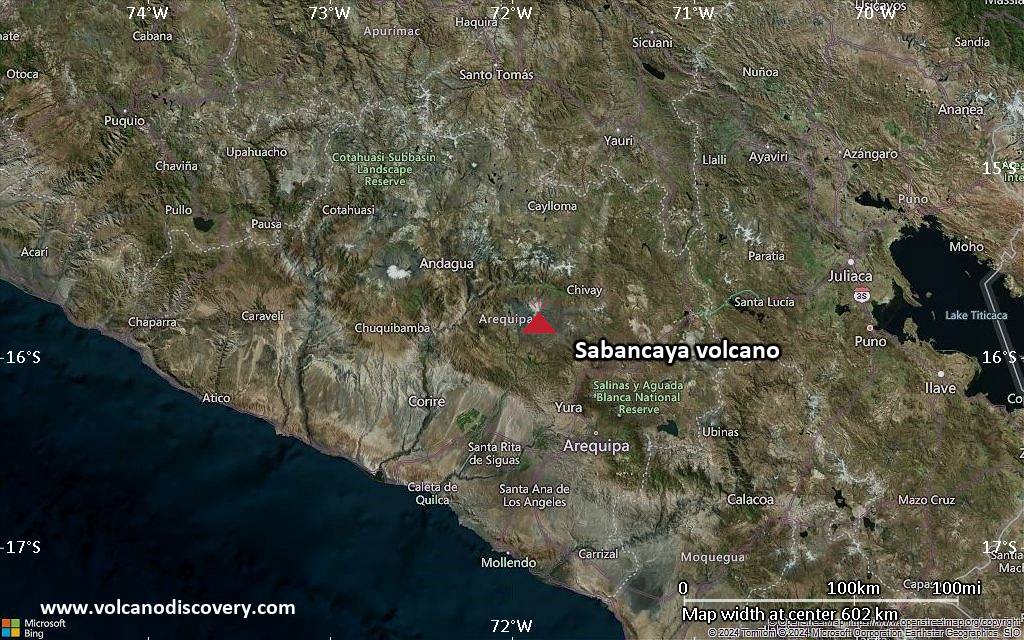
Sabancaya (Peru): Volcanic Ash Advisory Center Buenos Aires (VAAC) issued the following report: INTERMITTENT EMISSION …1 May: The Centro Vulcanológico Nacional del Instituto Geofísico del Perú (CENVUL-IGP) reported that the eruption continued at Sabancaya between 29 April 2026 (local) and 30 April 2026 (local). There was 1 explosion reported, with plumes rising to a maximum of 2,500 m (8,202 ft) above the vent. A total of 12 earthquakes related to the movement of magma and gases were recorded. Thermal anomalies were detected 4 times. The alert level remained at „Orange“ (level 3 on a 4-level scale). Activity also included: thermal anomaly(ies). Source: Centro Vulcanológico Nacional del Instituto Geofísico del Perú (CENVUL-IGP) … [read more] … [show less] Current Alerts: Observatory alert level: „Orange“ (level 3 on a 4-level scale)