Tim Stark of ‘Tiger King’ Ordered to Surrender Animals From ‘Wildlife in Need’

An Indiana judge has granted the state’s motion ordering roadside zoo owner Tim Stark to surrender all animals (excluding big cats) from Wildlife in Need (WIN) by September 18, pending the final outcome of the litigation charging Stark and WIN with charity fraud. This means the small exotic cats, primates, porcupines, foxes, wallabies, otters, bears, parrots, owls, and other animals relegated to his shoddy roadside zoo will soon be placed in new homes.

The new ruling omits big cats only because the process of finding new homes for the tigers, lions, and tiger/lion hybrids imprisoned at WIN was already secured per a federal court order that resulted from PETA’s successful Endangered Species Act lawsuit.

The Indiana judge also ordered Stark to ensure that all animals at WIN receive continued care prior to their removal, and he warned the Tiger King villain against further intimidating or threatening those involved in implementing the order—the latter of which was specified after Stark was filmed (below) outside a courtroom yelling at witnesses.

It’s been a rough few months for Stark—after years of PETA action, the infamous animal exploiter’s exhibitor’s license was permanently revoked last month, meaning that he can never again legally use frightened bear cubs, sloths, spider monkeys, or any other species regulated by the U.S. Department of Agriculture in his cruel animal encounters. The good news came after he and WIN were assessed a total of $340,000 in civil penalties—$40,000 of which was assessed against him individually.

This is a warning to the entire big-cat cub-petting industry: Your days are numbered.

Find out how you can help PETA get animals out of the hands of other cruel exhibitors:

Take Action to Help Animals at Roadside Zoos

The post Tim Stark of ‘Tiger King’ Ordered to Surrender Animals From ‘Wildlife in Need’ appeared first on PETA.
Get Out Your Hankie: New Film Tells Story of Dog Presumed Dead

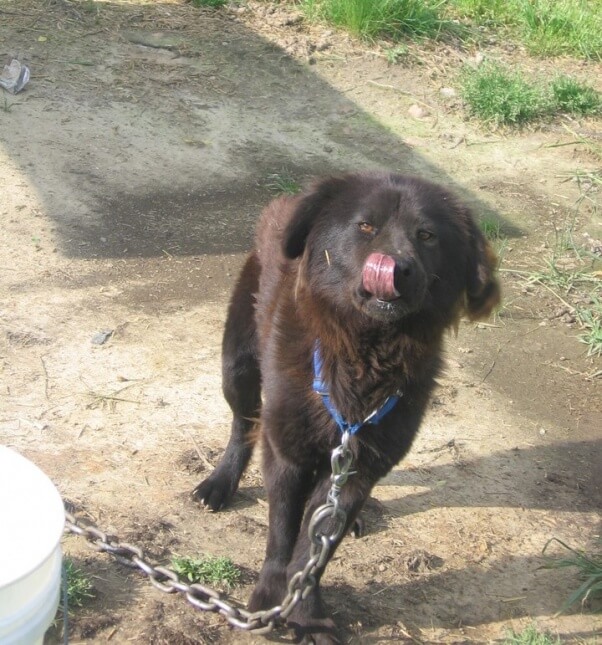
Edith always knew she deserved a starring role, and now she finally has one. The formerly chained dog, a fluffy black chow mix, is the star—along with dozens of other chained or penned dogs—of Breaking the Chain, a groundbreaking new documentary about PETA fieldworkers’ efforts to improve the lives of neglected “backyard dogs” produced by Oscar winner Anjelica Huston.

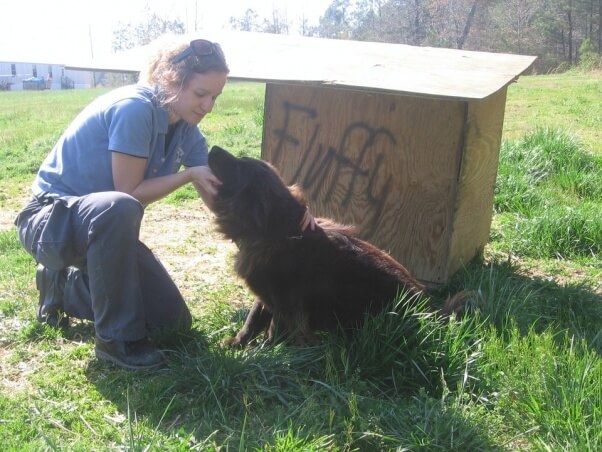
Edith (then called “Fluffy”) spent years yearning for a chance to show what she was capable of. The opportunity finally came on a chilly spring day when two PETA volunteers out delivering straw bedding spotted the aging, unkempt dog behind a rundown trailer in rural North Carolina. They put straw in her doghouse to keep her warm and dry, cleaned up her small patch of dirt, gave her some treats and ear scratches, took photos, and jotted down the owner’s name and address.

The next day at the Sam Simon Center—our headquarters in Norfolk, Virginia—PETA staffers Emily Allen and Jes Cochran were going through the volunteers’ photos and did a double take when they saw “Fluffy.” She sure looked like Edith, whom Jes had been visiting at another address for years and had delivered a doghouse to, transported to PETA’s mobile clinic for a free spay surgery, and routinely given lots of toys, treats, food, fresh water, and tummy rubs. However, two years earlier, Edith had disappeared, and Jes hadn’t known what had happened to her.

The life of every chained dog is heartbreaking, but Edith had struck a chord with Jes, who had been visiting her since she was a young, wriggling bundle of soft black fur. As the years passed, Edith’s puppy-like optimism and enthusiasm had never dimmed. Unlike many other chained dogs, who go mad from intensive confinement, she had never become fearful or aggressive. She always greeted Jes like an old friend, with face licks and by flopping over onto her back for tummy rubs. Edith never really cared about treats or toys—all she wanted was attention.

When Edith disappeared, Jes assumed the worst, knowing the many dangers that “backyard dogs” face, including contagious diseases, heartworms, exposure, heat exhaustion, dehydration, and attacks by loose dogs or cruel people.

You’ll have to watch the documentary to find out whether Edith and Jes were reunited. It’s available now on video-on-demand platforms such as Apple TV, iTunes, and Prime Video.

Breaking the Chain will also be shown at the Richmond International Film Festival and the American Documentary and Animation Film Festival in September and October. Don’t miss it!

The post Get Out Your Hankie: New Film Tells Story of Dog Presumed Dead appeared first on PETA.

UAB Whistleblower Comes Forward; Feds to Investigate University Lab

The U.S. Department of Agriculture (USDA) will investigate a University of Alabama–Birmingham xenotransplantation laboratory—where the organs of genetically modified pigs are transplanted into baboons—after a whistleblower gave documents, photos, and video footage to PETA that reveal acute animal suffering and scores of apparent violations of the federal Animal Welfare Act.

According to the whistleblower, experimenters did not follow proper protocols for animal care, failed to comply with common veterinary standards, used expired or incorrect medications, and falsified veterinary-care records to hide their failure to relieve animals’ suffering.

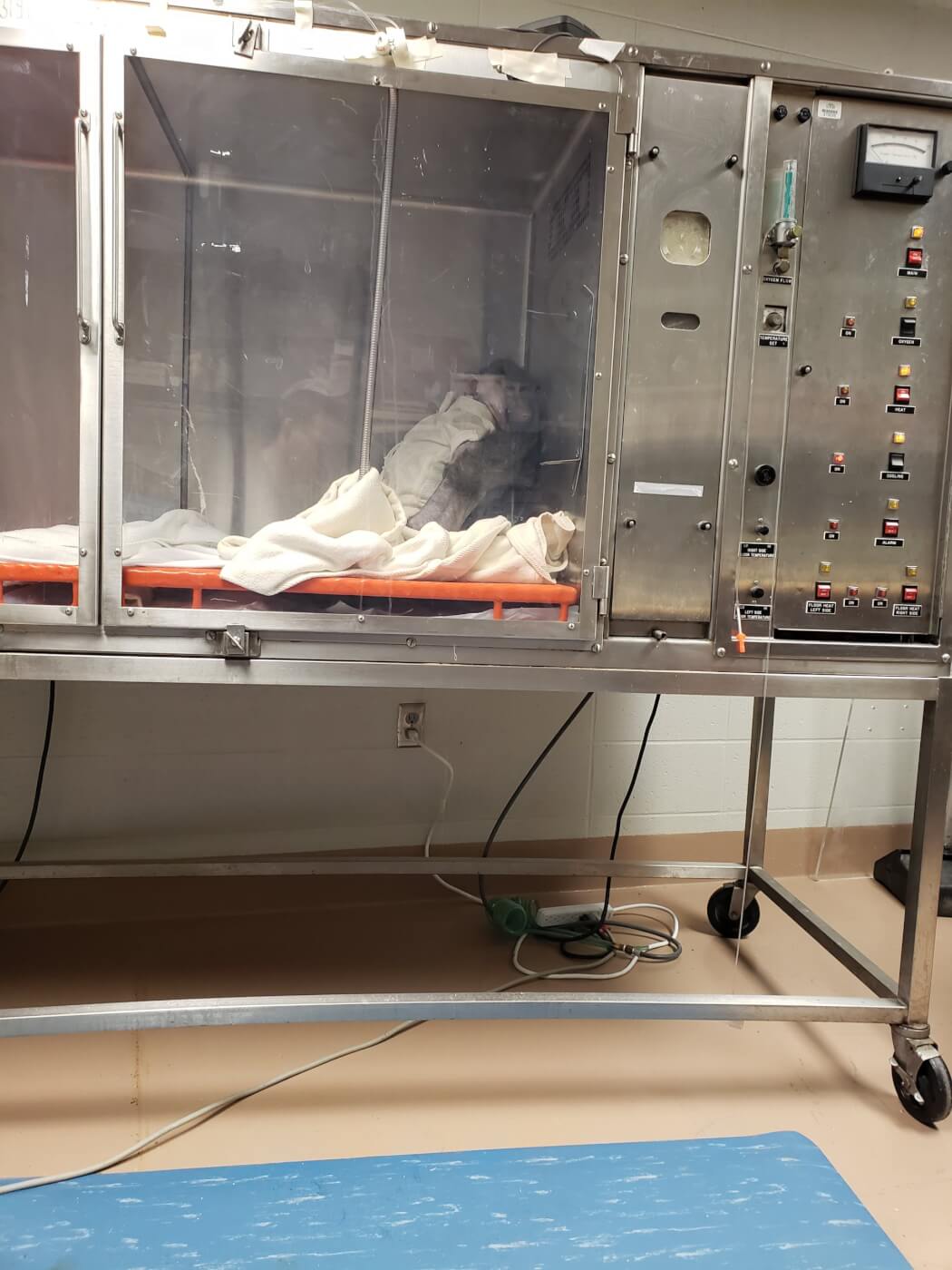
Among the whistleblower’s other allegations, a pig’s kidney had been transplanted into a baboon named Laja in January 2019. In a video taken in June 2019 to show the “success” of the surgery, Laja appears emaciated and is missing a lot of hair as she repetitively circles and somersaults in her cage, a sign of extreme psychological distress. As she got sicker—not better—following the transplant, fluid built up in her abdomen, pockets of fluid collected along her ulcerated surgery incision, and she developed an open sore on her thigh. Rather than properly treating the wounds, experimenters reportedly applied Woolite laundry detergent to them to hide the poor condition of her skin. She was killed in September 2019.

A photograph shows a baboon’s miserable post-operative condition after a pig’s heart was transplanted into her body. The intravenous tube can be seen leaking. The baboon reportedly died within two days. E-mails shared by the whistleblower reveal that experimenters discussed underfeeding a pig in order to keep her from growing too large for her organs to be removed and transplanted into another animal.

“Sensitive monkeys and pigs are being used in grisly Frankenstein experiments that have never worked,” says PETA Vice President of Laboratory Investigations Alka Chandna, Ph.D. “The school apparently can’t even comply with simple animal protection laws. University President Ray Watts should close this laboratory now.”

PETA is also urging the CEO of United Therapeutics—the company that has bankrolled these experiments with $19.5 million over five years—to rethink its funding, noting that implementing presumed organ-donation consent laws would increase organ availability, thus alleviating the shortage and saving more human lives.

PETA—whose motto reads, in part, that “animals are not ours to experiment on”—opposes speciesism, which is a human-supremacist worldview. For more information, please visit PETA.org.

The post UAB Whistleblower Comes Forward; Feds to Investigate University Lab appeared first on PETA.

Your Guide to Coconut Products That Aren’t Made With Monkey Labor

Not all coconut products are made the same way. In fact, some producers based in Thailand force monkeys to pick coconuts and keep them chained and confined to cages for extended periods of time. These naturally social primates are kept in isolation from each other and denied the freedom to move around. However, it’s easy to avoid products that are produced using these cruel methods, whether you’re looking for coconut milk, cream, water, oil, or any other coconut-based vegan products. The products below are made by companies that don’t use monkey labor to harvest coconuts.

Choose these monkey-friendly, vegan coconut products:

Canned Coconut Milk

A Taste of Thai Coconut Milk

Native Forest Organic Unsweetened Classic Coconut Milk

More Than Fair Fair Trade Organic Coconut Milk

Chef’s Choice Coconut Milk

Coconut Cream

Nature’s Charm Coconut Whipping Cream

Native Forest Organic Unsweetened Premium Coconut Cream

Let’s Do Organic Unsweetened Creamed Coconut

Chef’s Choice Coconut Cream

Coconut Water and Juice

Harmless Harvest

Nature Factor Organic Coconut Water

Chef’s Choice Certified Organic 100% Pure Coconut Water

Chef’s Choice Coconut Juice with Pulp

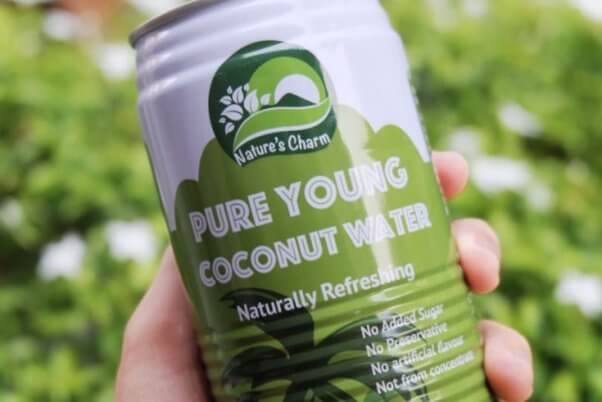
Nature’s Charm Pure Young Coconut Water

coconut products nature's charm coconut water© Nature’s Charm

Shredded Coconut and Coconut Flakes

Let’s Do Organic Unsweetened Shredded Coconut

Coconut-Based Yogurt, Cheese, and Ice Cream

Follow Your Heart

Miyoko’s Creamery

Violife

Daiya Foods

The Coconut Collaborative

Coconut Flour and Oil

Let’s Do Organic Coconut Flour

Native Forest 100% Organic Virgin Coconut Oil

Other Coconut Products

Nature’s Charm Sweetened Condensed Coconut Milk

Nature’s Charm Evaporated Coconut Milk

Nature’s Charm Coconut Salted Caramel Sauce

Let’s Do Organic Sweetened Condensed Coconut Milk


Let your local grocery stores know that animal exploitation is never OK by asking them to stop stocking coconut products that hurt monkeys:

Speak Up for Monkeys

Note: PETA participates in the Amazon Services LLC Associates Program, an affiliate advertising program designed to provide websites with a means to earn advertising fees by advertising and linking to Amazon.com.

The post Your Guide to Coconut Products That Aren’t Made With Monkey Labor appeared first on PETA.

PETA Calls For State Audit of FSU and UF After COVID-19–Related Animal Killings for ‘Non-Essential’ Experiments

Today, PETA sent a letter to the state auditor urging an audit of the use of public money, personnel, property, equipment, and space by Florida State University (FSU) and the University of Florida (UF) for animal experiments deemed non-essential during the COVID-19 pandemic. This apparently led to the euthanasia of animals in the universities’ laboratories.

In its letter, PETA notes that in the last fiscal year, FSU and UF received $1.28 billion in state appropriations, some of which may have gone toward funding animal experiments that were ultimately postponed or canceled. In March, UF informed its staff that “only mission-critical, essential research should continue” and urged experimenters to “consider reduction of animal census, including agricultural animals and USDA-covered species.” In April, FSU informed its experimenters that “all nonessential research occurring in a space owned or secured by FSU must be ramped down.” These directives likely led to the killing of hundreds or more animals the schools deemed extraneous. PETA questions why state funds were wasted on experiments considered non-essential.

“The experiments on animals conducted at FSU and UF were undoubtedly cruel, and apparently not even the schools can justify them,” says PETA Vice President Shalin Gala. “PETA is calling on state officials to follow the money and prevent taxpayer waste—and animal suffering—in laboratories that should never have received funding in the first place.”

Numerous published studies have shown that animal experimentation wastes resources and lives, as more than 90% of highly promising results from basic scientific research—much of it involving animal experimentation—fail to lead to treatments for humans. (Please read under “Lack of benefit for humans” here.) In addition, 95% of new medications that are found to be safe and effective in animals fail in human clinical trials.

PETA’s letter to Florida Auditor General Sherrill F. Norman is available upon request. The group—whose motto reads, in part, that “animals are not ours to experiment on”—opposes speciesism, a human-supremacist worldview. For more information, please visit PETA.org or click here.

The post PETA Calls For State Audit of FSU and UF After COVID-19–Related Animal Killings for ‘Non-Essential’ Experiments appeared first on PETA.