PETA Names Cruelest Animal Experimenters of 2020

Animal experimentation is a secretive, violent, abysmally cruel industry, and as 2020 comes to a close, PETA is dragging the perpetrators of the most appalling experiments on animals out of the shadows and giving them their due with a spot on its list of the Seven Worst Vivisectors of the Year:

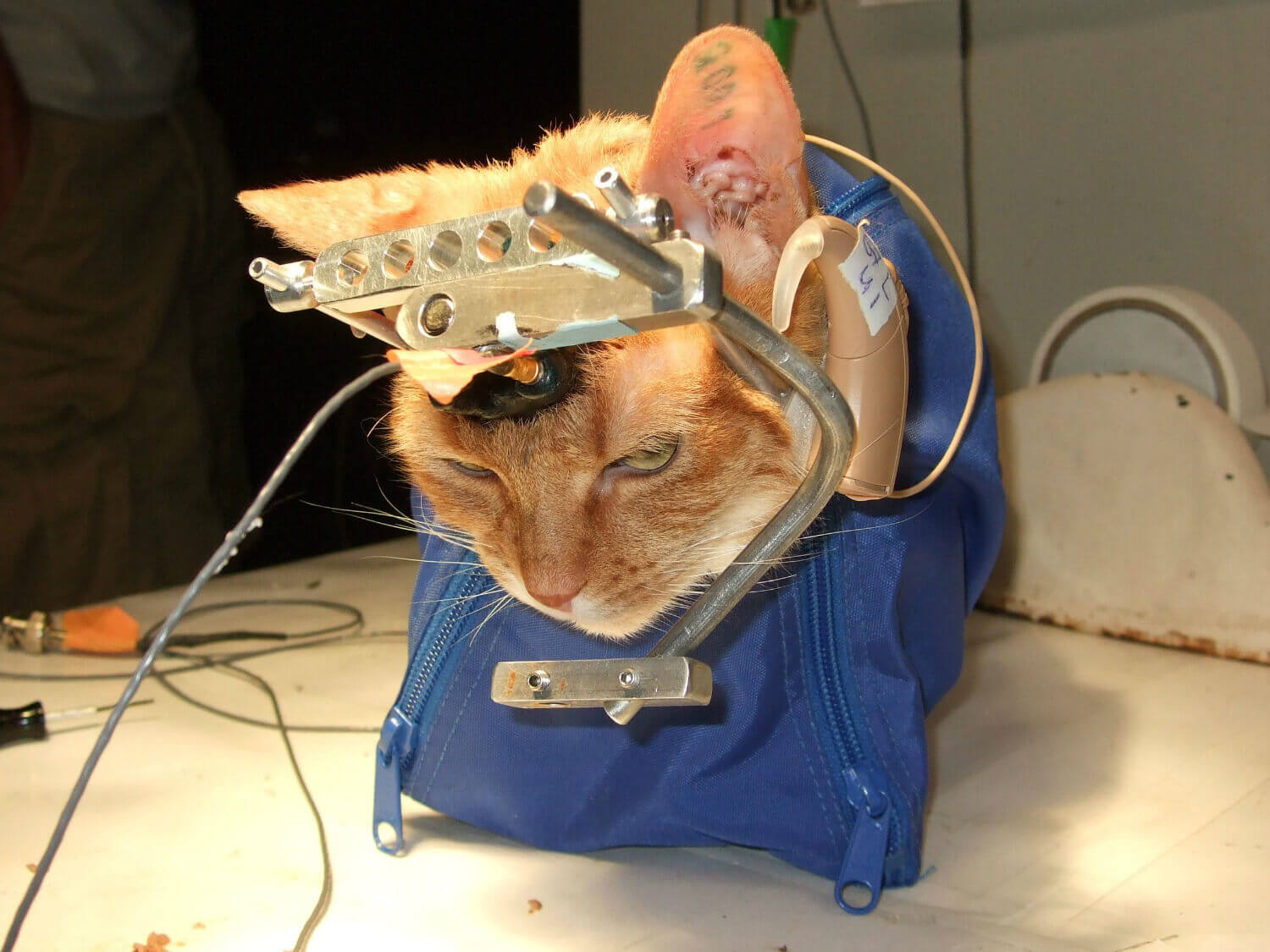
  • Donald C. Bolser (University of Florida) studies coughing. Among other horrors, he cuts open cats’ heads and puts dozens of electrodes in their brains, cuts open their backs to expose the spine in order to fix it to a device so that the cats can’t move, cuts open their chests to implant electrodes into the muscles involved in coughing, cuts open their throats to place electrodes in the muscles of the larynx, and puts chili pepper on their larynxes.
  • Elizabeth Buffalo (University of Washington’s Washington National Primate Research Center) destroys monkeys’ brains to cause memory loss and deprives them of food and water so that they’ll watch a computer screen for up to nine hours in exchange for a few drops of juice.
  • Shreesh Mysore (Johns Hopkins University) imprisons barn owls in a laboratory, cuts open their skulls, implants electrodes into their brains, restrains them in an “experimental rig” for up to 12 hours, clamps their eyes open, and bombards them with sounds and lights before killing and dissecting them.
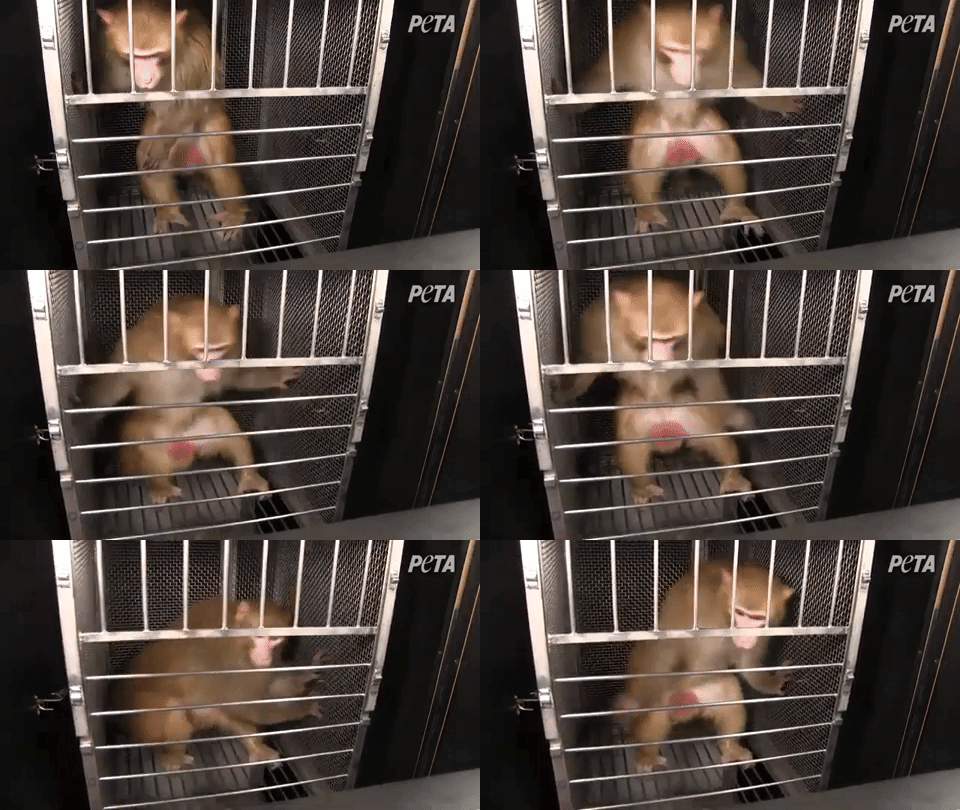
  • Elisabeth Murray (National Institutes of Health) is the evildoer behind “monkey fright” experiments, in which she inflicts permanent brain damage in monkeys and then confines them to darkened cages where they’re terrorized with realistic-looking rubber snakes and spiders.
  • Ned Kalin (University of Wisconsin’s Wisconsin National Primate Research Center) put his own spin on Murray’s experiments and terrorized monkeys with live snakes after burning or suctioning out part of their brains.
  • Michael Platt (University of Pennsylvania, formerly Duke University) implanted electrodes into monkeys’ brains, strapped them in a restraint chair for hours, and deprived them of water in order to force them to learn a computer game—all for a pointless study that supposedly reveals something about the human brain during decision-making. As if.
  • Barbara Shukitt-Hale (U.S. Department of Agriculture and Tufts University) fed rats and mice berries and mushrooms, made them cognitively impaired by irradiating them, forced them to swim and try to balance on rotating rods, and beheaded and dissected them.

“Not one of these twisted tormenters has advanced human health, yet they’ve wasted millions of taxpayer dollars and put animals through a living hell,” says PETA Senior Vice President Kathy Guillermo. “The empathy missing from these seven brains should alarm everyone, and PETA is committed to shutting down this junk science in 2021.”

Numerous published studies have shown that animal experimentation wastes resources and lives, as more than 90% of basic science research—most of which involves animal experimentation—fails to lead to treatments for humans. And 95% of new medications that are found to be effective in animals fail in human clinical trials.

PETA opposes speciesism, which is a human-supremacist worldview that fosters violence toward other animals. For more information, please visit PETA.org or follow the group on Twitter, Facebook, or Instagram or click here.

The post PETA Names Cruelest Animal Experimenters of 2020 appeared first on PETA.
PETA to Memorialize Hens Killed in Barn Blaze

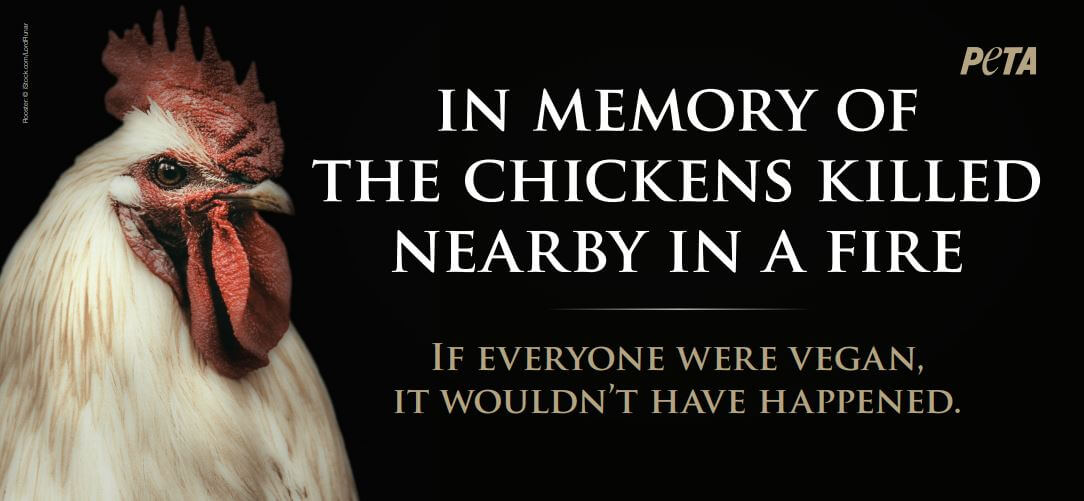
In memory of the approximately 250,000 chickens who died in fear and pain when a fire broke out at a local Cal-Maine Foods egg farm on December 15, PETA is placing a billboard nearby pointing out that if everyone were vegan, no birds would have suffered and died.

“These hens burned to death, and others’ throats are slit, all because people want to eat eggs,” says PETA President Ingrid Newkirk, who writes of the gentle nature, intelligence, and communication skills of chickens in her book Animalkind. “PETA is ready and willing to help anyone make the transition to eating delicious vegan food and by doing so, help stop cruelty to animals in barns and slaughterhouses.”

Egg production farms cram hundreds of millions of hens into wire-floored cages with less living space than a sheet of paper for up to two years. A recent PETA investigation into a massive egg producer revealed that many hens died after becoming trapped by a leg, a wing, or their head in the wire-mesh flooring of filthy cages. When hens’ bodies wear out and they’re no longer considered profitable, egg producers stuff them into metal boxes and crudely gas them with carbon dioxide, which is extremely painful, or send them to slaughterhouses, where workers cut their throats, often while they’re still conscious, and scald many to death in defeathering tanks.

PETA—whose motto reads, in part, that “animals are not ours to eat”—previously obtained eyewitness video footage of workers at a Cal-Maine Foods’ factory farm in Zephyrhills, Florida, dumping scores of chickens, some of whom were still alive, into a dump truck.

PETA opposes speciesism, which is the human-supremacist worldview that other species are nothing more than commodities. For more information, please visit PETA.org or follow the group on Twitter, Facebook, or Instagram.

The post PETA to Memorialize Hens Killed in Barn Blaze appeared first on PETA.

Video: The Wish of a Lonely ‘Backyard Dog’ for a Home Comes True for Christmas

As reported by People, a sweet dog named Bean spent the first three years of his life locked inside a small outdoor pen filled with trash, with a rotting doghouse as his only shelter until PETA replaced it. The only affection he received came from PETA’s fieldworkers, who visited him as much as they could, giving him water, food, companionship, and his first toy. But as a PETA video newly released today shows, everything changed when Bean’s owner finally agreed to let PETA find him a new home—and this year, for the first time, he’s celebrating Christmas indoors with a family who loves him.

A recent University of Leeds study shows that watching “cute” videos of animals can lower stress and anxiety!

“Bean’s first joyful Christmas is a reminder that the holidays aren’t about gifts under the tree but rather the difference that we can make for the most vulnerable among us,” says PETA Vice President Colleen O’Brien. “PETA hopes that this happy story will warm people’s hearts and inspire them to look out for neglected ‘backyard dogs’ during this tough winter and beyond.”

PETA—whose motto reads, in part, that “animals are not ours to abuse in any way” and which opposes speciesism, a human-supremacist worldview—notes that companion animals should always live indoors. “Backyard dogs” and “outdoor cats”—like those featured in Breaking the Chain, the new documentary produced by Oscar winner Anjelica Huston—often go without adequate food, water, shelter, and veterinary care, and they’re no better equipped to survive freezing temperatures than humans are.

More information about PETA’s work to help dogs and cats is available here, and more photos of Bean are available on PETA’s blog.

The post Video: The Wish of a Lonely ‘Backyard Dog’ for a Home Comes True for Christmas appeared first on PETA.

PETA Names the Cruelest Animal Experimenters of 2020

Each year, millions of animals are subjected to the unrelenting cruelty of vivisection—experiments on living animals. Instead of groundbreaking or useful data, this practice has yielded unfathomable suffering, a mountainous pile of dead bodies, a huge waste of our tax dollars, and articles that no medical professional worth their salt would refer to.

animal experiments at universities

So these experiments do nothing to advance our knowledge or our health. And even if animal experiments did help humans, they still shouldn’t be conducted. There is no moral justification for tormenting and killing sentient beings. As 2020 comes to a close, PETA is dragging the perpetrators of the most appalling displays of speciesism out of the shadows and into the spotlight where they belong.

Here are the seven cruelest animal experimenters of the year:

Donald C. Bolser (University of Florida)

Bolser studies coughing. On his long list of horrific acts of violence toward animals are cutting open cats’ heads and putting dozens of electrodes in their brains, cutting open their backs to expose the spine and fixing it to a device to immobilize them, cutting open their chests to implant electrodes into the muscles involved in coughing, cutting open their throats to place electrodes in the muscles of the vocal cord, and putting chili pepper on it. After these experiments, all the cats are killed.

Elizabeth Buffalo (University of Washington’s Washington National Primate Research Center)

Buffalo opens up the skulls of monkeys, attaches a metal head apparatus to them, destroys part of their brains to cause memory loss, and then deprives them of water so that they’ll be thirsty enough watch a computer screen for up to nine hours per day in exchange for a few drops of juice.

Experiments on animals are largely curiosity-driven, meaning that they don’t aim to advance human health. Others performed under the guise of human benefit exploit animals housed in unnatural, stressful conditions, and the results can’t be accurately extrapolated to human physiology—in fact, many of the diseases “studied” in this way don’t even occur naturally in those species.

Shreesh Mysore (Johns Hopkins University)

Mysore keeps barn owls caged in small plastic boxes. He cuts into their skulls, implants electrodes into their heads, cements a stainless steel bolt to the base of their skulls in order to restrict their head movement, and restrains the fully conscious birds in plastic tubes or tight jackets for up to 12 hours at a time. He clamps their eyes open and bombards them with bursts of noise and light while poking around at neurons in the conscious animals’ brains. He mutilates their brain tissue so severely by moving the electrodes around that the owls become “unusable” to him—at which point he kills them.

This owl is one of many imprisoned in Shreesh Mysore’s laboratory, where he cuts into their skulls and screws metal devices onto their heads in curiosity-driven experiments that are irrelevant to human health.

Elisabeth Murray (National Institutes of Health)

Murray is the evildoer behind “monkey fright” experiments, in which she cuts open monkeys’ heads, suctions out or burns parts of their brains to inflict permanent brain damage, and then confines them to darkened cages where they’re terrorized with realistic-looking rubber snakes and spiders. When she’s finished tormenting them, she kills them.

Elizabeth murray is the worst

Ned Kalin (University of Wisconsin’s Wisconsin National Primate Research Center)

Kalin put his own spin on Murray’s experiments and terrorizes monkeys with live snakes after burning or suctioning out part of their brains.

Michael Platt (University of Pennsylvania, formerly Duke University)

Platt implanted electrodes into monkeys’ brains, strapped them in a restraint chair for hours, and deprived them of water in order to force them to learn a computer game—all for a pointless study that would supposedly reveal something about the human brain during decision-making. If he really wanted to learn about human decision-making, he’d monitor human volunteers making decisions. He has a history of hideous experiments. While at Duke University, he purposely kept 10 macaque monkeys thirsty–—likely for days—in order to force them to cooperate in an experiment on sex and power in advertising. (Yes, you read that correctly.)

Barbara Shukitt-Hale (U.S. Department of Agriculture and Tufts University)

Shukitt-Hale harms animals to try to make dubious human health claims about fruit and vegetables. In one experiment, she fed rats blueberries, restrained them in plastic tubes, irradiated them to cause brain damage, forced them to perform confusing and stress-inducing memory tasks, and then killed them by cutting off their heads. In another experiment, she fed rats mushrooms and then forced them to perform stressful motor and cognitive tests, such as walking on balance beams and rotating rods and swimming through a water maze. Fourteen of them died or had to be killed early because of excessive weight loss.

*****

Not one of these twisted tormenters has advanced human health, yet they’ve managed to waste millions of taxpayer dollars putting animals through a living hell. Imagine how far we could’ve come by now if we’d used the past few decades and the billions of dollars spent on all animal tests investing in real science. Numerous published studies have shown that animal experimentation wastes resources and lives, as more than 90% of basic science research—most of which involves animal experimentation—fails to lead to treatments for humans. And 95% of new medications that are found to be effective in animals fail in human clinical trials.

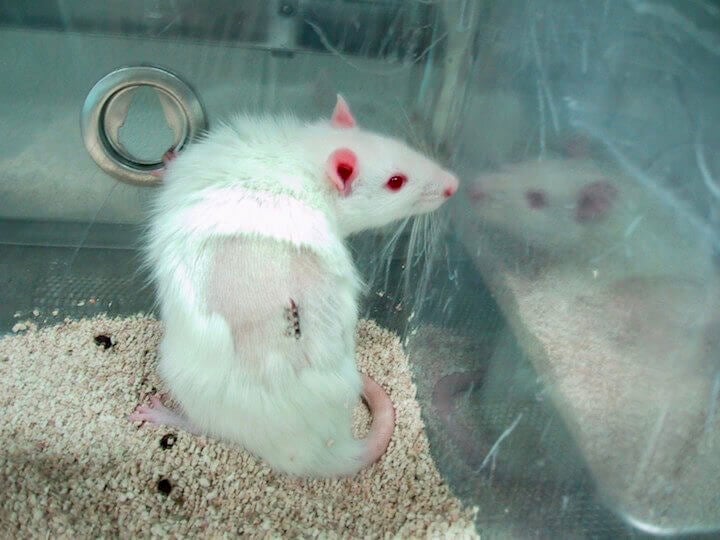
A sad white rat who has an incision on his or her back, sitting in a laboratory cage

Animal experimenters purposely and deliberately hurt sentient beings who scream, cry, convulse, and writhe. They sacrifice the animals’ freedom, joy, relationships, and lives, apparently without a second thought, all for the chance to publish a paper in a medical or scientific journal that won’t help anyone.

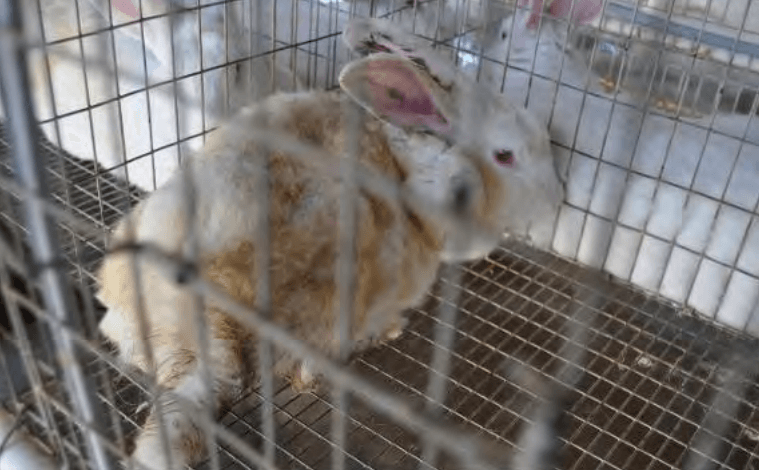
Animals Used on Antibody Farms

If these experimenters took into account animals’ ability to suffer and desire to live, the sadistic nature of their profession would become apparent to them—but instead, they’re blinded by speciesism. If you care about animals, please use your human privilege to speak up for those suffering in laboratories:

Take Rapid Action to End Animal Experiments

The post PETA Names the Cruelest Animal Experimenters of 2020 appeared first on PETA.

Victory! After Hearing From PETA, Karl Lagerfeld Bans Exotic Skins

Victory! PETA has pride in our runway stride, because Karl Lagerfeld is leaving exotic skins behind. After we contacted the luxury brand, urging it to stop supporting the exotic-skins industry—in which hunters nail snakes to trees and cut them open, workers electrically stun ostriches and slit their throats, and metal rods are jammed down crocodiles’ spines—it confirmed that it has banned the use of all exotic skins.

PETA persuaded Karl Lagerfeld to join Chanel as a major luxury brand that doesn’t sell exotic skins by sharing some of our investigations—which revealed that workers crowd reptiles into filthy concrete pits before slaughtering them—and reminding the brand that the exotic-skins industry increases the risk of future pandemics. There is nothing trendy about snakes writhing in pain for days before dying after hunters tear their skin off or workers beating ostriches and violently tearing their feathers out.

After learning that “wet markets” keep animals confined in unsanitary conditions that provide the ideal breeding grounds for viruses like the one that caused the COVID-19 pandemic, Karl Lagerfeld’s decision to stop supporting the exotic-skins industry is both ethical and responsible.

While snakes are solitary, shy animals who prefer to be left alone, crocodiles are social and use different vocal sounds to communicate with one another. The fascinating animals exploited by the fashion industry have unique qualities—and no matter where the skins come from, animals are not ours to wear.

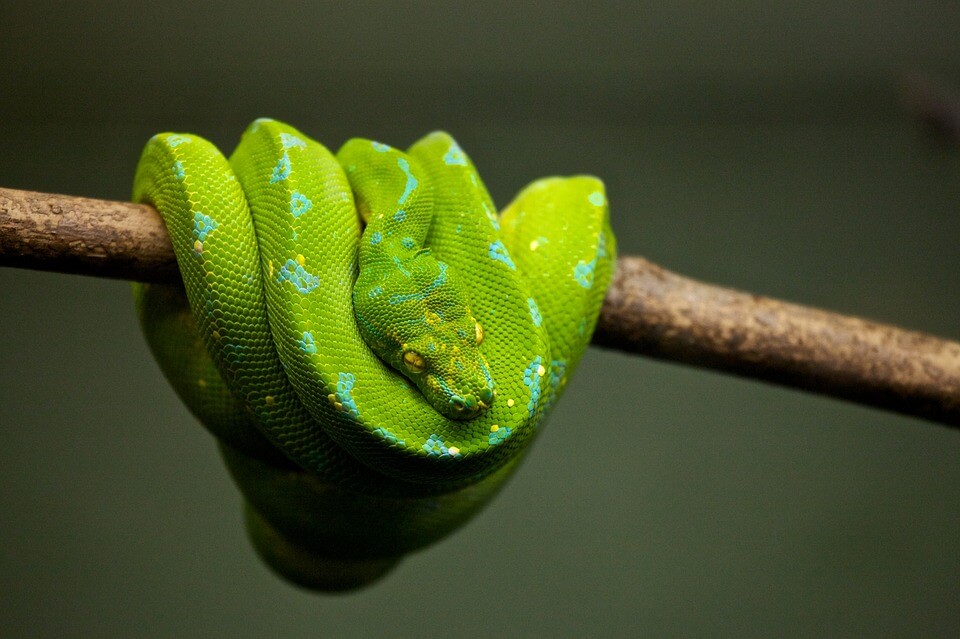
Snake Facts

With all the vegan materials out there to create luxurious, stylish pieces, there’s no reason to continue using exotic skins or other animal-derived materials for clothing, accessories, or other products. With the ban on exotic skins, Karl Lagerfeld joins the ranks of Topshop, H&M, and adidas, but there is still work to do. If you want to help save animals in the exotic-skins industry, urge Louis Vuitton to follow suit by kicking products that involve cruelty to animals to the curb.

Urge LVMH To Shed Exotic Skins From Louis Vuitton And All Its Other Brands

The post Victory! After Hearing From PETA, Karl Lagerfeld Bans Exotic Skins appeared first on PETA.