Bryant Terry’s Recipe for Food Justice

Bryant Terry believes that healthy food should be a right, not a privilege. The James Beard Award–winning vegan chef, educator, and cookbook author has made it his mission to help create an equitable and sustainable food system that treats everyone with dignity—humans and all other animals alike. He first became interested in the ethics of eating after hearing the hip-hop song “Beef,” which addresses cruelty to animals in the meat industry.

© Celeste Noche

Today, he’s encouraging historically marginalized communities to embrace the wholesome, plant-centric ways of eating favored by their ancestors, which were “replete with nutrient-dense dark leafy green vegetables, protein-rich legumes, vitamin-packed fruit, and the like.” In 2013, Bryant teamed up with PETA to promote animal-friendly eating in the Big Easy by serving as a judge at the Tremé Creole Gumbo Festival’s first-ever vegan gumbo cook-off. And through his acclaimed cookbooks—including Vegan Soul Kitchen, Afro-Vegan, and his latest, Vegetable Kingdom—he helps readers rethink vegan cooking with creative dishes centered on fresh ingredients and vibrant spices. The recipes below are adapted from ones in Vegetable Kingdom:

Caramelized Leek and Seared Mushroom Toast

© Ed Anderson 2020

Cornmeal-Fried Oyster Mushroom Po’Boy

bryant terry oyster mushroom po boy© Ed Anderson 2020

Spinach Salad with Blackened Chickpeas

bryant terry blackened chickpea salad© Ed Anderson 2020


Order Your Copy of Vegetable Kingdom Now

Bryant Terry photo: © Celeste Noche | Recipe photos: © Ed Anderson 2020 | Reprinted by permission of Vegetable Kingdom: The Abundant World of Vegan Recipes by Bryant Terry, © 2020, published by Ten Speed Press, an imprint of Penguin Random House

PETA is a participant in the Amazon Services LLC Associates Program, an affiliate advertising program designed to provide websites with a means to earn advertising fees by advertising and linking to Amazon.com.

The post Bryant Terry’s Recipe for Food Justice appeared first on PETA.

Are You ‘Kitten’ Me? Tiny Cat Almost Kicked Out on the Street

With her lavender-tinged fur and wide-eyed, deceptively innocent-looking gaze, Kiki bears an uncanny resemblance to the adorably precocious kitten of the same name in T.O.T.S., the candy-colored cartoon favorite of the preschool set. And like her animated counterpart, she’s cute, cuddly, curious, and a long way from home.

PETA-rescued kitten lying on wood floor

Kiki may not have a penguin navigator or a flamingo pilot, but she does have her own Tiny Ones Transport Service in the form PETA’s intrepid team of fieldworkers, who swooped in to rescue her when she found herself in danger of landing in the streets.

Kiki relaxes on a windowsill

Kiki’s innate curiosity came in handy when it led her to the home of an elderly woman in rural North Carolina, who took pity on the spunky stray and brought her indoors. But what initially looked like a Disney ending headed south when the woman’s husband became seriously ill. Kiki’s savior quickly found herself overwhelmed with being a full-time caregiver while simultaneously trying to keep up with an energetic kitten.

Kiki snuggled up in pillows

At the end of her rope, the woman reluctantly considered simply turning Kiki loose outside, but deep down, she knew this would be a death sentence for the helpless little cat and dreaded finding her tiny broken body on the busy road near her house. Fortunately, she discussed her predicament with a compassionate friend, who wisely turned to PETA for help.

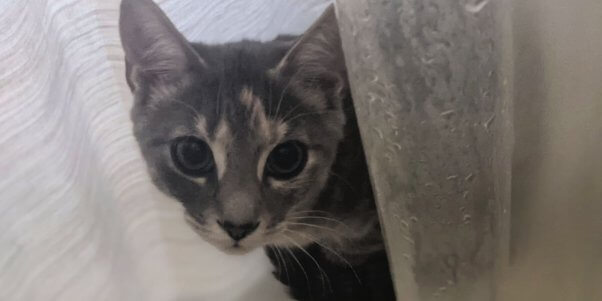
Pretty kitten rescued by PETA peeking from behind curtain

Kiki is now comfortably cooling her white-tipped heels in a PETA foster home, where she’s making friends with dogs, cats, and humans of all shapes and sizes. But as they say in the impossible-to-unhear T.O.T.S. theme song, it’s time to “bring this baby home.”

Are you cuckoo for Kiki? E-mail Adopt@peta.org to learn more about bringing her home to roost at your house.

Get to Know Kiki and Other Adoptable Animals

The post Are You ‘Kitten’ Me? Tiny Cat Almost Kicked Out on the Street appeared first on PETA.

10 Iditarod Mushers Who Have Skeletons in Their Closets

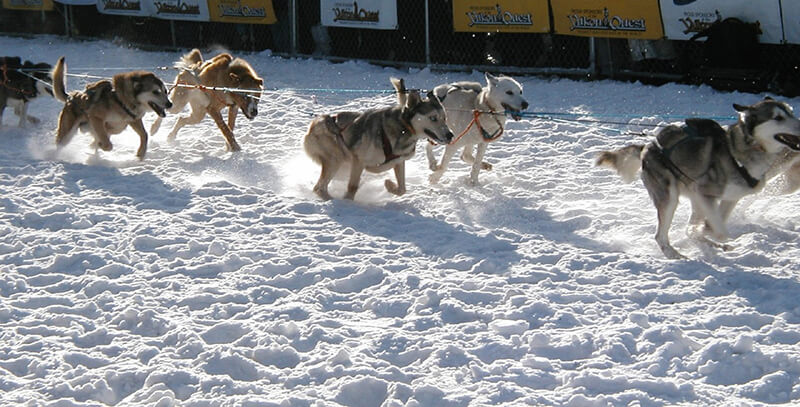
Strip away the hype, and it’s easy to see that the abuse inflicted on dogs in the Iditarod is criminally cruel: 150 dogs have died as a result of being forced to run about 100 miles a day through blinding snowstorms, treacherous terrain, and harsh winds for 10 days straight.sled dogs running in snow


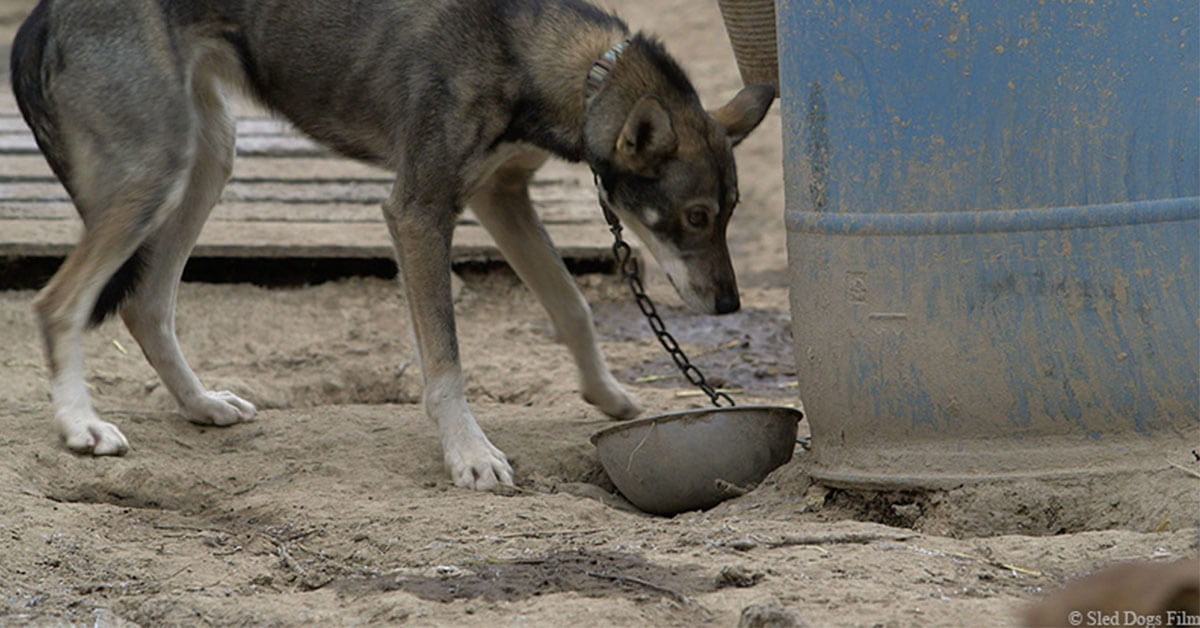
Countless others suffer and die off the trail: A PETA eyewitness investigation of kennels owned by Iditarod winners revealed that many dogs were so thin their bones were showing. One was limping from chronic arthritis. Mushers–or dogsled drivers–routinely fed them moldy meat and denied them water during training.

A study conducted by Northeastern University and the Massachusetts SPCA found that people who abuse animals are five times more likely to commit violent crimes against humans–so it’s no surprise that many Iditarod mushers also have a criminal history of aggression aside from what they do to dogs on these grueling trails. After all, if mushers are capable of killing dogs when they are no longer “useful” to the industry, it begs the question: What other atrocities are they capable of? Well, PETA knows that these 10 Iditarod mushers have criminal histories–and it’s time we call them out.

Long Records of Abusing, Neglecting, or Killing Animals

John T. Hessert

After racing in the 2005 Iditarod, John Hessert was charged with felony aggravated cruelty to animals and 33 counts of cruelty to animals after abandoning 33 huskies who suffered from frostbite, malnutrition, cracked feet, and infection. A veterinarian found that the dogs were “well below normal health” and underfed–one of the dogs had a collar embedded in their neck.

Frank Winkler

After musher Frank Winkler raced in the 1989 and 1990 Iditarod, he allegedly bludgeoned puppies with the blunt end of an ax. He was charged with 14 counts of cruelty to animals after an animal control officer found a crate of dead and dying puppies in his truck. According to him, he shot some of the dogs at the suggestion of other mushers–which isn’t surprising to PETA, as other whistleblowers have alleged that killing unwanted puppies is an industry standard.

Jerry Riley

After 1976 Iditarod winner Jerry Riley hit and killed a dog with a steel snow hook (a large, sharp metal claw) during the race, the musher was supposedly banned “for life.” Just ten years later, he was allowed back in the race.

Jeff King

Long-time musher Jeff King won Iditarod’s “Humanitarian Award”—clearly a meaningless title. King was found guilty of illegally killing a moose at Denali National Park and Preserve, which did not affect him from participating in the subsequent Iditarod races. In 2016, a snowmobile crash killed one dog and injured at least two others under King’s care.

From Rape to Domestic Violence – Some Mushers Allegedly Turned Their Aggression Toward Humans

Carmen Perzechino

A Kenai jury recently found former Iditarod musher Carmen Perzechino guilty of kidnapping and rape. The attack happened in 2001– three years before the criminal raced the Iditarod.

Jeffery K. Holt

A jury charged and sentenced Jeffrey K. Holt to 20 years in jail for sexually assaulting a “friend.” The convicted rapist raced in the Iditarod three times in 2005, 2007, and 2009.

Travis Beals

Beals raced in the Iditarod almost consecutively from 2013 to 2020–save for the 2017 race, in which was banned for his charges of domestic violence. The Iditarod Trail Committee Board allowed him to run in all subsequent years since (including in 2021), and he’s even gone on to make over $120,000 during these races.

Jerry Sousa

Sousa, who raced in the Iditarod for 11 consecutive years from 2002-2013 (and again in 2015), was charged with assault in an incident involving Alaska State Troopers. Sousa fired a gun while driving a four-wheeler on their land. The troopers met Sousa at his cabin’s front door, where he was naked and holding a revolver.

Rohn Buser

The son of one of the men on PETA’s “worst Iditarod mushers” list, Rohn Buser took police on a car chase that ended in an hour-long stand-off. Even after this, he was a musher in the 2012 and 2015 Iditarod races.

Driving Under the Influence and Racing on Meth

Lance Mackey

Police arrested Lance Mackey (winner of the Iditarod’s “Most Inspirational Musher” in 2002) for driving under the influence. The Iditarod didn’t let this–or the fact that he ran two young dogs to death in the 2015 race–stop the musher from continuing to race. In 2020, the Iditarod disqualified Mackey after he tested positive for meth while on the course.

YOU Can Help Protect Dogs From the Iditarod’s Systemic Abuse–Take Action Now!

The Iditarod could take a stand against these criminal offenses by banning convicted mushers from racing, but instead it celebrates, pays, and enables them. And it does the same thing when it winks at mushers’ systemic abuse of dogs who don’t want to run thousands of miles in subzero temperatures. It’s up to each of us to take an ethical stand by speaking out against the Iditarod, and hitting it where it hurts—by telling companies like ExxonMobil to stop sponsoring the Iditarod race.

The post 10 Iditarod Mushers Who Have Skeletons in Their Closets appeared first on PETA.

PETA, Scientists Take Aim at TBS’s ‘Go-Big Show’

This morning, PETA fired off a letter—cosigned by a PETA Foundation captive wildlife veterinarian and a group of New York University researchers—to TBS General Manager Brett Weitz urging the network not to air the alligator and snake acts advertised to appear in upcoming episodes of its new “extreme” talent competition, Go-Big Show.

PETA points to the researchers’ findings of systemic welfare harm for alligators used for alligator wrestling performances. The researchers conclude that “alligator wrestling … furthers traditional notions of dominion that undermine welfare and conservation aims.”

“If Go-Big Show airs these reptile acts, it will legitimize the harassment of wildlife and may even encourage viewers to buy or torment wildlife themselves,” says PETA Foundation Captive Wildlife Veterinarian Dr. Monica Bando. “The welfare of reptiles has long been overlooked, and PETA is urging TBS to stop providing a platform that perpetuates wildlife exploitation and abuse.”

PETA—whose motto reads, in part, that “animals are not ours to use for entertainment”—opposes speciesism, which is a human-supremacist worldview. For more information, please visit PETA.org or follow the group on Twitter, Facebook, or Instagram.

PETA’s letter to Weitz follows.

January 13, 2021

Dear Mr. Weitz:

We, as a representative of PETA and scientists, urge you not to air upcoming scenes of stressed, taunted animals on Go-Big Show. Promotional videos for the series show a visibly distressed alligator and live snakes crammed into a contestant’s mouth. The use of reptiles or any animal in this manner undermines efforts to improve their welfare and conservation.

Forced handling and restraint of alligators and snakes is the epitome of a stressful and uncontrollable event that these animals cannot escape. Crocodilians have refused food for days to months after events in which they were handled. The use of ropes to restrain alligators often results in significant and prolonged thrashing, risking physical injury and even lethal levels of stress. In addition, a recent study (Riordan, Jacquet, and Franks, 2020), concluded that “alligator wrestling attractions may be causing systemic welfare harms to the alligators involved with few, if any, environmental conservation payoffs.”

Reptiles have unique and complex physical, behavioral, social, and mental adaptations that enable them to thrive in their natural habitats, in which they choose where to roam, when to bask in the sun, and how to communicate with other members of their species. Growing scientific evidence has documented play behavior in alligators and the cognitive abilities of reptiles, including their capacity to learn and remember.

In the midst of a pandemic stemming from wildlife exploitation, there is increasing awareness of the need to protect reptiles and other wildlife. We are all re-examining how we can be more empathetic, and the entertainment industry is in a pivotal position to promote greater compassion and consideration for all animals by refusing to exploit them for entertainment.

Please assure us that harmful activities involving animals will not appear on Go-Big Show now or in the future.

Sincerely,

Monica K.H. Bando, M.S., B.V.Sc., Ph.D.

Captive Wildlife Veterinarian

PETA Foundation

Casey Riordan

M.A. Animal Studies

New York University

Jennifer Jacquet, M.S., Ph.D.

Associate Professor of Environmental Studies

New York University

Becca Franks, Ph.D.

Research Scientist of Environmental Studies

New York University

The post PETA, Scientists Take Aim at TBS’s ‘Go-Big Show’ appeared first on PETA.

PETA Exposes Misery and Waste, Demands Closure of National Primate Research Centers

Today, PETA released video footage obtained from four of the seven federally funded national primate research centers (NPRCs)—in Oregon, Texas, Washington, and Wisconsin—showing highly social monkeys in solitary confinement inside cages barely larger than their bodies, where they spin in circles, pull out their own hair, bite themselves, and engage in other behavior indicative of distress and trauma.

The NPRCs were begun in the 1960s with the aim of providing vaccines and cures for human diseases, but no marketable vaccines from the use of monkeys have resulted. Hundreds of millions of taxpayer dollars are poured into these facilities every year to fund experiments such as total-body irradiation, studies on junk food, maternal infant deprivation, and single-neuron tracking, which involves cutting into monkeys and inserting electrodes into their brains as they are bolted in place and forced to watch a computer screen for hours a day.

The NPRCs have racked up hundreds of violations of animal protection laws. Monkeys have died from starvation, dehydration, strangulation, choking on their own vomit, scalding in a high-temperature cage washer, and veterinary error. The Washington NPRC at the University of Washington is currently under investigation by the U.S. Department of Agriculture for escapes of monkeys and conflicts of interest on its experimentation oversight committee.

“These laboratories have produced 60 years of monkeys’ misery and not one marketable vaccine or cure for deadly human diseases,” says PETA Senior Scientific Adviser for Primate Experimentation Dr. Lisa Jones-Engel. “PETA is calling for these failed experiments to end, these centers to shut down, and these monkeys to be sent to sanctuaries where their loneliness and pain could be treated and their exploitation could finally end.”

In 2015, Harvard University’s New England NPRC, facing multiple animal welfare violations, examined the future of research and closed down. NPRCs remain at the University of Washington, the University of Wisconsin, Oregon Health & Science University, Emory University, Tulane University, the University of California–Davis, and Texas Biomedical Research Institute.

PETA—whose motto reads, in part, that “animals are not ours to experiment on”—opposes speciesism, which is a human-supremacist worldview. For more information, please visit PETA.org or follow the group on Twitter, Facebook, or Instagram.

The post PETA Exposes Misery and Waste, Demands Closure of National Primate Research Centers appeared first on PETA.