Smell something burning? That’s because PETA is catching companies that use animals for experiments, food, fashion, and entertainment with their pants on fire. They deceive consumers with false marketing known as “humane washing” (such as using labels like “humane,” “ethical,” and “responsible” while doing virtually nothing for animal welfare). Given the growing demand for ethical and sustainable business practices, countless companies are trying to save face—but they made their bed, and PETA is going to make them lie in it. These 10 companies are receiving our “Liar, Liar, Pants on Fire” Award for their misleading claims about animal suffering:
Eli Lilly
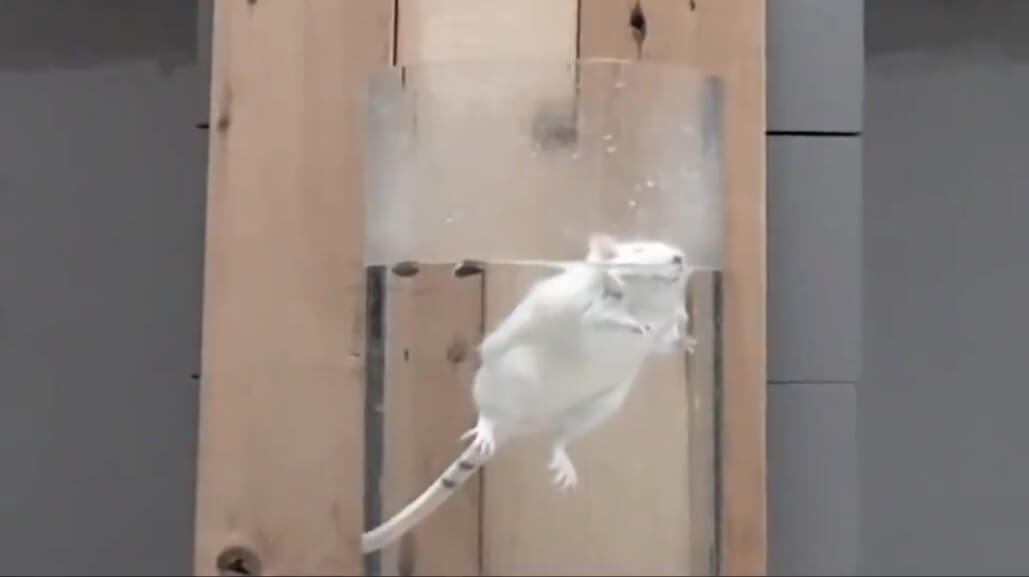
Even after Eli Lilly came under fire from PETA for refusing to ban the forced swim test—in which experimenters generally dose small animals with a test substance, drop them into inescapable water-filled beakers, and watch them frantically paddle to avoid drowning—the pharma giant still hasn’t officially prohibited it. Instead, the company glosses over the cruelty that it has subjected at least 3,400 curious, intelligent mice and rats to in tests that did not reliably predict the success of a single medication in humans. Eli Lilly is misleading the public with statements that it hasn’t used the test “for some time.” In fact, the company published papers saying that it performed the forced-swim test on mice—who are family-oriented and develop emotional attachments to one another—as recently as March 2019.
Tell Eli Lilly to ban the forced swim test
Nellie’s Free Range Eggs
PETA caught Nellie’s Free Range Eggs with its pants on fire for duping consumers into believing its “happy hens” nonsense. When the company says that its hens are “free-range,” it means that they’re not caged—but PETA eyewitness footage of a farm that supplies eggs to Nellie’s shows around 20,000 hens crowded into a single shed. The company cuts off the sensitive tips of hens’ beaks in order to prevent cannibalism in this stressful environment. Instead of having ample space to roam, bask in the sun, take dust baths, and develop a pecking order (which is a crucial part of their social lives), these birds only have a narrow strip of dirt—not much of a “range” if you ask us.
Canada Goose
Canada Goose is taking home an award this year for humane washing its coats while continuing to support the slaughter of coyotes and birds for fur and down. Coyotes can languish in traps indefinitely from broken bones and bleeding wounds before hunters kill them for their fur. If trappers don’t bludgeon, shoot, or kill them in some other horrific way, they can also die from blood loss, shock, dehydration, frostbite, gangrene, and attacks by predators. At slaughterhouses everywhere, it’s standard practice to hang ducks and geese exploited for their feathers upside down, run them through electrified water, and slit their throats. Canada Goose attempts to convince caring consumers that they’re buying compassionately produced goods, but no matter what a supplier’s standards are, no animal wants to be killed for their skin. Coyotes are loyal and remain with their partners for life—just like us, they also grieve when a member of their pack dies.
Urge canada goose to ditch all fur and down
Oswald’s Bear Ranch
Oswald’s Bear Ranch calls itself a “rescue refuge,” but a true sanctuary would never profit off photo ops with the animals it claims to rehabilitate. The roadside zoo may profess its mission to “protect” and “educate,” but the numbers do not lie: 59 bears have apparently died on Oswald’s watch. The ranch slaughtered at least six of those animals, and many others died of unknown or undisclosed causes.
Urge Oswald’s to send bears to reputable sanctuaries
Madewell
Madewell should be called Madecruel as long as it continues to sell cashmere, wool, and leather. In its animal welfare policy, the company claims to be “committed to ethical sourcing, including responsible and humane animal welfare practices in the supply chain.” There is nothing humane about the cashmere industry that the company continues to support, in which workers hold down goats and tear their hair out with sharp metal combs, causing them to scream and struggle—as a PETA Asia exposé of the world’s top cashmere exporters (China and Mongolia) revealed. The company also claims that it sources wool from “humanely raised and treated sheep,” but multiple investigations by PETA and our affiliates into 117 different sheep operations all over the globe show that workers abuse, mutilate, and castrate sheep.
PETA made it clear to the brand that there is no such thing as cruelty-free animal-derived materials, because no matter how the fashion industry steals their wool, goats and sheep have lives of their own and don’t want to be exploited for fashion. Goats have complex communication, and know how each another feel. They even recognize the distinct voices of members of their herd.
Tell Madewell to cut out cruel cashmere
Organic Valley
Organic Valley tries to fool consumers into believing that the cows it exploits for milk are “allowed to express their natural behavior,” but it can’t fool PETA. Cows cannot possibly express their natural behavior in an industry that repeatedly and forcibly impregnates them, takes away their babies, and eventually sends them to slaughter when they’re no longer profitable. The bond between cows and their calves is so important that when dairy farmers separate them, mothers will often continue to call and search for their babies long afterward. Cows’ natural behavior is to nourish their own young—not spend their lives producing milk for human consumption. By continuing to sell cow’s milk, Organic Valley is sending a clear message that it puts profits over animals’ lives and the environment.
Zoo Med Laboratories, Inc.
Zoo Med Laboratories—which supplies reptile products to PetSmart, Petco, Walmart, and other retailers—cons its customers into confining snakes to cramped, barren tanks. According to herpetologists, snakes need enclosures that allow them to stretch out, burrow, and move around freely—yet Zoo Med won’t stop blowing smoke. In order to market and sell its inadequate snake enclosures, the company disingenuously convinces customers that snakes can live in a tank as small as half the length of their body.
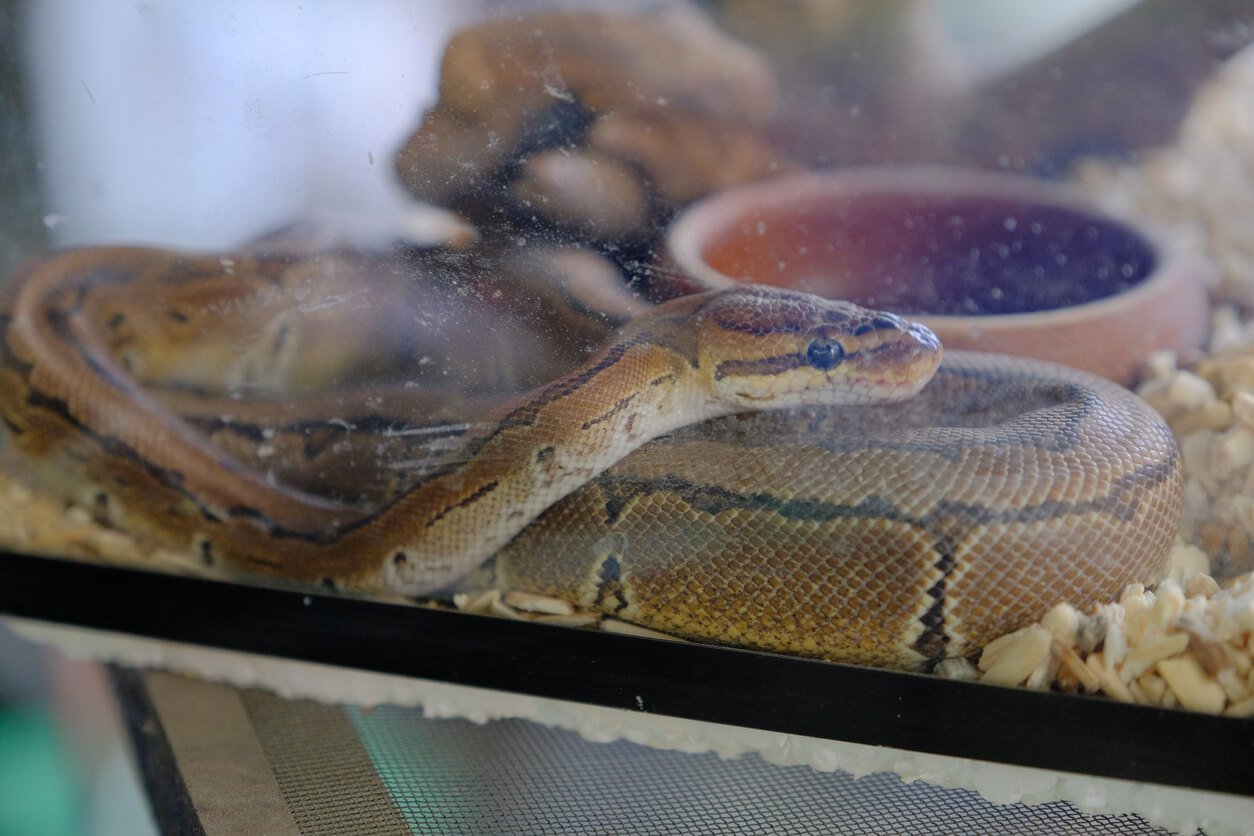 © iStock.com/Natt Boonyatecha
Zoo Med gives the public the false impression that caring for a snake is easy, but the solitary animals require specific lighting, temperatures, diets, and humidity levels that are difficult to maintain. One study even shows that 75% of reptiles who are kept as “pets” die within one year in the home.
Take Action Against reptile product suppliers like zoo med
Everlane
Everlane pretends to be concerned with “ethical practices throughout the alpaca fiber sourcing process,” all while ignoring what PETA’s investigation into the world’s largest privately owned alpaca farm uncovered: workers yanking alpacas by their tails, forcefully restraining them, and hastily shearing them with clippers (causing many to suffer from gaping wounds). As long as Everlane continues to sell alpaca, its “support” for animal well-being and sustainability is nothing more than humane washing (and greenwashing, because according to the Higg Materials Sustainability Index, alpaca wool is the second most environmentally damaging material). Alpacas are intelligent and fashion special “rules” within their herd, such as designating a bathroom area as a way to control parasites.
Aside from alpaca wool being unethical, the Higg Materials Sustainability Index ranked alpaca wool as the second most environmentally damaging material after silk.
— PETA (@peta) July 2, 2020
Clover Sonoma
Clover Sonoma says that it “loves” cows and treats them with “kindness and respect.” However, when you love someone, you don’t exploit them for profit and discard them when they’re no longer “useful,” which is standard on dairy farms. If Clover really respected cows, it wouldn’t ignore their individual interests, like fostering friendships and establishing unique social hierarchies. On crowded dairy farms, cows can’t choose leaders or form cliques as they would naturally. The company also insists that it cares about the environment, but no feeble sustainability initiatives can make up for the dairy industry’s massive water and waste footprints.
Allbirds
Allbirds knows that if consumers saw workers engaging in the standard farm practices of beating and mangling sheep for wool, they wouldn’t want anything to do with the cruelly obtained material. Instead of refusing to sell wool, the shoe company makes baseless claims that the sheep in its supply chain “live the good life.” Allbirds doesn’t just downplay wool suppliers’ cruelty to sheep, who build strong friendships and even stick up for one another in messy confrontations—it also minimizes wool’s water and land footprint by marketing it as “sustainable.”
*****
Before you support a company, remember: No animal wants to be used for experimentation, food, fashion, or entertainment. If a brand exploits animals in any way, it’s simply not “humane” or “ethical.” Don’t let these companies—or any others that support or engage in abuse—get away with their lies. Go vegan, and encourage others to do so as well.
The post PETA’s ‘Pants on Fire’ Awards—10 Companies That Deceive Consumers appeared first on PETA.