PETA Presses The American Heritage Dictionary to Drop Speciesist Definitions

This morning, PETA sent a letter to The American Heritage Dictionary requesting that the dictionary remove harmful definitions of pig (“a person regarded as being piglike, greedy, or disgusting”), snake (“a treacherous person”), and dog (“a person regarded as unattractive or uninteresting”), pointing out that lending credence to such inaccurate descriptions fuels speciesism, a human-supremacist attitude that slights, insults, and denigrates animals.

“Words matter, and The American Heritage Dictionary is in a position to relegate outdated language to the dustbin of history and help usher in a more respectful view of other species,” says PETA President Ingrid Newkirk. “PETA encourages everyone to reject mischaracterizations of animals and reflect upon their talents, communication abilities, social skills, and more. Saying, ‘as loyal as a goose,’ ‘as protective of their young as a pigeon,’ ‘as flexible as an octopus,’ and ‘as clever as a mouse,’ would be more apt and accurate.”

PETA’s motto reads, in part, that “animals are not ours to abuse in any way.” For more information, please visit PETA.org or follow the group on Twitter, Facebook, or Instagram.

PETA’s letter to The American Heritage Dictionary President John J. Lynch Jr. follows.

January 26, 2021

John J. Lynch Jr.

President, CEO, Director

Houghton Mifflin Harcourt

Dear Mr. Lynch,

I’m writing on behalf of People for the Ethical Treatment of Animals (PETA) and our more than 6.5 million members and supporters worldwide with an important request: We would like you to remove from The American Heritage Dictionary all animal-related slurs whose purpose is to debase human beings. Eliminating such language will help move us closer to a more respectful and empathetic world. This is perhaps a more pressing area of concern than most people realize. Please allow me to explain.

PETA has always urged people to stop using language that is meant to hurt others’ feelings and denigrate those who happen not to be human, in much the same way that we now understand how wrong it is to attribute undesirable traits, like miserliness or laziness, to certain nationalities or ethnicities. It was once acceptable for Carl Linnaeus, the “father of taxonomy,” to correlate skin color with disposition (listing Americans as “choleric,” Europeans as “sanguine,” Asians as “melancholic,” and Africans as “phlegmatic”). Looking back at this, we are rightly appalled. And assigning a negative meaning to an objective, neutral word for an animal, e.g., “pig” (“a person regarded as being piglike, greedy, or disgusting”), “snake” (“a treacherous person”), or “dog” (“a person regarded as unattractive or uninteresting”), among others, is also unacceptable.

Calling humans various animal names is meant to sting, yet pigs, for instance, are intelligent, lead complex social lives, and show empathy for other pigs in distress. They have rescued drowning humans and alerted their guardians to fires. Snakes are clever, have family relationships, and prefer to associate with their relatives rather than with strangers. If taken many miles away, they can find their way back home even if it takes two years. Dogs have personalities as varied and distinct as those of the humans who care for them. A dog living in a human home has been shown to understand, on average, some 400 words of human language simply from paying close attention. Yet humans don’t even try to understand their language.

As you know, language matters and is essential to reflecting our ever-evolving culture. Perpetuating the idea that animals are sly, dirty, heartless, and so on is improper and inaccurate, desensitizes the public, and paves the way for the normalization of cruelty to and violence against animals. I look forward to hearing that The American Heritage Dictionary will remove these harmful definitions and thereby encourage people to recognize that attributing ill character to these thinking, feeling animals who experience joy, suffering, love, and grief, just as we do, is unacceptable. Thank you for your consideration. I look forward to hearing from you.

Very truly yours,

Ingrid E. Newkirk

President

The post PETA Presses The American Heritage Dictionary to Drop Speciesist Definitions appeared first on PETA.

Meet the Women Scientists Who Can Make Meat out of Thin Air

Vegan eggs, complete with shells that crack open. Bloodless brisket. Protein created out of thin air. It’s not science fiction—it’s scientific innovation! And it’s being driven by women food-tech pioneers, whose vision and creativity are revolutionizing the way we eat.

Since PETA announced a $1 million prize in 2008 to the first laboratory to use chicken cells to create commercially viable clean meat, innovation has exploded worldwide. Clean meat—also known as lab-grown or cultured meat—is real meat that’s grown from cells instead of obtained by killing animals. It has the potential to spare millions of animals suffering and death.

Here are five women in food tech who are bringing meat without murder to the table. As their companies are still in development, we’re also sharing delicious options already on the market to help you go vegan today.

Air Protein’s Dr. Lisa Dyson

There are tons of vegan foods that pack a protein punch. But did you know that protein can also come from air? At Air Protein, Dr. Lisa Dyson is doing the seemingly impossible: making a product appear out of thin air.

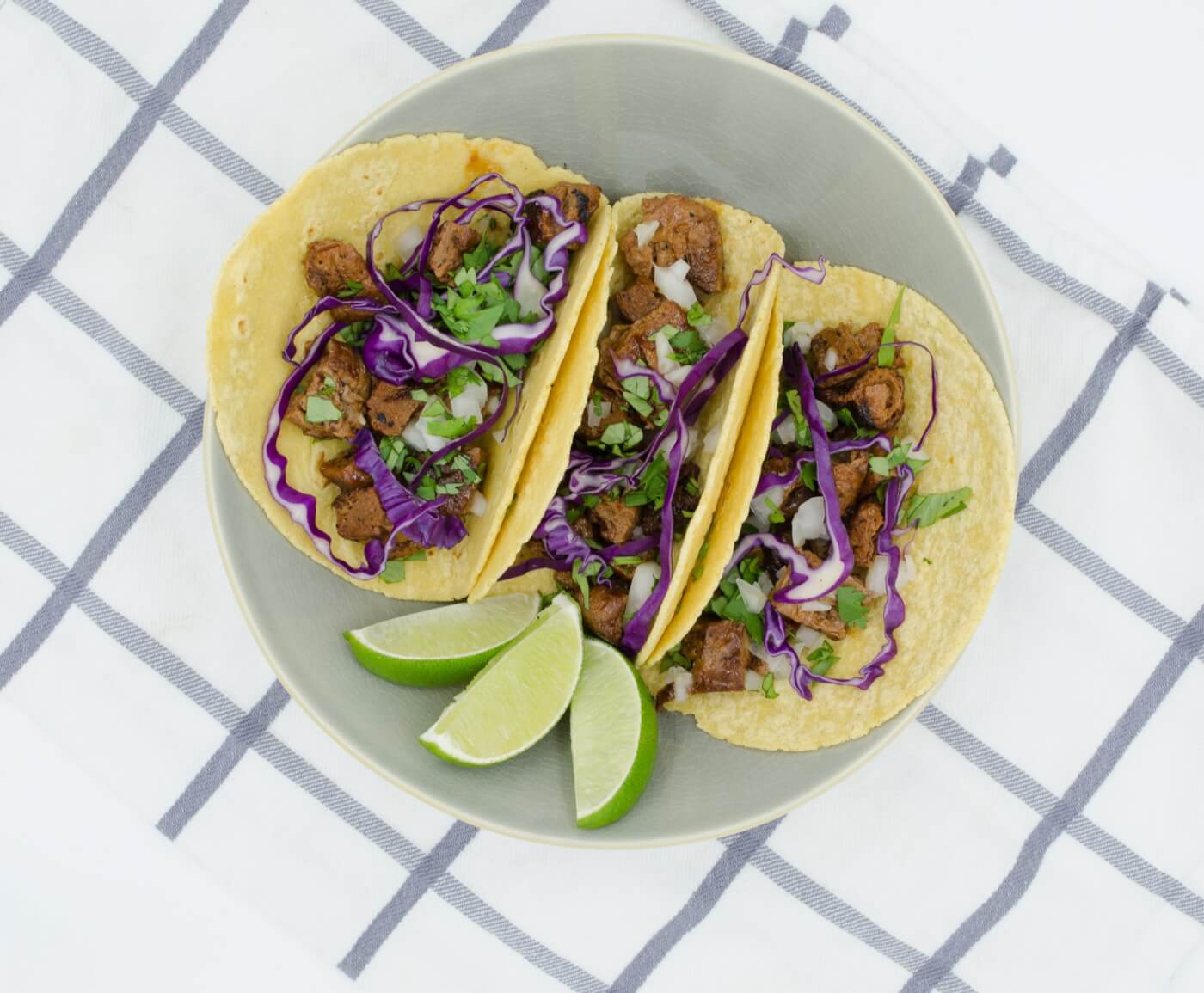
Plant-based meat in a taco from Air Protein

Tacos made with Air Protein meat are on the menu.

Taking inspiration from NASA scientists who tried to grow food on the moon, the team uses common elements like carbon dioxide as a starting point. They then ferment these elements in a probiotic process similar to that used in making yogurt. The final product is a complete protein rich in vitamins, minerals, and amino acids.

This “Air Protein flour” requires over a million times less land than the beef industry does—and less water, too. But the best part? No cows have to endure a terrifying one-way trip to the slaughterhouse for it. The company is 100% animal-free and 100% remarkable.

Vegan Burgers You Can Find at Grocery Stores Near You

Float Foods’ Vinita Choolani

At Float Foods, Vinita Choolani is sparing chickens with her revolutionary vegan egg made from legumes. The OnlyEg has two distinct components: the yolk and the white, inside a shell that actually cracks. You can now have your “sunny-side up” and feel fantastic knowing that it didn’t harm a feather on a chicken’s head.

Plant-based egg on a plate

The OnlyEg is free of cholesterol, hormones, and the cruelty of the egg industry, which cuts off the tips of hens’ sensitive beaks, confines them to wire cages, and destroys their families. A mother hen can teach her chicks to recognize her voice before they even hatch, by clucking softly to them while they’re still inside the eggs. But in the egg industry, day-old male chicks are ground up in a high-speed industrial grinder while still alive.

Save Chicks—Eat Vegan Eggs

Because Animals’ Dr. Shannon Falconer

Dr. Shannon Falconer spent over a decade volunteering in the animal rescue community, and her love for cats and dogs inspired her to start a company that helps them and other animals. At Because Animals, she creates cultured meat for companion animals that’s full of nutrients, free of suffering, and better for the environment. Commercial dog and cat foods produce 64 million tons of greenhouse gases every year. Cultured meat produces only a fraction of this.

Cultured meat revolution

While this product is still in development, your dogs can thrive on a nutritious, carefully planned vegan diet.

Vegan Dog and Cat Food Brands We Love

BioBQ’s Dr. Katie Kam and Dr. Janet Zoldan

In the heart of one of the world’s BBQ capitals, two women are tackling the challenge of making cultured brisket and beef jerky. At BioBQ in Austin, Texas, Dr. Katie Kam and Dr. Janet Zoldan use unique technology in cell structures to make layers of fat and marbling, creating juicy steaks without the slaughter.

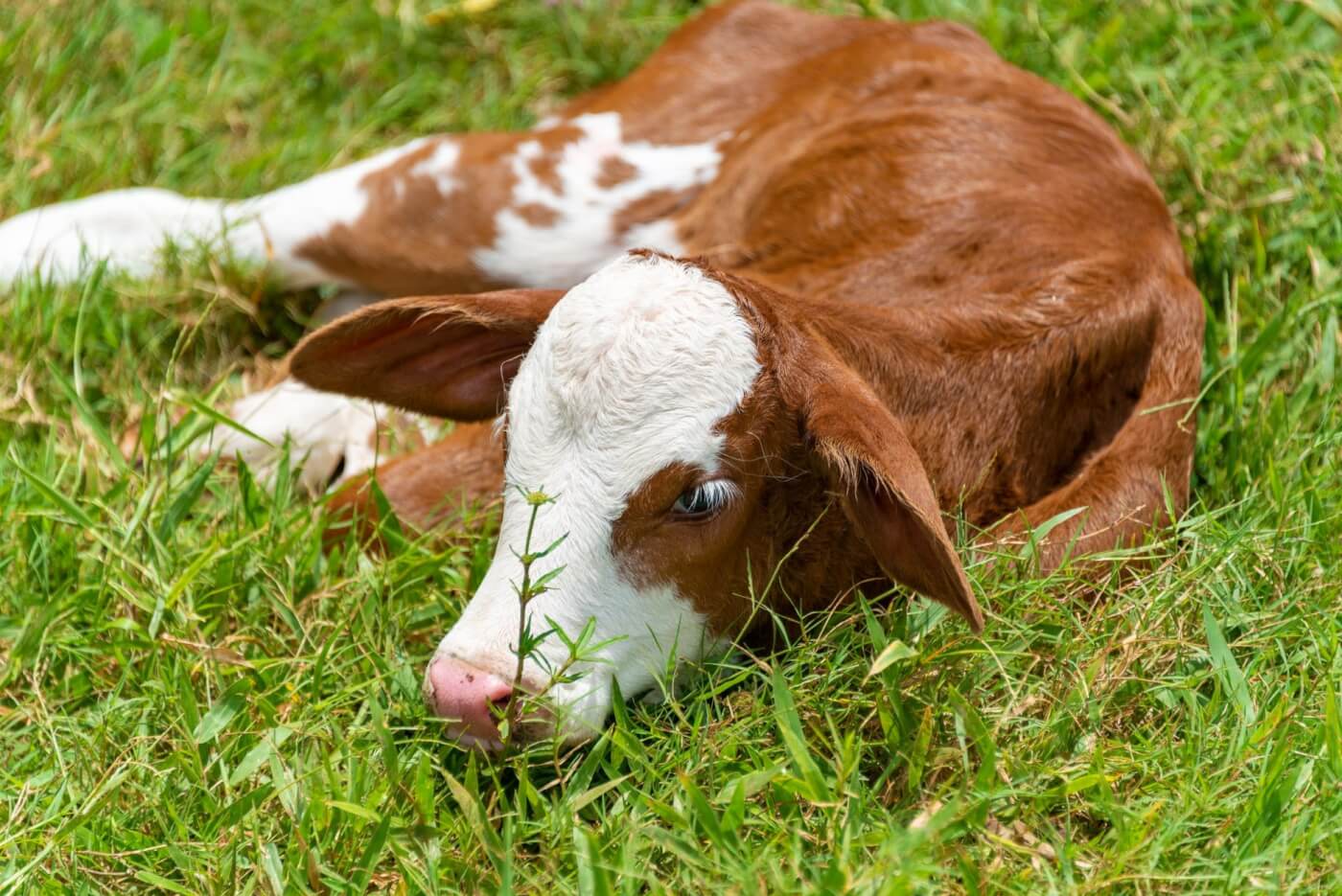
Brown calf lays in grass

A longtime vegan, Dr. Kam says that speciesism is the main reason she stopped eating animals. Most humans wouldn’t dream of keeping their dog in a cramped warehouse—yet they buy the flesh of cows who are crammed together by the thousands in feces- and mud-filled holding pens. Cows can experience pain, joy, and fear, just as dogs can. They even shed tears when separated from their loved ones.

These Vegan Meats Spare Cows Suffering in Filthy Feedlots

Food Tech Is the Way Forward

Clean meat isn’t a dream for the future—it’s already here. And although food tech is cutting-edge, these innovative women prove what vegans have known for centuries: You don’t need to kill animals for food. It’s time to go vegan already! Help spare cows, chickens, and pigs by purchasing exclusively slaughter-free meat.

PETA’s Meal Plan Makes Going Vegan Easy

The post Meet the Women Scientists Who Can Make Meat out of Thin Air appeared first on PETA.

PETA Pokes Fun at Ted Cruz With ‘Moanin’ Teds’ Chocolates

Sen. Ted Cruz (R-Texas) called Oprah’s explanation of white privilege and now PETA’s appeal to stop using derogatory language about animals “bull$#&!”—prompting PETA to reply, “Isn’t it strange that you need to refer to a bull’s bowel movements in a moment of anger? That seems to make our point that it’s time to think about cleaning up your language.” Now, we’re honoring the “BS King” with boxes of “Moanin’ Teds”—vegan dark chocolates featuring a caricature of the senator—available for pre-order here. All proceeds will go toward supporting the distribution of vegan food to needy families, starting in Texas. The Moanin’ Teds come in the same color as the senator’s beloved BS.

“These tasty Moanin’ Teds are perfect for taking away the bad taste that Senator Cruz’s words leave in your mouth,” says PETA President Ingrid E. Newkirk. “PETA thanks him for illustrating how pervasive anti-animal language is in everyday speech—and how we must work to stamp it out.”

PETA—whose motto reads, in part, that “animals are not ours to abuse in any way”—notes that the horrors inflicted on animals in laboratories and slaughterhouses, on fur farms, in shearing sheds, at roadside zoos and circuses, and elsewhere are rooted in speciesism, the false and harmful idea that other species are inferior and don’t deserve respect. The words we use have the power to create a more just world—or to perpetuate such oppression.

For more information, please visit PETA.org or follow the group on Twitter, Facebook, or Instagram.

Note: PETA supports animal rights, opposes all forms of animal exploitation, and provides the public with information on these issues. The group does not directly or indirectly participate or intervene in any political campaign on behalf of or in opposition to any candidate for public office or any political party.

The post PETA Pokes Fun at Ted Cruz With ‘Moanin’ Teds’ Chocolates appeared first on PETA.

Derogatory Definitions, Speciesist Slurs—Dictionaries Should Nix Them All

The words we use have the power to create a more inclusive world or to perpetuate oppression, so PETA is asking everyone to think before they speak—or type. Respected resources like Merriam-Webster, Dictionary.com, The American Heritage Dictionary, Collins English Dictionary, Oxford English Dictionary, and WordReference.com are in a prime position to help move us closer to a more respectful, empathetic world, with a more compassionate view of other species. This is why we’re urging such resources to remove harmful definitions, like Merriam-Webster’s pig (“a dirty, gluttonous, or repulsive person”), snake (“a worthless or treacherous fellow”), and dog (“a worthless or contemptible person”), pointing out that lending credence to such inaccurate descriptions fuels speciesism, a human-supremacist attitude that slights, insults, and denigrates other animals.

When we tweeted about removing speciesist slurs from our vocabulary, the Internet went berserk. Our tweet about standing up for justice by rejecting supremacist language …

… quickly became a top trending topic on Twitter, and it’s no wonder why: Anti-speciesism is having its moment. More and more people understand that bullying and violence aren’t limited to humans any more than they’re limited to certain races or one gender identity. People are realizing just how much words matter, and while dictionaries are in a unique position to combat speciesism, everyone can reject mischaracterizations of animals and reflect upon their talents, communication abilities, social skills, and more. In her letter to Merriam-Webster, PETA President Ingrid Newkirk points out the following:

Calling humans various animal names is meant to sting, yet pigs, for instance, are intelligent, lead complex social lives, and show empathy for other pigs in distress. They have rescued drowning humans and alerted their guardians to fires. Snakes are clever, have family relationships, and prefer to associate with their relatives rather than with strangers. If taken many miles away, they can find their way back home even if it takes two years. Dogs have personalities as varied and distinct as those of the humans who care for them. A dog living in a human home has been shown to understand, on average, some 400 words of human language simply from paying close attention.

The least we can do is ensure that our language never normalizes violence against animals. Saying, “as loyal as a goose,” “as protective as a pigeon,” “as flexible as an octopus,” and “as clever as a mouse,” would be apt and accurate. Using “as playful as a pig” makes sense—using “pig” to describe “a dirty, gluttonous, or repulsive person” does not. (Looking at you, Merriam-Webster.)

Language should progress, just as our ever-evolving culture does.

We certainly hope that these dictionaries take our request to remove these harmful definitions seriously, thereby encouraging people to recognize that attributing ill character to thinking, feeling animals who experience joy, suffering, love, and grief, just as humans do, is unacceptable. But don’t wait for someone else to do the right thing—discover how you can join PETA and countless others in dismantling speciesism today, and encourage your friends and family to do the same:

The post Derogatory Definitions, Speciesist Slurs—Dictionaries Should Nix Them All appeared first on PETA.