Following reports that a dog had to be rescued from a frozen pond in Odessa—and because freezing temperatures are forecast to occur in the Odessa area during the evenings—PETA is sharing for keeping animals safe. Animals are especially vulnerable in cold weather and winter storms, and there were at least 37 cold weather–related companion animal deaths in 2019. (Those are just the ones that were reported—most aren’t.) A glimpse of just some of the dogs PETA’s fieldworkers have found suffering in the cold this winter can be seen here.
The following steps can go a long way in helping animals survive throughout cold weather:
Bring Them Indoors
Companion animals should always live indoors. “Backyard dogs” and “outdoor cats”—like those featured in Breaking the Chain, the new documentary produced by Oscar winner Anjelica Huston—often go without adequate food, water, shelter, and veterinary care. They are no better equipped to survive freezing temperatures or extreme weather conditions than humans are, they suffer terribly from frostbite, and they can die of exposure.
Gear Up
Coats will keep dogs comfortable in cold weather, secure harnesses can help prevent them from getting loose on walks, and booties will protect their sensitive paw pads from the frozen ground. Keep walks short in cold weather, especially for shorthaired dogs.
Don’t Forget Birds
During extreme winter weather, provide birds and other wild animals with access to an emergency water supply by filling a heavy nonmetal water bowl (tongues can freeze to metal) and breaking the surface ice at least twice a day.
Good Samaritans who see companion animals kept chained or penned outside 24/7 or without adequate shelter from the elements should note the animals’ exact location and alert local law-enforcement authorities immediately.Anyone who leaves animals outside to suffer in severe weather may be prosecuted.
To assure consumers that it’s ethical, J.Crew has announced its adoption of a “good” cashmere standard, causing PETA to fire off a letter this morning to the company’s CEO, Libby Wadle, calling out the numerous ways in which the “standard” fails to protect animals and dupes potential buyers. PETA is urging the company to be honest about the suffering involved in cashmere, which is shown in videotaped investigations, and stop selling it.
PETA says J.Crew realizes that consumers are unlikely to discover shocking facts about the “standard,” including these: It allows farmers untrained in euthanasia to kill baby goats by inflicting blunt force trauma on them and farmers to tear out the hair of live goats with sharp, metal rakes; it doesn’t require any certification of off-farm slaughter sites, which could include those similar to the slaughterhouses in which PETA Asia eyewitnesses found workers bashing goats on the head with a hammer and slitting their throats; and it requires only 10% of “certified” farms to be audited just once a year.
“J.Crew is struggling financially and is apparently desperate enough to try duping customers with sham standards that don’t protect animals from extreme cruelty,” says PETA President Ingrid Newkirk. “PETA is calling on the company to drop cashmere and stop ‘humane washing’—or it may find itself on the wrong end of a consumer fraud lawsuit.”
PETA—whose motto reads, in part, that “animals are not ours to wear”—opposes speciesism, a human-supremacist worldview. For more information, please visit PETA.org or follow the group on Twitter, Facebook, or Instagram.
PETA’s letter to Wadle follows.
Libby Wadle, CEO
J.Crew Group
Dear Ms. Wadle:
On behalf of People for the Ethical Treatment of Animals (PETA) and our more than 6.5 million members and supporters worldwide, I’m writing to express deep disappointment in response to J.Crew’s announcement that your company has chosen to hide behind the meaningless “good” cashmere “standard,” which will never eliminate cruelty. Please reconsider, and I’ll explain why we think you would benefit from doing so.
J.Crew is going to be exposed as untruthful in claiming to care about animal welfare if it continues to sell cashmere, and today’s (especially young) consumers will out you.
The company is financially drowning, but grabbing at humane-washing catchphrases to peddle the same old cruel “materials” shows a startling lack of cultural awareness and will not save you. In the midst of a global pandemic, companies are examining their impact on society and how they can be more empathetic. This societal reckoning must include a reflection on all the deeply disturbing ways in which animals are raised and killed for their skin, wool, and hair, including cashmere.
PETA has released exposés of dozens of facilities around the world that all reveal that animals used for clothing are mutilated, abused, and even, not uncommonly, skinned alive, including on “sustainable” and “responsible” farms. Labeling items containing cashmere as “good” is a transparent attempt to distract from what’s actually happening to animals, and standards won’t prevent most suffering, even if followed to the letter. The “good” cashmere standard (GCS) is cruel for a number of reasons, including the following:
It allows for the use of blunt-force trauma for the euthanasia of kids up to 7 days old (0.5). This is a killing method that the American Veterinary Medical Association does not recommend for obvious reasons. The GCS does not even require farmers or employees to attend a training on the correct way to euthanize a goat (8.0.7). Frankly, the fact that this is even part of a standard with the word “good” in it should be enough to show that there is something wrong here.
The GCS doesnot require the certification of off-farm slaughter sites (0). PETA Asia’s investigation revealed that slaughterhouse workers hit goats on the head with a hammer and slit their throats. In one slaughterhouse, workers did not even attempt to stun them. Some animals were moving for minutes after having been struck.
Pain relief for kid castration is not a requirement (3.3).
Herders are allowed to shear goats using a sharp metal comb (0.3), even though this method has been banned by other guidelines and is considered much more painful and injurious to the animals. PETA Asia’s investigation showed that workers pinned frightened, crying goats to the ground; bound their legs; and ripped (I do not use that word lightly) out their hair with combs. This terrifying and violent ordeal left the animals with cuts for which they received no pain relief or veterinary care whatsoever.
The GCS does not specify a maximum time that goats can be restrained during shearing and instead says that it “must be kept as short as possible” (0.8). Goats are prey animals, meaning that they’re terrified of being pinned down. Handling prey animals causes them extreme stress, as fight or flight is their deeply ingrained instinctual response.
Farms are allowed to parallel-produce both GCS-certified cashmere and noncertified cashmere (0.7, p. 34). Certified buying stations are also allowed to process both GCS-certified cashmere and noncertified cashmere (3.0.11). There is therefore a lack of transparency and accountability in the supply chain and no guarantee that a company is actually purchasing “certified” cashmere.
The Aid by Trade Foundation, which administers the GCS, requires only a minimum of 10% of the “certified” farms to be annually audited.
This program is a sham. Given the cruelty inherent in the cashmere industry, the environmental impact of raising cashmere goats, and the abundance of cruelty-free, eco-friendly vegan cashmere options available, there is no reason to continue to sell cashmere from goats. It is time to act to end this suffering and stop attempting to dupe consumers with “standards” that absolutely do not protect animals from abuse. It’s also time to end this humane-washing advertising—or you may find yourself on the wrong end of a consumer fraud complaint or lawsuit. I do not mean that as a threat but as an appeal to change. We are always here to assist in any way you may wish us to, but we cannot let this pass.
Just like other animals, fish are complex and feeling individuals with a desire to live. Yet in the commercial fishing industry, they are captured and killed on a massive scale. Thousands of tuna at a time are caught in huge nets in which some fish suffocate from the weight of others pressing against them. Larger fish are impaled using longlines with barbed hooks and then beaten until they become unconscious or are left on ice to freeze. These intelligent animals feel fear and pain, and they should be left alone instead of being killed for a fleeting taste. The good news is that there are many vegan tuna options that will help you satisfy your cravings while leaving fish off your fork.
Catch some of these delicious vegan tuna products:
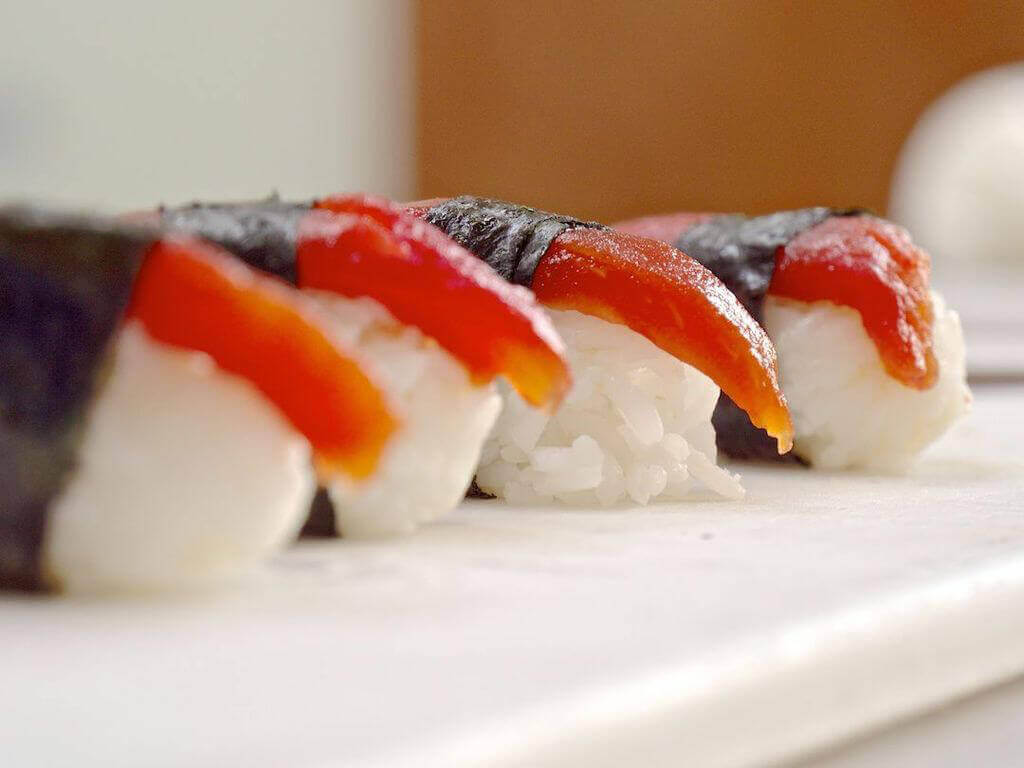
Your eyes aren’t fooling you—Vegan ZeaStar’s tuna looks just like the real thing, but it’s made from cassava root and bell pepper, not fish. It’s perfect for sashimi, sushi, poke bowls, and other delectable dishes.
This tasty vegan tuna comes in three flavors for any of your recipe needs: Naked in Water, Mediterranean, and Oil & Herbs. You can also try Good Catch in the tuna melt at Veggie Grill.
You can find TUNO in five delicious flavors: Spring Water, Lemon Pepper, Sriracha, Thai Sweet Chili, and Sesame Ginger. It’s available in cans or convenient pouches for meals on the go.
Students go to school to learn, not to mutilate the corpses of fetal pigs and the organs of animals who’ve been violently killed, as Project Lead The Way supports.
Project Lead The Way Has Students Cutting Into Fetal Pigs and Cow Eyes
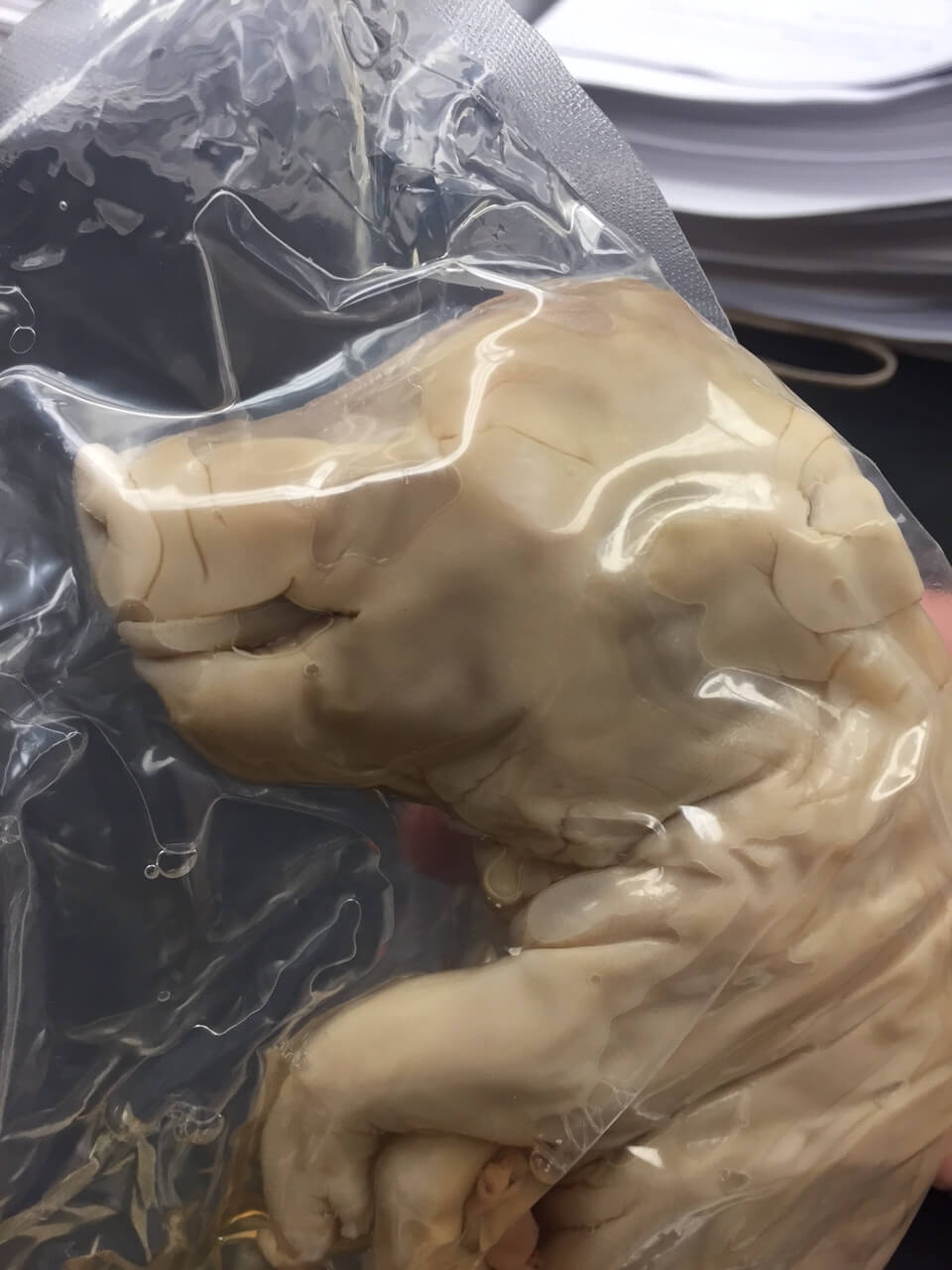
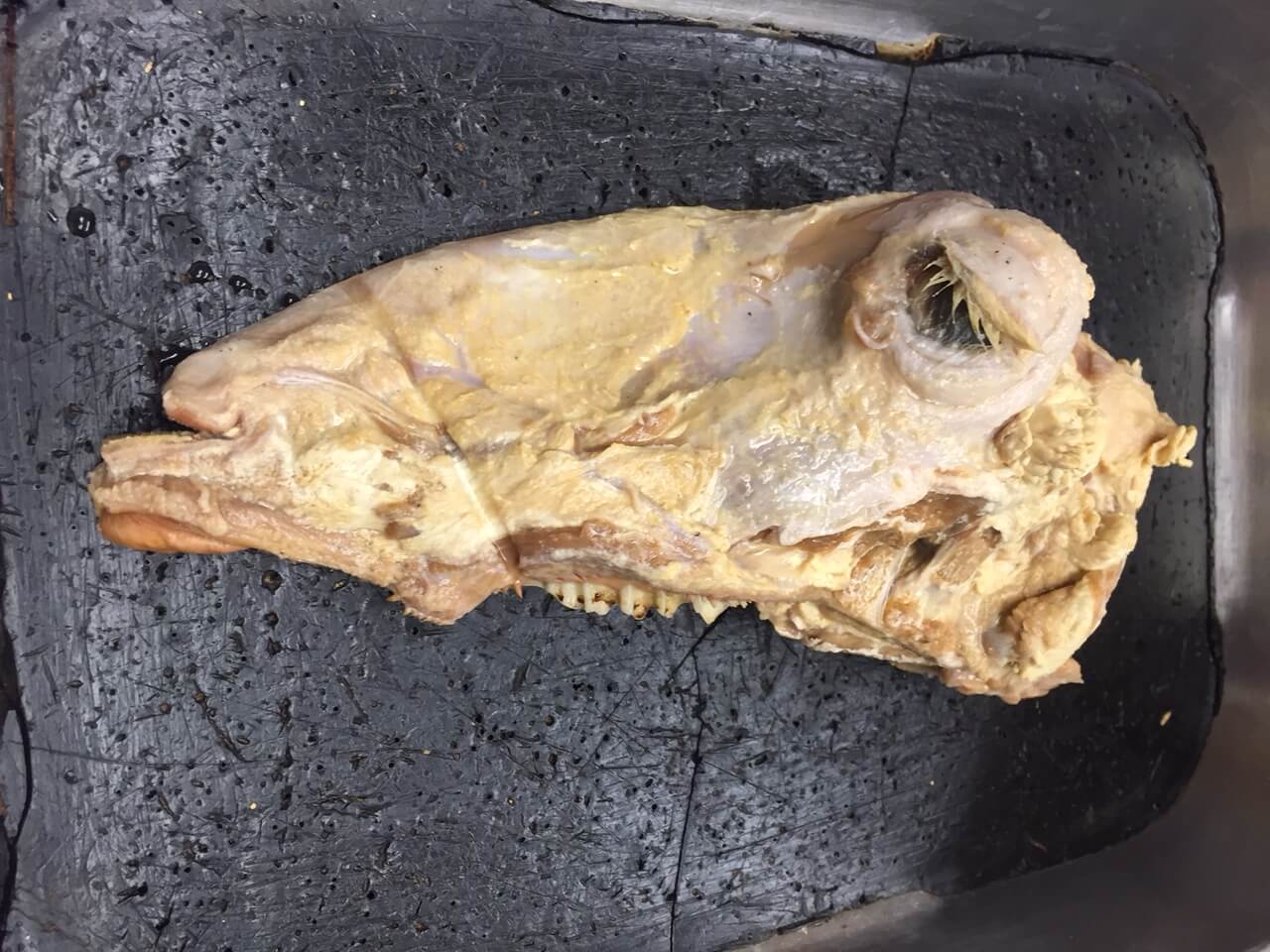
Project Lead The Way is a STEM curriculum company that uses animals such as fetal pigs and organs such as sheep brains and hearts, cow eyes, and pig kidneys for dissection. At slaughterhouses, workers cut pregnant pigs’ stomachs open and take their babies to be used for dissection. Other animals’ body parts are doused with formaldehyde before they’re vacuum-sealed in plastic bags.
Despite Project Lead The Way’s misleading name and its website’s claim that the company is “reinventing the classroom experience,” it hasn’t fully embraced modern, sustainable, humane, chemical-free technology like SynFrog and virtual programs—which can be used again and again until the information is absorbed—in favor of archaic and potentially unsafe “lessons” in which students cut into corpses, poke around at monochromatic guts, and throw the dead animals in the garbage when they’re done.
The company says that its mission is to empower “students to thrive in an evolving world,” yet it hypocritically ignores all the superior options that are readily available and continues to expose students to the chemically preserved carcasses and body parts of tormented animals, thus holding them back from, well, thriving in an evolving world. Project Lead The Way, it’s time for you to evolve.
Dissection Is Not Only Unnecessary but Also Potentially Harmful to Students
Can we all agree that the point of biology class is to teach students anatomy and physiology? Neither of these studies requires carving into dead, embalmed animals. The only thing dissection teaches students is to see animals as tools—fostering callousness and instilling speciesism in impressionable minds. A sound education cannot contradict sound ethics.
Peer-reviewed literature confirms that students who use modern dissection methods perform better in learning assessments than those who dissect animals. Studies show that as many as 25% of secondary students object to dissecting animals and that doing so can dissuade them from pursuing a career in biology and health sciences.
Jamia Smith, Mylia Scott, Jeff Sanford, Sema’J Clark
How You Can Help
Since 2019, PETA has urged Project Lead The Way to embrace humane teaching tools and remove animal dissection—we even met with the company and provided information. There’s no good reason for it to live in the past—putting students’ futures at risk—especially when claiming to be a leader. Help us get the message across by posting a polite comment on Project Lead The Way’s Facebook page. You can also take the following actions to help students and animals:
Take rapid action against cruel animal experiments at colleges and universities.
Inquire about getting revolutionary new technology that makes ethical dissection labs possible in your own school.
Animal dissection is irrelevant in today’s world of modern technology, and insisting on animal dissection fails students, educators, and animals. Project Lead The Way, leave animals’ bodies alone and cut dissection from your curriculum instead.