
The post Keep Urban Outfitters on the Hook for Using Leather, Wool, and Down appeared first on PETA.
Urgent: PETA’s Tips for Keeping Dogs Safe Around Frozen Lakes and Ponds in Helena
Reports that dogs—and often their guardians—have fallen through ice on lakes and ponds are on the rise this year. Following news reports that a dog had to be rescued from an icy lake in Helena this week, PETA is sharing tips for keeping animals safe.
While some dogs have been rescued, others have died, and so have some guardians who tried to rescue them. (Please see these recent stories—covering incidents in Arkansas, Mississippi, New York, Pennsylvania, and Tennessee.) The following precautions can help dog guardians prevent such tragedies:
- Always keep dogs on a secure leash and in a harness during walks.
- Never let dogs run free near open bodies of water.
- In backyards with unfenced swimming pools, always walk dogs on a leash in other parts of the yard.
PETA also urges guardians to let companion animals live indoors with the rest of the family, as “backyard dogs” and “outdoor cats”—like those featured in the documentary Breaking the Chain—suffer terribly from frostbite and can die of exposure. There were at least 37 cold weather–related companion animal deaths in 2019, and those are just the ones that were reported—most aren’t. This video shows just a few of the dogs PETA’s fieldworkers have found suffering in the cold this winter.
PETA has released this cold-weather public service announcement. For more information, please visit PETA.org or follow us on Twitter, Facebook, or Instagram.
The post Urgent: PETA’s Tips for Keeping Dogs Safe Around Frozen Lakes and Ponds in Helena appeared first on PETA.
‘Junebug: No Life Too Small’ Virtual Read-Aloud Event
On Wednesday, March 24, from 5:30 to 6 p.m. ET (2:30 to 3 p.m. PT), we invite students in grades pre-K–2 to join TeachKind, PETA Kids, and some exciting guests for a free virtual read-aloud event featuring Junebug: No Life Too Small, a new compassionate children’s book about respecting and showing kindness to insects.
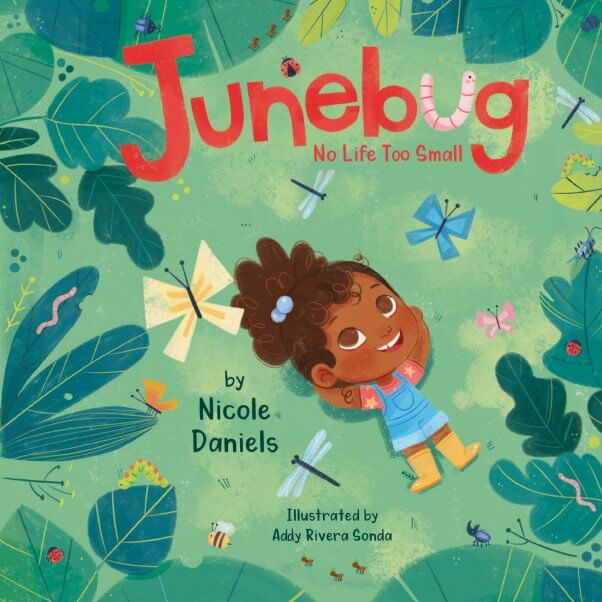
Here’s what your students can expect from this fun online event:
- Author Nicole Daniels will read an excerpt from Junebug and answer questions about being an author.
- Former music teacher Jonathan Horn will play and teach students three original songs about being kind to bugs.
- Jordyn Tacoronte from PETA Kids, our host, will lead students in creating an insect rescue kit and a neat bug-themed craft using common art supplies and household items.
Sign up for TeachKind’s free virtual read-aloud event below. Please include your name and the number of participants you wish to sign up. (We’ll e-mail you an exclusive Zoom link the day before the event.)
Below are a few things you may want to know ahead of time to get the most out of this event.
- You can purchase a copy of Junebug: No Life Too Small to read along with us during the event. The author, Nicole Daniels, will be reading only one excerpt, so students might like to read the rest of the book.
- The three songs that Jonathan will be teaching are to the tune of other, familiar songs. You can review the lyrics ahead of time or have them handy to refer to during the event:
- ‘Help, Help, Help a Bug’ Lyrics
(To the tune of “Row, Row, Row Your Boat”)
Help, help, help a bug
Gently as can be
They just want to live their life
Just like you and me!
- ‘If You’re Friendly and You Know It, Help a Bug’ Lyrics
(To the tune of “If You’re Happy and You Know It”)
If you’re friendly and you know it, help a bug (clap, clap)
If you’re friendly and you know it, help a bug (clap, clap)
If you’re friendly and you know it and you really want to show it
If you’re friendly and you know it, help a bug (clap, clap)
(Jonathan will cue students to clap their hands, stomp their feet, and snap their fingers during the song.)
- ‘Daylight Come and the Crickets Go Home’ Lyrics
(To the tune of “Day-O, The Banana Boat Song”)
Day-o, day-o
Daylight come and the crickets go home
Day, me say day, me say day, me say day
Me say day, me say day-o
Daylight come and the crickets go homeChirp all night and they had their fun
Daylight come and the crickets go home
Hopping in the grass ’til the mornin’ come
Daylight come and the crickets go homeCome, mister firefly, we must go to sleep now.
Daylight come and the crickets go home
Come, mister firefly, we must go to sleep now.
Daylight come and the crickets go homeSix-footed insects and eight-footed spiders
Daylight come and the crickets go home
Six-footed insects and eight-footed spiders
Daylight come and the crickets go homeDay-o, day-o
Daylight come and the crickets go home
Day, me say day, me say day, me say day-o
Daylight come and the crickets go home
Daylight come and the crickets go home
Daylight come and the crickets go home
- To create an insect rescue kit and to participate in the craft with us, each student will need the materials listed below. You can review the instructions ahead of time or have them handy to refer to during the event.
- Insect Rescue Kit Materials List and Instructions
Materials
- A small cup
- An index card (or some other sturdy, flat item)
- A small object, such as a coin or a pencil eraser, to practice using the insect rescue kit
Instructions
- Imagine that your small object is an insect who has come indoors. Carefully place the cup over the “insect” on a flat surface, such as the floor or a table.
- Gently slide the index card underneath the rim of the cup so that the “insect” is on top of the card.
- Carefully lift the cup and the card together and carry the “insect” to an outdoor area, like your backyard.
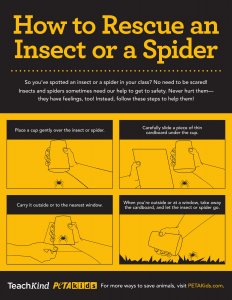
- Download and print TeachKind’s insect rescue poster and keep it handy around the house or display it in your classroom for when “unexpected guests” need to be escorted back outdoors—the step-by-step instructions make it easy.
- Ladybug Craft Materials List and Instructions
Materials
- A coffee filter
- Crayons
- Construction paper
- Child-safe scissors
- Glue
Instructions
- Begin by flattening the coffee filter: Smooth your hands across it on a flat surface, like a tabletop.
- Then, using a black or other dark-colored crayon, draw a semicircle at the edge of the coffee filter. From the bottom of the semicircle, draw a line down the center of the coffee filter. This creates the head and two wings of the ladybug.
- Next, color the wings of your ladybug red. Draw two eyes on your ladybug’s head and color the head black, except for the eyes.
- Using the scissors, cut out four small circles from a piece of black construction paper. They should be about the size of a quarter. Glue them to the ladybug’s wings.
- TeachKind’s printable insect rescue poster provides step-by-step instructions on carefully containing insects who have made their way indoors and escorting them back outside. Display it in your classroom or in your home and refer to it whenever a bug needs rescuing to encourage students to be kind to all.
If you have any questions about this event or experience technical difficulties on the day of the event, please e-mail us at Info@teachkind.org.
*****
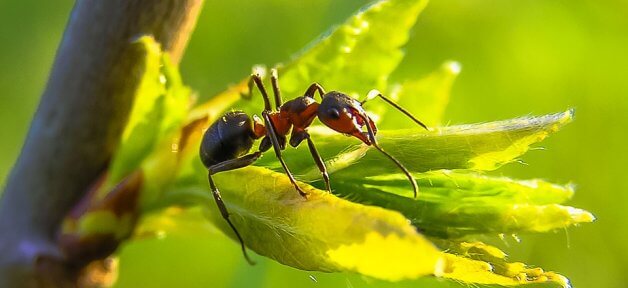
We can’t wait to teach students how easy it is to be kind to insects and why these tiny, fascinating animals deserve our respect. To extend these lessons or to prepare kids for the virtual event, check out TeachKind’s lesson using the popular children’s book Hey, Little Ant:

The post ‘Junebug: No Life Too Small’ Virtual Read-Aloud Event appeared first on PETA.
Search
Support PETA
The post Support PETA appeared first on PETA.