
Vital Farms Claims Humane Treatment of Chickens—PETA Lawyers Help File Class Action Lawsuit

You may have heard of Vital Farms eggs—you may have even spent upwards of $7 on a dozen of the brand’s eggs because of boasts it makes in the packaging. Well, we’re not buying it, and neither should you. PETA has assisted misled consumers in filing a class action lawsuit against Vital Farms, Inc., because of the company’s allegedly false claims that it treats animals in an ethical and humane manner.

Chicks Are Slaughtered and Hens Are Debeaked for Egg Production

Male chickens don’t lay eggs and therefore can’t be exploited for them. Dropping live chicks from a conveyor belt into a grinder is an industry-standard way of disposing of them. The lawsuit alleges the following:

  • Vital Farms obtains hens from hatcheries that kill all male chicks at birth.
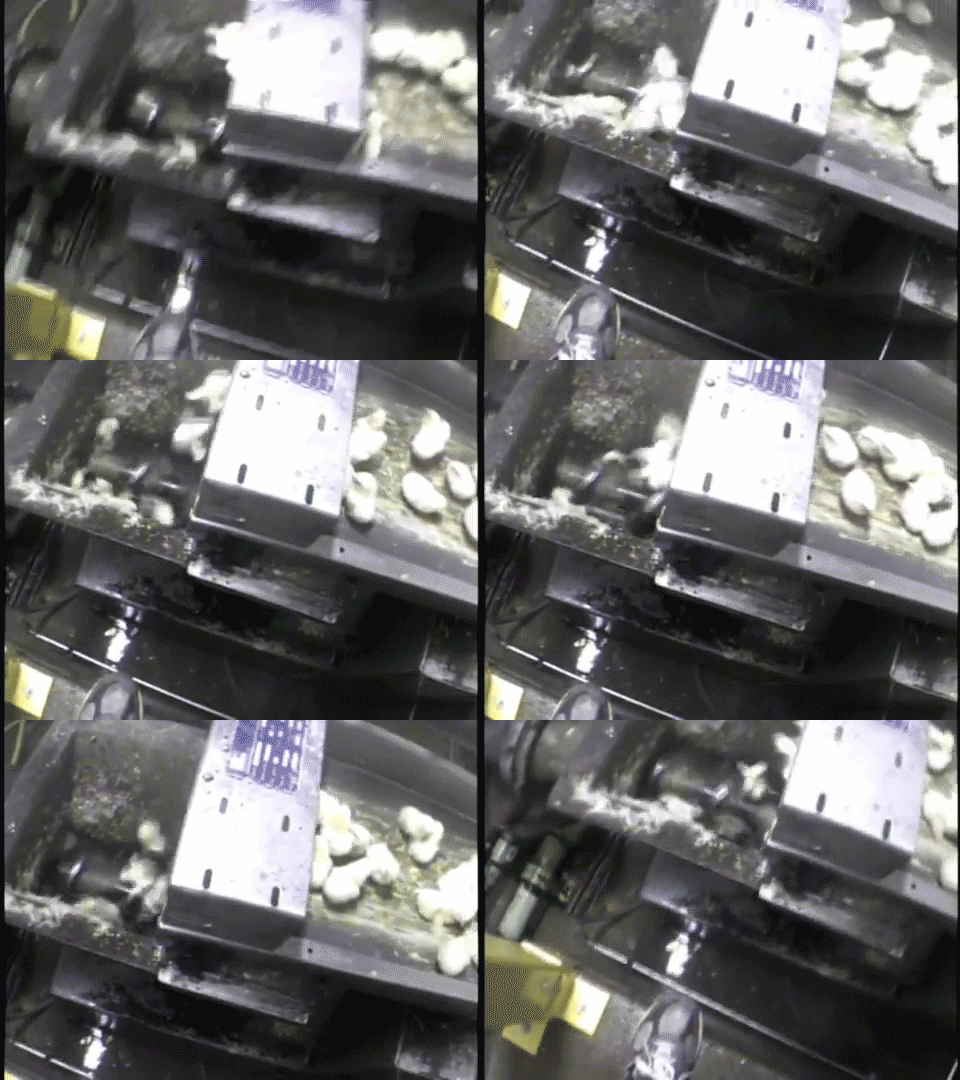
    Mercy for Animals
    Imagery reflects typical U.S. farm practices
  • Vital Farms supports the burning or cutting off of hens’ highly sensitive beaks, an industry-standard practice performed to prevent stressed, severely crowded, confined hens from pecking at each other—which wouldn’t be an issue if they had adequate living conditions, including enough space.
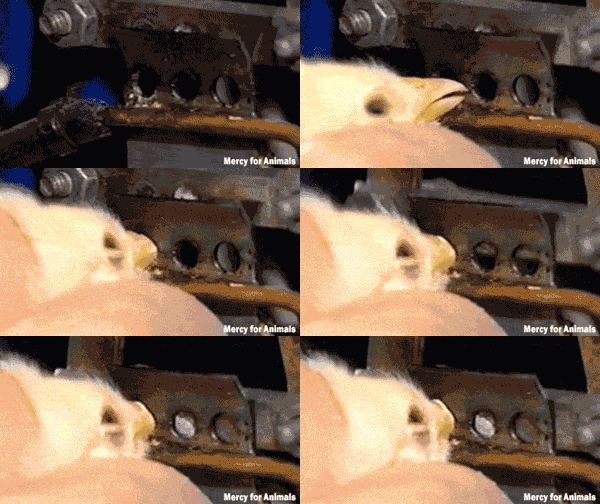
    Mercy for Animals
    Imagery reflects typical U.S. farm practices
  • The birds at Vital Farms suppliers are kept in conditions that cause many of them to spend most or all their time indoors—not in “pastures,” as the company would lead you to believe with the words and images displayed on its products.
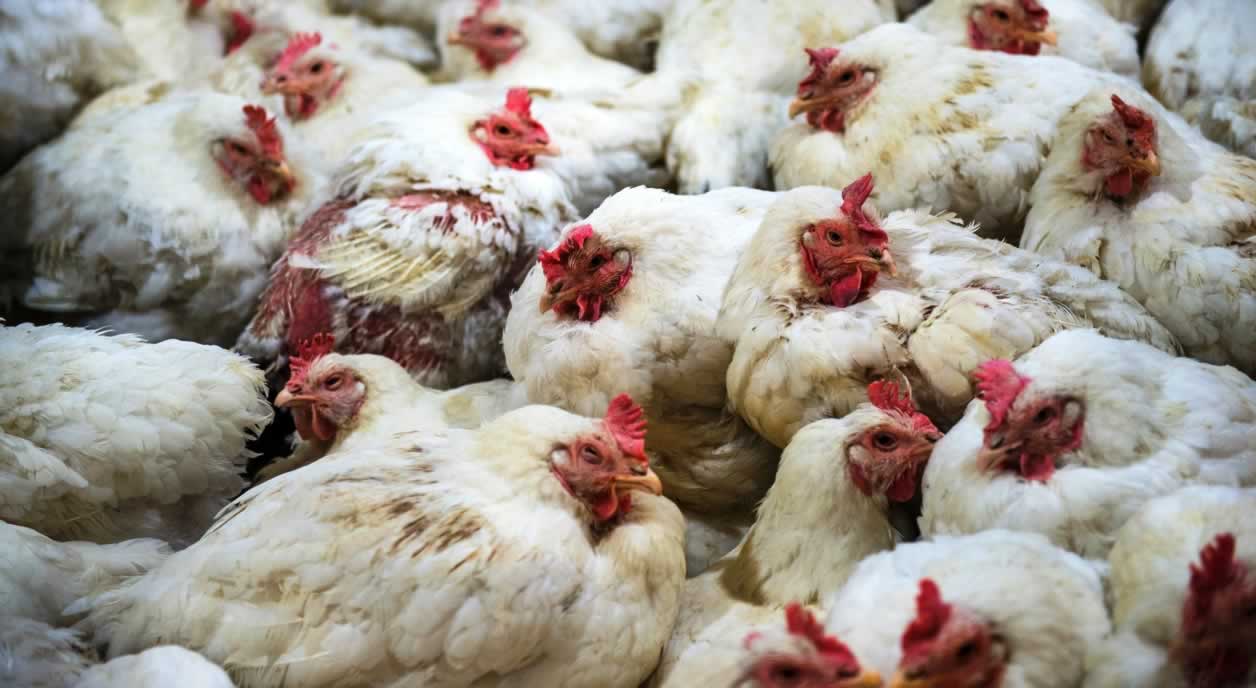
this is how chickens raised for cage-free eggs really live © iStock.com/takobchaiprakobkit

Hens Are Forced to Lay Far More Eggs Than They Naturally Would

The consumers are also alleging that Vital Farms causes hens to lay far more eggs than they naturally would, taxing their bodies and leading to health issues such as osteoporosis. Based on admissions made by Vital Farms’ founder and executive chair, Matthew O’Hayer, the consumers also allege that when hens stop laying enough eggs to be profitable, they’re sold to pet food companies and killed for cheap meat, likely right alongside hens raised in factory farms. Despite all this, Vital Farms deceptively touts its “humane treatment of farm animals” in every carton, alongside photos that misleadingly show hens free to roam on green grass.
Stock image

Using Chickens for Eggs Isn’t Humane

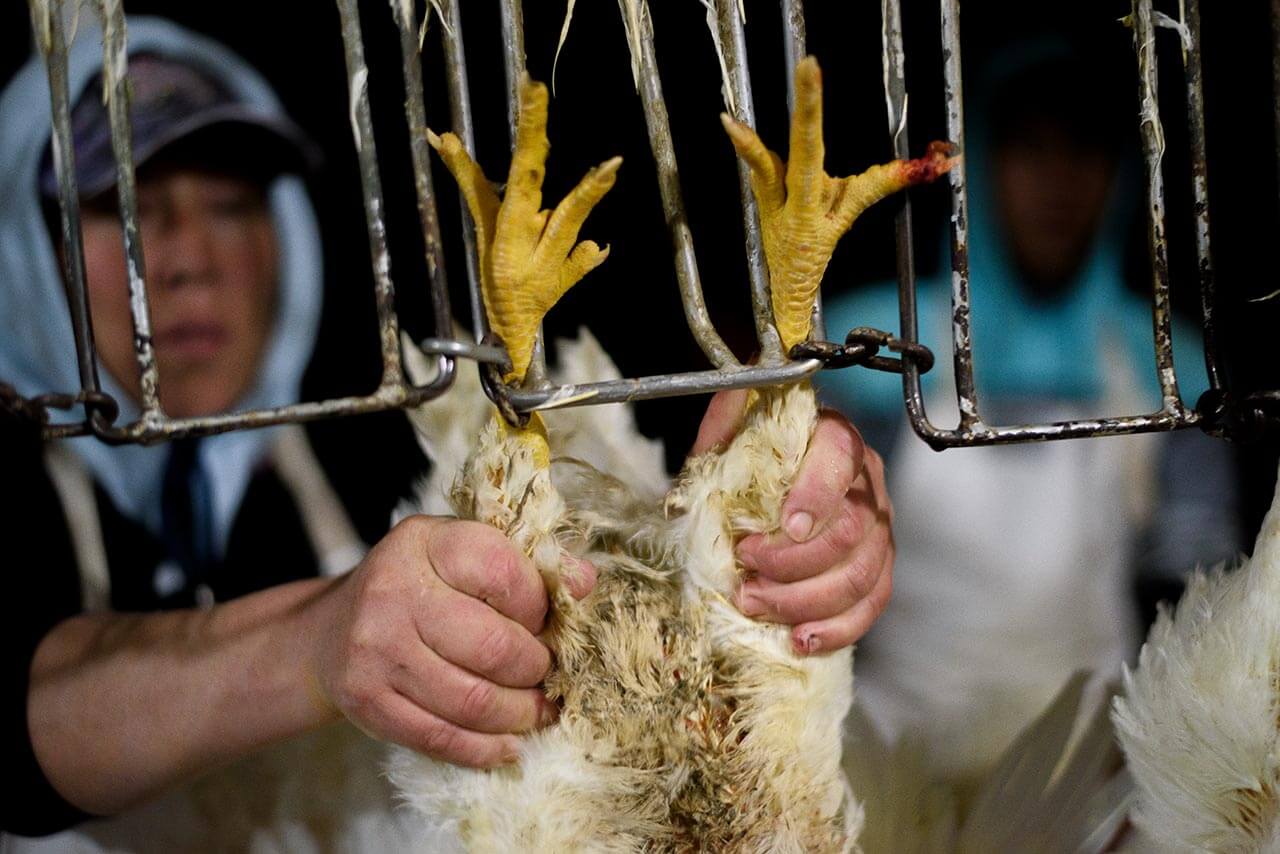
More than 99% of hens used for food in the U.S. live on farms where workers cut off the tips of their sensitive beaks with a hot blade before cramming the birds into filthy sheds. They never get to breathe fresh air or feel the sun on their backs until they’re loaded into a transport truck heading for slaughter. The hens get lung lesions, ammonia burns, and breast blisters from sitting on urine- and feces-covered floors. “Organic,” “pasture-raised,” “cage-free,” “free-range,” and factory farms typically use the same slaughterhouses, where birds are hung upside down and their throats are cut. Many of them are still conscious and can feel pain when they’re submerged in the scalding-hot water of the defeathering tanks.
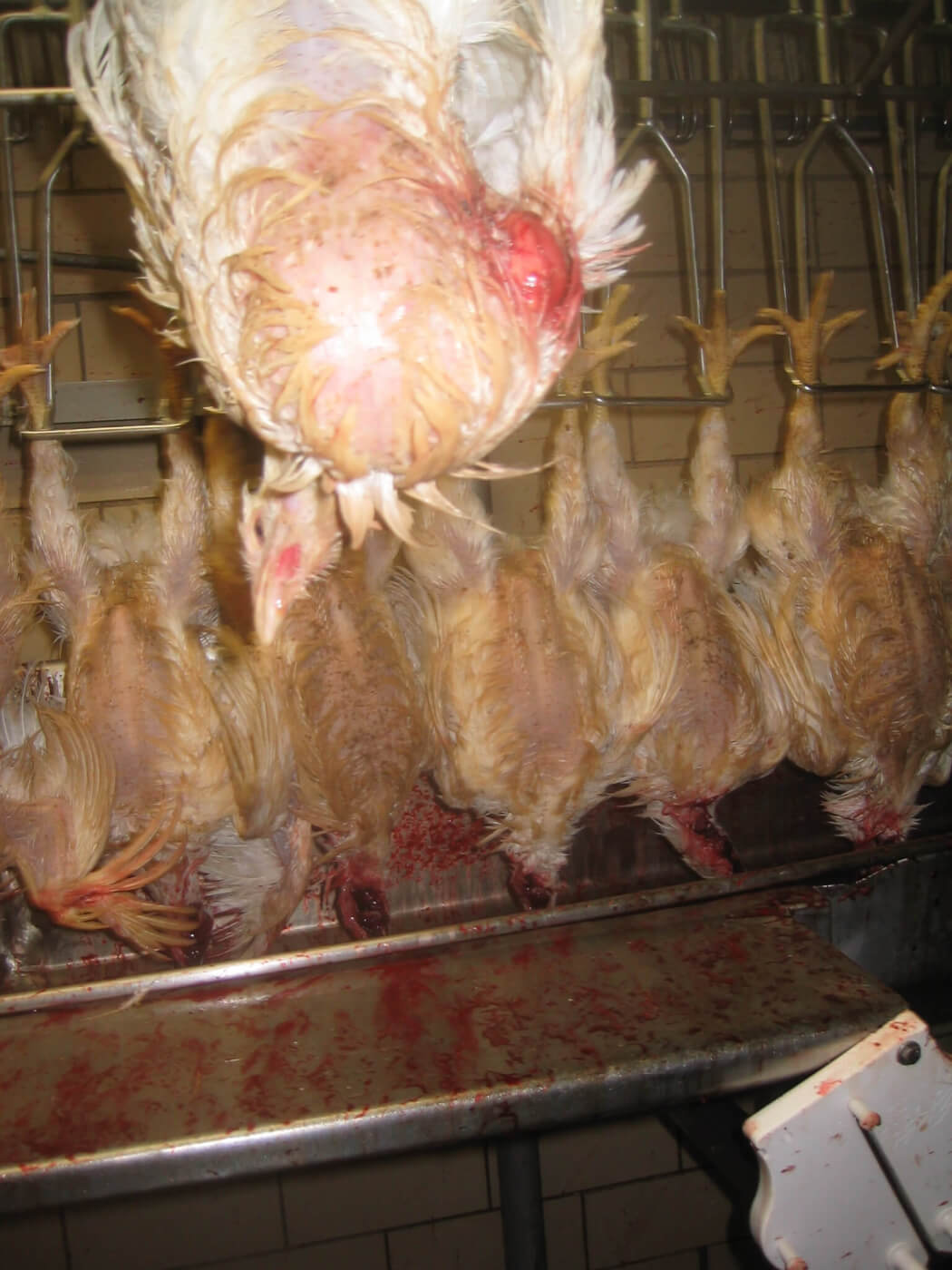
Stock image

The very idea that hens exist to provide humans with eggs is speciesist. Even at $7 per dozen, which is more than twice the cost of other brands, Vital Farms eggs are the product of pain and suffering. They come from gentle and curious hens who are confined, tormented, and ultimately killed. There is no retirement home for “spent” birds who are exploited for food—including for “backyard eggs” and eggs sold at farmers markets. It’s all about profit. As soon as the animals can’t “pay rent” anymore, it’s off to the slaughterhouse for them. Being vegan is the only ethical way to eat, and no compassionate consumer should be duped by marketing gimmicks that claim otherwise.

Anyone who cares about animals needs to make the connection: There is no humane way to exploit them.

The post Vital Farms Claims Humane Treatment of Chickens—PETA Lawyers Help File Class Action Lawsuit appeared first on PETA.

Adult Film Cuts Snake Scenes After PETA Push

After former international figure skater and vegan adult film star Jada Kai reported seeing snakes being transported in lunch coolers and draped across actors’ bodies on the set of former Boy Meets World actor Maitland Ward Baxter’s Mistress Maitland 2, PETA fired off an urgent appeal to Vixen Media Group, which quickly cut the reptile scenes.

“Snakes never should have been involved, but Vixen Media Group now seems to agree with PETA that stressing out sensitive wild animals is cruel, not sexy,” says PETA Senior Vice President Lisa Lange. “Keeping wild animals out of the bedroom is a no-brainer—and keeping them off film sets should be, too.”

Snakes have highly specialized needs and require precise lighting, heat, and humidity to regulate their body temperature. They also naturally shun human contact, so being handled can leave them prone to illness and injury. Most reptiles are captured in their native wild habitats and then sold by breeders en masse. At least 75% of “pet” reptiles, including snakes, are estimated to die within one year—the majority from stress related to intense confinement and human handling.

PETA—whose motto reads, in part, that “animals are not ours to abuse in any way”—opposes speciesism, a human-supremacist worldview. For more information, please visit PETA.org or follow the group on Twitter, Facebook, or Instagram.

The post Adult Film Cuts Snake Scenes After PETA Push appeared first on PETA.

Naples Woman Nabs PETA Award for Helping Duck Family Cross the Road

A Compassionate Action Award is on the way from PETA to Jessica Unda, who was en route to her birthday brunch on May 20 when she spotted a family of ducks crossing U.S. 41 onto the median. Concerned that the ducklings and their mother wouldn’t make it all the way across the busy road, Unda and her family circled back in their car—and as this video shows, she got out, stopped traffic, and ushered the birds to safety, to the cheers of spectators.

“To my surprise, it seems like [the mother duck] understood completely and knew I was there to help,” Unda tells PETA. “As soon as I signaled to her, she came right out without hesitation and began to cross the road. … What an awesome way to celebrate my birthday.”

“Our super-developed cities are leaving wildlife with fewer and fewer places of safety,” says PETA Senior Vice President Lisa Lange. “PETA hopes Jessica’s kindness to this little family will inspire others to look out for wild animals who need help navigating the world we’ve built.”

Unda will receive a framed certificate and a box of delicious vegan cookies.

PETA—whose motto reads, in part, that “animals are not ours to abuse in any way”—opposes speciesism, a human-supremacist worldview. For more information, please visit PETA.org or follow the group on Twitter,  Facebook, or Instagram.

The post Naples Woman Nabs PETA Award for Helping Duck Family Cross the Road appeared first on PETA.

Texas A&M Admits to Violating PETA’s Rights, Ends Unconstitutional Ad Policy

Texas A&M University, represented by Texas Attorney General Ken Paxton, has ended the unconstitutional transit system advertising policy that PETA challenged with a free-speech lawsuit and acknowledged that the policy violated PETA’s rights, prompting the group to agree to the suit’s dismissal today. A copy of the group’s response to the school’s motion to dismiss is available upon request.

After Texas A&M refused to run a PETA ad on its buses showing a dog used in its canine muscular dystrophy (MD) experiments, the group filed its lawsuit, arguing that the school’s policy prohibiting “political” advertisements was vague and discriminated against PETA’s viewpoint, in violation of the First Amendment. After the school unsuccessfully pushed for the lawsuit to be dismissed, it admitted that the policy was unconstitutional—and it has now changed its advertising policy to allow bus ads only from Texas A&M itself and from commercial enterprises.

“Texas A&M is so desperate to keep PETA ads off its buses that it was willing to violate our rights and is now blacklisting all charity ads,” says PETA Senior Vice President Kathy Guillermo. “This lawsuit may be ending, but PETA’s campaign to free the dogs still trapped in the school’s laboratory will continue.”

The dog on PETA’s ad is Peony, one of those at Texas A&M who struggled to walk, swallow, and even breathe. She repeatedly suffered from parasites, was subjected to painful surgeries, and was regularly soaked in the drool caused by her enlarged tongue. She was put down at 22 months old.

Under pressure from PETA supporters, 500 physicians, and humans with MD, Texas A&M stopped breeding dogs to develop the disease. The lead experimenter has retired, and many of the nearly 100 dogs have been adopted into homes—but the laboratory still keeps 20 dogs imprisoned there.

PETA has filed two other First Amendment lawsuits, challenging Texas A&M’s deletion of comments about the dog laboratory on its official Facebook page and other social media sites. The group settled the first lawsuit to its satisfaction, and the second is pending.

PETA—whose motto reads, in part, that “animals are not ours to experiment on”—opposes speciesism, which is a human-supremacist worldview. For more information, please visit PETA.org or follow the group on Twitter, Facebook, or Instagram.

The post Texas A&M Admits to Violating PETA’s Rights, Ends Unconstitutional Ad Policy appeared first on PETA.