Oppression against anyone is never OK, regardless of species. That’s why this Pride Month, we’ve teamed up with “PETA-Approved Vegan” shoe and accessories brand Good Guys Don’t Wear Leather to create a limited-edition Pride box. Each box is packed with fabulous items that celebrate love and embrace diversity—and everything in it is made of vegan materials, because animals don’t belong in the closet, either!
The box contains an “Aloha! to All Beings” T-shirt, the first-ever Good Guys notebook (made of apple leather and embossed in gold), a pair of leather-free JERRY rainbow slide-on sandals, a pair of wool-free “Go Vegan” rainbow socks, and a bevy of stickers and other goodies from PETA and Good Guys.
So many vegan accessories that are perfect for the summer ☀️
When you buy from “PETA-Approved Vegan” companies like Good Guys, you help fuel innovation in fashion and put an end to the industries that use animals for profit.
Did we mention that a portion of the proceeds from each sale will be donated to PETA to continue our vital work to help animals?
Don’t wait! Get your limited-edition PETA x Good Guys Don’t Wear Leather Pride box today, before they sell out:
Following a May 2021 study confirming that snakes in captivity must be able to stretch out fully in order to survive, PETA has learned that Zoo Med Laboratories, Inc., removed misleading guidance from its website that snakes may be held in an enclosure only half the length of their body. This egregiously false claim was at the center of a consumer protection lawsuit that PETA filed with the D.C. Superior Court last year against Zoo Med, a locally based supplier of reptile products to PetSmart, Amazon, Walmart, and other retailers.
PETA’s lawsuit alleged that Zoo Med lied to consumers by presenting its small and mostly barren tanks as suitable snake habitats, inevitably causing snakes to suffer and die. Herpetologists concur that snakes need enclosures that are longer than their bodies and opportunities to engage in natural behavior, including stretching out, basking, burrowing, and exploring. Their highly complex needs are difficult to meet, and according to a peer-reviewed study, 75% of reptiles die within one year in a personal home.
“Zoo Med has stopped making one false claim to consumers that has sentenced snakes to immense, avoidable suffering,” says PETA Foundation Director of Litigation Asher Smith. “PETA is spreading the word that most people cannot meet snakes’ specialized needs and that snakes do not belong in captivity and should not be forced to die in someone’s house.”
Worryingly, despite removing the false guidance, Zoo Med is still advertising the same tanks on its website. PETA’s lawsuit ended in January when a D.C. judge ruled that the court lacked jurisdiction over the California-based manufacturer. PETA’s efforts to hold companies accountable for animal suffering continue, and the group encourages anyone who believes that they were misled into purchasing an insufficient reptile enclosure to fill out a survey available here.
PETA—whose motto reads, in part, that “animals are not ours to abuse in any way”—opposes speciesism, which is a human-supremacist worldview. For more information, please visit PETA.org or follow the group on Twitter, Facebook, or Instagram.
Two dogs had to be rescued from a hot car in Des Moines recently, and this week’s scorching temperatures will put dogs at high risk of enduring heat prostration and death, so PETA issued an urgent warning to anyone with a dog:
Touch the pavement to ensure that it won’t burn dogs’ foot pads.
Be alert to a long, curled-up tongue and heavy panting, as dogs cannot sweat as humans can and heat builds up inside their bodies.
Walk only in the shade, on earth or grass, and never leave animals outdoors in extreme heat or inside vehicles.
Just last week, PETA fieldworkers discovered the body of a dog who had died after being left chained up in the hot sun, and similar reports nationwide are starting to roll in. Recently, a law-enforcement officer mistakenly left his patrol car with a dog inside it, and the K-9 succumbed to heat prostration and died. Last year, more than 31 dogs were reported dead from heat-related causes. (Figures are likely far higher, as most heat-related deaths go unreported.)
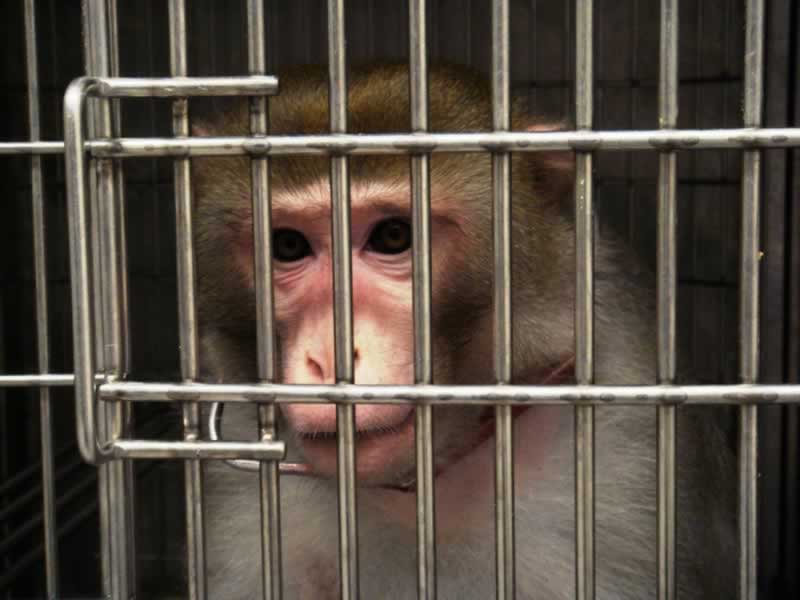
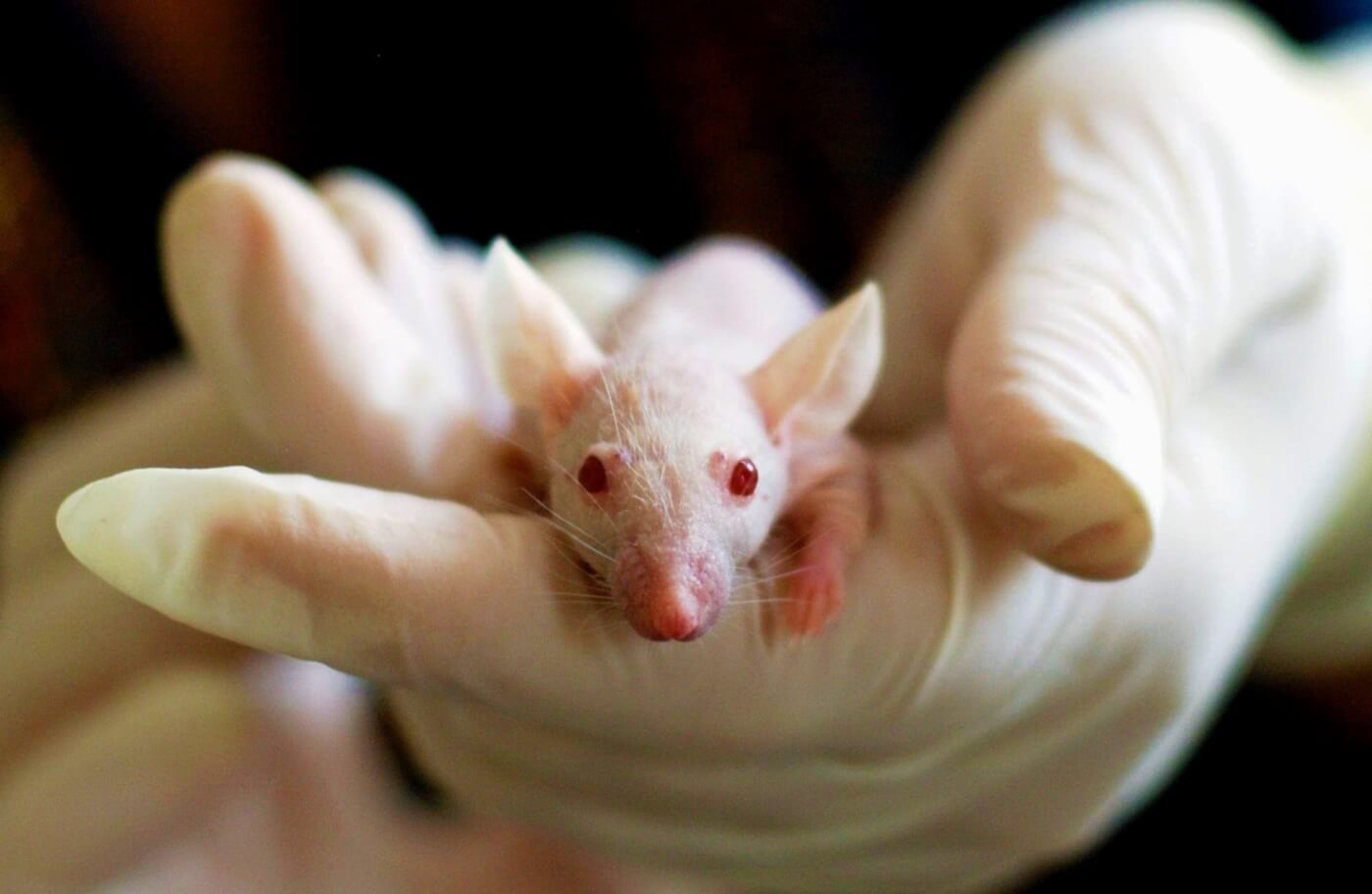
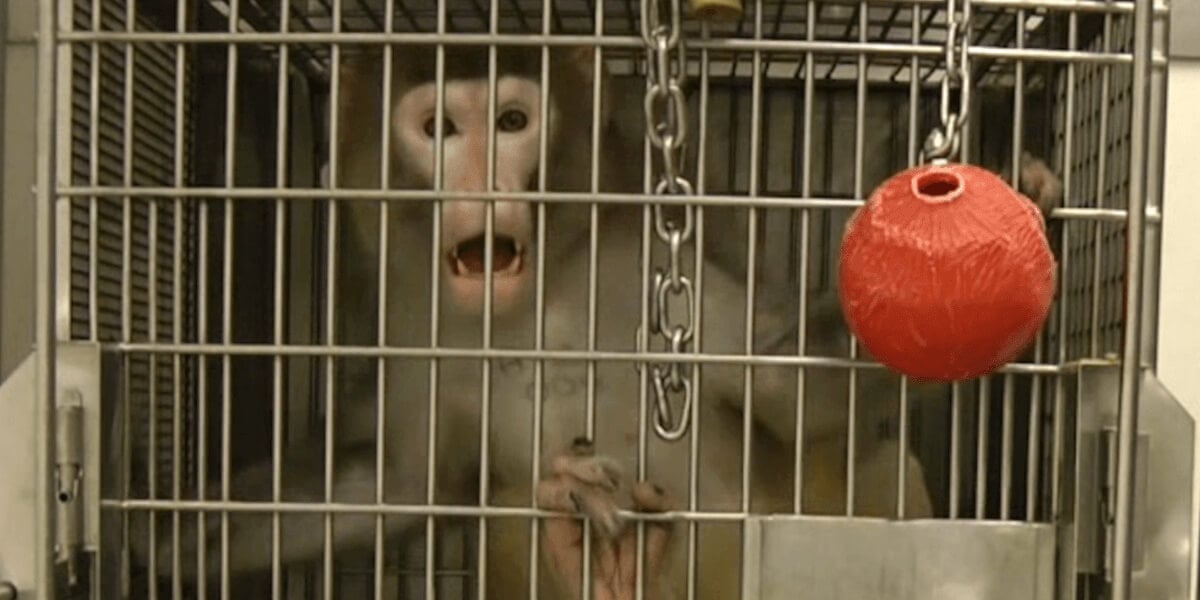
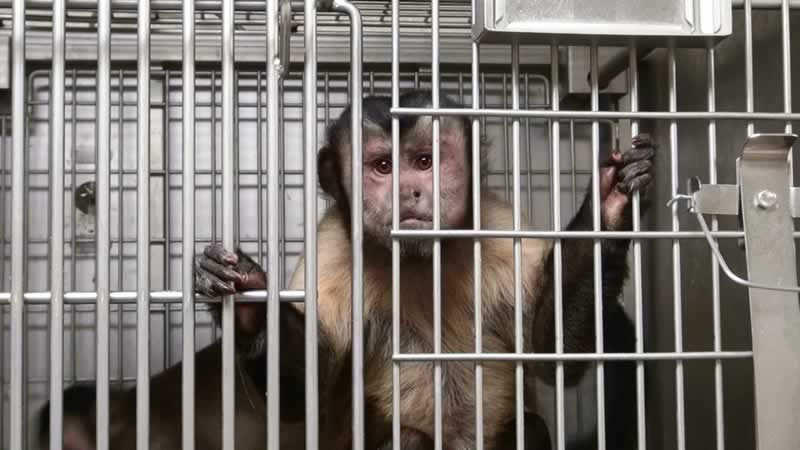
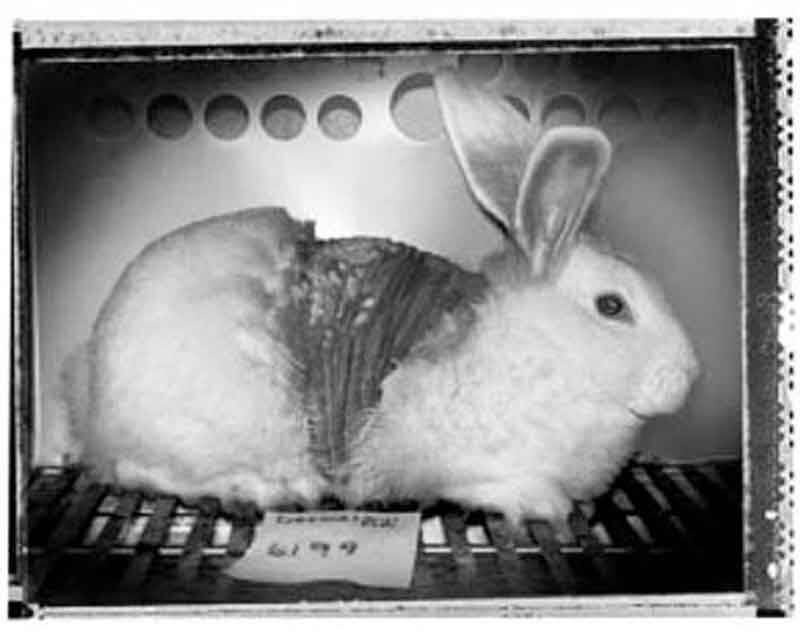
Millions of rats, cats, primates, dogs, and other animals are languishing in laboratories across the country. But just picture one animal—one monkey or one rabbit—writhing in pain after being purposely infected with a disease or dosed with chemicals, covered with gaping wounds or burns, starving and thirsty, aching with loneliness and longing to be free from invasive experiments, and overcome with terror any time a human walks past the cage that they’re locked inside.
The conditions in laboratories are so bleak that some animals develop neurotic types of behavior, such as incessant spinning, tearing out their own fur, and even self-mutilation—and all this suffering is for nothing, as animal experiments help no one.
PETA is setting the record straight and addressing common misconceptions and questions about animal testing.
Why Do Experimenters Use Animals?
This is what they were taught to do, what they know how to do, and what they’re paid to do. Despite the purported purpose of their work, some may not care to explore new kinds of technology, even though doing so could actually help humans. Experimenting on animals is an easy way to get millions of tax dollars in funding and publish in journals—even if the findings are useless. PETA has delved into the backgrounds of some animal experimenters who’ve been convicted of violent crimes, which has made us wonder: Could some animal experimenters be psychopaths who use their laboratories as a cover to carry out their violent impulses legally?
Why Are Beagles Used for Animal Testing?
Dogs are abused in laboratories because of their trusting nature. Beagles, in particular, are naturally docile and of a manageable size. Even when they’re being abused, most don’t bite—they cower, hoping for a kind touch, and their gentleness is exploited by animal experimenters. At Liberty Research, Inc., a PETA eyewitness investigation found that workers used a drill to bore holes into the skulls of 30 young beagles so that distemper virus could be injected directly into their brains. Some dogs whimpered during the painful procedure, indicating that they weren’t adequately anesthetized. They woke up moaning. Likely in pain, some hit their heads on their cage walls, causing blood to spurt from their wounds.
Almost 65,000 dogs are tormented in U.S. laboratories every year. They are often forced to ingest or inhale pesticides or are bred to have degenerative diseases. Video footage obtained by PETA reveals that experimenters at Texas A&M University deliberately bred dogs to develop crippling canine muscular dystrophy, a disease that ravages their bodies and causes progressive muscle wasting and weakness.
Animal experimenters have used mice, ferrets, monkeys, hamsters, camels, rabbits, alpacas, horses, and other animals in the hope of developing vaccines for all kinds of viruses, including SARS-19, MERS-CoV, and HIV. Some resulting experimental vaccines initially showed promise—however, none were approved for use in humans. All those wasted lives, hours, and dollars amounted to nothing. In order to speed up the development of COVID-19 vaccines, scientists were allowed to go directly to human clinical trials without first conducting the years-long extensive trials on animals that are usually required. Here’s the bottom line: Vaccine tests on animals aren’t necessary and don’t work.
What Percentage of Victims Survive Animal Testing?
Of the tens of millions of mice, rats, rabbits, monkeys, cats, dogs, fish, and other animals used in tests every year, virtually none make it out alive. The only federal law in the U.S. that governs the use of some animals in laboratories, the Animal Welfare Act (AWA), allows animals to be burned, shocked, poisoned, infected with potentially deadly diseases and viruses, irradiated, isolated, starved, addicted to drugs, and brain-damaged. No experiment—no matter how painful or trivial—is prohibited. If an animal survives this violence and trauma, they’re killed and dissected or discarded when the experiment is over.
Between 2015 and 2019, more than 300,000 animals—excluding mice, rats, birds, fish, reptiles, and amphibians—were subjected to painful experiments without any pain relief. Bear in mind that the animals excluded from the AWA’s “protection” make up more than 99% of those used in experiments.
Are There Benefits to Animal Testing?
Nope. A decade of studies shows that most animal experimentation never leads to benefits for humans. Many of the most important medical advances are attributable to human studies. Sir Alexander Fleming, who discovered penicillin nearly 100 years ago, remarked, “How fortunate we didn’t have these animal tests in the 1940s, for penicillin would probably have never been granted a license, and probably the whole field of antibiotics might never have been realized.”
Former National Institutes of Health (NIH) Director Dr. Elias Zerhouni stated, “We all drank the Kool-Aid on [animal experiments], me included. … The problem is that it hasn’t worked …. We need to refocus and adapt new methodologies for use in humans.”
Disadvantages of Animal Testing
It doesn’t work. Diseases that are artificially induced in animals in an unnatural setting are never going to be the same as those that occur naturally in human beings. More than 95% of new drugs that test safely and effectively in animals go on to fail in human clinical trials. For some diseases, the failure rate is even worse—studies of cancer drugs have a 96.6% failure rate, and studies of Alzheimer’s disease have a 99.6% failure rate.
And they waste lots of money. One of the largest sources of funding for animal tests is government granting agencies. NIH wasted nearly half of its almost $42 billion research and development budget on torturing animals in 2020. This means that people like us paid for it with our tax dollars.
How Long Has Animal Testing Been Around?
Humans have been using animals for experimentation for thousands of years, beginning long before humans understood that other animals feel pain, joy, and fear, among other emotions. The cruelty persists today not because it’s useful but because of deeply ingrained archaic habits, resistance to change, and a lack of outreach and education.
Where Is Animal Testing Banned?
A number of countries have implemented bans on testing certain types of consumer goods on animals, such as the cosmetics-testing bans in the EU, India, Israel, New Zealand, Norway, and elsewhere. Although they’re imperfect, they represent progress. In the U.K., it’s against the law for medical (and veterinary) students to practice surgery on animals.
What Can We Use Instead of Animals?
Technologically advanced, animal-free test methods! There are microchips that use real human cells and tissues to construct fully functioning organs so that researchers can test drugs and treatments. Human brain cells that have been developed into a model “microbrain” have been used to study tumors, while human tissue constructs can be used to test skin irritation (e.g., MatTek’s EpiDerm) and to produce and test vaccines.
Human clinical and epidemiological studies, human tissue-based and human cell-based research methods, cadavers, computational models, and sophisticated, high-fidelity human-patient simulators—not animals—all have the potential to facilitate faster, more reliable, more precise, and less expensive studies that aren’t hindered by the biological differences that make applying animal test results to humans virtually impossible.
How You Can Help End Animal Testing
Always buy cruelty-free products, donate only to charities that don’t experiment on animals, request alternatives to animal dissection in class, urge government agencies and corporations to use non-animal methods, and call on your alma mater to stop experimenting on animals.
Most importantly, urge your representatives in Congress to implement PETA’s strategy for phasing out animal experimentation:
This week’s scorching temperatures—reaching triple digits Norman, Tulsa, and Oklahoma City—will put dogs at high risk of heat prostration and death, so PETA is issuing an urgent warning to anyone with a dog:
Touch the pavement to ensure that it won’t burn dogs’ foot pads.
Be alert to a long, curled-up tongue and heavy panting, as dogs cannot sweat as humans can and heat builds up inside their bodies.
Walk only in the shade, on earth or grass, and never leave animals outdoors in extreme heat or inside vehicles.
Just last week, PETA fieldworkers discovered the body of a dog who had died after being left chained up in the hot sun, and similar reports nationwide are starting to roll in. Recently, a law-enforcement officer mistakenly left his patrol car with a dog inside it, and the K-9 succumbed to heat prostration and died. Last year, more than 31 dogs were reported dead from heat-related causes. (Figures are far likely higher, as most heat-related deaths go unreported.)
Anyone who leaves animals outside to suffer in severe weather may be prosecuted for cruelty.