Skin Sensitization

Skin sensitizers are substances that cause allergic reactions after repeated exposure to the skin.

A number of government agencies require or request the submission of skin sensitization data before products, such as cosmetics, pesticides, and pharmaceuticals, are brought to the market. In the U.S., these agencies include the Consumer Product Safety Commission, the Environmental Protection Agency, the Food and Drug Administration, and the Department of Transportation.

Animal Tests

The guinea pig maximization test, which is more than 50 years old, involves injecting animals multiple times with a test substance. They’re monitored for signs of allergic reaction, including skin that’s itchy, inflamed, ulcerated, or otherwise painful.

In the murine local lymph node assay, a test substance is applied to the ears of mice, who are ultimately killed so that the lymph nodes near their ears can be removed and their immune response measured. Human-relevant methods that forgo animals altogether have been developed and should be used in place of these animal tests.

Non-Animal Tests

In 2021, the Organisation for Economic Co-operation and Development (OECD)—an alliance of countries promoting international consistency in the testing, labeling, and regulation of chemicals—published an innovative approach for skin sensitization testing of chemicals that does not use a single animal. All 38 member countries of the OECD—including the U.S., the U.K., and European Union member states—must accept this approach for legally required chemical toxicity tests.

This approach combines multiple non-animal tests together into one formal, defined approach to test chemicals for their ability to cause an allergic reaction on the skin. The individual tests used within the approach assess different aspects of skin sensitization. For example, the direct peptide reactivity assay examines whether some of the events required for an allergic reaction occur in response to a chemical in a test tube. Another non-animal test, KeratinoSens, allows a chemical to be added to a layer of human cells that react a certain way if the chemical would cause an adverse reaction on human skin.

These tests spare animals and have been shown to be as predictive of human responses as animal tests—or even more so.

The post Skin Sensitization appeared first on PETA.
Eye Irritation and Corrosion

Eye irritants are chemicals that cause reversible eye damage, whereas substances that cause irreversible damage to the eye are considered severe irritants or corrosives.

A number of government agencies require or request the submission of eye irritation/corrosion data for products such as cosmetics, pesticides, and pharmaceuticals before they’re marketed or shipped, in order to predict whether they will cause damage if they come into contact with human eyes. In the U.S., these agencies include the Consumer Product Safety Commission, the Environmental Protection Agency, the Food and Drug Administration, and the Department of Transportation.

Animal Tests

The Draize eye irritation and corrosion test dates back to the 1940s. In this test, substances are applied to the eyes of live rabbits. Laboratory technicians then subjectively score the damage—which can include inflammation, ulcers, bleeding, swollen eyelids, irritated and cloudy eyes, or even blindness—at specific intervals for up to two weeks. There is no requirement to provide the animals with any pain-relieving drugs during this prolonged process.

Evidence demonstrates that the Draize rabbit test has variable outcomes. In fact, different laboratories—and even different rounds of testing within the same laboratory—often yield different results. In addition, the results from the Draize eye irritation and corrosion tests are not necessarily relevant to humans, because of the anatomical and physiological differences between human and rabbit eyes. For example, rabbits have a third eyelid, whereas humans do not.

Non-Animal Tests

Multiple methods can be used to replace the unreliable Draize rabbit eye test, many of which are recognized by the Organisation for Economic Co-operation and Development—an alliance of countries promoting international consistency in the testing, labeling, and regulation of chemicals. For example, chemicals can be applied to human cell models of the cornea and any damage to the cells themselves or to the barriers between the cells is then assessed. Another test uses fluorescent dye to measure a chemical’s ability to break through a solid layer of cells, and yet another assesses a chemical’s potential to damage the molecular structures within the eye that are essential for normal function.

In 2021, PETA scientists and their expert collaborators from government agencies and private laboratories published a paper showing that scientific methods that do not use live rabbits were as reflective of human biology as the rabbit test is—if not more so—and that their results were more consistent than those of the rabbit test. The authors concluded that the newer methods should be accepted immediately to replace the rabbit test. These test methods that don’t use live rabbits are already accepted for testing certain types of substances, and PETA scientists will work to ensure that they are accepted around the world for all testing.

The post Eye Irritation and Corrosion appeared first on PETA.

Criminal Probe Sought Into Suffering and Death at Massive Animal Mill

A recent federal inspection report of Sun Pet Ltd.—a massive locally based animal mill—reveals animal suffering and neglect in apparent violation of state law. This morning, PETA sent a letter to Fulton County Solicitor General Keith E. Gammage asking him to investigate the PetSmart and Petco animal supplier and file appropriate criminal charges against those responsible.

The August 4 report from the facility, which housed nearly 13,000 animals during the inspection, describes how one hamster was eaten alive by other severely stressed hamsters, and workers didn’t notice that “pieces of deceased hamster” were scattered throughout the animals’ food and bedding. Workers failed to treat hamsters and a rabbit for swollen and crusted eyes, labored breathing, hair and weight loss, inflamed skin, and other painful conditions; failed to provide gerbils with adequate water; and roughly handled boxes containing hamsters.

“More animals are in danger of dying of thirst, of injuries, and in other grisly ways as long as the carelessness and callousness at Sun Pet go unchecked,” says PETA Senior Vice President Daphna Nachminovitch. “PETA is asking officials to hold the company responsible for severely neglecting animals.”

PETA notes that federal veterinarians’ findings at Sun Pet appear to violate O.C.G.A. § 16-12-4, which prohibits subjecting an animal to “physical pain, suffering, or death … by any unjustifiable … omission” or “fail[ing] to provide [an] animal adequate … water [or] sanitary conditions.”

PETA—whose motto reads, in part, that “animals are not ours to abuse in any way”—opposes speciesism, a human-supremacist worldview. The group’s letter to Gammage is available here. For more information on PETA’s newsgathering and reporting, please visit PETA.org or follow the group on Twitter, Facebook, or Instagram.

The post Criminal Probe Sought Into Suffering and Death at Massive Animal Mill appeared first on PETA.

Blue Bottle Coffee Testing Oat Milk as the Default Option at Two Locations

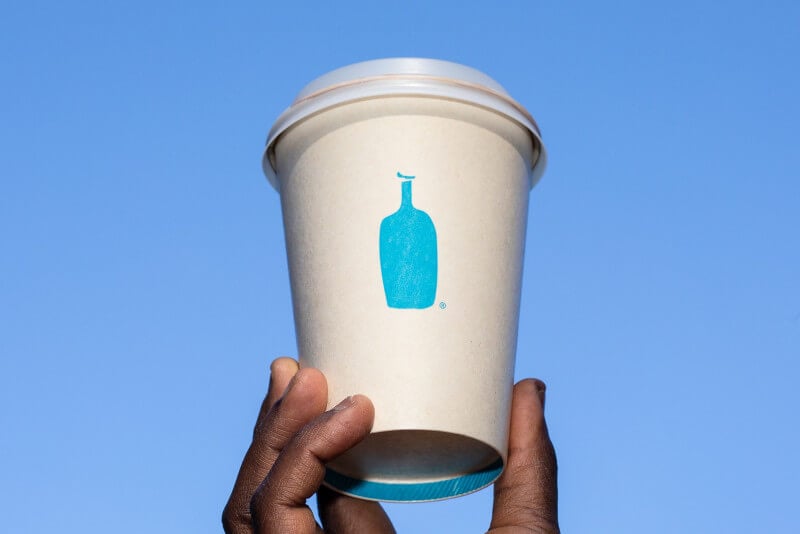
Two Blue Bottle Coffee locations are now testing oat milk as the default option for its drinks. If the test proves successful and this approach is expanded to the rest of the chain’s almost 100 locations worldwide, Blue Bottle could be the first major coffee chain to offer oat milk as the standard at no additional cost. The decision comes in response to oat milk’s popularity—many customers prefer the creamy, allergen-friendly option to cow’s milk already. The test stores include the N. Fairfax Avenue location in Los Angeles and one in the Jackson Square neighborhood in San Francisco.

© Blue Bottle Coffee

It makes sense to offer oat milk as the standard, since it’s a choice that helps animals and the environment and most customers prefer it anyway. Blue Bottle’s test shows consideration for a significant portion of the population who are vegan, lactose intolerant, or allergic to cow’s milk (since it’s not meant for humans to drink in the first place!). Oat milk is allergy-friendly and gluten-free, and having a sensitivity or allergy to oats is much less common than having one to dairy. Making oat milk the default also reduces or even eliminates the likelihood of a vegan or someone with allergies being served cow’s milk accidentally.

Many people choose vegan milks because they know what cows in the dairy industry endure. Cows produce milk to feed their babies, but in the dairy industry, they are repeatedly impregnated so that they’ll continue to produce milk, even after their babies are stolen from them. These loving mothers are hooked up to painful milking machines and often pumped full of hormones and antibiotics, and their lives are cut short once they can no longer produce enough. Most are killed after about five years, just a fraction of their natural life expectancy of 20 years.

The dairy industry is also a major contributor to the climate crisis—a single cow emits more greenhouse gases than a typical car or a light truck. Manure from cows on today’s dairy farms poisons our waterways and drinking water. Blue Bottle is showing that it’s willing to take real action toward its goal of being carbon neutral by 2024, unlike Starbucks, which claims to be working to become more sustainable but is still charging up to 80 cents extra for vegan milks. Why should customers be punished for making responsible choices that are better for animals and the environment?

While many coffee chains, including Panera Bread, Pret A Manger, and Stumptown Coffee Roasters, have dropped the surcharge for vegan milks, Blue Bottle is the first to go one step further. We hope other chains follow its example. Until then, go grab a coffee from Blue Bottle and keep the pressure on Starbucks by taking action today:

Ask Starbucks to Stop Charging Extra for Vegan Milk

The post Blue Bottle Coffee Testing Oat Milk as the Default Option at Two Locations appeared first on PETA.