
PETA’s New Video Exposes ‘Tiger King 2’ Villain Tim Stark’s Cruelty to Cubs

In 2017, PETA filed an Endangered Species Act (ESA) lawsuit against notorious animal exhibitor and Tiger King 2 villain Tim Stark, his then-wife Melisa, and his now-defunct roadside zoo, Wildlife in Need, alleging that his cruel practices of prematurely separating tigers, lions, and tiger-lion hybrids from their mothers; declawing them; and using them for public encounters violated the federal ESA. In 2020, PETA won its lawsuit against Stark, setting a groundbreaking precedent that big-cat cub-petting encounters violate federal law.

As a result of our legal efforts, Stark can never again own ESA-protected big cats without seeking court permission. The court also ordered PETA to arrange permanent placement at accredited sanctuaries of the surviving big cats he had exploited. But his legal troubles were far from over.
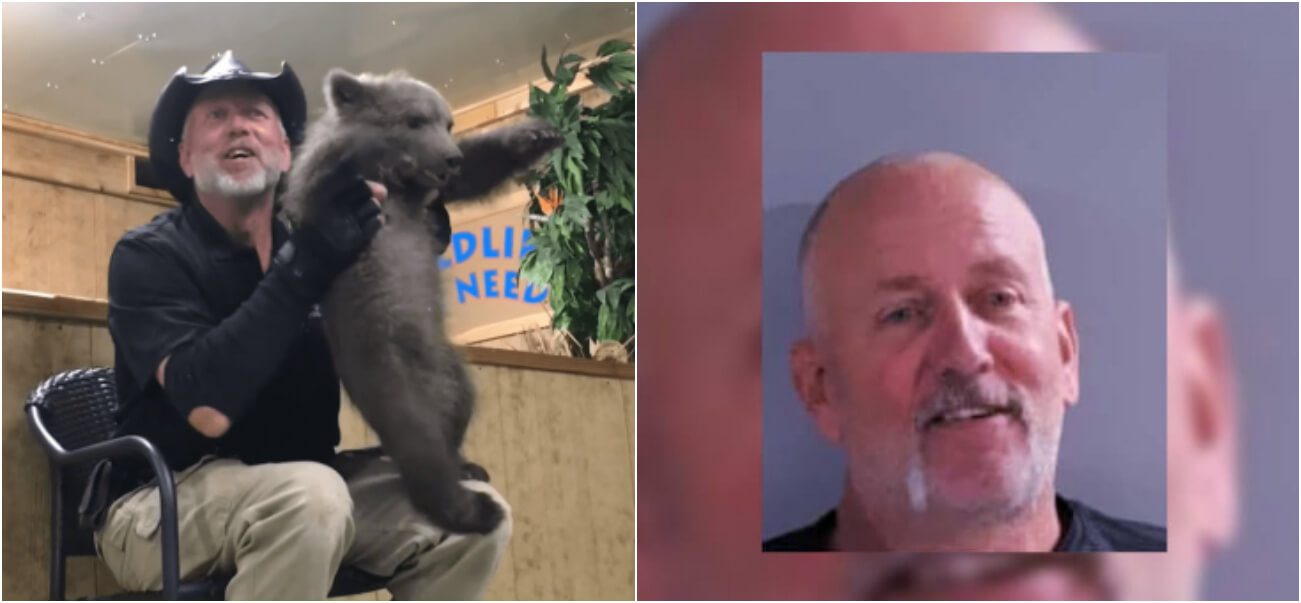
who is tim stark tiger king 2RIGHT: © Washington County Sheriff’s Office

A 2021 ruling from the Office of the Attorney General of Indiana prohibited Stark from “acquiring, owning, and exhibiting any exotic or native animals, including all mammals, birds, reptiles and amphibians.” This came after he had unlawfully used the nonprofit assets of Wildlife in Need for personal expenses, including a failed venture with another Tiger King villain, Jeff Lowe, in Oklahoma, which resulted in the deaths of numerous animals Stark had transported across state lines.

Who Is Tim Stark? New Video Exposes Cruelty of Tiger King 2 Villain

Former exotic-animal exhibitor Tim Stark beat a leopard to death with a baseball bat, he had the claws of big-cat cubs amputated, and his neglect and abuse led to the deaths of federally protected big cats. New video from PETA includes never-before-released footage of baby big cats who died at his facility following declawing surgeries:

A previous PETA video revealed that Stark once held a 14-week-old bear cub named Gizzy by her mouth. She showed signs of extreme distress and terror. Stark later transferred her to former business partner Lowe’s roadside zoo, where the U.S. Department of Agriculture found her in June 2020 in an emaciated condition.

Gizzy has since been rescued and placed at a true sanctuary.

Big-cat cubs can be exploited for petting for only about four months before they become too dangerous to be used in public encounters. Once they grow too large, they’re typically used as breeding machines to continue the cycle of cruelty, dumped at other roadside zoos or with private owners, locked in a cramped cage for years, or killed because they’re no longer profitable.

Take Action for Tigers and Other Big Cats

To help end public contact with tigers and other big cats as well as private breeding and possession of these animals, please let your U.S. representative and senators know that you support the Big Cat Public Safety Act (HR 263/S 1210), which would end private ownership of dangerous big cats, safeguarding both wild animals and communities across the U.S.

PETA makes it quick and easy to take action for animals using your phone or computer, so what are you waiting for?

Get Started Now

The post PETA’s New Video Exposes ‘Tiger King 2’ Villain Tim Stark’s Cruelty to Cubs appeared first on PETA.
Engraved Pennies Blasting Johns Hopkins Owl Experiments Put Into Circulation in Baltimore

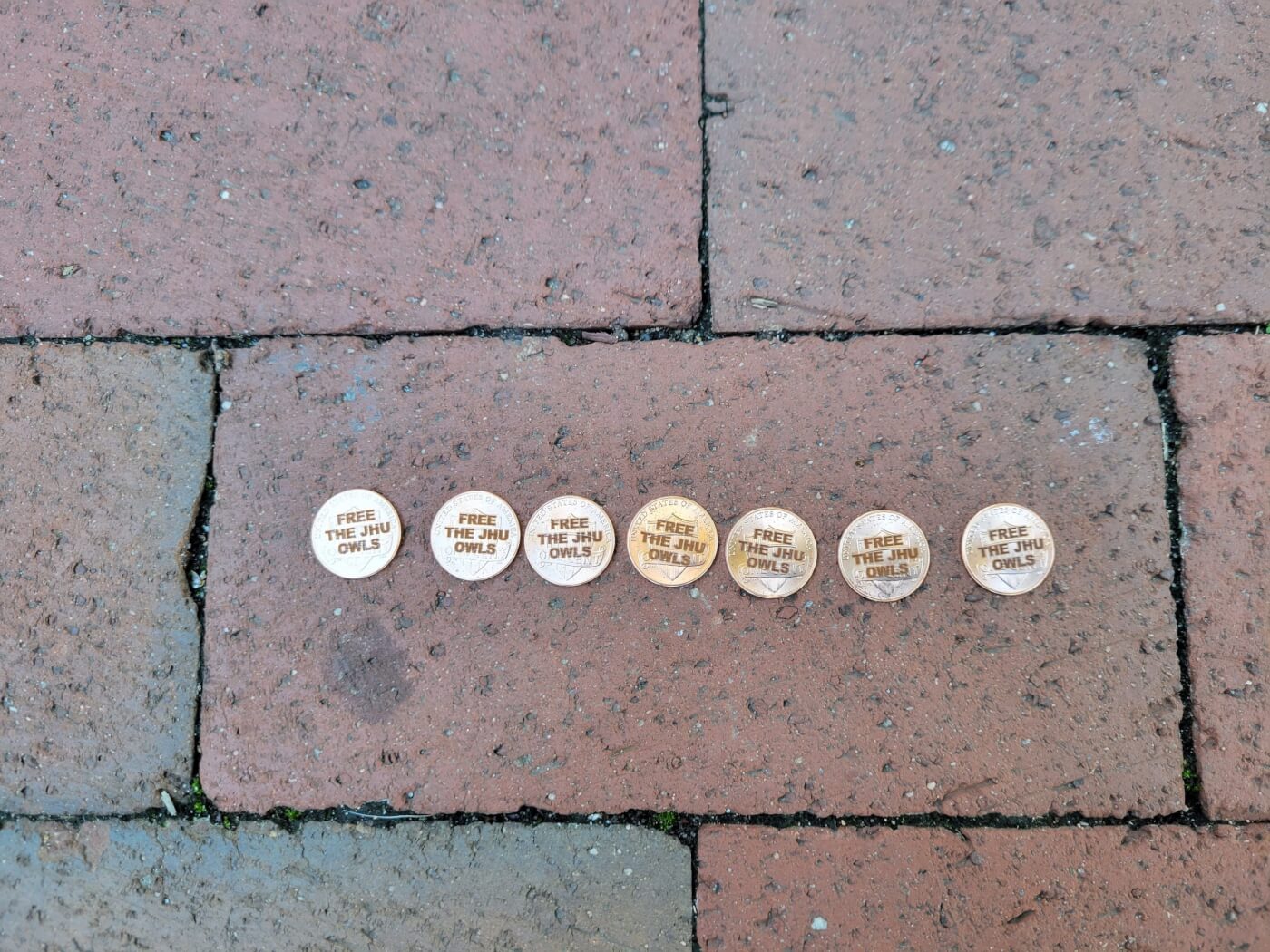
In a push for Johns Hopkins University (JHU) to end its deadly experiments on owls—whose skulls are cut into, brains are implanted with electrodes, bodies are constrained by tight jackets, and eyes and ears are bombarded by lights and sounds for up to 12 hours at a time—this week PETA is putting into circulation in the Baltimore area thousands of one-cent pieces, all embossed with the message “Free the JHU Owls,” and sending two to every member of the university staff and surrounding area residents.

Enclosed with the mailed coins is a letter detailing how JHU experimenter Shreesh Mysore doesn’t give tuppence (a British expression meaning “couldn’t care less”) when it comes to the birds he cages in a laboratory or the $1.9 million in public funds his tests have squandered.

“The suffragists made their plea for liberation with use of engraved pennies, and PETA is doing the same on behalf of imprisoned owls,” says PETA Vice President Shalin Gala. “PETA is asking the Johns Hopkins University community to demand an end to these owls’ torture in cruel experiments and their release to a reputable wildlife sanctuary.”

PETA notes that Mysore previously conducted these invasive brain experiments without valid state-mandated permits for years—in other words, illegally—and admitted that results from these experiments can be “misinterpret[ed].” Listen to Mysore here.

PETA—whose motto reads, in part, that “animals are not ours to experiment on”—opposes speciesism, a human-supremacist worldview. For more information on PETA’s investigative newsgathering and reporting, please visit PETA.org or follow the group on Twitter, Facebook, or Instagram.

The post Engraved Pennies Blasting Johns Hopkins Owl Experiments Put Into Circulation in Baltimore appeared first on PETA.

Full-Page Call for Dairy Whistleblowers Hits Local Papers, Courtesy of PETA

“Have you witnessed animal abuse or neglect on a dairy farm?” That’s the question from PETA that’s running in tomorrow’s editions of The Fresno Bee and its Spanish counterpart, Vida en el Valle, asking tipsters to submit their evidence to CIDInfo@peta.org. PETA investigations have found abuse on dairy farms across the country, including cows denied care for oozing grapefruit-size masses in Pennsylvania and others forced to lie down in their own waste in Texas—and the group is eager to find out what’s hiding behind closed doors in California.

“We want to hear from anyone who has seen cows struggling to walk, mired in their own waste, or bellowing for the calves who have been taken from them,” says PETA Executive Vice President Tracy Reiman. “By reporting abuse to PETA, industry insiders can help stop the abuse that Big Ag is desperate to hide.”

California Dairy Magazine stopped responding to PETA’s ad inquiries after seeing its artwork, so the group placed its whistleblower-seeking messages in local newspapers instead. PETA also plans to run them in newspapers in other dairy-heavy areas, including in Iowa, Michigan, and Pennsylvania.

Cows in the dairy industry are forcibly artificially inseminated—workers insert an arm into the animals’ rectum and a metal rod to deliver semen into their vagina—and their calves are taken away from them shortly after birth so that their milk can be sold and consumed by humans instead. Male calves, who are considered a “byproduct” by the dairy industry, may be killed and carved up for veal, while female calves are typically used as milk machines until their bodies give out and they’re slaughtered for cheap meat.

For all these reasons and more, per capita fluid cow’s milk consumption has dropped by 40% since 1975, according to data from the U.S. Department of Agriculture, while roughly one in three U.S. adults now drink vegan milk at least weekly.

PETA—whose motto reads, in part, that “animals are not ours to eat or abuse in any other way”—opposes speciesism, a human-supremacist worldview. For more information, please visit PETA.org or follow the group on Twitter, Facebook, or Instagram.

The post Full-Page Call for Dairy Whistleblowers Hits Local Papers, Courtesy of PETA appeared first on PETA.

PETA Squashes SeaQuest CEO’s Bid to Build a Grand Forks, North Dakota, Aquarium!

A vacant Kmart in Grand Forks, North Dakota, was dangerously close to being turned into a SeaQuest aquarium and petting zoo—but then PETA stepped in! In his bid for $1 million in taxpayer money to build another animal house of horrors, SeaQuest CEO Vince Covino made numerous demonstrably false statements to the Grand Forks City Council, including about his connection to a convicted wildlife trafficker. So PETA urged North Dakota Attorney General Wayne Stenehjem to consider the facts, and we requested an investigation into apparent violations of the North Dakota Unlawful Sales or Advertising Practices Act. Now, mere days after our letter was sent, Covino has conveniently decided to “pass” on the Grand Forks location.

In our letter to Stenehjem, we pointed out several of Covino’s false and misleading claims, including the following:

  • Although Covino states that SeaQuest is the fastest growing aquarium/petting zoo company “in the history of the world,” in part because it has been “successful with compliance with regulators,” the company has been hit with citations stemming from human injuries and animal deaths, a fine for possession of unpermitted animals, a license suspension, and a lawsuit over unpaid taxes.
  • While Covino has attempted to distance himself from his brother, Ammon, a convicted wildlife trafficker, the indictment against Ammon outlines his attempt to acquire sharks for an aquarium that he was building with Vince. Ammon was also arrested and jailed for violating his parole restrictions by working on the construction of and animal acquisition for two SeaQuest facilities.
  • Vince Covino dismissed an incident in which a child had been bitten by an otter at SeaQuest’s Connecticut location as “nothing to the extent where a Band-Aid wouldn’t fix it immediately,” but otter bites carry a risk of rabies infection—and the bite occurred just two weeks after interactions with otters resumed following a six-month state-mandated rabies quarantine because another child had been bitten.
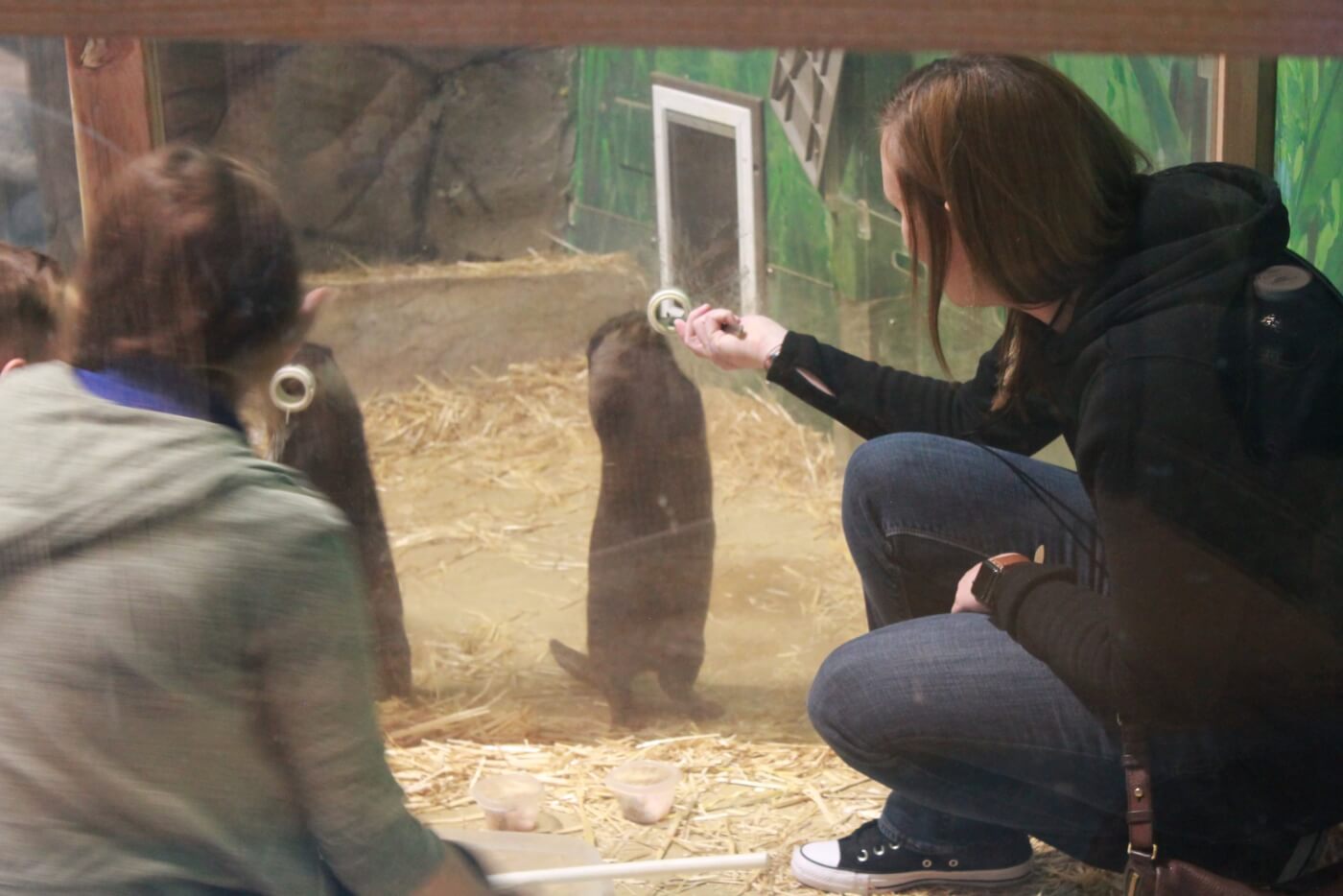
seaquest otters stressed by human interaction

For the most part, SeaQuest confines otters exclusively to indoor areas that have concrete flooring, with straw sometimes covering the concrete. When they’re not swimming in water, otters generally need dry land for resting. Ideally, the terrain would consist of grass, soil, sand, or pebbles—not concrete, which can cause foot and tail sores.

  • Records show that SeaQuest Las Vegas secretly replaced a dead otter with another animal, in violation of its county permit. This unpermitted female otter was placed with a male otter, even though SeaQuest’s permit strictly prohibited breeding, and she became pregnant a month after arriving. Contrary to Covino’s claims, this otter did not arrive at SeaQuest pregnant.
  • While Covino claims that SeaQuest has received funding “in every city” and that $1 million “would be the smallest amount of funds” that it’s ever received, only Layton, Utah, seems to have given SeaQuest public funds—and only $40,000.

Thankfully, Covino decided to walk away instead of continuing his bid to swindle Grand Forks taxpayers out of a million dollars. And while the disreputable CEO reportedly claims that other unidentified cities “want and need” SeaQuest, PETA remains at the ready, prepared to advise municipalities about his deceptive conduct as well as the trail of dead animals, injured customers, and controversy that SeaQuest aquariums have left. As we keep doing everything that we can to prevent any more of these monstrosities from popping up, you can speak up for these animals, too: Click below to urge SeaQuest to stop exploiting animals and to share your disappointment with properties that have supported the notorious company:

” link=”https://headlines.peta.org/seaquest-aquariums/?en_txn7=blog::grand%20forks%20seaquest%20plan%20squashed” target=”_blank” color=”dark-blue” size=”large” position=””]

The post PETA Squashes SeaQuest CEO’s Bid to Build a Grand Forks, North Dakota, Aquarium! appeared first on PETA.

USDA Cites NIH-Contracted Int’l Breeding Mill for Dozens of Violations of the Animal Welfare Act

Today, the U.S. Department of Agriculture (USDA) released three damning inspection reports citing Envigo—a Virginia-based, international dog breeder and supplier to laboratories—for 26 violations of the federal Animal Welfare Act. This federal inspection occurred in July, while PETA’s just-released undercover investigation was underway. Another multiday inspection took place just this month, the findings of which aren’t yet available.

According to the July reports, federal veterinarians found 15 dogs denied treatment for “severe dental disease,” wounds, yellow discharge around the eyes, and more; a “depressed” puppy covered with feces in a waste pan; 13 dogs denied food for 42 hours while nursing 78 puppies; hundreds of dogs and puppies confined to rooms in which temperatures reached 92.3 degrees; a dog trapped by her foot in a kennel floor and puppies’ legs jutting through floors; more than 450 dogs deprived of adequate space; an “overpowering ammonia and fecal odor”; insects in dogs’ food; “widespread” maintenance problems; and more. Envigo’s own records reportedly showed more than 300 puppies’ deaths were attributed to unknown causes, that 24 dogs and puppies were “missing,” and that three dogs had been killed in fights and 71 dogs had been injured by dogs in adjacent kennels. The facility allegedly “refused to provide full copies” of study records for 16 animals used in experiments to federal inspectors.

In October, the USDA opened an investigation of Envigo after PETA reported to the government that its investigator witnessed and filmed workers with no veterinary credentials injecting euthanasia drugs directly into puppies’ hearts without sedation, causing them immense pain; intentionally depriving nursing mother dogs of food for up to two days; and leaving dogs soaked to the skin from water sprayed via high-pressure hoses. A facility supervisor was caught on video describing USDA inspectors’ concerns as “a damn game you gotta play to … satisfy ’em, because of the bull**** that they can make happen.”

“These inspection reports make it clear that Envigo has been failing to provide these beagles with basic care and veterinary attention to prevent and alleviate psychological and physical suffering,” says PETA Senior Vice President of Cruelty Investigations Daphna Nachminovitch. “It is time for the company to do the right thing by getting out of the animal business.”

Since September 2020, the National Institutes of Health, already under fire for funding cruel experiments on dogs, has awarded three contracts to Envigo. According to published papers, dogs from Envigo have also been experimented on at the U.S. Food and Drug Administration, Temple University, the Medical University of South Carolina, the University of Missouri, and Level Biotechnology in Taiwan, among other facilities. Photos and video footage from PETA’s investigation are available via WeTransfer here and here. Video statements from Nachminovitch are available via WeTransfer here.

PETA—whose motto reads, in part, that “animals are not ours to experiment on”—opposes speciesism, a human-supremacist worldview. For more information on PETA’s investigative newsgathering and reporting, please visit PETA.org or follow the group on Twitter, Facebook, or Instagram.

The post USDA Cites NIH-Contracted Int’l Breeding Mill for Dozens of Violations of the Animal Welfare Act appeared first on PETA.