Please see the following statement from primate scientist PETA Science Advisor Dr. Lisa Jones-Engel, who spoke to an eyewitness who was at the scene of the Pennsylvania truck crash on Friday. This morning, PETA filed a complaint with the U.S. Department of Agriculture and the agency has just confirmed it has opened an investigation.
PETA has obtained eyewitness information that a woman on the scene of the crash got an eyeful of monkey saliva that has caused a reaction and she is now on antiviral drugs and medication to protect against rabies. Feces and urine from the terrified monkeys were reportedly smeared across the highway as crates—that weren’t strapped in as required—flew from the truck, and the Centers for Disease Control and Prevention should be scrambling to ensure that numerous people who were at the scene aren’t in danger. The monkeys, some likely injured and all surely terrified, remained on the highway in subfreezing temperatures for hours without any protection or veterinary care as onlookers peered into the crates. The importation of monkeys for experimentation has minimal oversight—monkeys arrive by airplane from Asia or Africa, are trucked without adequate oversight to undisclosed quarantine sites, and are then sent out to laboratories across the country. If monkeys develop bloody diarrhea or other symptoms after their quarantine period PETA has learned that no officials are informed and no one seems to care. For the safety of ALL animals, the U.S. must stop pretending that experiments on monkeys are useful and stop importing them.
For more information on PETA’s investigative newsgathering and reporting, please visit PETA.org or follow the group on Twitter, Facebook, or Instagram.
“Given that Jennie-O has a track record of violations and that producing vegan meats eliminates the risk of slaughterhouse violations, what is Hormel doing to hasten the transition to producing only vegan foods?” That’s the question a PETA representative will ask the company’s executives at Hormel’s virtual annual meeting tomorrow.
PETA recently obtained U.S. Department of Agriculture documents from April through July 2021 revealing numerous slaughter violations at the Melrose turkey slaughterhouse operated by Hormel subsidiary Jennie-O. On one day, 514 turkeys were dead on arrival, which a report describes as an “on-going concern.” On another day, on the conveyor belt headed toward the carbon dioxide gas chamber, two cages had a layer of dead turkeys on the bottom. And on numerous days, turkeys exhibited signs of heat stress but weren’t provided with the fans or foggers required to cool them down, even as temperatures climbed as high as 93 degrees.
PETA notes that Hormel already offers a vegan line, Happy Little Plants—and that the demand for vegan meats has continued to rise, with the global vegan meat market expected to top $13 billion by 2026.
“The more consumers learn how gentle birds suffer from and die of heatstroke even before they face the slaughterhouse knife, the more they’re eager to go vegan,” says PETA Executive Vice President Tracy Reiman. “PETA is urging Hormel to get out of the animal-killing business and switch entirely to making the delicious vegan meats that today’s kind shoppers want.”
Early in the pandemic, PETA purchased stock in Hormel along with stock in Tyson, Sanderson Farms, Maple Leaf Foods, Kraft Heinz (parent company of Oscar Mayer), and Chinese-owned WH Group (owner of Smithfield Foods)—all with the aim of urging them to switch to producing vegan meats.
PETA—whose motto reads, in part, that “animals are not ours to eat”—opposes speciesism, a human-supremacist worldview. For more information, please visit PETA.org or follow the group on Twitter, Facebook, or Instagram.
Missaukee County Prosecuting Attorney David Den Houten has filed a felony count of cruelty-to-animals and three misdemeanor counts of violating other animal protection laws against Jack Russell terrier breeder John D. Jones, following a PETA undercover investigation revealing extreme abuse and neglect at Jones’ unlicensed kennel, a four-daysit-in by PETA members calling for action at the Missaukee County Sheriff’s Office, and the January 7 seizure of some 40 dogs kept outside by Jones in below freezing temperatures. The charges stem from PETA’s video footage and photos of Jones severing puppies’ tails without anesthetics or pain relief and leaving small, shorthaired dogs penned outside in sub-freezing cold, snow and mud—and often without drinkable water, as it would freeze overnight—among other issues. One dog was found frozen after dying overnight.
Below, please find a statement from PETA Senior Vice President Daphna Nachminovitch:
John Jones mutilated puppies and left dozens of dogs to suffer in barren pens in the freezing cold so charges against him should stick and stick hard. PETA looks to the prosecutor to prevent more dogs from suffering in this serial abuser’s hands by seeking a lifelong ban on possessing animals and urges the public to never shop, but adopt.
PETA notes that this is at least the third time law-enforcement authorities have confiscated dogs from Jones. By 2008, approximately 85 dogs had been seized from him in Barry County, Michigan; in 2013, authorities seized at least 165 dogs from him in Missaukee County.
A curious onlooker of a vehicular accident on a Pennsylvania highway got the shock of a lifetime when she approached a crate that she believed held a cat, cooing, “Kitty, kitty.” Instead, she found a monkey looking back at her. She had no idea that she may have been risking her life. One of the vehicles involved in the wreck was carrying 100 long-tailed macaque monkeys on their way to a quarantine facility in Florida. When the wreck occurred, four monkeys escaped—and one is still missing. The other three have had their first and last taste of freedom and the opportunity to climb trees.
SHE SAW THE MONKEYS: One monkey is still on the loose in the Danville area after four escaped from a truck carrying lab monkeys. Michele Fallon saw the wreck unfold. She says people first thought the truck was full of cats! @WNEPpic.twitter.com/9n8XUkm1J7
The monkeys had just arrived in New York from what is likely a squalid breeding farm in Mauritius. They had not been quarantined, and their health status was unknown. Monkeys can carry lethal pathogens that spread through their saliva, blood, feces, and urine. Photos taken at the site of the Pennsylvania monkey crash reveal a worrying lack of biosecurity—people dragging boxes barehanded, motorists sticking their faces into crates, and of course, the escaped, likely terrified and disoriented monkeys who were thrown out into freezing cold weather and will likely die from their injuries and/or exposure or be killed.
New pictures of the monkeys police and game commission are trying to round up after a crash involving a truck they were in this afternoon in Danville, PA . we are told the 100 monkeys were being taken to a lab before the crash. 4 are still loose tonight. @CBS21NEWSpic.twitter.com/VqCOr3qYJ1
Because these 100 long-tailed macaque monkeys were headed to a laboratory to be caged, tormented, and killed, they were already in danger—but now the public is, too. The four who got away—including one who is still missing—are undoubtedly terrified and likely injured, and they may be harboring viruses that are transmissible to humans. There is no way to ensure that monkeys are virus-free, and state veterinary and other records uncovered by PETA show that monkeys in laboratories in the U.S. have been found with tuberculosis, Chagas disease, cholera, and MRSA. The only way to ensure that pathogens don’t jump from monkeys to humans is to stop importing, caging, and experimenting on these animals. A 2020 pathology report uncovered by PETA shows that shortly after clearing Centers for Disease Control quarantine, one monkey from Mauritius arrived at the University of Washington infected with giardia and campylobacter. Approximately two months later, before being used in an experiment, the monkey developed bloody diarrhea of unknown origin. The young longtailed macaque was eventually killed when he became too sick.
This monkey crash is not the first time monkeys have posed a health risk to the public. In 1989, monkeys infected with an unknown strain of the Ebola virus landed at a facility owned by Hazleton Laboratories (later known as Covance and now Envigo) in Reston, VA. Four people became ill before all the monkeys were killed and the lab shut down. It happened again in 1996, that time in Texas. Shipping monkeys and other animals to torment and ultimately kill them is dangerous—for everyone. But that hasn’t stopped companies that experiment on animals from continuing to engage in the practice.
Every year, thousands of monkeys are transported to and around the U.S. to be imprisoned in laboratories and tormented in experiments in which they’re often cut open, poisoned, crippled, forced to become addicted to drugs, shocked, and killed. These sensitive individuals are bred in captivity on filthy factory-like farms in Africa and Asia.
This Monkey Crash Should Never Have Happened
The industry that claims to be developing vaccines and treatments for human diseases not only fails to deliver results from animal-based experimentation, but also cruelly abuses and wastes the lives of sensitive monkeys and poses health risks to the general public by failing to safely contain the animals they use.
PETA is calling on the U.S. Department of Health and Human Services to close monkey facilities and transfer the animals held within them to reputable sanctuaries. Please join our call:
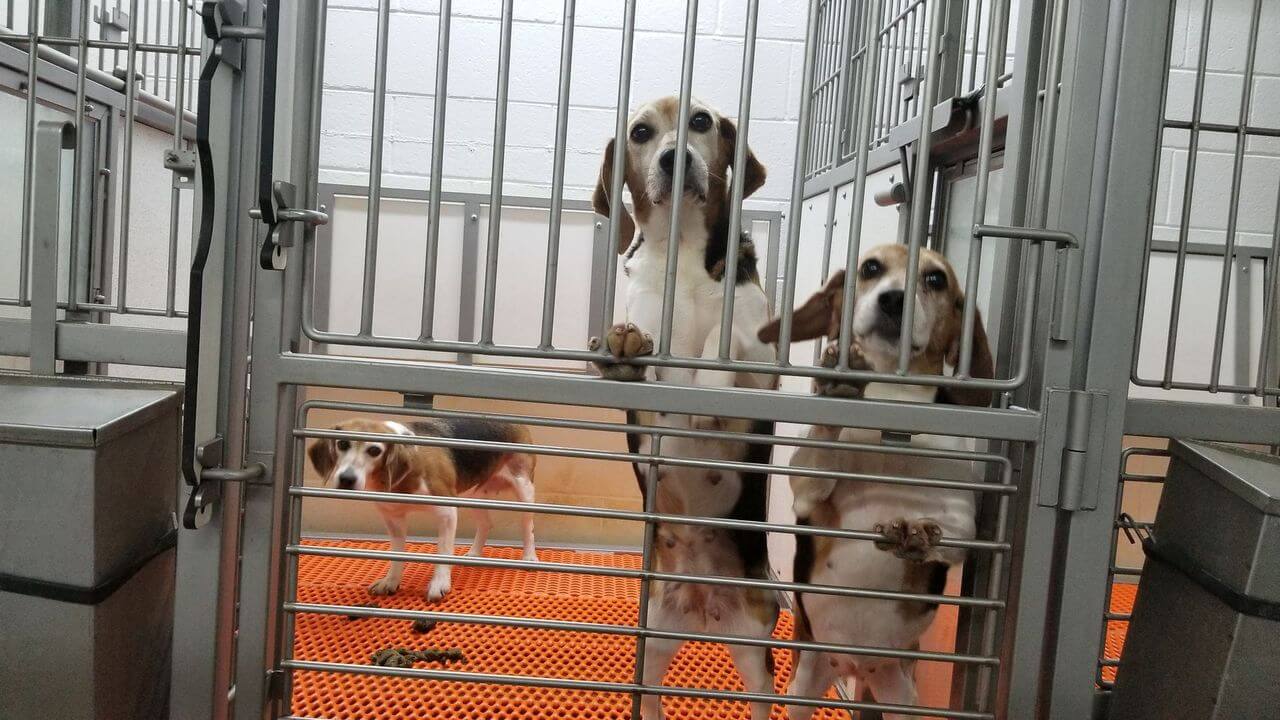
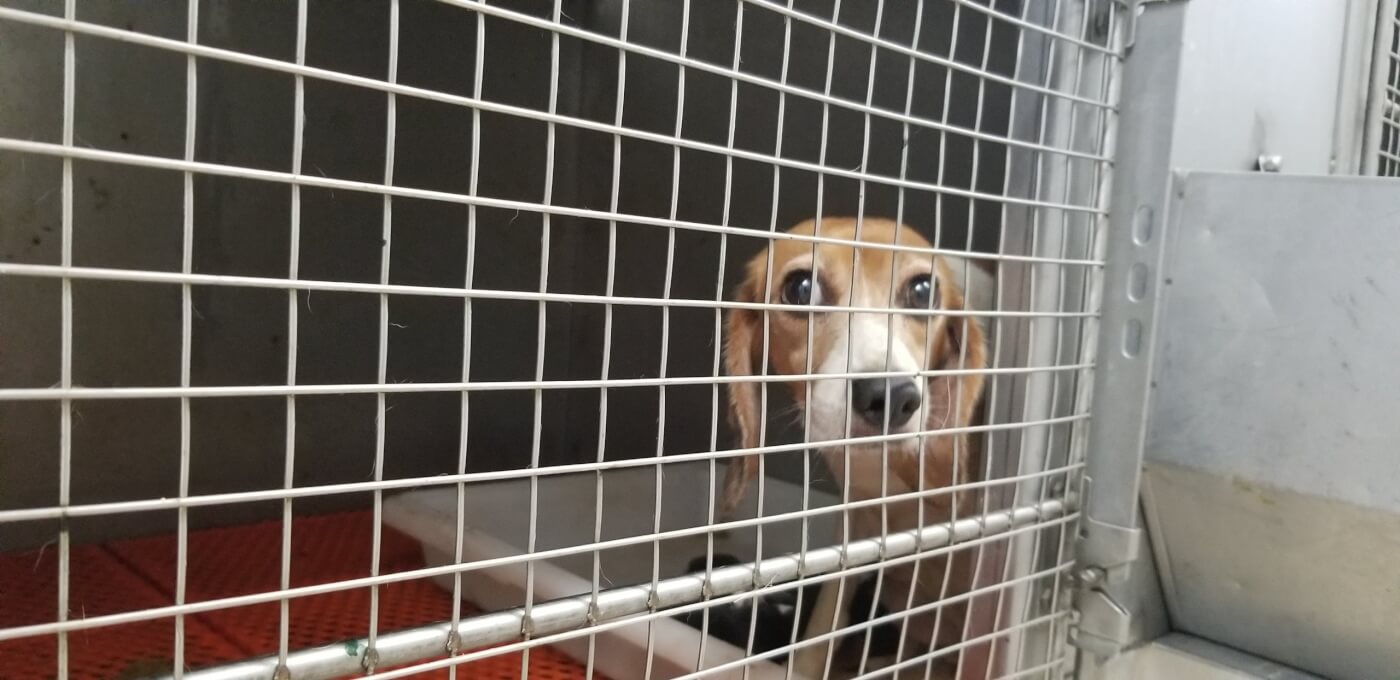
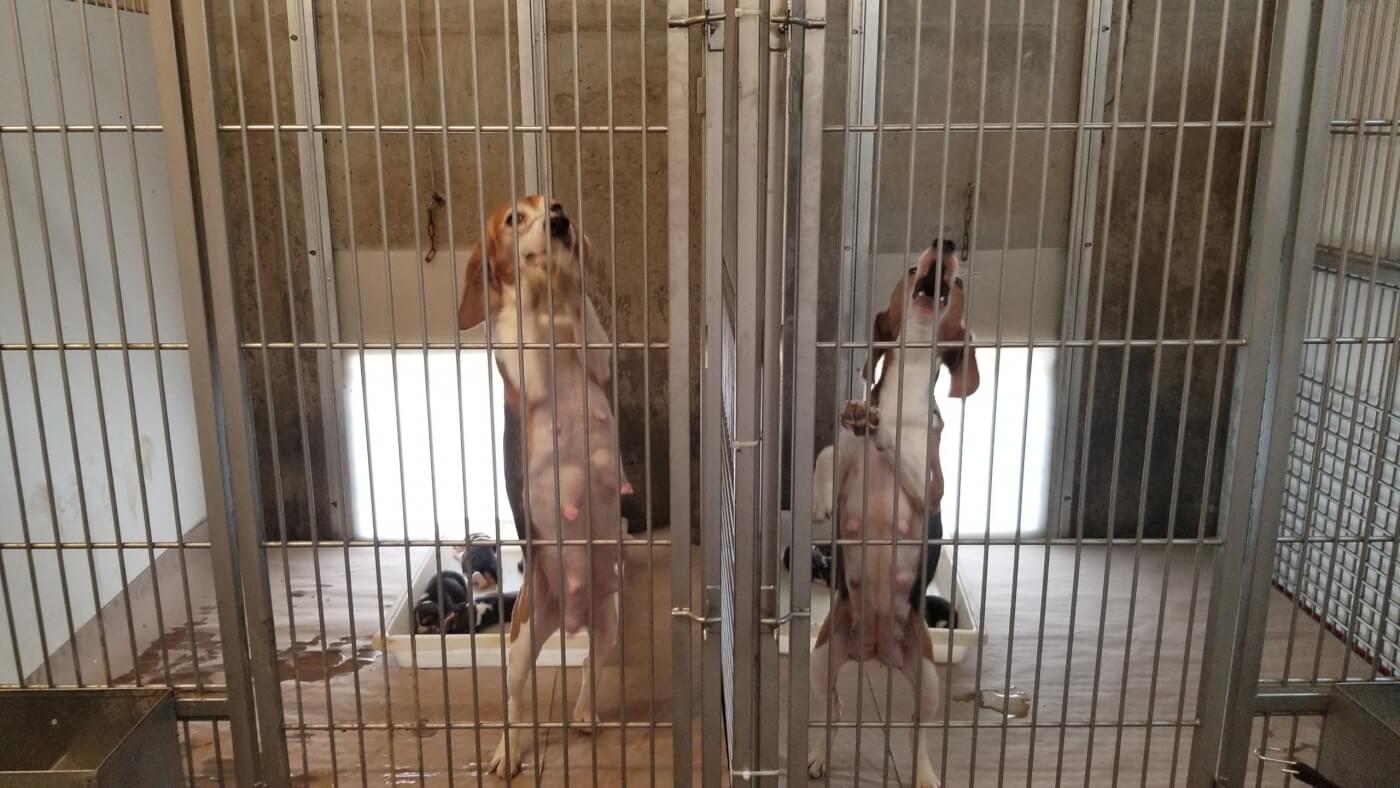
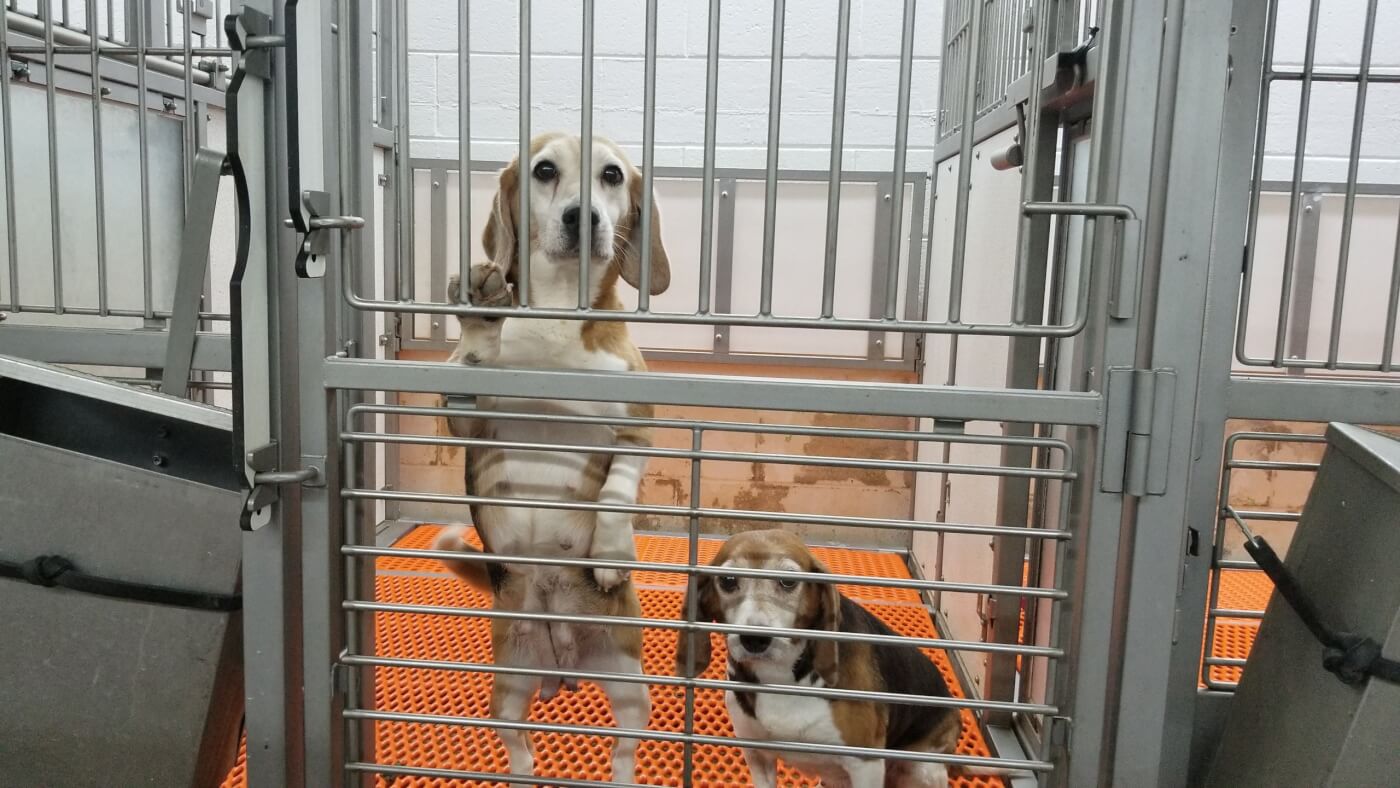
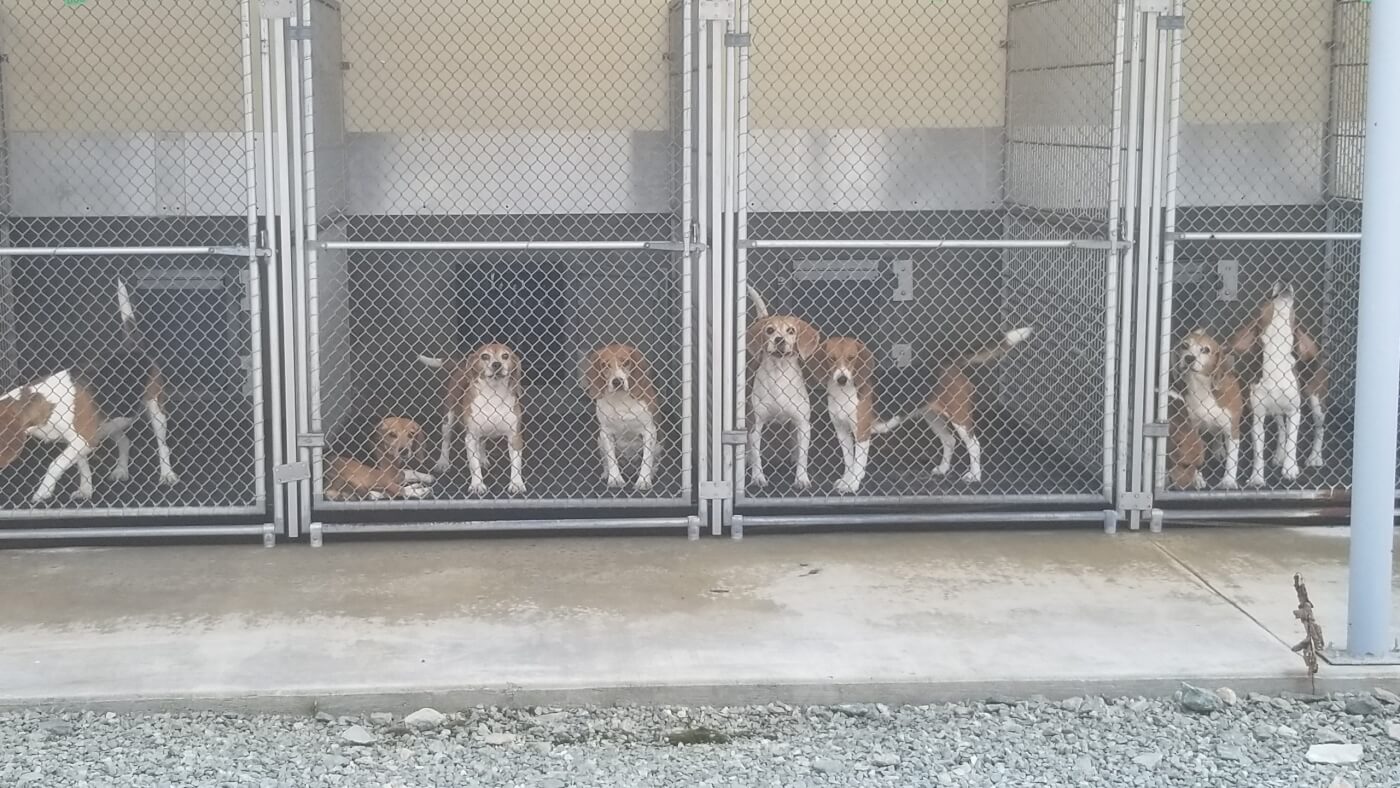
Did you know that Cumberland, Virginia, is home to a massive factory farm that breeds dogs? Owned by Envigo—Virginia’s largest commercial dog breeder—it warehouses 5,000 beagles at a time and produces 500 puppies per month to sell to experimenters all over the world.
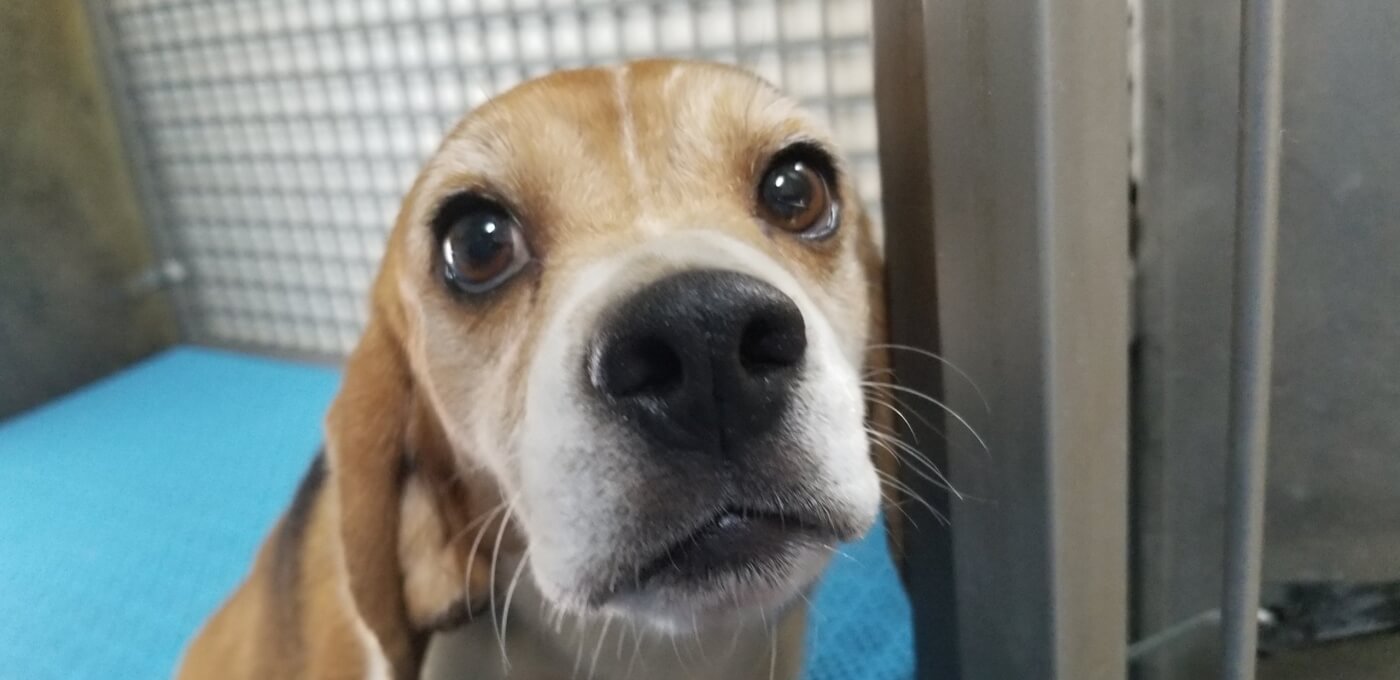
Beagles are used for experimentation because they’re small, docile, and forgiving. At Envigo, these gentle dogs are kept caged 24/7 without beds, stimulation, or the opportunity to play or exercise—they don’t even have names. A PETA undercover investigation and a 37-page inspection report from the U.S. Department of Agriculture (USDA) recently exposed the cruelty at this hellish facility, which has been operating in Virginia without state oversight since 1961.
USDA inspections of Envigo resulted in 26 citations in 2021. The inspection reports detail the following, among other findings:
Sick animals left untreated, including 71 dogs who had been injured in fights, five with severe dental disease, and three with serious skin conditions, including one who had patchy hair loss covering approximately 80% of her coat
Nursing dogs deprived of food (Some were seen “reaching their front paws through the doors of the cages to reach the food in the top of their feeders” and “trying to scoop or dig out food from the feeders,” only to retrieve an occasional piece of kibble. One mother dog was observed “vigorously licking the back of the self-feeder, [and] another was observed intently smelling the side of the feeder.”)
A “large accumulation of feces, urine, standing water, insects (both dead and alive) and uneaten food under the raised indoor and outdoor kennel floors”
The federal investigation is ongoing, and additional citations are expected. An auditor’s report on Envigo that was filed with the U.S. Securities and Exchange Commission outlines possible outcomes of the investigation:
During the period from July through December 2021, one of the Company’s U.S. facilities was inspected on several occasions by the U.S. Department of Agriculture (“USDA”). USDA issued inspection reports with findings of non-compliance with certain USDA laws and regulations. Envigo formally appealed certain of the findings. USDA has indicated it intends to conduct a formal investigation. The inspections and/or the investigation could lead to enforcement action resulting in penalties that could include a temporary restraining order or injunction, civil and/or criminal penalties, and/or license suspension or revocation. Orders resulting from an administrative action, if any, can be appealed to a U.S. Court of Appeals. There can be no certainty as to the end result.
But there’s good news, too! Nine Virginia legislators from both sides of the aisle have introduced 11 bills that, if passed, would help improve welfare standards, implement some reporting requirements, restrict state funds that can be spent on animals from facilities that have violated the federal Animal Welfare Act (AWA), and more. The dogs need concerned Virginians like you to contact your legislators and urge them to support these bills, which would do the following:
Increase protections for dogs and cats by ensuring that companies cited under certain provisions of the AWA can’t do business with Virginia state agencies and that the state does not use public funds to procure animals from facilities that are in violation of the AWA [HB 255, SB 87]
Prohibit the sale of dogs bred for experimentation in Virginia for experiments not required by federal law or regulation and prohibit the sale of dogs for experimentation overseas (This industry is shrouded in secrecy, but documentation shows that animals commercially bred in Virginia are sold to laboratories in Japan and Taiwan—both of which have abysmally low standards for animal welfare policy and legislation.) [HB 1061, SB 457]
Help ensure that state authorities have oversight of facilities that breed dogs and cats for experimentation by implementing requirements for record keeping and reporting [SB 88, SB 442, SB 535]
Require that animals at breeding facilities be given a chance to find a loving home (Dogs who have endured such miserable conditions their entire lives should be given a chance to be adopted, loved, and respected. One PETA investigator adopted Samson, a beagle used for breeding who was evidently no longer useful to Envigo. Samson needed urgent care for various health conditions—including broken and rotting teeth, an ear infection, and bloody urine—but he’s currently enjoying life with his adoptive family.) [SB 90]
Close a legal loophole that currently excludes dogs and cats used as research animals from Virginia’s companion animal–protection laws (This bill would hold facilities that breed dogs and cats for experimentation to the same standards as animal shelters and commercial breeders that sell them as companion animals.) [SB 604]
Summary (as introduced): Procurement of dogs and cats for research. Prohibits any state entity, including a public institution of higher education, from procuring dogs or cats for research purposes from a person or entity that has received certain citations pursuant to the federal Animal Welfare Act.
Summary (as introduced): Breeding dogs or cats for foreign animal testing facility prohibited; penalty. Prohibits a person from breeding or raising a dog or cat for the purpose of selling or transferring the dog or cat, or its offspring, to an animal testing facility outside of the United States. A violation of the bill is a Class 1 misdemeanor.
Patron:Del. Kaye Kory and Del. Hyland F. “Buddy” Fowler Jr.
Summary (as introduced):Breeders; records of animals sold or transferred to animal testing facility; report. Requires entities that breed dogs or cats for sale or transfer to an animal testing facility to keep records of each animal for two years from the date of the sale or transfer, and to annually submit a summary of the records to the State Veterinarian. Such entities shall also report certain information to the State Veterinarian on a monthly basis. The report shall include information regarding the birth, acquisition, death, sale, transfer, or other disposition of a dog or cat in the prior month.
Summary (as introduced): Dealers; sale of dogs or cats for experimental purposes. Prohibits a dealer or commercial dog or cat breeder from importing for sale, selling, or offering for sale a dog or cat bred by a person who has received certain citations pursuant to the federal Animal Welfare Act. Current law only prohibits such activities related to the sale of dogs. The bill also clarifies that selling includes selling the dog or cat for experimental purposes.
Summary (as introduced): Dealers; sale of dogs or cats for experimental purposes. Prohibits a dealer or commercial dog or cat breeder from importing for sale, selling, or offering for sale a dog or cat bred by a person who has received certain citations pursuant to the federal Animal Welfare Act. Current law only prohibits such activities related to the sale of dogs. The bill also clarifies that selling includes selling the dog or cat for experimental purposes.
Summary (as introduced): Breeders; records of animals sold or transferred to animal testing facility. Requires entities that breed dogs or cats for sale or transfer to an animal testing facility to keep records of each animal for two years from the date of the sale or transfer, and to annually submit a summary of the records to the State Veterinarian.
Summary (as introduced): Breeders of dogs and cats for animal testing facilities; adoption of dogs and cats. Requires a breeder of dogs and cats for sale or transfer to an animal testing facility that no longer has a need for a dog or cat in its possession to offer the animal for adoption prior to euthanizing it. Currently, only animal testing facilities are subject to this requirement.
Summary (as introduced): Breeding of dogs and cats for research; reporting. Requires any person who or entity that breeds dogs and cats for animal testing facilities to report certain [information] to the State Veterinarian on a monthly basis. The report shall include information regarding the birth, acquisition, death, sale, transfer, or other disposition of a dog or cat in the prior month.
Summary (as introduced): Breeding dogs for certain research prohibited; penalty. Prohibits a person from breeding or raising a dog for the purpose of selling or transferring the dog or cat, or its offspring, to an animal research facility outside of the United States, or to an animal research facility located in the United States that will use the animal for testing or research not required by federal law or regulation. A violation is a Class 1 misdemeanor.
Summary (as introduced): Oversight of research breeders; Animal Welfare Oversight Officer; Animal Welfare Oversight Advisory Committee; civil penalty. Directs the State Veterinarian to hire an Animal Welfare Oversight Officer to inspect and oversee the operations of research breeders, defined in the bill as a person or entity that breeds dogs or cats for sale or transfer for use in testing or research within or outside the Commonwealth, and report any violations of state or federal law by the research breeder. The bill requires each research breeder to register with the Animal Welfare Oversight Officer, pay a registration fee as determined by the Commissioner of Agriculture and Consumer Services, and allow the Animal Welfare Oversight Officer continuous access to its facilities located in the Commonwealth. The bill subjects a research breeder that does not register, pay the fee, or allow the Animal Welfare Oversight Officer access to its facilities to a civil penalty of $1,000 for each day of noncompliance. The bill also establishes an Animal Welfare Oversight Advisory Committee.
Summary (as introduced): Animal cruelty; companion animals; penalty. Clarifies that dogs and cats in the possession of a person who or an entity that breeds dogs or cats for sale or transfer to an animal research facility are considered companion animals for the purposes of animal cruelty statutes. The bill also provides that breeding dogs or cats for sale or transfer to a research facility, or breeding dogs or cats within a research facility, does not constitute bona fide scientific or medical experimentation for purposes of animal cruelty statutes.
 we are told the 100 monkeys were being taken to a lab before the crash. 4 are still loose tonight.