Please see the following statement from PETA Senior Vice President Kathy Guillermo regarding Judge Nana Chin’s decision to uphold the veterinary license suspension of California Horse Racing Board (CHRB) Equine Medical Director Jeff Blea:
If the allegations against Jeff Blea are found to be true, horses were harmed. PETA will be asking the district attorney to investigate Blea for possible violations of anti-cruelty laws, particularly regarding his alleged administration of a powerful thyroid medication to multiple horses without examining them. Blea was once quoted as saying, “In our practice, I think if we had half a dozen horses a year that we put on thyroxine that’s probably too many. Hypothyroidism is a pretty rare metabolic disease in the horse.” Yet he is now alleged to have administered thyroxine to multiple horses well after the California Horse Racing Board tightened the rules on the medication, following the deaths in 2011 to 2013 of seven Bob Baffert–trained horses, all of whom had been given thyroxine. Ignoring veterinary regulations, racing rules, and the welfare of horses must not be tolerated.
PETA—whose motto reads, in part, that “animals are not ours to use for entertainment or abuse in any other way”—opposes speciesism, a human-supremacist worldview. For more information, please visit PETA.org or follow the group on Twitter, Facebook, or Instagram.
Following news that the groundhog Milltown Mel died shortly before this year’s Groundhog Day event, PETA sent a letter today to John McNamara—“chief wrangler” and owner of the funeral home where Mel was kept—offering condolences on the loss of Mel and urging McNamara not to replace him with another live groundhog, as he reportedly plans to do.
Instead, PETA asks the organizers to consider an animatronic groundhog with artificial intelligence that could actually predict the weather, a groundhog costume (which a human could choose to wear), or a persimmon tree whose seeds could be checked for the forecast. Any of these prognosticators would help Milltown celebrate Groundhog Day without dragging a shy, sensitive animal out of hibernation, transporting him to an unfamiliar location, and subjecting him to distressing loud crowds, bright lights, and human handling.
“Just as whaling towns in New England celebrate now without harming animals, we hope Milltown will modernize, recognize society’s belated respect for wildlife, and end the practice of turning groundhogs into captive props,” says PETA President Ingrid Newkirk. “PETA stands ready to help the town honor Mel’s memory by establishing itself as a trendsetting and humane Groundhog Day destination that shows respect for these remarkable animals.”
PETA—whose motto reads, in part, that “animals are not ours to use for entertainment”—opposes speciesism, a human-supremacist worldview. For more information, please visit PETA.org or follow the group on Twitter, Facebook, or Instagram.
PETA’s letter to McNamara follows.
February 2, 2022
John McNamara
Chief Wrangler
Bronson & Guthlein Funeral Home
Dear Mr. McNamara:
I’m writing on behalf of People for the Ethical Treatment of Animals—PETA entities have more than 9 million members and supporters globally, including many in New Jersey—to offer our condolences on the loss of Milltown Mel and in response to news that you’re trying to find a new groundhog to replace him for 2023. We strongly urge you to honor his memory and respect all wildlife by ending this tradition. We ask that you please hear us out and consider seeking alternative entertainment, using a robotic groundhog or a costumed human (who had a choice whether to participate) as your groundhog prognosticator. Here’s why:
As a prey species, groundhogs are shy, sensitive animals who avoid humans at all costs, if they can. Dragging them out of hibernation and transporting them to an unfamiliar location where they may be in close proximity to a crowd of people inarguably causes them significant stress. As if that weren’t enough, groundhogs can transmit zoonotic pathogens to humans, and they’re believed to be highly susceptible to the SARS-CoV-2 virus responsible for the current pandemic. This situation poses a safety risk to groundhogs and their handlers and could increase the risk of illness from infectious diseases. And with the blaring voice of an announcer and hooting and hollering from the audience only feet away from the groundhog, these events are frightening and distressing to them, as these animals have highly sensitive hearing. With all due respect, regardless of the intent of this exhibit, the message conveyed to the public is irresponsible and condones the inhumane treatment of animals.
There are plenty of excellent ways for Milltown to make a name for itself. Please consider an animatronic groundhog with artificial intelligence that could actually predict the weather, a contest for best groundhog costume, or even a persimmon tree to plant; you could hold an event where you check the seeds annually to determine the season’s weather.
Respectfully, we ask that you please stop exploiting live wildlife, for the sake of humans and other animals alike. We look forward to hearing from you. Thank you for your consideration.
Today, as President Joe Biden announces plans to cut the rate of cancer deaths in the U.S. in half, PETA scientists sent a petition request to National Cancer Institute Director Norman Sharpless asking that the agency prioritize research that can actually help cancer patients, rather than continuing to rely on animal experiments that have failed.
The petition was signed by 39,760 people and follows a letter, co-signed by the National Hispanic Medical Association, 104 U.S. physicians and health-care professionals, and PETA scientists, that was sent to Sharpless and White House Office of Science and Technology Policy Director Eric Lander in November, and a PETA white paper, requesting five critical changes to federal cancer funding. The group released a full-page newspaper ad to underscore the effort.
PETA’s petition and ad coincide with Biden’s announcement today that the U.S. will relaunch the Cancer Moonshot. PETA is hopeful about the president’s anticipated approach. According to the White House statement on the matter, the priorities of the new Cancer Moonshot are cancer prevention and care, individualized treatments, addressing racial disparities in cancer rates and fatalities, and support for patients and their families.
History shows this is a wise move. Despite the $140 billion that has been spent on cancer-related initiatives in the past 50 years, including experiments on countless animals, cancer remains the second-leading cause of death in the U.S.—as it was a half-century ago. One reason for this lack of progress is that cancer drugs tested on animals fail in human clinical trials 96.6% of the time.
“The Bidens know that what cancer patients need is better prevention, earlier and more frequent screenings, and better care during treatment, not more failing animal experiments,” says PETA neuroscientist Dr. Katherine Roe. “PETA thanks the president for following the science and putting his priorities in areas that reduce cancer morbidity and mortality, saving patients and sparing animals’ lives.”
PETA’s petition requests that the National Cancer Institute take the following actions:
Reallocate National Institutes of Health intramural and extramural research funding toward animal-free, human-relevant models
Convene or commission an unbiased committee to review the translatability of cancer research and carcinogenicity assessment in animals to human patients
Provide regulators and researchers with opportunities to receive free training and education on the use of human-relevant models
Adopt legislation to create new federal regulations to replace outdated requirements of the lifetime tests on rats and mice for carcinogenicity assessment with rapid, reliable, and human-relevant models
Increase the percentage and amount of federal funding allocated to cancer prevention
PETA scientists point out that in vitro methods, such as organs-on-chips and tissue engineering, as well as three-dimensional printing, human genomics, and computational biology are more efficient and accurate for studying cancer in humans and protecting human health and that cancer prevention and control, which does save lives, has been erroneously underfunded.
PETA—whose motto reads, in part, that “animals are not ours to experiment on”—opposes speciesism, a human-supremacist worldview. For more information, please visit PETA.org or follow the group on Twitter, Facebook, or Instagram.
If you’ve ever passed a truck on the highway and wondered what was inside, you’ve likely never guessed that it may be full of monkeys. But a January 21 crash on a Pennsylvania highway involving a truck carrying 100 laboratory-bound long-tailed macaques is proof that using primates in experiments is a seedy business that’s dangerous for both monkeys and humans.
In the wake of the wreck, PETA fired off a letter to Secretary of Transportation Pete Buttigieg, urging him to investigate possible hazardous material violations associated with transporting monkeys from one laboratory to another and the health risks posed by the importation of monkeys into the U.S. in general. According to the Centers for Disease Control and Prevention (CDC), in 2019 and 2020 alone, 227 shipments brought 60,546 monkeys into the U.S. from other countries—all destined to be tormented and killed in laboratories.
This industry is devastating monkey populations and putting Americans at risk. The only way to eliminate the dangers—for all animals—posed by these shipments is to stop importing and experimenting on monkeys.
The monkeys involved in the crash had been flown from the other side of the world while sitting in their own urine and feces, were transported on a jostling truck, and were then thrown out into the cold before being delivered to a quarantine facility or gunned down (as the three who escaped were). In addition to the undeniable torment the animals endured, the wreck also demonstrates serious issues related to public safety.
A truck carrying about 100 monkeys crashed in central Pennsylvania, state police said, as authorities searched for at least three of the monkeys that apparently escaped. The truck had been on its way to a lab, state police said. https://t.co/pOcFqIUrjb
The macaques had arrived at John F. Kennedy International Airport in New York that morning and had not yet be quarantined or tested for any viruses that could endanger humans. Witnesses say that the crates holding the animals had no labels warning of potential dangers or even that the crates held monkeys.
After the crash, bystanders waded through the monkeys’ feces and urine, which was smeared across the highway. Three monkeys who escaped on-site following the accident were later shot and killed per orders from the CDC because of the public health risk they posed.
A bystander took this photo of one of the escaped monkeys, who was later presumed to be shot.
Demand an End to Monkey Experiments
The best way to limit harm to monkeys and human exposure to any disease they carry is to close the national primate research centers (NPRC) and all other laboratories that use monkeys. PETA revealed that the University of Washington’s NPRC and its breeding facility in Mesa, Arizona, transported diseased monkeys to experimenters across the country, and we promptly demanded an investigation by the National Institutes of Health. Numerous violations of health and veterinary regulations were uncovered along with the fact that the breeding facility sits next to a toxic waste site. Still, NPRCs remain in business—and drive much of the demand for monkeys to be transported in the U.S. For the safety of all primates, these cruel laboratories need to be closed down.
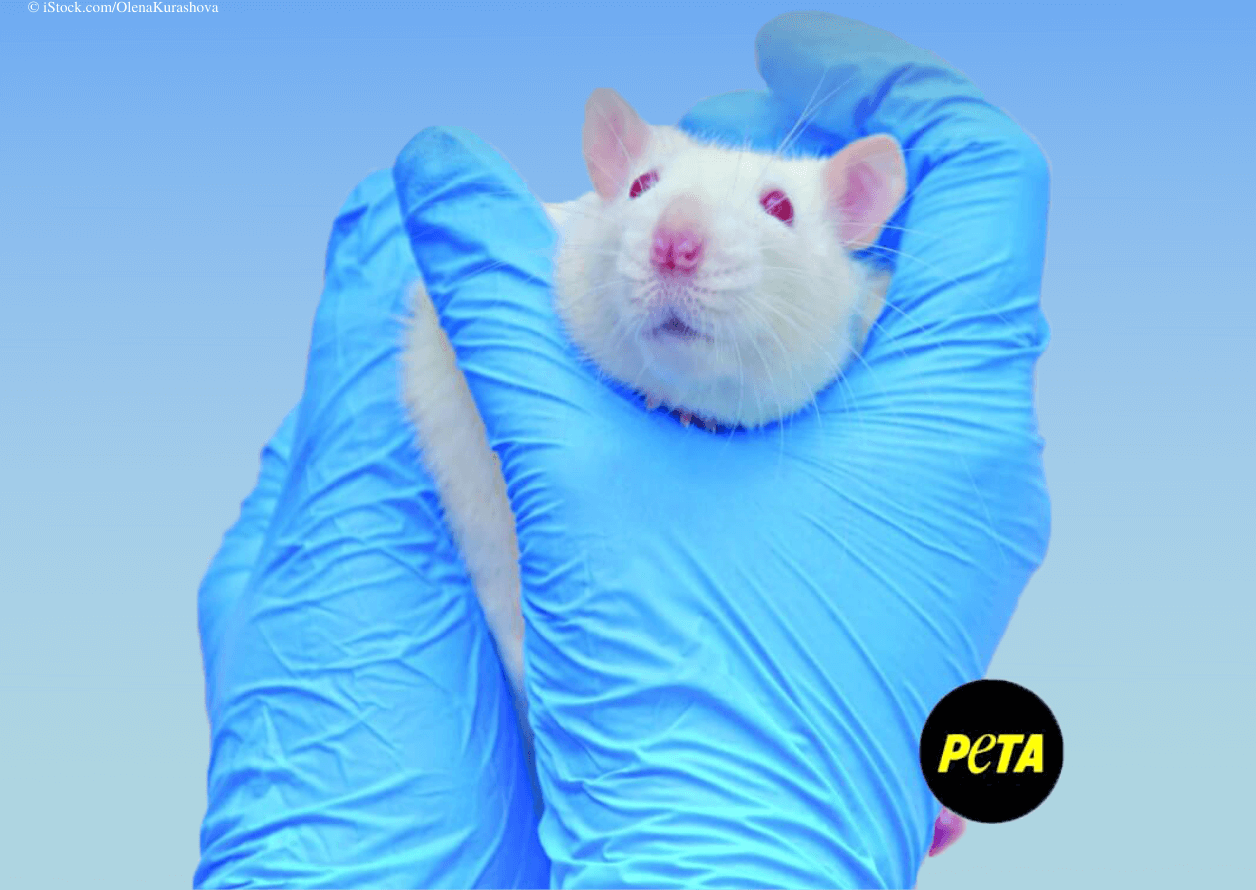
A recent study confirms what PETA’s been saying all along: experiments on mice and rats are cruel and unreliable.
More than 110 million mice and rats are killed in U.S. laboratories every year. Experimenters slowly poison these animals to death in toxicity tests, electroshock them in pain studies, force them to swim for their lives in “psychological tests,” and commit other horrific acts. The results of these tests are wildly unreliable—and not just because human biology and physiology are entirely different from those of mice and rats. According to the study by researchers at the University of Guelph in Canada—which builds on several previous studies—one of the many reasons why these experiments are ineffective is because even the way the animals are housed is cruel.
The researchers analyzed 200 experiments on rats and mice relating to cancer, heart disease, strokes, anxiety, and depression. They found that in many cases, experimenters subjected animals to extremely stress-inducing conditions—which they say may have significantly compromised the results.
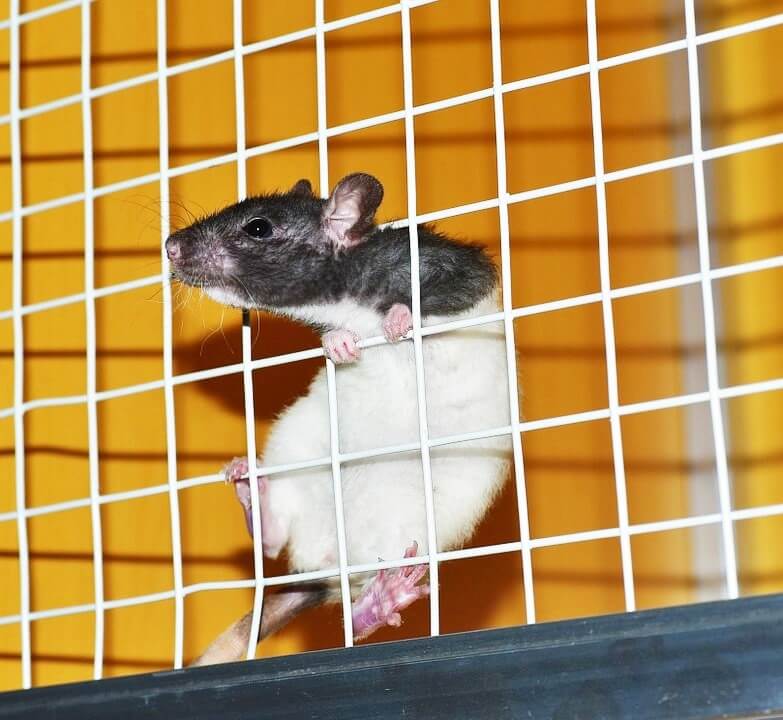
In the U.S., mice and rats are exempt from even the meager protections of the federal Animal Welfare Act. Laboratories typically house them in small, barren cages that are pitiful substitutes for the natural environments of these animals. The team found that in these conditions, the animals are “CRAMPED: cold, rotund, abnormal, male-biased, poorly surviving, enclosed and distressed.”
These characteristics create extreme physiological stress that could make them even less reliable as human “models” (even though, as PETA points out, they aren’t “models ” to begin with—they’re sentient individuals with complex emotions and distinct personalities, and they don’t belong to humans to abuse).
The study found that animals who were housed in standard (horrible) cages developed more severe disease and experienced higher death rates compared with animals housed in “enriched” (in other words, less horrible) cages that had more space and offered them the opportunity to be with other mice, something to engage with, and warmth.
Mice and rats are social, inquisitive animals whose happiness and survival depend on important bonds with others of their species. Experimenters are likely the only ones who are surprised that denying them enrichment and opportunities for socializing will severely affect their health.
“What this study adds is the strongest evidence that is available to date that failure to respect essential aspects of animals’ behavior [and] welfare interferes with research results in a way that is negative for the research,” states Anna Olsson, a researcher specializing in laboratory animal science at the University of Porto in Portugal.
Research has shown that tests on other animals are ineffective. Ninety-five percentof all new drugs that are shown to be safe and effective in animal tests fail in human trials. Eighty-nine percentof preclinical studies, most of which involve animals, can’t be reproduced—which is regarded as a fundamental step used to confirm the validity of scientific results. So why are experimenters still using these archaic methods?
Rats and Mice Don’t Belong in ANY Lab Cage —Let’s End Experiments on Animals
There is never any excuse for tormenting animals in laboratories, and experts have repeatedly shown that tests on animals are unreliable and waste valuable time, money, and other resources that could instead go toward the use of effective, human-relevant research methods that offer real hope of developing treatments and cures for humans.
Help PETA replace barbaric experiments on animals with modern, cruelty-free research by supporting our Research Modernization Deal: