
3 Ways PETA Entities Combat Speciesism and Advocate for Primates

A Look Inside Our Worldwide Efforts to Help Monkeys

As uncovered by PETA and reported in The Arizona Republic, the Washington National Primate Research Center and its monkey-breeding facility in Mesa, Arizona, have violated health and veterinary regulations, operated without state oversight, failed to prevent the introduction and spread of deadly diseases among monkeys, and been repeatedly cited for multiple violations of animal welfare laws—all while breeding monkeys next to a toxic waste site.
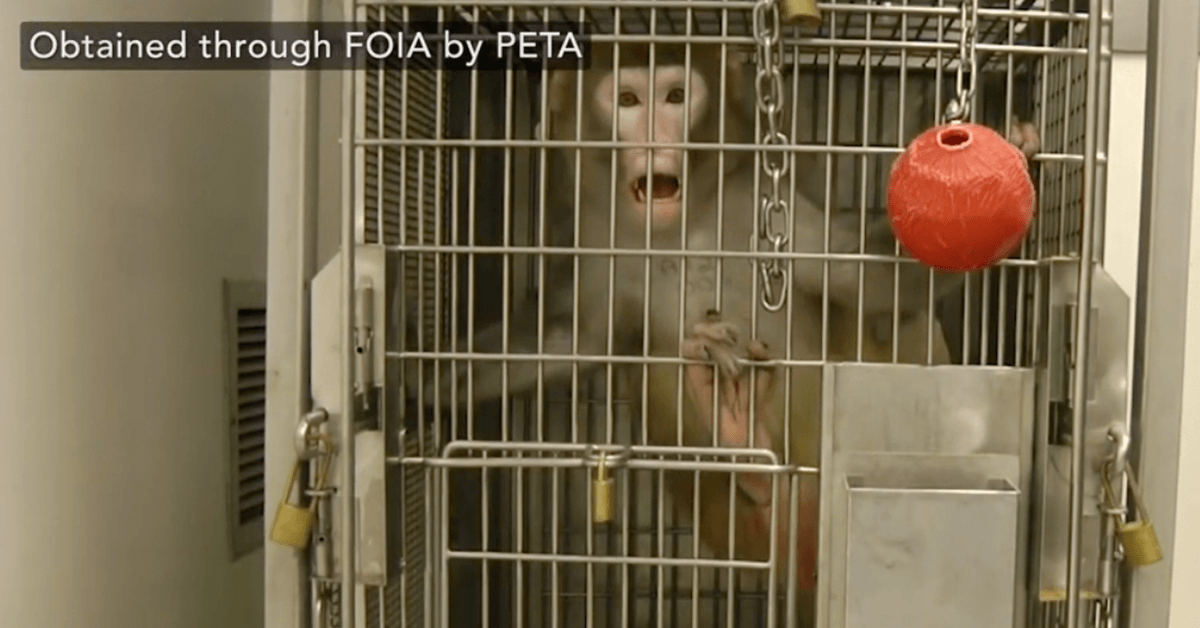
Washington National Primate Research Center at the University of Washington

What this breeding facility is doing isn’t just pointless, dangerous, and cruel—it’s also a terrible waste of lives and important research dollars. Plus, even after monkeys leave this compound and its toxic tap, they still face a lifetime of terror while being used for experiments elsewhere.

But this case is just one example of the systemic speciesism and oppression that countless primates face daily.

Right now, thousands of them are languishing in cages, living in fear, and being denied the opportunity to engage in natural behavior vital to their physical and mental well-being. These complex animals are used in crude, cruel, and useless experiments; they’re forced—out of fear—to “grin” on command on the sets of Hollywood movies and television shows; some are captured in their natural habitats and torn away from their families; and others are even forced into cruel manual labor.

It’s pure speciesism—the misguided belief that one species is more important than another—that causes humans to inflict such suffering on other individuals. This supremacist worldview has deadly consequences for countless primates every year. That’s why PETA campaigns hard to wake people up and show them the suffering that our fellow primates endure when they’re exploited for cheap entertainment, used in painful experiments, or abused by humans in any other way.

3 Big Ways PETA U.S. and PETA Entities Help Monkeys

1. PETA Asia Undercover Investigation Reveals Monkeys Chained and Abused for Coconut Milk

Many kind people choose coconut milk instead of cow’s milk because they don’t want to support cruelty to animals. But a disturbing PETA Asia investigation reveals that terrified young monkeys in Thailand are kept chained, abusively trained, and forced to climb trees to pick coconuts that are used to make coconut milk, meat, flour, oil, and other products.

Before PETA Asia’s groundbreaking investigation made headlines around the globe, this type of cruelty was a dirty industry secret. But following the worldwide release of PETA Asia’s damning footage, more than 26,000 stores committed to no longer purchasing one egregious brand’s products and the majority will no longer buy any coconut products derived from monkey labor.

Learn More and Take Action!

2. PETA Exposes Horrific Experiments on Monkeys

Every year in the U.S., tens of thousands of primates are imprisoned inside laboratories, where most of them are abused and killed in invasive, painful, and terrifying experiments. While it’s well known that monkeys are sensitive and intelligent, experimenters treat them as if they were disposable pieces of laboratory equipment.

In labs, these animals have barely enough room to sit, stand, lie down, or turn around. The rich environment full of sensory stimulation that they should be experiencing is replaced by one devoid of color, scent, and almost every other type of enrichment.
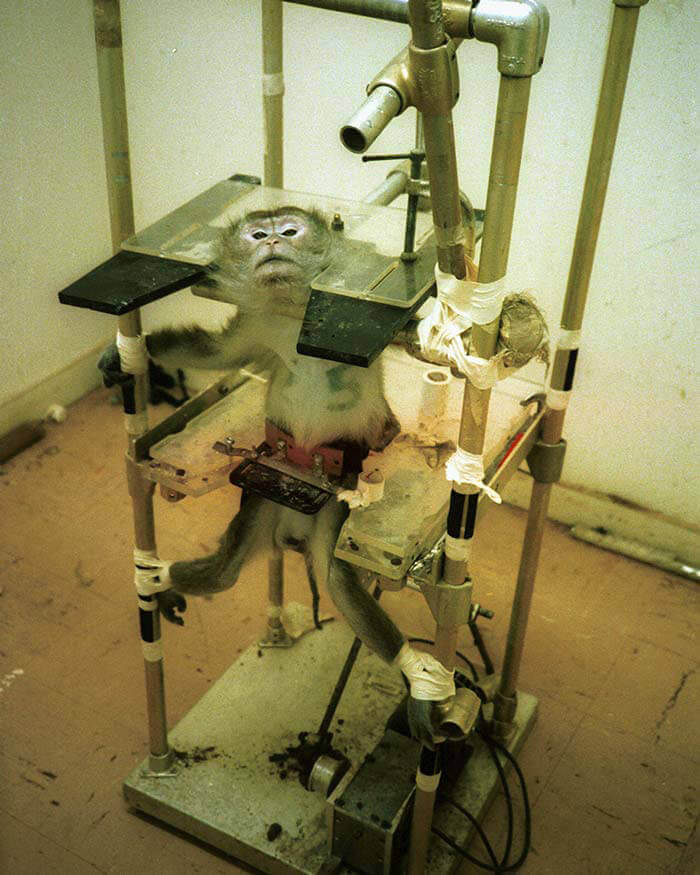
PETA exposes animal suffering in labs, offers tips to help monkeys

The majority of primates who are used in laboratories exhibit abnormal behavior patterns that are caused by physical abuse, psychological stress, social isolation, and confinement to barren enclosures. Many go insane, rocking back and forth, pacing endlessly in the cages, and doing repetitive motions such as back-flipping. They even engage in acts of self-mutilation, including tearing out their own hair and biting their own flesh. Experiments on captive animals suffering from extreme stress can never teach us anything meaningful about naturally occurring illnesses in humans, and experimenters know it.

PETA is working hard to push our government leaders and the scientific community forward, away from a deadly reliance on archaic experiments on animals. You can join our call.

Take Action Now

3. Monkeys Aren’t Actors or Clowns Here to Entertain Humans

In stark contrast to the lives they’d have in nature, primates used for entertainment are denied adequate psychological and social stimulation and proper exercise. Their instincts—which include exploring, choosing mates, raising young, and foraging—are completely thwarted. As a result, they often develop neurotic behavior patterns, such as pacing, rocking, swaying, cage-biting, and self-mutilation.

Intelligent, curious, highly social animals have needs that can’t be met on the sets of films or television shows, at training compounds, in traveling circus-style shows, or at seedy roadside zoos. Most primates used for entertainment are taken away from their mothers prematurely—a cruel practice that denies the infants the maternal care and nurturing that they need for normal development. In order to force young primates to perform on cue, physical and psychological abuse are commonly used.

However, this dire information doesn’t always make it to spectators. The use of animals for entertainment fools the public into believing that they’re happy in human environments. But with the many advancements that have been made in computer-generated and holographic imagery, there’s no reason to use real monkeys or other animals in film, television, or any other type of show.

PETA has been both diligent and successful in our efforts to get primates and other animals out of the entertainment industry. In fact, all the top 10 ad agencies in the U.S. banned the use of great apes in their commercials after learning about this important issue from us. You can do your part by never buying a ticket to any venue where animals are exploited for a cheap and fleeting gimmick.

Take Action to Help Monkeys — PETA Makes It Easy!

Using your phone or computer, you can support our campaigns to help animals no matter where you are. It only takes a minute to complete multiple PETA action alerts that will put pressure on abusers and make a real difference for animals.

What are you waiting for?

Take Action to Help Monkeys Now

The post 3 Ways PETA Entities Combat Speciesism and Advocate for Primates appeared first on PETA.

Taiwan’s FDA Ends Blood Pressure Tests on Animals After Hearing From PETA

The Taiwan Food and Drug Administration (TFDA) has finalized a regulation that removes animal testing recommendations and requirements for companies wanting to make blood pressure health marketing claims about their food and beverage products. The testing included feeding foods of interest for at least eight weeks to rats bred to develop hypertension and measuring their blood pressure response using the stress-inducing tail-cuff method. The TFDA will now require only safe and effective human tests for this purpose. This follows pressure from PETA that included the submission of a detailed scientific critique at the agency’s request and e-mails to agency officials from more than 50,000 supporters opposing animal experiments.

The post Taiwan’s FDA Ends Blood Pressure Tests on Animals After Hearing From PETA appeared first on PETA.

Members of Congress Come Down On Feds’ Lack of Enforcement Action Against Notorious Beagle Supplier

A laboratory-supplying beagle-breeding factory farm—it was the PETA undercover investigation heard around the world. The shockwaves reached Congress, and now Rep. Dina Titus (D-Nev.) and six other representatives are speaking out for thousands of beagles suffering at the massive facility operated by Envigo in Cumberland, Virginia, that breeds dogs for experimentation. The legislators sent a letter to the U.S. Department of Agriculture’s (USDA) Animal and Plant Health Inspection Service (APHIS) urging the agency to fulfil its legal obligations by confiscating the dogs at Envigo or suspending the facility’s license over its critical, direct, and repeated violations of the federal Animal Welfare Act (AWA). Reps. Julia Brownley (D-Calif.), Elaine G. Luria (D-Va.), Eleanor Holmes Norton (D-D.C.), Rashida Tlaib (D-Mich.), Charlie Crist (D-Fla.), and Jerry McNerney (D-Calif.) also signed the letter.

A PETA undercover investigation into the massive Envigo-owned breeding factory found 5,000 beagle dogs and puppies intensively confined to small, barren kennels and cages 24/7. “[A] PETA investigator who worked at Envigo for seven months recorded workers with no veterinary credentials injecting euthanasia drugs directly into puppies’ hearts without sedation, causing them immense pain; intentionally depriving nursing mother dogs of food for up to two days, including after the aforementioned warning by the USDA to cease this cruel practice; and leaving dogs soaked and shivering from water sprayed via high-pressure hoses,” Rep. Titus and the others point out in their letter.

In July, the USDA cited Envigo for 26 violations of the AWA. In October, a team of USDA officials conducted a multiday inspection of the puppy mill. The USDA corroborated PETA’s findings and cited Envigo for 13 more violations. Yet, despite these citations, the agency has failed to take meaningful steps to protect the thousands of beagles who remain imprisoned at the facility. In their letter, Rep. Titus and the other representatives are demanding action:

This lack of timely follow-through is not what Congress intended when it entrusted APHIS with investigating these violations of federal law. Please provide my office with … a complete explanation as to when APHIS will take these and other actions to render urgently needed aid to the roughly 5,000 dogs held at Envigo.

Of the 39 violations that Envigo was cited for between July and October 2021, 19 were direct or critical (having serious or severe adverse effects on the health and well-being of animals) and 11 were repeat failures. The violations include the following:

  • Only 17 staff members were employed to supply direct care to 5,000 dogs and puppies.
  • More than 300 puppies’ deaths were attributed to “unknown causes.”
  • One dead puppy was found eviscerated, and records showed that her kennelmates had “chewed on” her corpse.
  • Numerous dogs were denied care for “severe dental disease,” eye ailments, crusted and oozing sores on their paws, multiple skin lesions with “thickened” and “inflamed” tissue, and other wounds and conditions.
  • Three dogs had been killed in fights, and 71 others had been injured by dogs in adjacent kennels. Twenty-four dogs and puppies were missing, and nine dogs who had been injured when “body parts” were pulled through a kennel wall by other dogs and bitten, causing “physical harm and unnecessary pain,” were put down.
  • Thirteen mother dogs were denied food for 42 hours while nursing 78 puppies.
  • There were “old, dried, and moldy feces” in dog enclosures; up to 6 inches of feces piled in a gutter; one kennel with “at least nine or ten piles of feces”; and an “overpowering fecal odor” and a “strong sewage odor” in the facility.

Rep. Titus and the letter’s other cosigners are leading Congress’ call for APHIS to suspend Envigo’s license or confiscate the animals who are still suffering at the notorious Virginia breeding facility, and you can help. Please, click below to join PETA, Rep. Titus and her colleagues, and countless others in urging USDA authorities to rescue suffering dogs and suspend Envigo’s license immediately:

Dogs Trapped at Envigo Need Our Help!

The post Members of Congress Come Down On Feds’ Lack of Enforcement Action Against Notorious Beagle Supplier appeared first on PETA.

Dog InterRUFFS Detroit Motorists With Message: Let Us Inside!

With chilly temperatures in the forecast for the weeks ahead, who left the dogs out can be a matter for law enforcement, but PETA has rushed a code blue alert to Detroit, courtesy of a sky-high message featuring a pup beside a bicycle to emphasize that chains belong on objects, never on living, feeling beings.

PETA responds to thousands of heartbreaking reports every year of dogs left chained up outside, struggling to survive in storms and freezing temperatures, sometimes with tethers so tangled that they are unable to reach shelter—if they even have any worth reaching. Water sources freeze in winter, snow turns food into inedible mush, and the ground gets muddy and icy. This leaves dogs vulnerable to frostbite, hypothermia, and dehydration. Cold weather and winter storms lead to multiple deaths, injuries, and near-miss rescues each year, and most incidents aren’t even reported.

“Dogs are social pack animals who need and deserve companionship, respect, and a warm place with their human, indoors,” says PETA President Ingrid Newkirk. “PETA is calling on Detroit residents to treat their dogs like family, encourage others to do the same, and blow the (dog) whistle on abuse.”

Hundreds of cities around the U.S.—including Dallas, Miami, and Tucson, Arizona—have enacted legislation banning the practice of tethering dogs alone outdoors. PETA asks that residents speak out against this cruel practice and push city officials to ban unattended chaining completely.

PETA—whose motto reads, in part, that “animals are not ours to abuse in any way”—opposes speciesism, a human-supremacist worldview. For more information, please visit PETA.org or follow the group on Twitter, Facebook, or Instagram.

The post Dog InterRUFFS Detroit Motorists With Message: Let Us Inside! appeared first on PETA.