A bull-riding participant in the Bell County Rodeo in Belton, Texas, was “bucked off the bull almost immediately after coming out of the gate,” prompting the rider’s father to run into the arena. One outlet called the father a “hero,” but before doling out any more kudos, consider this important detail: The bull was just protecting himself.
This young man voluntarily risked injury and death by participating in the event. The bull he decided to torment had no such choice. This animal was left with one choice only: to defend himself.
Rodeo performers have been observed beating, kicking, and shocking normally docile bulls and other animals in holding pens—abuse they inflict in order to provoke bulls’ instinct to run from harm. It’s no wonder that by the time bulls are released into the arena, they’re frantic.
Rodeos are nothing more than manipulative displays of human dominance over animals, thinly disguised as entertainment. Many bulls forced to participate have sustained fatal injuries, including broken backs and necks, and have experienced heart attacks and aneurysms. The ones who aren’t killed during events, however, often still meet a vicious death: When they’re too old or worn out to continue “performing,” “retirement” often means a one-way trip to the slaughterhouse.
Bulls Are Being Tormented—They Need Us to Speak Up
Students Opposing Speciesism—the PETA-backed, youth-led revolt against human supremacy—doesn’t miss a beat in furthering the mission of ending speciesism, including when it comes to denouncing rodeos.
PETA has scored a victory with our Endangered Species Act (ESA) lawsuit against notorious animal exhibitor and Tiger King villain Jeff Lowe! The U.S. District Court for the Western District of Oklahoma found that Lowe “treated the four lions directly involved in this case … with appalling cruelty.” This is the first court decision establishing that Lowe’s treatment of animals was so deficient that it violated the ESA.
Jeff Lowe’s Violations of the ESA
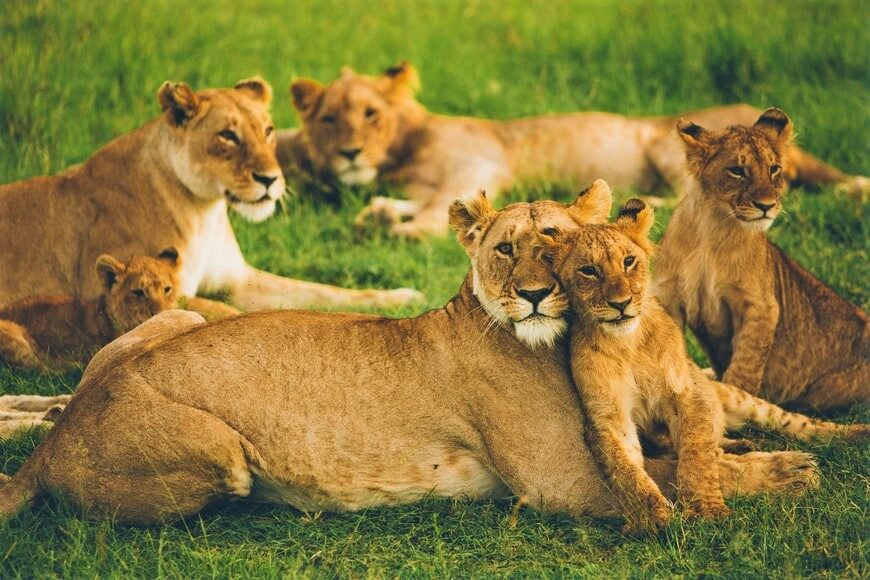
Our lawsuit sought justice for the mistreatment of lion cubs Nala, Kahari, Amelia, and Leo, who were originally in the custody of Jeff Lowe and his former business partner Tim Stark. Stark violated multiple court orders in the case by transporting the four cubs to Lowe’s Wynnewood property, and Kahari died there only days before her scheduled rescue.
The court agreed that Lowe—who had lied about the circumstances of Kahari’s death and left her body outside to decompose beyond the point at which a necropsy could determine its cause—was in fact responsible for the lion’s death. He was also found liable for a number of other violations, including the following:
Feeding the cubs a commercial milk replacer that lacked the necessary nutrients found in mothers’ milk and, when they were older, providing rancid, nutrient-deficient meat as their only food source
Lacking adequate enclosures, which contributed to gruesome injuries, including a bite wound that required part of Amelia’s paw to be amputated
Failing to hire a veterinarian with sufficient training or experience in lion care and failing to treat numerous injuries uncovered by PETA experts
Failing to take adequate COVID-19 precautions, including failure to restrict access to animals, a first-of-its kind ruling under the ESA
What You Can Do to Help Big Cats
This court win sends a clear message to other animal exploiters that they will be held accountable for their actions. PETA’s victory against Stark allowed us to rescue the three surviving cubs as well as 22 other big cats.
Please urge your members of Congress to pass the Big Cat Public Safety Act, which would end private ownership of big cats, safeguarding humans and our fellow animals across the U.S.!
After Gov. Janet Mills contacted the Portland International Jetport to demand the removal of PETA ads that point out that fishing gear kills 300,000 whales and dolphins every year, PETA fired off a letter to the governor today, taking her to task for attempting to trample on the group’s First Amendment rights.
“Silencing PETA’s message that going vegan saves animals is about as un-American as you can get,” says PETA President Ingrid Newkirk. “PETA is calling on the governor to stop protecting the exploitative fishing industry at the expense of everyone else, including New England’s whales.”
PETA—whose motto reads, in part, that “animals are not ours to eat”—opposes speciesism, a human-supremacist worldview. For more information, please visit PETA.org or follow the group on Twitter, Facebook, or Instagram.
PETA’s letter to Mills follows.
March 1, 2022
The Honorable Janet T. Mills
Governor of Maine
Dear Gov. Mills:
I’m writing on behalf of People for the Ethical Treatment of Animals U.S.—PETA entities have more than 9 million members and supporters globally, including many thousands across Maine—in response to your attempts to take down our “Save the Whales” ads in the Portland International Jetport. It’s un-American to stifle our right to free speech for any reason but particularly scurrilous to do so in seeking to protect an exploitative industry and prioritize profit over protecting whales. We ask that you consider the suffering that marine animals endure when slaughtered for food. Fishing causes pain and suffering to other sentient beings you may not relate to—just because they don’t look like us—but they certainly do suffer greatly because of this industry.
A livelihood for one species should not be a death sentence for another. Fishing gear kills 300,000 whales and dolphins annually, and these animals are callously referred to as “bycatch,” a euphemism for non-target animals who become caught or entangled in fishing gear and then are discarded or simply die. Death from fishing gear is the single biggest threat to the survival of many of the world’s 86 cetacean species, and eating fish contributes to the decimation of ocean ecosystems. More fish are killed for food each year—billions in U.S. waters alone—than all other animals combined. Fish, who feel pain as acutely as mammals do, have long-term memories, are savvy social learners, develop cultural traditions, and use tools.
As you know, Maine’s lobster industry has faced increased restrictions to protect the endangered North Atlantic right whale, whose population has shrunk by an alarming 30% over the last decade, from going extinct. Estimates suggest that there are fewer than 350 of these whales left, and fewer than 100 are breeding females. According to the National Marine Fisheries Service, if we want the population to recover, we must reduce human-caused deaths to an average of less than one per year, but the agency estimates that the number of observed deaths and serious injuries caused by entanglements with fishing gear at least five each year. The actual number is no doubt higher.
Our previous offer stands to assist with retraining Mainers who want to quit the cruel, ugly fishing business and pursue a nonviolent occupation such as photography or gardening.
We hope that instead of backing this outdated industry, you’ll realize how important it is to evolve with the times and support the vegan businesses in your state. The vegan market is expected to grow by 451% within the next 10 years, and it’s already thriving in Maine, which ranks third in the nation for the prevalence of vegan options and the availability of all-vegan restaurants. For every 1 million residents, Maine has 4.6 all-vegan restaurants. And the number of people going vegan has been skyrocketing—there’s been a 300% increase in the U.S. in the past 15 years, and more than half of all U.S. households now buy vegan food products.
If you haven’t already seen it, we recommend watching the eye-opening documentary Seaspiracy on Netflix, which exposes how the commercial fishing industry is harming all ocean life. In addition, we’ll be sending you Gardein vegan fish filets, vegan lobster, and vegan tartar sauce so you can see how delicious vegan fish is—along with a copy of What a Fish Knows: The Inner Lives of Our Underwater Cousins by Jonathan Balcombe. Thank you for your consideration.
After Rep. Genevieve McDonald of Maine took to Twitter to slam PETA ads at Portland International Jetport that point out that fishing gear kills 300,000 whales and dolphins every year—an urgent message for New England, where the whale population is declining in large part because the animals become entangled in fishing gear—PETA sent her a letter this morning encouraging her to stop defending the fishing industry and to promote Maine’s vegan food industry instead. The state’s vegan restaurant scene is booming—Maine reportedly ranks third out of all 50 states for vegan friendliness.
“PETA’s jetport ads may have struck a nerve, but it takes a lot more nerve to defend the killing of whales and other sea life,” says PETA President Ingrid Newkirk. “PETA is asking Rep. McDonald to open her heart and encourage her constituents to support Maine’s vegan businesses instead of its deadly ones.”
PETA—whose motto reads, in part, that “animals are not ours to eat”—opposes speciesism, a human-supremacist worldview. For more information, please visit PETA.org or follow the group on Twitter, Facebook, or Instagram.
PETA’s letter to McDonald follows.
February 28, 2022
The Honorable Genevieve McDonald
Maine House of Representatives
Dear Rep. McDonald:
I’m writing on behalf of People for the Ethical Treatment of Animals U.S.—PETA entities have more than 9 million members and supporters globally, including many thousands across Maine—in response to your criticism of our “Save the Whales” ads placed in the Portland International Jetport. We ask that you consider the suffering that fish and other marine animals endure when slaughtered for food. Fishing causes pain and suffering to other sentient beings you may not relate to—just because they don’t look like us—but they certainly do suffer greatly because of this industry.
Just as humans want to earn a living, animals such as lobsters and whales simply want to live. Fishing gear kills 300,000 whales and dolphins annually, and these animals are callously referred to as “bycatch,” a euphemism for nontarget animals who become caught or entangled in fishing gear and then are discarded or simply die. Death from fishing gear is the single biggest threat to the survival of many of the world’s 86 cetacean species, and eating fish contributes to the decimation of ocean ecosystems. More fish are killed for food each year—billions in U.S. waters alone—than all other animals combined. Fish, who feel pain as acutely as mammals do, have long-term memories, are savvy social learners, develop cultural traditions, and use tools.
As you know, Maine’s lobster industry has faced increased restrictions to protect the endangered North Atlantic right whale, whose population has shrunk by an alarming 30% over the last decade, from going extinct. Estimates suggest that there are fewer than 350 of these whales left, and fewer than 100 are breeding females. According to the National Marine Fisheries Service, if we want the population to recover, we must reduce human-caused deaths to an average of less than one per year, but the agency estimates that the number of observed deaths and serious injuries caused by entanglements with fishing gear at least five each year. The actual number is no doubt higher.
Our previous offer stands to retrain any Mainers who want to quit the cruel, ugly fishing business and pursue a nonviolent occupation such as photography or gardening.
We hope that instead of backing this outdated industry, you’ll support the vegan businesses in your state. The vegan market is expected to grow by 451% within the next 10 years, and it’s already thriving in Maine, which ranks third in the nation for the prevalence of vegan options and the availability of all-vegan restaurants. For every 1 million residents, Maine has 4.6 all-vegan restaurants. And the number of people going vegan has been skyrocketing—there’s been a
300% increase in the U.S. in the past 15 years, and more than half of all U.S. households now buy vegan food products.
If you haven’t already seen it, we recommend watching the eye-opening documentary Seaspiracy on Netflix, which exposes how the commercial fishing industry is harming all ocean life. In addition, we’ll be sending you a copy of What a Fish Knows: The Inner Lives of Our Underwater Cousins by Jonathan Balcombe. Thank you for your consideration.