
Why You Should Never ‘Like’ or Share Videos of Animals Being Teased on Social Media

Just as we would never “like” or share content on social media that makes fun of humans for their ethnicity, age, race, or gender, we should never support posts, videos, or tweets that involve teasing, scaring, or demeaning other animals. We should always examine such content critically and think about it from the animals’ perspective. When we start to do this, we often realize that there’s nothing funny about it.

Pancake cuddles with adoptive dog sibling

Animal companions depend on their human guardians for everything—food, water, shelter, love, and respect. It’s speciesist to mock them, scare them, and possibly even injure them for the sake of earning online brownie points. Even if you would never make one of these videos yourself, you shouldn’t “like” them or share them, either. If you come across a post in which animals are teased, speak out: Leave feedback and help inform others about this issue.

Watch the video below to learn why it’s wrong to create, “like,” or share videos in which animals are teased:

Here’s What’s Wrong With Putting Costumes on Animals

Costumes can be dangerous to animals if they impair their ability to see, move, or breathe. Animals can choke or strangle if they attempt to eat small parts of costumes or become entangled in them, and they can overheat if a costume is left on for a long period of time.

Animals forced into a costume don’t understand what’s going on, and they probably find the outfits uncomfortable, cumbersome, and even frightening. Since many humans have a hard time reading animals’ body language, they may not even notice when cats or dogs in costumes are actually in distress.

Dressing animals up in joke or novelty costumes can also lead humans to have negative, disrespectful attitudes about them, and it sends the harmful message that those animals are here merely for human amusement. It leads viewers to see them as playthings, not as living, feeling beings with needs and desires of their own.

‘Pet-Shaming’ Is Another Form of Entertainment at Animals’ Expense

Animals give us all their love, and what do some guardians give them in return? They “shame” them on social media for doing something they don’t usually understand they aren’t permitted to do, all for a few “likes.”

Often, the animals being shamed were just reacting to something that their humans did or failed to do. Cats rightfully refuse to step into litterboxes that haven’t been cleaned. Dogs chew on things when they’re teething or left at home for long, lonely hours with nothing to do day after day. And animals get into tempting foods that have been placed unattended within their reach.

Scaring Cats With Cucumbers and Other Objects

You’ve likely seen videos of cats leaping into the air after being deliberately frightened by something.

It’s obvious even to the people posting these videos that the cats are scared. That’s the whole point of them, and that’s reason enough not to “like” or share them. Placing unfamiliar objects behind cats triggers their natural startle reflex. Cats associate the area where they eat with safety, and scaring them there with objects that they mistake for threats can cause particularly severe reactions.

‘Pet Fail’ and Fake Death Videos Can Cause Long-Term Harm

Mean-spirited “pet fail” videos feature actions such as cats falling into bathtubs or off tables and dogs getting their heads stuck inside bags of food. Some of these videos even show animals dangerously crashing into glass doors or through glass tables. No one should be put in danger or caused distress for the sake of a cheap laugh at their expense. Besides the obvious risk of physical injury that these pranks can cause, there’s reason to worry about potential long-term psychological trauma to the animals.

In some videos in which animals are teased, humans pretend to die in front of their dogs, while their dogs howl in distress and nudge and lick their unresponsive owners, frantically trying to revive them. No one would find it acceptable for parents to pretend to die in front of their children. It’s no more acceptable to do this in front of dogs—who form deep bonds with their humans, consider us to be members of their family, and, yes, grieve when loved ones die. Imagine how you would feel if someone you love collapsed in front of you and couldn’t be revived. That’s how these dogs feel.

When people deliberately orchestrate stunts that frighten or may even injure their animals, the bond of trust can be broken. Animals may become fearful in what they previously perceived to be a safe environment, resulting in aberrant types of behavior, such as cats who constantly hide or dogs who are constantly on alert and easily startled. If an animal’s anxiety is severe enough, they may even suffer from physical ailments related to stress.

Never Post, ‘Like,’ or Share Videos in Which Animals Are Teased

Even small acts, such as commenting on a post or sending a video to a friend, can influence how many overall views something receives. The way you interact with this type of online content can also shape the opinions of others about animals, for better or for worse.
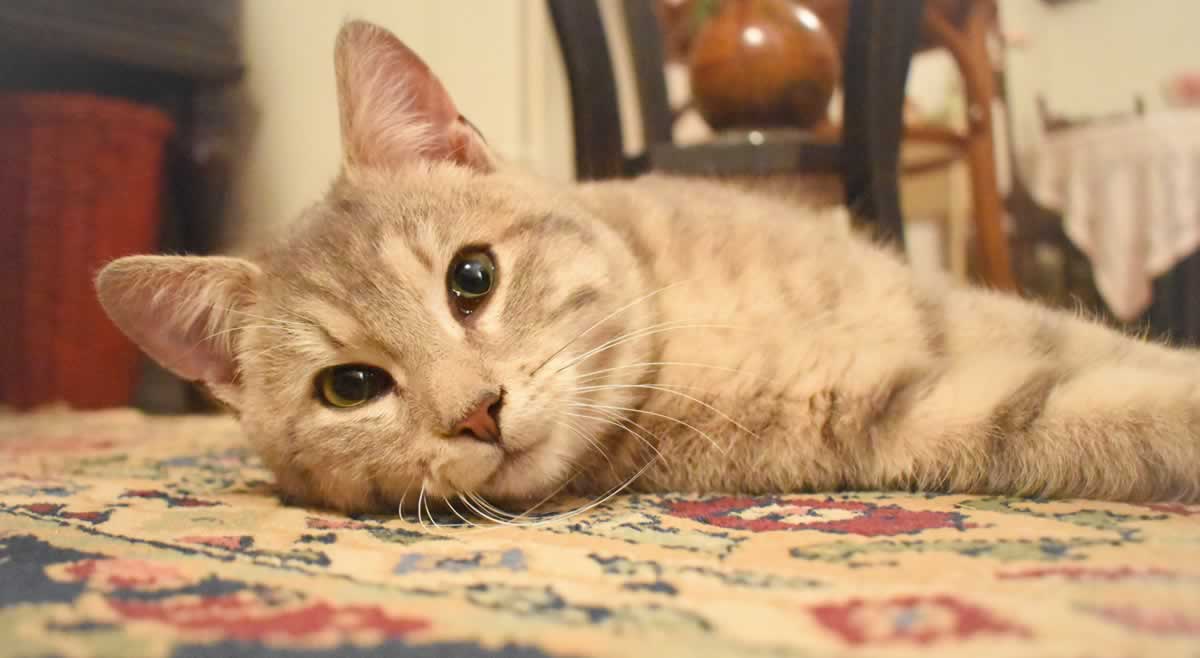
Kenny, a cat PETA rescued from a gas station, lying on Oriental rug

Show love to social media posts and videos that truly respect and uplift other animals. And always leave a comment explaining why it’s wrong to tease animals when you see a video in which they’re being intentionally scared, shamed, or humiliated.

The post Why You Should Never ‘Like’ or Share Videos of Animals Being Teased on Social Media appeared first on PETA.

Live Squirrel Flushed Down Toilet Prompts PETA Plea for Empathy Lessons in Schools

Following reports that a group of Eagle Valley High School students flushed a live squirrel down a toilet and posted a video of the incident to social media, TeachKind—PETA’s humane education division—rushed a letter today to Eagle County School District Superintendent Philip Qualman asking to provide the district with a K–12 kindness-to-animals curriculum and “Empathy Now,” a guide to preventing all kinds of violence by young people.

Colorado law strongly encourages schools to include character education programming in order to “better prepare students to become positive contributors to society.” As TeachKind notes in its letter, the group’s curriculum and offer to host free, empathy-building virtual presentations would help the district meet this recommendation.

“Drowning would be every bit as painful and terrifying for a squirrel as it would be for another mammal, like a dog or a human,” says PETA Senior Director of Youth Programs Marta Holmberg. “Compassion and empathy can be learned, and TeachKind is on standby to help schools teach young people that violence is wrong, whether the victim is a squirrel or a student.”

TeachKind notes that research shows that 43% of perpetrators of school massacres first committed acts of cruelty against animals—so juvenile animal abusers potentially pose a serious threat to the community at large. The group’s other resources include its free high school social justice curriculum, “Challenging Assumptions,” and its “Share the World” program kit for elementary school students.

TeachKind—whose motto reads, in part, that “animals are not ours to abuse in any way”—opposes speciesism, a human-supremacist worldview. For more information, please visit TeachKind.org or follow the group on Facebook or Instagram.

The post Live Squirrel Flushed Down Toilet Prompts PETA Plea for Empathy Lessons in Schools appeared first on PETA.

Humane Alternatives to Chick-Hatching Projects in Schools

The best candidate to raise a baby animal is the animal’s mother, not children. Fortunately, there are some great humane alternatives to classroom chick-hatching projects. Chicks and ducklings used in school projects are often harmed before they even hatch, and they can die inside the shell or end up with terrible deformities. The ones who survive are typically sent back to the provider and are likely killed to prevent potential disease transmission to the companies’ flocks. Chick-hatching experiments that use live chicks in the classroom are not only cruel but also unnecessary.

© Long Island Orchestrating for Nature
Chicks and ducklings like Dougie can sustain debilitating injuries and contract diseases as a result of being used in classroom hatching projects.

Learning about the life cycle of a chicken shouldn’t be done at the expense of birds’ health and well-being. Set a positive example for your students and for other educators by leaving animals out of your classroom. Respect the individuals who are being discussed in your life cycle lesson by using the following humane educational resources instead.

Try these humane alternatives to chick-hatching projects:

MOTHER HEN’S NEST

This project meets the following Next Generation Science Standards (NGSS):

  • K-LS1-1 Use observations to describe patterns of what plants and animals (including humans) need to survive.
  • 1-LS1-2 Read texts and use media to determine patterns in behavior of parents and offspring that help offspring survive.

Making a “mother hen’s nest” is a dynamic and humane way for students to have a hands-on experience learning about the life cycle of a chicken without harming a living, feeling being. Find a cozy and quiet spot (if possible) in your room to set up your “nest.” This would essentially resemble the safe space chosen by a mother hen to house her babies. Use the following materials:

Fill your basket with straw, place the stuffed toy hen on top, and then over 21 days, select one student each day to retrieve an egg from beneath the “mother hen” and replace it with the appropriate egg. If you’re using plastic eggs that you’ve purchased on your own, print out small images of each stage of the chick’s development and put them in your plastic eggs. Have a student open the assigned egg for that day and show the image to their peers. For virtual learning, ask the students what number between 1 and 21 they’re on. Throughout this time period, use the slide show below to teach students about the development of the chick’s body. This setup in your classroom will also reinforce to students that this development should take place while the chick is with the mother hen. You’ll be able to see the excitement in your students when they understand the bond between mother hen and chick.

Use the following slide show presentation to provide students with detailed information about the life cycle of a chicken and the subtle changes that take place in the developing embryo each day. It can be used to supplement this nest activity or to replace it if you don’t have access to the needed materials. It can also provide virtual learners with detailed images and information about the development of a chicken. Slides 1 through 4 are just for teachers.

Click here for the slide presentation!

Have your students draw an image for each of the 21 days of the chick’s development. They can also record notable changes in the chick’s physical characteristics, such as the emergence of feathers and the development of the beak, in a few words or a couple of sentences, depending on their ability.

  • Key Vocabulary
    • Domesticated animals—Animals who rely on humans to meet their needs
    • Needs—Things that animals must have so they can live and be healthy, including food, water, shelter, the opportunity to move around and interact with others, and sometimes veterinary care
    • Wants—Things that make animals happy, including their favorite foods and activities
    • Sanctuary—A place that provides animals with safe, comfortable living conditions
    • Hen—A female chicken
    • Rooster—A male chicken
    • Chick—A baby chicken
    • Embryo—An unhatched chicken

help chickens used for food

‘MEET’ REAL CHICKENS

While it might not be possible for you and your students to visit a farm sanctuary in person, you can still “meet” real chickens (and other animals) through the power of technology. Virtual field trips can provide educational enrichment while being both engaging and empathy-building. Both Farm Sanctuary and Catskill Animal Sanctuary offer virtual tours on which students can be introduced to chickens who were rescued from abusive situations and now get to live in peace. Pasado’s Safe Haven and Indraloka Animal Sanctuary both have educational programs geared toward many different age groups. Each animal has a unique story, and it’s not uncommon for chickens at sanctuaries to have been rescued after being used in classroom chick-hatching projects. Remind your students that by speaking up and choosing not to participate in these projects, they can help spare chickens suffering and abuse.

Check out our collection of online live-animal cams that allow students to observe animals in their natural habitats without disturbing them.

You can also share stories about chickens rescued from abusive situations. Lucky, for example, was on her way to the slaughterhouse when fate intervened. Use this video discussion activity (for grades K–2), which is an age-appropriate version of her rescue story (for grades 6–8), to encourage your students to take action to help end animal suffering.

Lucky rescue, sits on shoulder

EXTENSION ACTIVITY

Read “A Chicken’s Life” with your students so they can learn interesting facts about chickens, why they need our help, and easy ways to help them.

*****

Learning about the life cycles of animals can help your students explore scientific concepts and address NGSS, but hatching experiments that use live chicks in the classroom don’t model kind practices for young learners. With the alternative chick-hatching projects above, students can gain an understanding of how an embryo grows into a chick while also developing empathy for chickens as individuals who deserve to live with their families, who know best how to care for them.

If you’d like to learn more about the various resources that TeachKind has to offer, sign up for our newsletter using the form below.

All fields in bold are mandatory.

FormBuilder Form – 3364

First name
Last name
E-mail
Please sign me up for Teachkind E-News. Current subscribers: You will continue to receive e-mail unless you explicitly opt out by clicking here
Please sign me up for PETA E-News. Current subscribers: You will continue to receive e-mail unless you explicitly opt out by clicking here
Please sign me up for PETA's Membership Updates. Current subscribers: You will continue to receive e-mail unless you explicitly opt out by clicking here
Get texts & occasional phone calls for Action Alerts, local events, & other updates to help animals with PETA! (optional)
Tel. (mobile)
By clicking, you agree to receive automated texts and calls from PETA and accept our terms and conditions. Message and data rates may apply. U.S. mobile users only. You can opt-out anytime.

The post Humane Alternatives to Chick-Hatching Projects in Schools appeared first on PETA.