PETA Allies to Be Blindfolded at Ajinomoto Shareholder Meeting

“When will Ajinomoto follow the global trend and ban all animal tests that are not explicitly required by law?” If selected to attend the company’s annual meeting tomorrow, that’s the question PETA Asia’s Laila Imai—acting as a shareholder representative—would have  asked executives of conglomerate Ajinomoto Co. Inc., the multinational owner of Hondashi, Consommé, and Knorr.  But PETA wasn’t among the shareholders chosen so as shareholders and board members enter the building, a group of PETA Asia members will be waiting, blindfolded and holding signs that read, “Ajinomoto: Don’t Be Blind to Animal Cruelty.”

When:    Thursday, June 23, 9:00 a.m.–10:00 p.m.

Where:    Ajinomoto Group Takanawa Training Center, 3-13-65 Takanawa, Minato-ku, Tokyo

The stock in Ajinomoto was purchased in 2020 to urge shareholders to end the company’s experiments on animals. PETA has uncovered that since the 1950s, Ajinomoto experimenters have cut open dogs’ stomachs, inserted tubes into them, starved the animals, fed them MSG, taken their stomach fluid, and injected them with drugs, purportedly to establish health claims for marketing the company’s food products and ingredients. Some of Ajinomoto’s other tests have involved inserting tubes into day-old piglets’ arteries and starving them, electroshocking rats, and compelling mice to fight each other. These tests are neither relevant to human health nor required by law.

“It’s indefensible to torment animals in painful and invasive experiments, all to market food and beverages to humans,” says PETA Vice President Shalin Gala. “PETA is calling on Ajinomoto to join dozens of other global food giants that have ended animal tests and switch to effective, ethical, economical, non-animal research.”

As PETA notes in the question, Ajinomoto’s newly released animal-testing policy allows for the continuation of nearly all the same tests that it’s been conducting and funding for decades. The company is violating its own “3R” policy to replace, reduce, and refine the use of animals in experiments by continuing to greenlight these tests while animal-free research methods for these purposes are readily available.

PETA—whose motto reads, in part, that “animals are not ours to experiment on”—opposes speciesism, a human-supremacist worldview. For more information on PETA’s investigative newsgathering and reporting, please visit PETA.org or follow the group on Twitter, Facebook, or Instagram.

The post PETA Allies to Be Blindfolded at Ajinomoto Shareholder Meeting appeared first on PETA.
Why Did the Kansas Cows Die? Catastrophic Heat, Farming, and Human Cruelty

The scorching heat of the Kansas summer sun is being blamed for the deaths of thousands of cows—but mass deaths are the norm in the animal agriculture industry. If the photos and videos of the dead Kansas cows shocked you, there’s one thing you can do to prevent more catastrophes like this one: Go vegan.

The Farming Industry Only Cares About Profiting Off Animals

The cows who died in 100-degree heat on Kansas feedlots were the victims of an industry that doesn’t care about animals. Cows are sensitive, loving individuals who communicate with one another and have unique personalities—but humans continue to traumatically separate calves from their mothers, steal their milk, and otherwise exploit them for food. Farm owners aren’t required to have any evacuation plans for the animals in their care when disaster strikes, and cows and others are left behind to drown in hurricanes and floods or burn to death during fires. They’re also killed en masse when there’s a whisper of disease. The climate catastrophe is only intensifying, in large part due to the exploitation of animals in agriculture, so it’s no shock that heat waves are on the list of disasters.

And if they don’t die from injury, disease, or natural disaster on the farm, conditions during transport to slaughter are so horrific and poorly regulated that every year in the U.S., around 20 million animals die—from heat stress, hypothermia, or trauma—before ever making it to the slaughterhouse.

Cows Always Suffer When Humans Exploit Them

The cows who died in Kansas were forced to live on feedlots where it appears that there was no way for them to escape the heat—not enough shade, water, or shelter. Their deaths were likely slow and painful, but had they lived long enough to be useful to the farming industry, their deaths would have been no less horrific: They would have been shot in the head with a captive-bolt gun and strung up by one leg, and then their throats would have been cut before they were skinned and gutted.

Cows are social animals who form complex relationships with others in their herd. They love their calves and enjoy frolicking with friends in green pastures at sanctuaries. However, more than 29 million cows suffer and die in the meat and dairy industries every year in the U.S. alone.

Farming Animals Is One of the Biggest Causes of the Climate Catastrophe

According to the U.S. Department of Agriculture, the waste from just 200 cows produces as much nitrogen as the sewage from a community of up to 10,000 humans. Rainforests, prairies, and wetlands are systematically destroyed and converted to farmland in order to grow the enormous amount of crops needed to feed cows. A typical cow produces 120 pounds of waste each day—and when this manure is used as fertilizer, it can contaminate streams and lakes, destroy entire ecosystems, poison food products, and pollute the atmosphere with ammonia and methane. None of this is the cows’ fault—they don’t want to be exploited any more than you want the environment to be destroyed.

You Can Help Cows and Other Animals

If you want to help prevent more animals from dying—and benefit the planet and your own health, too—start making a difference today with our 3-Week Vegan Challenge!

Take Part in PETA’s 3-Week Vegan Challenge

The post Why Did the Kansas Cows Die? Catastrophic Heat, Farming, and Human Cruelty appeared first on PETA.

Envigo Beagle-Breeding Hellhole to Shut Down After Being Exposed by PETA

With our groundbreaking undercover investigation that blew the lid off neglect, intense confinement, suffering, and death at Envigo’s massive beagle-breeding facility in Cumberland, Virginia, PETA helped spark a historical domino effect that paved the way for the closure of the dog prison.

Within a few months, our 2021 exposé was followed by the execution of a search warrant that resulted in law-enforcement officials’ seizure of nearly 450 dogs and puppies “in acute distress,” federal citations for dozens of violations of animal welfare laws, and a legal battle with the Department of Justice (DOJ ). No more dogs will be bred and born at this beagle factory farm, but we aren’t popping champagne corks just yet—Envigo’s $330 million parent company, Inotiv, is fighting to profit off more than 500 beagles still imprisoned at the site by selling them to laboratories.

Keep reading to see how the operation came crashing down.

  • In 2021, a PETA eyewitness investigation documented shocking abuse and neglect of dogs and puppies at an Envigo beagle factory farm—workers willfully deprived famished nursing mothers of food, workers with no veterinary credentials cut puppies out of sedated dogs’ abdomens before euthanizing the mothers, and more.  Over the course of the investigation, our eyewitness found more than 360 puppies dead among their live littermates and mothers. Some puppies had been inadvertently crushed to death by their mothers inside the cramped cages, while others suffered from hydrocephalus (in which fluid builds up inside the skull and puts pressure on the brain), were eviscerated, or just couldn’t survive the harsh conditions.
  • In October 2021, PETA filed a complaint with the U.S. Department of Agriculture, prompting the agency to conduct at least two multiday inspections of the facility. They found that dogs with oozing sores on their paws and other painful conditions were denied veterinary care, puppies died after falling into a drain, and more. In just one 10-month period, the facility racked up citations for more than 70 violations of the federal Animal Welfare Act (AWA).
  • In May 2022, a federal search warrant led law-enforcement officials to seize from the facility nearly 450 dogs and puppies found in “acute distress.” Federal agents found beagles with untreated wounds and severe dental disease. The dogs were denied adequate food and water, trapped in cage floors and cage bars, and kept in “torturous conditions.”
usda inspection of envigo facility

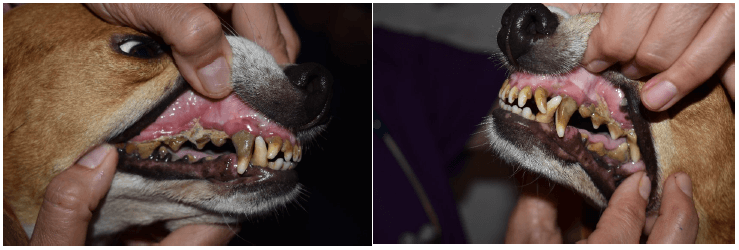
Many dogs “suffered from severe dental disease, including gingivitis, premature gum recession, and infections,” likely because of “poor nutrition and/or the failure” to provide them with adequate dental care.

usda inspection of envigo facility

This female beagle’s ear was infected and shredded, and many other dogs had recent or old ear wounds.

usda inspection of envigo facility

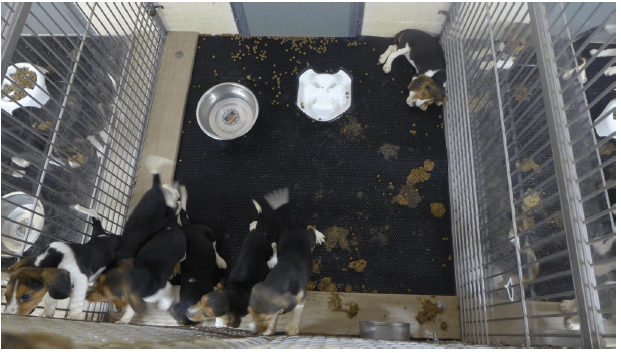
Enclosures were severely crowded, many containing four or more beagles and some containing as many as 10.

  • In June 2022, the DOJ found “serious and ongoing violations of the AWA” during a compliance check, including severely crowded enclosures and temperatures reaching 90 degrees inside the facility.
DOJ inspection of envigo facility

Some enclosures contained food bowls with kibble, but the bowls could be turned over by the dogs, “exposing the food to the feces on the mats.”

  • When Envigo’s parent company, Inotiv, announced that it would close the Cumberland breeding facility, the DOJ offered Envigo a plan to place the dogs up for adoption. But instead of giving all the dogs at its facility a chance to be adopted into a loving home, the company argued that it should be allowed to “fulfill orders” and “operate its business” by selling the dogs to laboratories—even though it’s already put them through hell. 

Dogs Still Imprisoned at the Envigo Former Breeding Facility Need Your Help

An estimated 3,200 beagles remain at Envigo’s operation, and the company intends to ship more than 500 off to laboratories to be tormented and killed in cruel, useless experiments—but you can do something about it. Urge Envigo’s parent company, Inotiv, to finally do the right thing by giving all the dogs a chance at adoption:

The post Envigo Beagle-Breeding Hellhole to Shut Down After Being Exposed by PETA appeared first on PETA.

Judge Issues Preliminary Injunction Against Envigo—but Allows Sale of More Than 500 Dogs to Labs

Senior U.S. District Court Judge Norman K. Moon just granted the U.S. Department of Justice’s (DOJ) request for a preliminary injunction in its civil case against Envigo RMS LLC. However, the court has allowed Envigo to “fulfill existing orders” for more than 500 beagles and sell the dogs in the coming days for experimentation.

On June 13, Envigo’s parent company, Inotiv, announced that it would close the facility. However, that same day, its attorney told Judge Moon that the company should be allowed to “operate its business” by selling these beagles, even though Envigo has been persistently noncompliant with the requirements of its license to operate and the U.S. government has offered a plan to make all the animals available for adoption.

“Inotiv took in nearly $225 million in just the past six months—and less than 1% of that was from selling dogs—but it wants to wring every last penny out of the exploitation of these long-neglected dogs, who have already been through so much,” says PETA Senior Vice President of Cruelty Investigations Daphna Nachminovitch. “Inotiv owes these beagles the opportunity to have what every dog deserves—the freedom to enjoy life in a loving home. It’s time for this company to finally do the right thing: Let all the dogs be adopted now.”

Nearly 450 dogs and puppies were seized from Envigo’s Cumberland, Virginia, site pursuant to a search warrant. On May 19, the DOJ filed its complaint, and on May 21, Judge Moon issued a temporary restraining order (TRO), which revealed that federal agents had found beagles with wounds and dental disease, denied adequate food and water, trapped in cage floors and cage bars, and kept in “torturous conditions.” A June 1 motion in the case indicated that Envigo had relinquished all 446 dogs seized by law-enforcement officials. Judge Moon’s preliminary injunction further imposes most of the TRO’s conditions on Envigo.

PETA—whose motto reads, in part, that “animals are not ours to experiment on”—conducted a seven-month undercover investigation into Envigo, which revealed more than 360 dead puppies. Workers with no veterinary credentials stuck needles into puppies’ heads, apparently to drain hematomas, without any pain relief, and injected euthanasia drugs directly into puppies’ hearts without sedation—causing them immense pain—among other forms of abuse. Broadcast-quality video from PETA’s investigation is available here, and photographs from the investigation are available here.

For more information on PETA’s investigative newsgathering and reporting, please visit PETA.org or follow the group on Twitter, Facebook, or Instagram.

The post Judge Issues Preliminary Injunction Against Envigo—but Allows Sale of More Than 500 Dogs to Labs appeared first on PETA.