Lauren Sánchez Asked to Donate $100K Crocodile Birkin Bag to PETA’s Museum of Atrocities

After seeing Lauren Sánchez exit the Ham Yard Hotel on Wednesday with a $100,000 crocodile-skin Birkin bag over her arm, PETA rushed off a letter to her this afternoon, urging her to donate the “testament to the human decimation of animal life” to the group’s Museum of Atrocities Against Animals. The letter includes an offer to replace the Birkin bag with a stylish, innovative, humane vegan crocodile-skin bag from a high-end designer like Stella McCartney.

“[C]rocodiles are fascinating, intelligent animals who use tools, communicate through body language and sounds, like to play (yes!), and are excellent mothers who fiercely protect their young,” writes PETA President Ingrid Newkirk. “I hope you agree that your Birkin bag belongs in the Museum of Atrocities Against Animals, and your donation would help educate children and adults about the exotic-skins industry and show that you value kindness over cruelty.”

At least three crocodiles must endure agony to make just one Hermès bag: Video footage released by Kindness Project shows crocodiles on farms owned by Hermès and one of its suppliers confined to concrete pens, electrocuted, stabbed, shot, and mutilated with screwdrivers. PETA’s own exposé of Hermès suppliers found that workers cut into the animals as they struggled to escape and stabbed still-conscious animals to try to dislocate their vertebrae. The animals continued to move for several minutes after these attempts at slaughter. Burberry, Carolina Herrera, Calvin Klein, Chanel, Jean Paul Gaultier, and many other brands have now banned all exotic skins.

PETA—whose motto reads, in part, that “animals are not ours to wear”—opposes speciesism, a human-supremacist worldview that fosters violence against other animals. For more information, please visit PETA.org or follow the group on Twitter, Facebook, or Instagram.

PETA’s letter to Sánchez follows.

August 5, 2022

Dear Ms. Sánchez:

Greetings. I’m writing on behalf of People for the Ethical Treatment of Animals U.S.—PETA entities have more than 9 million members and supporters globally, and PETA U.S. is the largest animal rights organization in the world. I thought you looked stunning in the photograph I saw of you exiting Ham Yard Hotel—except for that crocodile-skin Birkin bag. Please let me explain: In this day and age—when London Zoo has placed such a bag in its crocodile exhibit to make the point that acquisition of wild animal–skin accessories harms animals and when Chanel, Burberry, and other fashion houses have banned all exotic-skin items—I urge you not to ruin your beautiful look by carrying such a testament to the human decimation of animal life. There is something you can do to help.

First, may we offer you a fabulous vegan crocodile-skin bag to carry proudly and so make a “compassion in fashion” statement for others to follow? Second, would you please donate the Birkin bag to our Museum of Atrocities Against Animals? That would be a wonderful (and tax-deductible) thing to do for animal welfare. Blondie has donated her furs, as has Mariah Carey, and we have other such horrors as a colobus monkey coat, an alligator briefcase, a steel trap, a circus bear whip, and a sealskin ornament of a mother and baby seal.

Many people are unaware that crocodiles are fascinating, intelligent animals who use tools, communicate through body language and sounds, like to play (yes!), and are excellent mothers who fiercely protect their young. But crocodiles raised for their skins are factory-farmed, often confined for months or even years to filthy, barren concrete pits before being hacked up for their skin. You need a strong stomach to watch our videos of workers attempting to kill the animals by cutting into their necks and ramming metal rods down their spines—while they were still alive.

Animal-free textiles are revolutionizing the fashion industry. Stella McCartney, for instance, creates gorgeous vegan bags, including a snakeskin-print purse, and Minuit sur Terre offers exotic-skin bags made from cereals and recycled plastic bottles. There’s a growing demand for animal-friendly, planet-friendly products created from pineapples, mushrooms, apples, cactus, and other plant-based materials.

I hope you agree that your Birkin bag belongs in the Museum of Atrocities Against Animals, and your donation would help educate children and adults about the exotic-skins industry and show that you value kindness over cruelty. We would praise you to the heavens.

Thank you for your consideration. I look forward to hearing from you.

Kind regards,

Ingrid Newkirk

The post Lauren Sánchez Asked to Donate $100K Crocodile Birkin Bag to PETA’s Museum of Atrocities appeared first on PETA.
Speak Out Against Animal Giveaways in Williamsport, Maryland!

Experts agree that fish are highly complex animals who have the same capacity to feel pain, fear, and stress as mammals do, and they deserve better than to be doled out as trinkets. However, between June 21 and 25, the Downsville Ruritan Carnival—organized by the Downsville Ruritan Club, a community service organization—in Williamsport, Maryland, reportedly gave goldfish away as prizes to its game-booth attendees. When kept in captivity, these animals require a sizeable amount of water, climate control and filtration, regular aquarium maintenance, and ample enrichment. Most spontaneous recipients of these living, feeling “prizes” are hardly prepared for such a commitment, and the animals suffer as a result. PETA contacted the carnival organizers and asked that they exclude this booth from future fairs, apparently to no avail. These animals need your help now!

© iStock.com/mehmettorlak

Please urge the Downsville Ruritan Club to forgo animal giveaways at its events—then share this alert with everyone you know!

Please send polite comments to:

Mr. Eugene Mumma, President
Downsville Ruritan Club
8629 Downsville Pike
Williamsport, MD 21795
genemumma1969@gmail.com

Please also leave a message on the Downsville Ruritan Club’s Facebook page.

The post Speak Out Against Animal Giveaways in Williamsport, Maryland! appeared first on PETA.

PETA Celebrates the End of USDA’s ‘Teachable Moments’

In 2016, the U.S. Department of Agriculture (USDA)—the agency responsible for enforcing the federal Animal Welfare Act (AWA)—implemented its infamous “teachable moments” program. Rather than being written up in an inspection report for failing to comply with minimum animal welfare provisions, facilities that ran afoul of the law would simply be asked to do better—pretty please with brown sugar on top. When animals such as bear cubs, monkeys, and dogs suffered as a result of AWA violations, their abusers got off scot-free. Happily, the use of “teachable moments” has ended. Here’s why PETA is glad to see it laid to rest.

What Kinds of Violations Were Considered ‘Teachable Moments’?

The USDA began using “teachable moments” to document violations that its inspectors interpreted as minor violations, in an attempt to “work together” with licensees and registrants and bring them into compliance before recording a citation on their inspection reports.

“Minor” violations that could be recorded as a “teachable moment” were supposed to meet the following criteria:

  • Did not adversely impact animal welfare
  • Was unlikely to become serious, direct, critical, or repeatedly noncompliant in a short time frame
  • Represented something the facility was willing and able to correct quickly
  • Had not been recorded previously as a teachable moment or cited in an inspection report

However, some serious violations were written off by inspectors as “teachable moments” instead of earning violators the citations they deserved, failing the animals the inspections were supposed to protect. Now that the “teachable moments” system has ended, exploiters will be cited for their mistreatment of animals, which is the only way they can be held accountable, since citations are the basis for more severe enforcement actions such as warnings, fines, penalties, administrative lawsuits, court cases, and even animal confiscations or license suspensions or revocations.

Who Did ‘Teachable Moments’ Fail?

The use of “teachable moments” gave animal exploiters a pass, even as they failed to comply with minimum animal welfare regulations, and some inspectors incorrectly treated serious animal welfare violations as nothing more than learning opportunities. Incidents that were written off as “teachable moments” but should have been cited in an inspection report include the following.

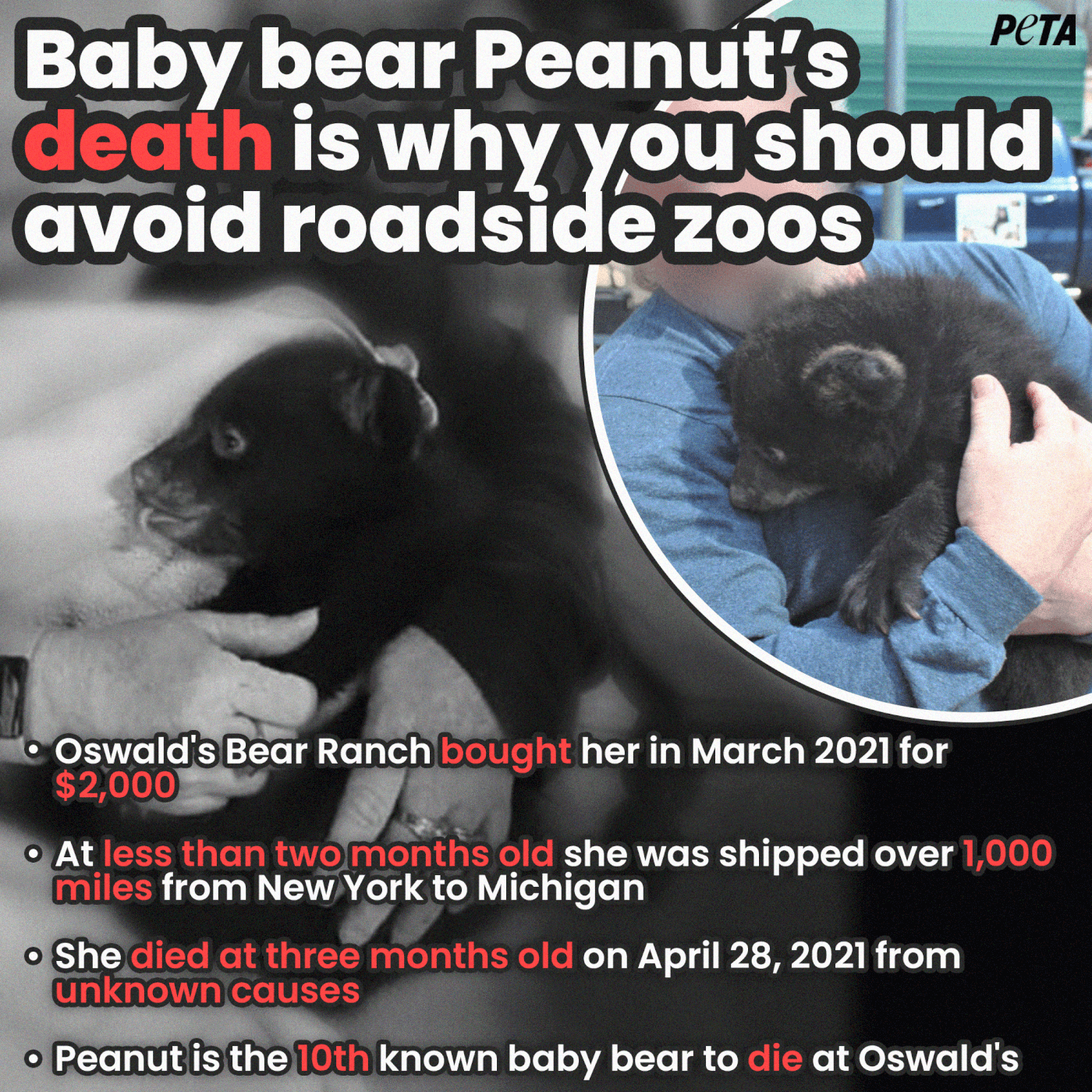
  • Oswald’s Bear Ranch transported three bear cubs in a sealed plastic tote. A USDA inspector issued a “teachable moment” on April 18 for inadequate ventilation.

Why this should have been a citation: The USDA’s guidance for its inspectors states that any noncompliance that adversely affects animal health and well-being should be cited on an inspection report and includes lack of ventilation as an example of something that warrants a citation. Without proper ventilation, the cubs risked not getting enough oxygen, which would have led to respiratory acidosis as well as increased intracranial pressure—a condition that can cause permanent neurological damage or even death. Also, “teachable moments” weren’t supposed to be issued to facilities with poor compliance records. At the time of this issuance, Oswald’s had just four months earlier agreed to pay $2,400 to settle alleged violations of the AWA.

  • SeaQuest failed to protect animals and the public—multiple incidents in which an animal bit or scratched guests during encounters were reported. Since then, the same type of violation has been cited on 10 inspection reports, with many noted to be repeat, critical violations.

Why this should have been a citation: Clearly, this issue was serious because the incidents had occurred at an interactive petting zoo—and subsequently were unlikely to be corrected anytime soon.

  • Oswald’s Bear Ranch failed (again!) to provide infant cubs with nutritionally sufficient food. At the time of inspection on June 11, 2019, the facility’s owners had bottle-fed nearly 90 cubs (who were all vulnerable and immunocompromised because they had been removed from their mothers prematurely) in the span of more than two decades and were apparently not providing the animals with an adequate diet—and still the USDA didn’t cite them for this failure. Several infant cubs have died on Oswald’s watch, including at least two cubs in 2021.

New Report: Two More Dead Cubs at Oswald’s Bear Ranch

Why this should have been a citation: “Teachable moments” cannot have an impact on animal welfare—and not providing cubs with proper food absolutely falls within this realm.

  • Banana Derby and Pompeyo Family Dogs failed to provide dogs with adequate space. Banana Derby exhibitor Philip Dolci was issued a “teachable moment” on July 15, 2019, and Pompeyo Family Dogs was issued one on January 14, 2020—both for not providing dogs with the minimum floor space required when they weren’t forced to travel.

Why this should have been a citation: Insufficient space has an adverse effect on animal health and well-being and can lead to psychological distress and physical suffering—making these serious apparent violations of animal welfare regulations.

  • Weber State University, Wayne State University, and Experimur failed to ensure proper oversight of experiments that caused animals pain and distress. Additionally, Experimur’s Institutional Animal Care and Use Committee (IACUC) failed to ensure that an experimental protocol was classified in the correct pain category. Because the IACUC classified the protocol as causing less pain and distress than was actually the case, the experimenter wasn’t required to conduct a search for alternatives.

Why this should have been a citation: In all three cases, the institutions’ oversight committees failed animals. These failures are particularly concerning as IACUCs are intended to be animals’ last line of defense. The USDA itself considers IACUC violations to be gravely problematic, because such failures represent a breakdown of the system of oversight governing the use of animals in experimentation.

No More Learning Curve—Increase the Pressure on Oswald’s Bear Ranch to Send Animals to Reputable Sanctuaries

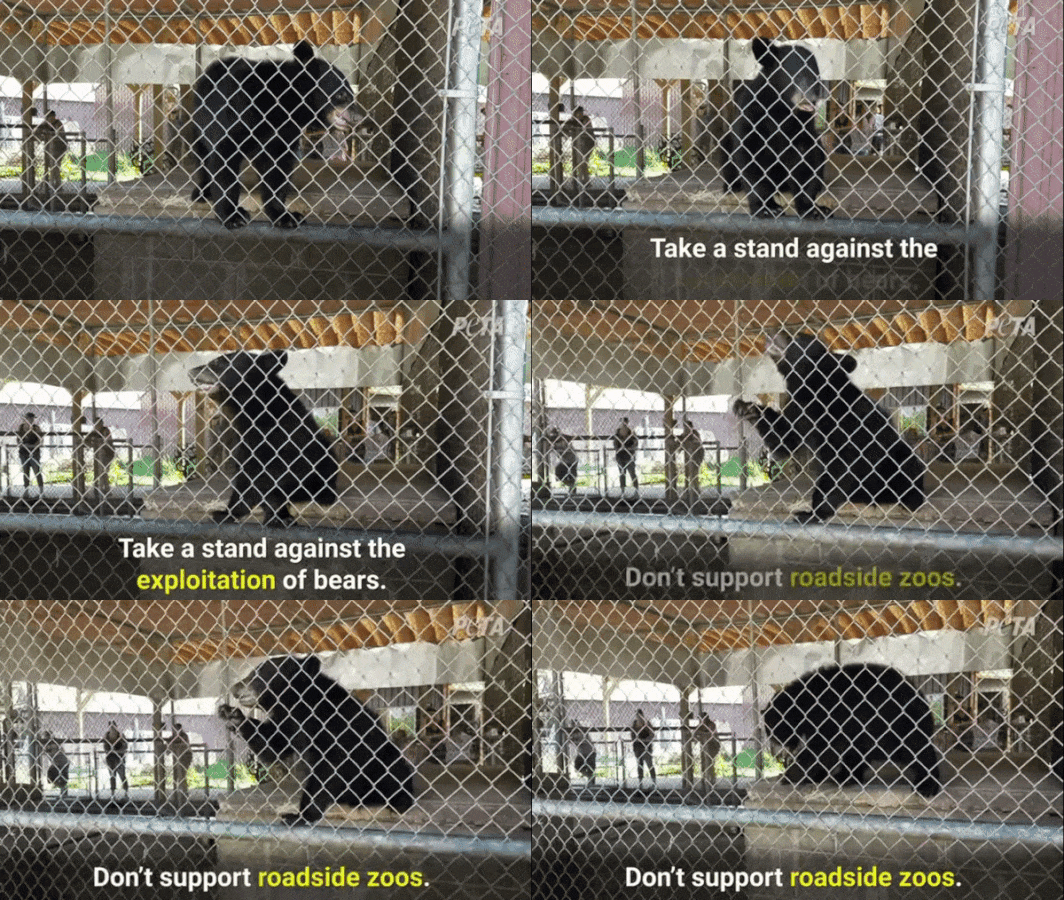
In nature, bear cubs spend their time playing, exploring, and socializing, but at Oswald’s Bear Ranch, they’re used for photo ops and handled by the public—highly disruptive practices that often result in long-term psychological and physical issues for the cubs. Bears at Oswald’s have suffered greatly at the hands of exploiters and unknowing tourists who paid to feed cubs torn away from their mothers by profit-hungry breeders. The roadside zoo was issued several “teachable moments” and citations, but the only way it can show that it really learned its lesson is to turn the bears over to a reputable sanctuary.

The post PETA Celebrates the End of USDA’s ‘Teachable Moments’ appeared first on PETA.

Paulina Rubio to Miami Seaquarium: Release Lonely Orca Before It’s Too Late

Monday marks the 52nd anniversary of the orca Lolita’s abduction from her ocean home, so singer Paulina Rubio sent a letter today to Eduardo Albor, the CEO of The Dolphin Company—which is the Miami Seaquarium’s new owner—urging the orca’s release to a coastal sanctuary. The star’s letter follows a whistleblower report from earlier this year detailing how Lolita was dangerously ill at the park. Although she’s now on the mend, she may not survive any future illnesses.

“The global calls to release Lolita from the world’s smallest and oldest orca tank are stronger now than ever,” writes Rubio. “Please don’t wait until it’s too late to give her the life she deserves. There is still time for Lolita to experience the ocean’s currents, swim greater distances and dive deeper, and live as an orca should.”

PETA—whose motto reads, in part, that “animals are not ours to use for entertainment or abuse in any other way”—opposes speciesism, a human-supremacist worldview. For more information, please visit PETA.org or follow the group on Twitter, Facebook, or Instagram.

Rubio’s letter to Albor follows.

August 5, 2022

Eduardo Albor, CEO

The Dolphin Company

Dear Mr. Albor:

Monday, August 8, will mark the 52nd anniversary of Lolita the orca’s capture, when she was violently torn away from her family and ocean home off the coast of Washington. She’s been swimming in endless circles ever since. As the new owner of the Miami Seaquarium, you have the power to bring her relief and a second chance at life in a seaside sanctuary.

The global calls to release Lolita from the world’s smallest and oldest orca tank are stronger now than ever, as the Seaquarium’s failure to provide animals with even the bare minimum necessary for their well-being and survival has come to light. I was horrified to learn of the damning inspection report that revealed a slew of animal welfare violations at the facility, including holding incompatible dolphins together who ended up dying from trauma, forcing Lolita to continue performing tricks that had likely injured her jaw, and repeatedly acting against its own veterinarians’ instructions.

When a whistleblower revealed that Lolita was deathly sick at the park earlier this year, the public rallied to support her. In what we can only imagine was a result of her strength and hope for a better future, a recent independent veterinary evaluation has shown that Lolita is on the mend. Please, don’t wait until it’s too late to give her the life she deserves. There is still time for Lolita to experience the ocean’s currents, swim greater distances and dive deeper, and live as an orca should, all while receiving food and veterinary care as part of the rehabilitation process.

You’ve already retired Lolita from public performances. Now, I’m asking you to please take the next step by allowing her to live out her remaining years in an ocean home.

Sincerely yours,

Paulina Rubio

The post Paulina Rubio to Miami Seaquarium: Release Lonely Orca Before It’s Too Late appeared first on PETA.

Paulina Rubio Urges Miami Seaquarium to Release Lolita to a Sanctuary

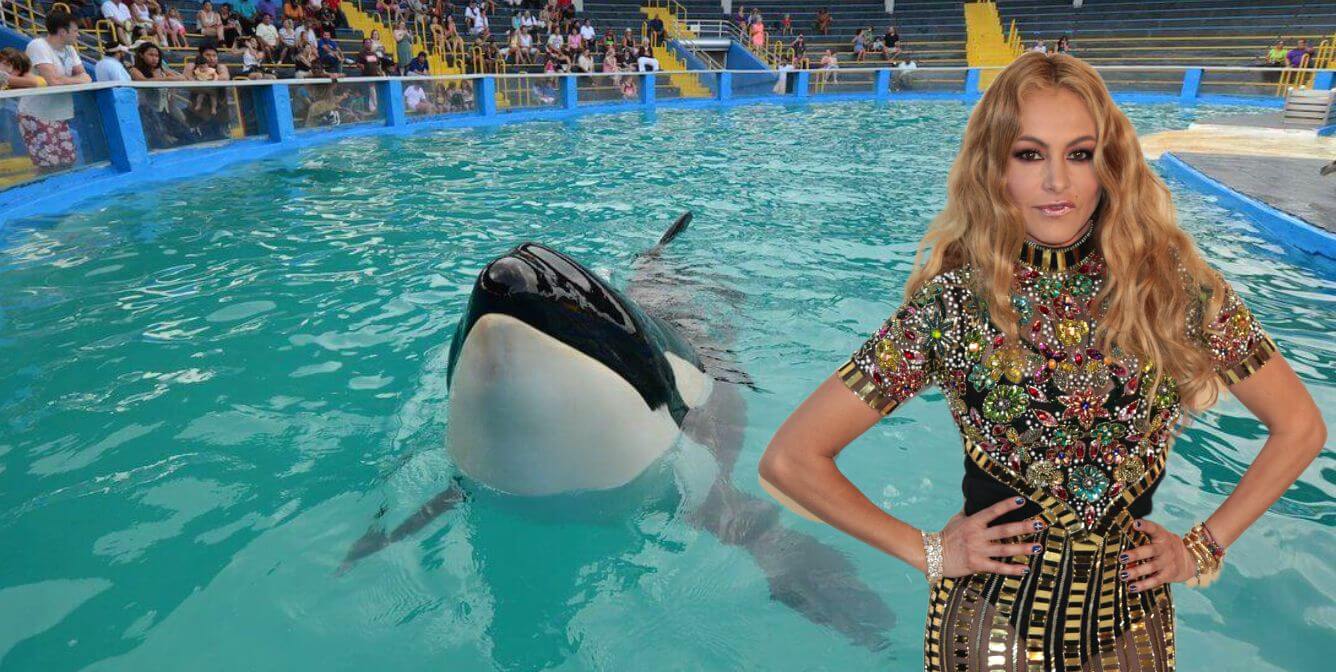
Captors abducted an orca named Lolita when she was only about 4 years old. On August 8, she’ll have suffered in a tank at the Miami Seaquarium for 52 years. Imagine swimming in a bathtub, away from your home and loving family, for half a century. So Paulina Rubio, “The Queen of Latin Pop,” used her beautiful voice in another way today—to advocate for Lolita. She sent a passionate letter to Eduardo Albor, CEO of The Dolphin Company, which owns Miami Seaquarium, asking that Lolita get a second chance at life in a seaside sanctuary.

Lolita, Paulina Rubio looking serious© StarMaxInc.com

The urgent message from the singer comes after a whistleblower reported earlier this year that Lolita was gravely ill at the park. Although she managed to survive, she is unlikely to survive another illness. And according to a federal report from last year, the Seaquarium committed several animal care breaches, including by forcing Lolita to perform tricks that had likely hurt her jaw and frequently going against the advice of its own veterinarians.

The Show Must Not Go On

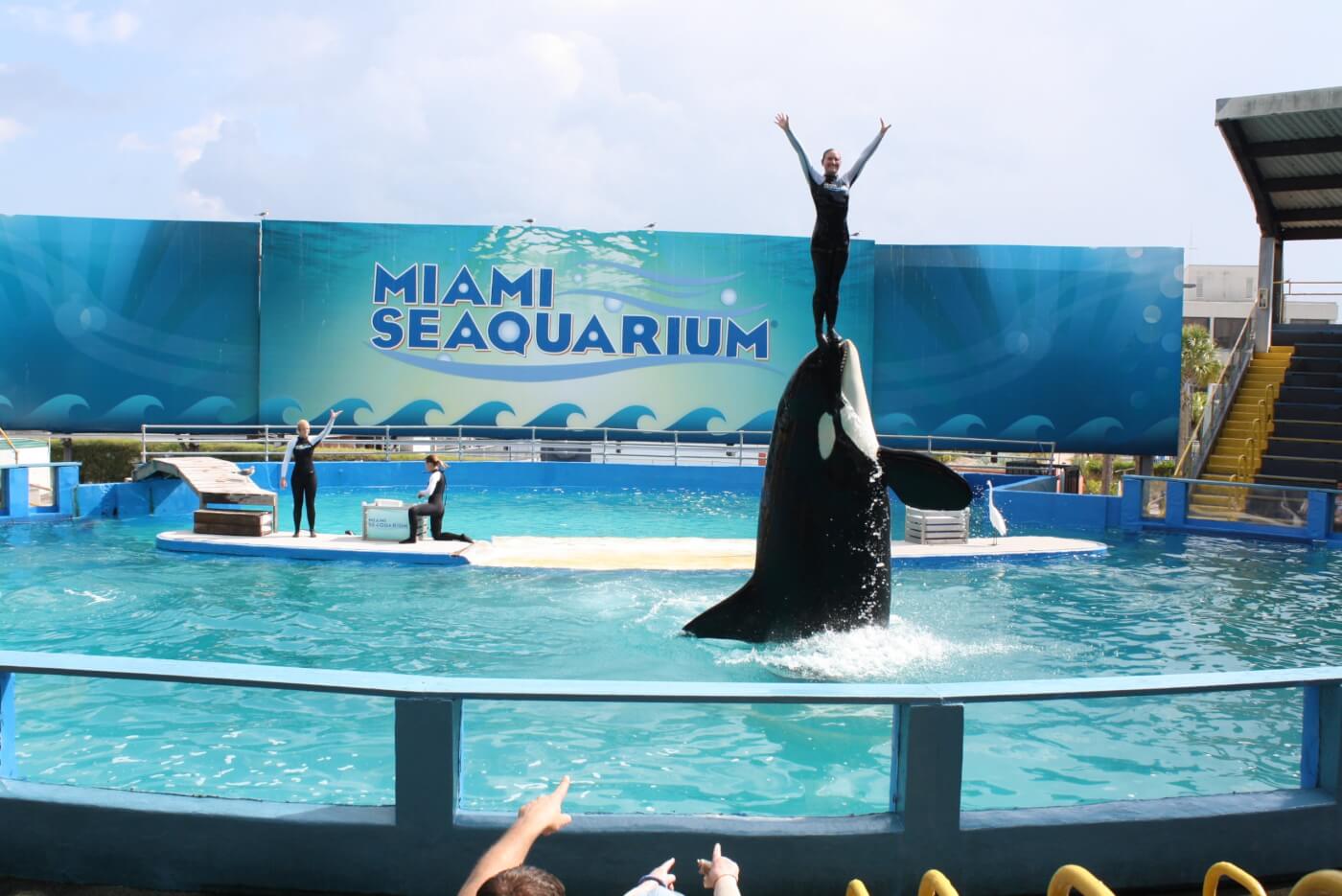
The Seaquarium forced Lolita to perform for decades. She was typically required to perform two or three times a day, and there were occasions when performances continued even when she could not keep her eyes open or had just undergone invasive procedures. As of this spring, Lolita is no longer forced to perform. Yet the long-suffering orca is still in the smallest orca tank in the world instead of a seaside sanctuary.

MIAMI SEAQUARIUM | LEONARDO DASILVA | CC BY 2.0
A Miami Seaquarium trainer stands on Lolita’s face in 2011.

Lolita’s Voice

Lolita clearly doesn’t like her small enclosure. She exhibits signs of distress and frustration. Pattern swimming and rubbing against the sides of the tank—rubs on various body parts have been documented several hundred times by her trainers, including “all over her body”—are two examples of such behavior displayed by an animal deprived of everything that is natural and important to them.

That’s why Paulina Rubio, PETA, and many others are speaking out for Lolita, telling The Dolphin Company to let her live out her golden years in a better place.

“Please, don’t wait until it’s too late to give her the life she deserves. There is still time for Lolita to experience the ocean’s currents, swim greater distances and dive deeper, and live as an orca should, all while receiving food and veterinary care as part of the rehabilitation process.”

—Paulina Rubio

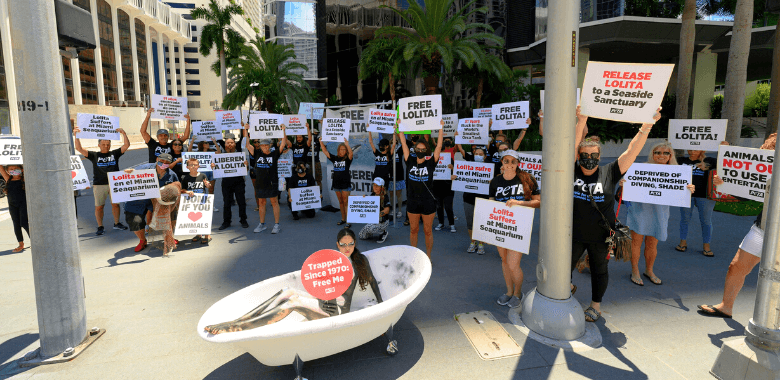
‘Orca’ in Bathtub Pushes for Lolita’s Release

Protesters urged the Miami Seaquarium to release Lolita to a seaside sanctuary on the weekend marking her 51st year of being confined to the world’s smallest orca tank.

Use Your Voice for Lolita

Please politely urge The Dolphin Company to release Lolita to a seaside sanctuary.

Send courteous comments to Eduardo Albor, CEO of The Dolphin Company:

The post Paulina Rubio Urges Miami Seaquarium to Release Lolita to a Sanctuary appeared first on PETA.