Greetings from PETA. Please see the following statement from PETA Senior Vice President Kathy Guillermo regarding today’s statement by the University of California–Davis that 21,000 fish slated for experiments were accidentally killed:
UC-Davis should never be allowed to imprison another animal. Years of violations have resulted in animal deaths, including administering the wrong vaccine to monkeys, failing to operate anesthetic equipment properly, and even baking monkeys to death when no one noticed a broken temperature control. The university’s incompetence is inexcusable.
For more information on PETA’s investigative newsgathering and reporting, please visit PETA.org or follow the group on Twitter, Facebook, or Instagram.
Going vegan is a great way to help animals—you’ll spare nearly 200 lives each year by leaving animal-derived products off your plate. Here are four additional benefits of going vegan—and one of the lives you spare could be your own!
In addition to protecting animals, being vegan decreases your environmental impact; lowers your risk of developing heart disease, cancer, and other diseases; increases your intake of fiber and antioxidants; costs less; and improves your mood and state of mind.
If you grew up in a traditional Latino household, chances are your family has been eating animal-derived foods three times a day, seven days a week. Whether it’s huevos con chorizo for breakfast, barbacoa for lunch, or arroz con leche or flan for dessert, these dishes all contain animal-derived ingredients, which adversely affect your heart, blood sugar, or other aspects of your health.
According to the American Heart Association, 52.3% of Hispanic men and 42.7% of Hispanic women age 20 and older suffered from cardiovascular disease from 2015 to 2018.
Foods that many Latinos consume regularly, such as lard, whole-fat cheeses, pork belly, fatty cuts of beef—carnitas, lengua, hooves, and other animal parts and viscera—fried desserts, flan, and dulce de leche can cause excess bodyweight, high cholesterol, and fats in the blood, leading to diabetes and high blood pressure.
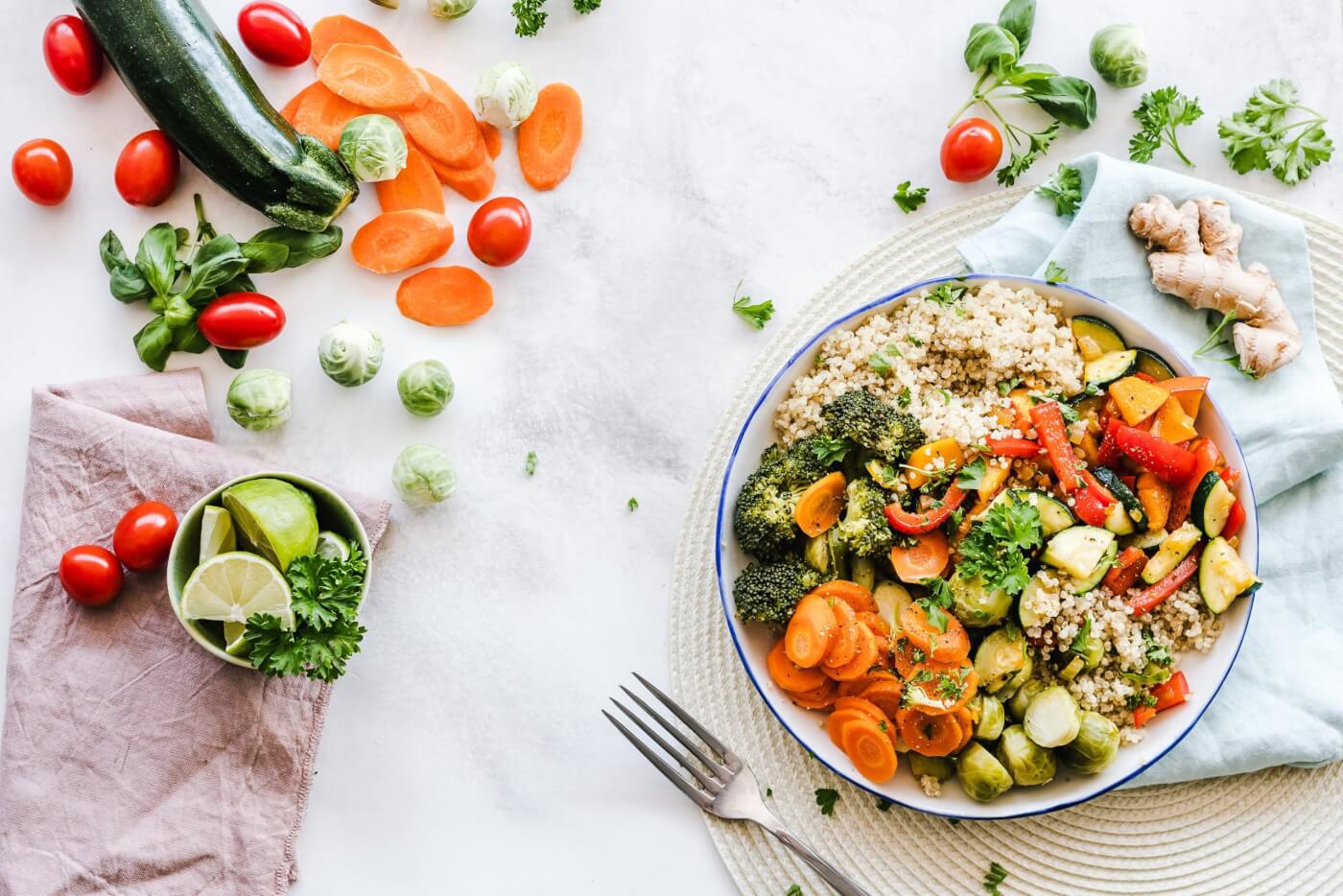
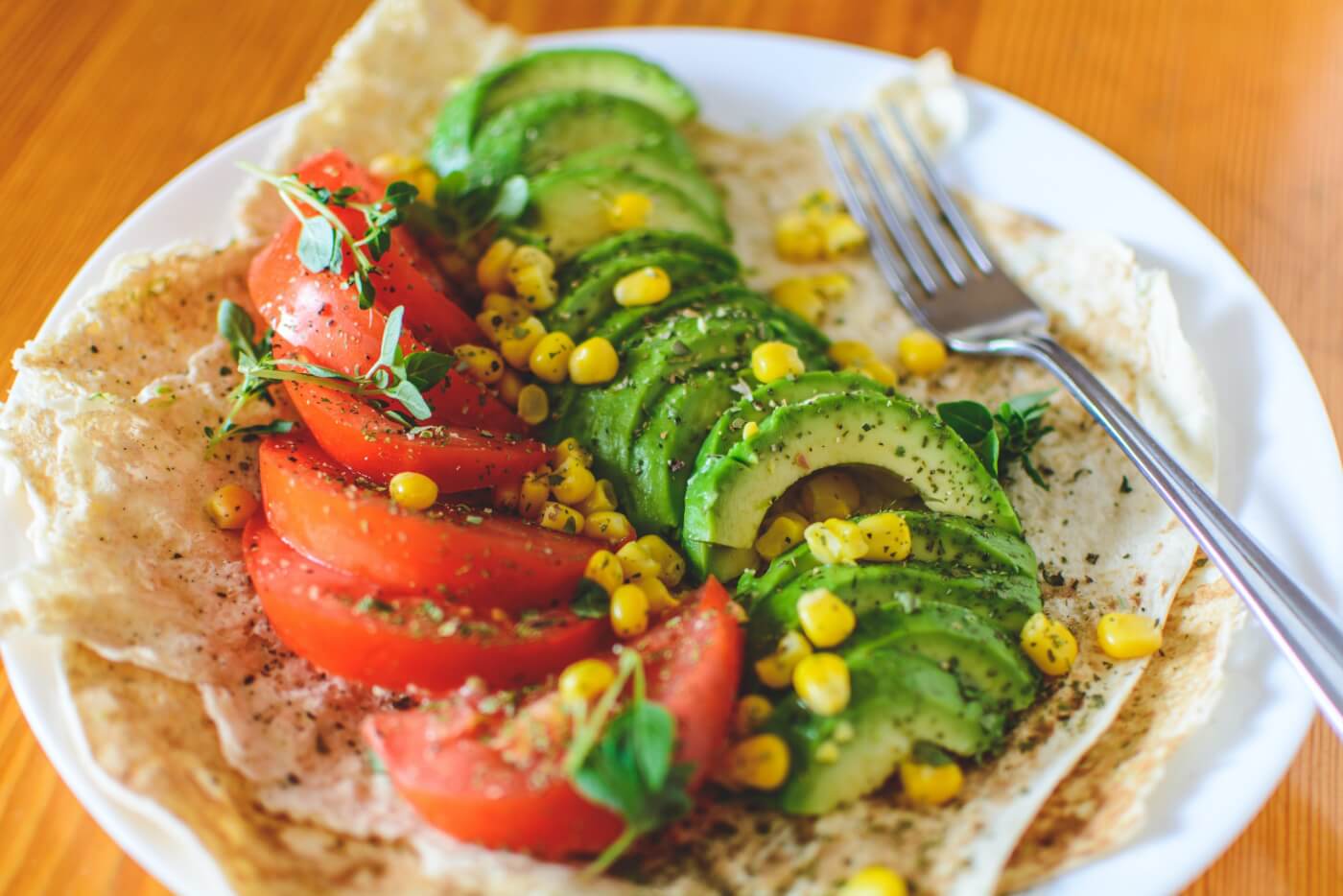
However, other Latino staples are healthy and delicious and have been part of Latino cultures for centuries. Foods like black and red beans, avocado, bright-colored vegetables such as peppers and tomatoes, yams, plantains, brown rice, corn, rich herbs, and many, many others are much healthier and reduce the risk of suffering from heart disease and strokes. The National Lipid Association recommends eating these foods and cutting out animal-derived fats in order to enjoy healthy Latino meals.
2. Eating Vegan Can Boost Your Mood and Productivity
It’s no wonder that more and more athletes are going vegan—to improve their performance, boost their health, and save animals. Leaving meat, eggs, and dairy off your plate can help you say goodbye to waking up tired, sluggish, and unmotivated. Did you know that feeling heavy, bloated, and exhausted can be caused by consuming animal-derived foods?
A recent study by Harvard Medical School psychiatrist and nutrition specialist Dr. Uma Naidoo found that diet affects mental health. Her research suggests that eating foods such as vegetables, fruits, and healthy, animal-free fats creates a healthier gut microbiome, which boosts energy levels and mood. She also points out that healthy, animal-free foods help us wake up in a good mood and stay energized and focused through the morning.
These benefits come from eating colorful vegetables, fruits, and delicious sweets, such as dark chocolate, nuts, and berries. If you’re looking for inspiration, check out these wonderful Latino-owned vegan restaurants to support this summer that are full of flavor!
3. Being Vegan Is Good for Your Bank Account
Saving money is as easy as ditching animal-derived foods, all of which are products of cruelty. Eating healthy and vegan is simple on a budget, and over time, the money you save will add up.
Don’t believe us? Fruits and vegetables are significantly more affordable than meat. Legumes, grains, and other starches are staples of any Latino kitchen, and they’re cost-effective sources of essential nutrients. Click here for more tips.
Raising animals for food requires massive amounts of resources. Two-thirds of all agricultural land in the U.S. is used to raise animals for food or to grow grain to feed them. Chickens, pigs, cows, and other animals raised for food are the primary consumers of water in the U.S. Just one pig consumes 21 gallons of water per day, and a cow drinks as much as 50 gallons daily.
Going vegan reduces our ecological footprint, allowing us to tread lightly on the planet and be compassionate to its inhabitants.
In addition to polluting the environment, factory farming strives to produce the most meat, eggs, and milk as quickly and cheaply as possible and in the smallest amount of space, resulting in abusive conditions for animals. Cows, calves, pigs, chickens, turkeys, ducks, geese, rabbits, and others are kept in small cages or stalls, where they’re often unable to turn around.
Animals used for food endure constant fear and torment:
Animals endure mutilations, such as debeaking, dehorning, and castration, without painkillers.
Most farmed animals have been genetically manipulated to grow larger or to produce more milk or eggs than they naturally would. Chickens used for their flesh grow so large that their legs can’t support their outsized bodies, and they suffer from starvation or dehydration when they can’t walk to reach food and water.
Many fish on aquafarms suffer from parasitic infections, diseases, and debilitating injuries. Conditions on some farms are so horrendous that millions of fish die before farmers can kill and package them for food.
In the foie gras industry, pipes or tubes are shoved down the throats of ducks and geese three times daily so that 4 pounds of grain can be pumped into their stomachs to produce the diseased “fatty liver” that some diners consider a delicacy.
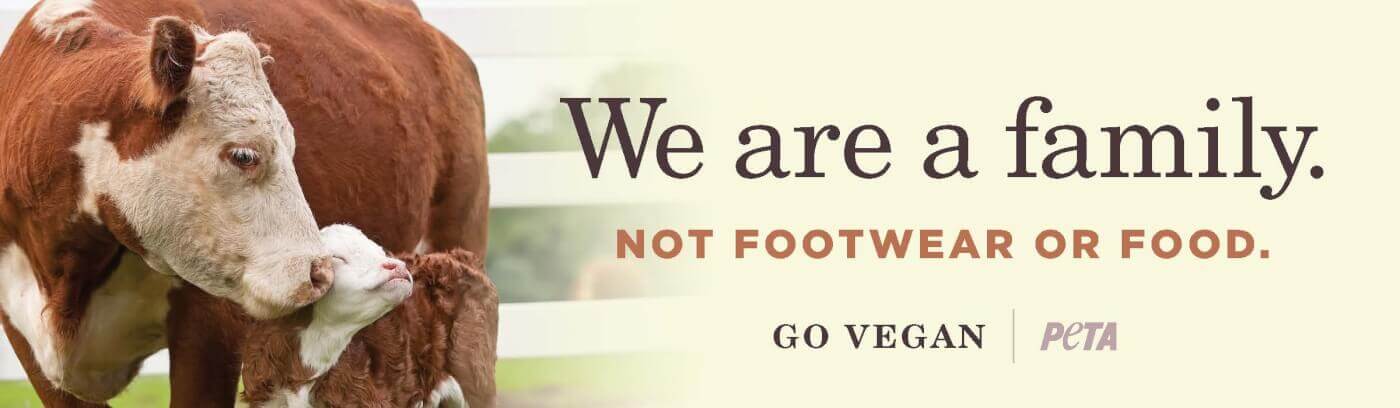
Calves are torn away from their loving mothers, and the nourishment that the mothers long to give their babies is instead stolen and shipped off for human consumption.
At the slaughterhouse, the throats of those who survived transport are slit, often while they’re still conscious. Many remain alert while they’re plunged into the scalding-hot water of defeathering or hair-removal tanks.
Some are even still awake while their bodies are being skinned or hacked apart. Most animals killed for food are practically babies, slaughtered at only a few months old.
Industries that use animals also have a disproportionate negative effect on Latino communities. Pollution and climate change fueled by animal agriculture affect everyone, but as the Food Empowerment Project discusses, filthy farms and slaughterhouses—huge sources of pollution—are often located in or near Black, brown, and low-income communities.
With generation after generation sickened by air, land, and water pollution from the animal agriculture industry, going vegan means taking a direct stance against environmental racism.
In light of a new government report exposing “research misconduct” by Deepak Kaushal, director of the Southwest National Primate Research Center (SNPRC) at Texas Biomedical Research Institute (Texas Biomed), PETA rushed a letter today to city officials urging them to revoke the $10 million in funds from the American Rescue Plan Act (ARPA) that was approved for the facility in February.
The investigation by the U.S. Office of Research Integrity found Kaushal guilty of “intentionally, knowingly, and/or recklessly falsifying and fabricating” data from a monkey study in published work and on grant applications. The study in question involved infecting monkeys with tuberculosis, treating them with a combination of drugs, and then infecting them with SIV, a primate virus that has failed to be a surrogate model for HIV infection and that leads to severe and painful symptoms. At the experiment’s end, the monkeys were killed.
Even though local residents spoke out overwhelmingly against directing any of the ARPA funding—federal money meant to help the city during the COVID-19 crisis—to the SNPRC, the council was persuaded by Kaushal and others at the center to award it the no-strings-attached funding.
“I urge [the city] to retract all ARPA funds currently slated for Texas Biomed/SNPRC and instead direct those funds to other projects that will benefit the people of San Antonio rather than to this facility, which is currently headed by an individual who has demonstrated no respect for scientific integrity, animal welfare, transparency, or accountability,” primate scientist and PETA Senior Science Advisor Dr. Lisa Jones-Engel writes in the letter to the city.