Can we be stylish and warm in clothes that don’t exploit birds for their feathers? Is it possible to get big fashion groups to be done with down? Absolutely, and PETA is celebrating a victory in that vein, thanks to a recent commitment from the French fashion group SMCP! After having banned fur and then exotic skins, the group that owns the famous brands Sandro, Maje, Claudie Pierlot, and Fursac announced to PETA France that it will no longer market items made with down or feathers. This is fantastic news that will help prevent birds from being abused and killed for their feathers.
SMCP representatives confirmed in an e-mail to PETA France that their group is committed to removing duck and goose feathers completely across its four brands by the fall–winter 2023 season. They explained that for the past few seasons, they have begun a shift in favor of materials that replace feathers and down in each of their brands.
The Down Industry
PETA has released exposés of the down industry around the world that reveal cruel practices at all stages of production, including by “responsible” suppliers. In an investigation into down farms in China (where 80% of the world’s down and feathers come from), workers stood on the delicate wings and necks of geese in order to keep them from struggling while they tore out handfuls of feathers. The birds were left raw and bloodied.
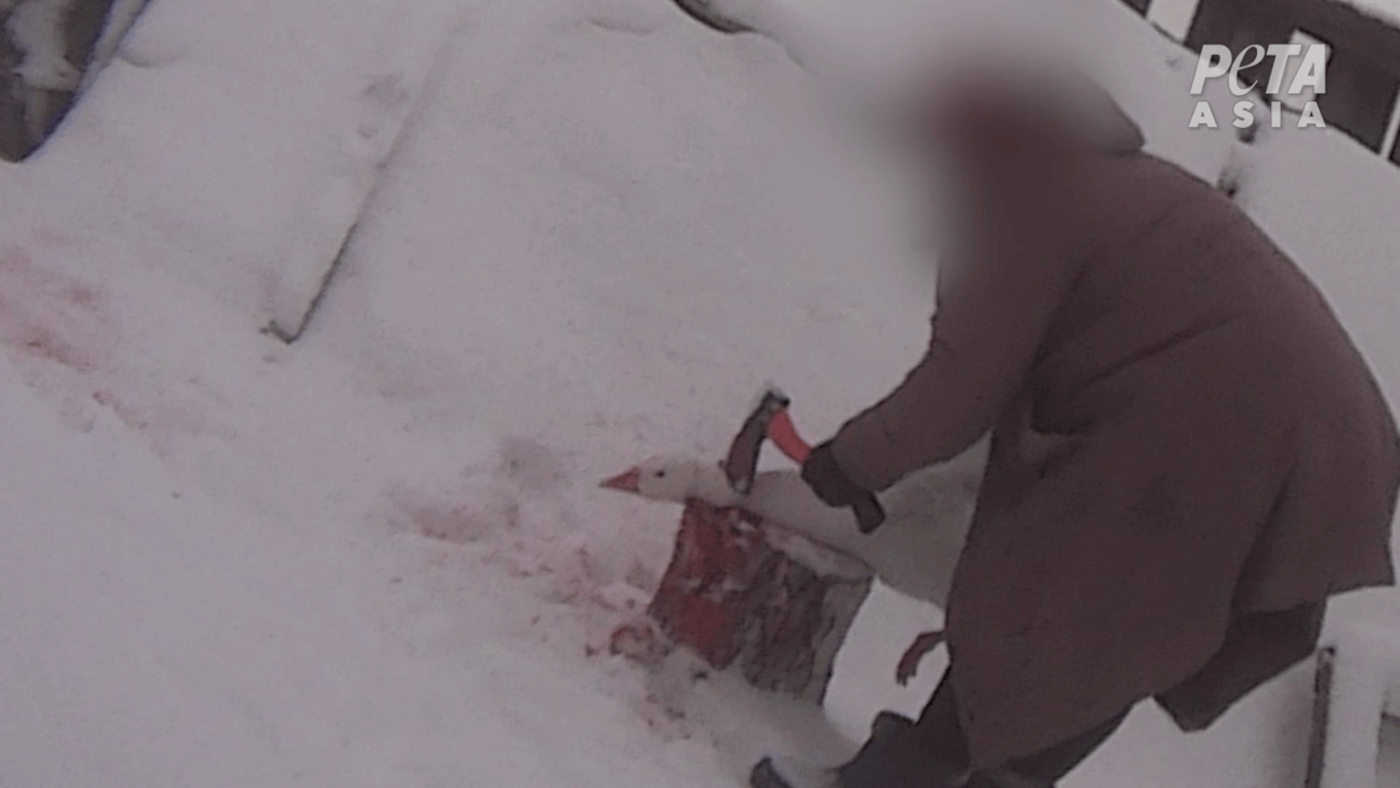
A 2022 PETA Asia investigation into goose farms certified by the “Responsible Down Standard” (RDS), a certification program for down suppliers in Russia, which exports down to countries around the world, found that geese were decapitated with a blunt axe while fully conscious.
International certifications, such as the “Non Live-Plucked Products Guarantee” and the RDS, exist to make consumers more inclined to buy vile products, but they don’t prevent animal abuse.
Let Birds Keep Their Feathers
Items made with feathers and down from birds who were plucked alive or after a violent death are exported around the world to be sold to customers who are unaware of the cruelty associated with these materials. As exposés released by PETA show, the purchase of items that contain down, even if it’s purported to be “responsibly produced,” directly endorses animal abuse.
SMCP’s choice to stop selling products made with feathers is excellent news for birds who won’t be forced to endure live plucking or slaughter in abominable conditions after a lifetime of suffering.
PETA welcomes SMCP’s compassionate decision and calls on other companies to follow its example, as the production of feathers and down is just as cruel as that of fur, which has already been largely abandoned by the fashion world.
Take Action for Geese and Ducks
Feathers are stolen from sentient beings, and their use in fashion is unnecessary, cruel, and unethical. If you’re considering buying bedding, pillows, a down jacket, or a down sleeping bag, remember the birds who need their own feathers and opt for vegan products instead.
Take action by calling on activewear brand lululemon, which continues to hide behind the deceptive RDS certification, to stop selling down:
Please see the following statement from PETA primate scientist Dr. Lisa Jones-Engel regarding the U.S. Department of Agriculture’s (USDA) critical citation of Envigo for violating the federal Animal Welfare Act in an incident involving the death of a monkey, who was left in a transport cage for three days, at the company’s Texas facility. PETA has filed a complaint with the USDA, urging it to revoke Envigo’s animal dealer license.
Federal officials have tolerated Envigo’s despicable treatment of monkeys for far too long, and the company should immediately lose its animal dealer license. It’s already out of the beagle-breeding business because of staff negligence and incompetence, and now the feds have cited its Texas facility, which is owned by Inotiv, for the death of a monkey who was left in a transport crate for three days. The monkey’s lifeless body was discovered on November 21, just days after the U.S. Department of Justice indicted eight Cambodians, including two government officials, on charges of monkey-smuggling and passing off monkeys captured in their forest home as captive-bred. Envigo is believed to be one of two unindicted co-conspirators named in the indictment that were receiving the alleged smuggled monkeys.
Just last week, PETA revealed that during 2021 at least four monkeys imported from Cambodia were released from Inotiv’s Texas monkey quarantine facility despite being infected with and likely shedding Burkholderia pseudomallei—a deadly bacteria classified as a bioterrorism agent. Melioidosis, the infectious disease caused by the bacteria, can cause symptoms ranging from acute septicemia (blood poisoning) to chronic infection, resulting in death for 10% to 50% of infected humans. At least six monkeys imported into the U.S. in 2020 and 2021 were infected with the bacteria, and multiple monkeys in Texas have died.
The law, which passed in the California legislature in 2019, was championed by over 600,000 PETA supporters in the state. In addition, we wrote to California’s Senate Committee on Natural Resources and Water strongly urging its support of the measure. Over a dozen countries in Europe have taken action to shut down fur farms, and it’s clear now more than ever: Fur is dead.
Fur Factory Farms and Trappers Destroy Lives
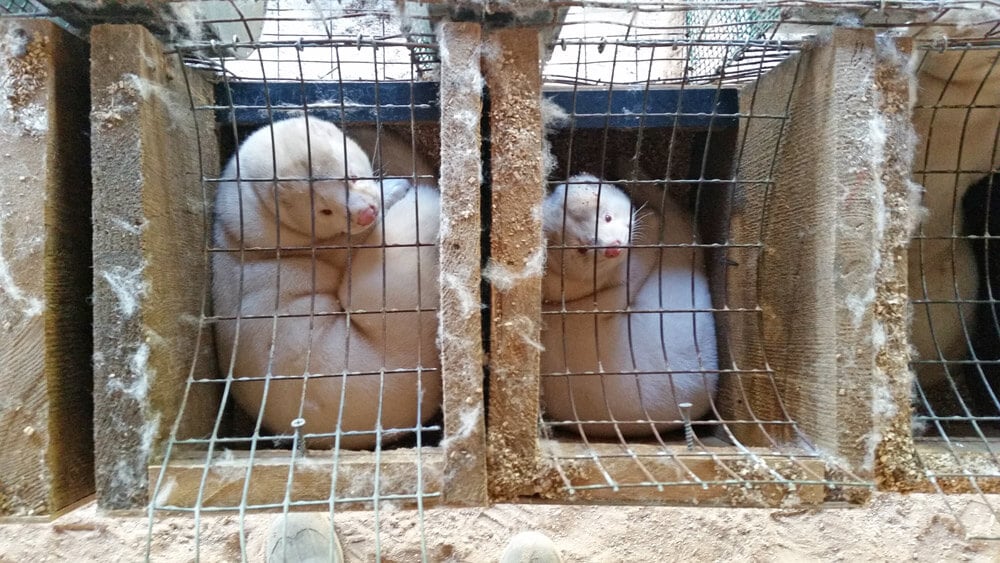
On fur factory farms, where 85% of the fur industry’s skins are obtained, animals are often crammed into filthy wire cages with no space to themselves. They can’t express any of the normal behavior essential to their well-being, and they quickly go insane.
PETA entity eyewitnesses have documented that workers gas minks en masse, electrocute foxes and rabbits, skin raccoon dogs alive, and more. PETA’s exposé of a now-defunct chinchilla farm in California revealed that the owners never provided animals with veterinary care and would amputate chinchillas’ legs with “wire snips” and “six drops of brandy.”
Humans also steal skin from fur-bearing animals in the fur-trapping industry, in which cowardly trappers set barbaric traps in animals’ home turf, checking them daily at best. The trappers then wait for their victims to spring the traps, and animals endure protracted and excruciating deaths while trying to escape. Steel-jaw traps, which clamp onto and mutilate animals’ legs, are the most commonly used device in the industry. Trappers litter the planet with these hazardous, indiscriminate objects, which may be forgotten about, ruining the lives of unintended targets, all in the ruthless pursuit of profit.
Fur Kills the Planet, Too
The fur industry also wreaks havoc on the environment. Fur coats and trim, just like other animal skins, are loaded with toxic chemicals, including ammonia and formaldehyde, to keep them from decomposing. The negative environmental impact from producing a fur coat and trim can be three to 10 times greater than from making a faux-fur coat.
Take Action Against Fur Profiteers!
If you spot someone selling animals’ fur in California, we want to know about it. For the sake of all animals killed for their fur, reporting violations of the new law is crucial to its impact.
Now is also the perfect time to urge LVMH—the owner of Louis Vuitton, Fendi, Dior, and other fashion brands—to ban fur. Every day it delays going fur-free is another day it loses sales from conscientious customers.
The holidays are possibly the best time of the year, with gifts, friends and family, parties, and lots of food! But tradition is no excuse to serve the flesh of a dead animal who was capable of feeling love, joy, and fear. This year for Nochebuena, a Christmas Eve holiday celebrated in the Latine community, PETA is urging families around the world to celebrate with a vegan feast. With plenty of delicious vegan ham brands to enjoy, it’s easy to spare pigs during the holidays (and long afterward).
What Happens to Pigs Used for Food?
From the moment they’re born to the day they’re killed, pigs raised for food are surrounded by blood, dirt, terror, disease, and death.
Workers on farms sexually assault and artificially inseminate female pigs throughout their lives. Mother pigs are confined during most of their pregnancies to gestation crates, which can be as small as 2 feet wide. This space is too narrow for them to turn around or even lie down comfortably.
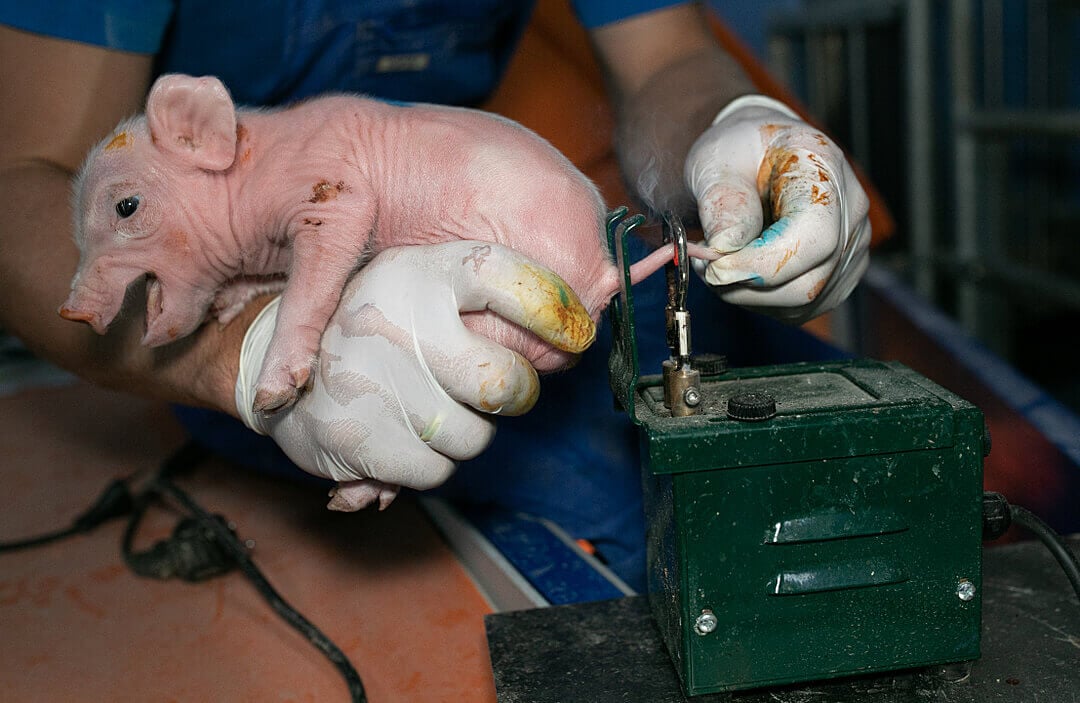
Farmers separate piglets from their mothers when they’re less than a month old. The tails of these defenseless babies—devoid of protection, exposed to terrifying sounds and smells, and violently mistreated by farmers—are often docked (i.e., cut). Workers sometimes use pliers to cut off the tips of piglets’ teeth or pieces of their ears, without administering any painkillers.
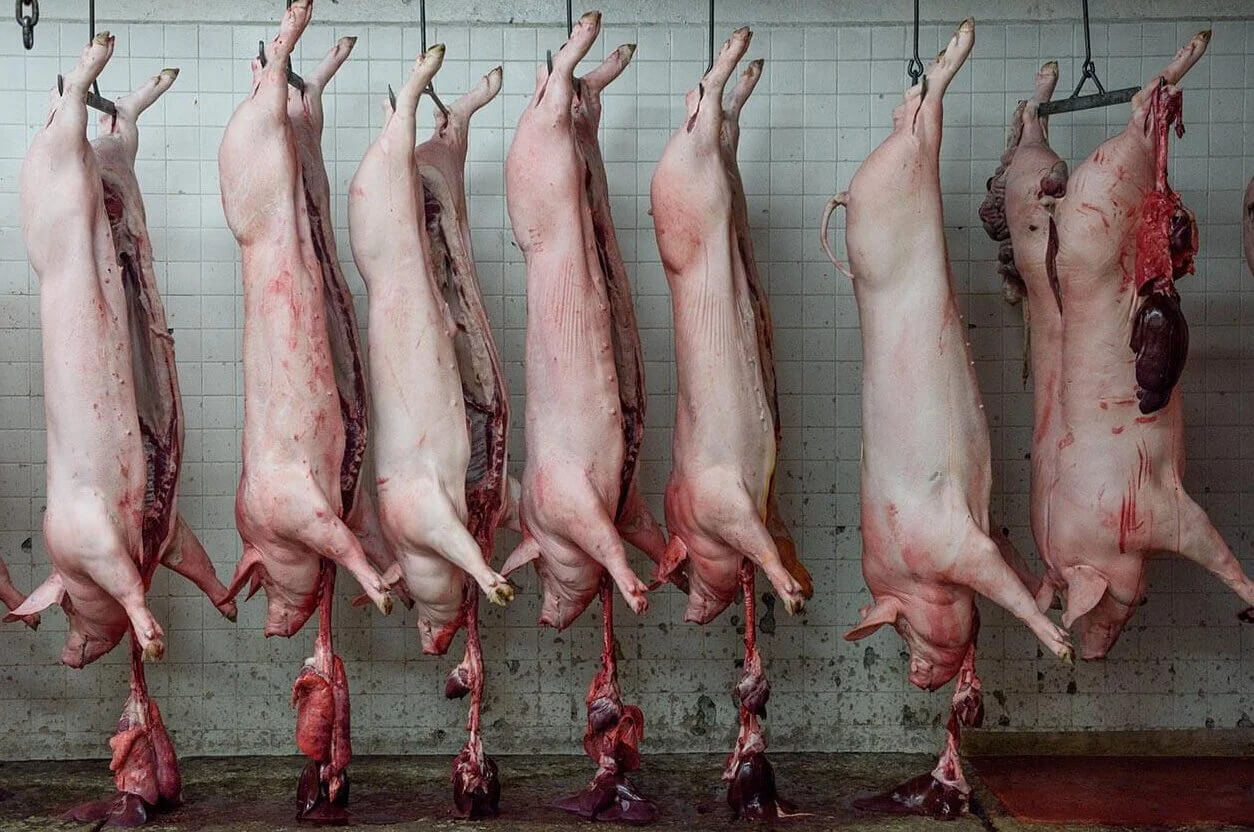
In slaughterhouses, workers hang pigs upside down, submerge them in vats of boiling water to remove their hair, and then stab them in the throat, often while they’re still conscious.
All this happens while other animals stand in a line, watching in horror and waiting, hopelessly, for their own painful death.
How Many Pigs Die Each Year?
An estimated 121 million pigs are killed for food each year in the U.S. alone.
Who Are Pigs? Here’s Why You Shouldn’t Eat Them During Nochebuena
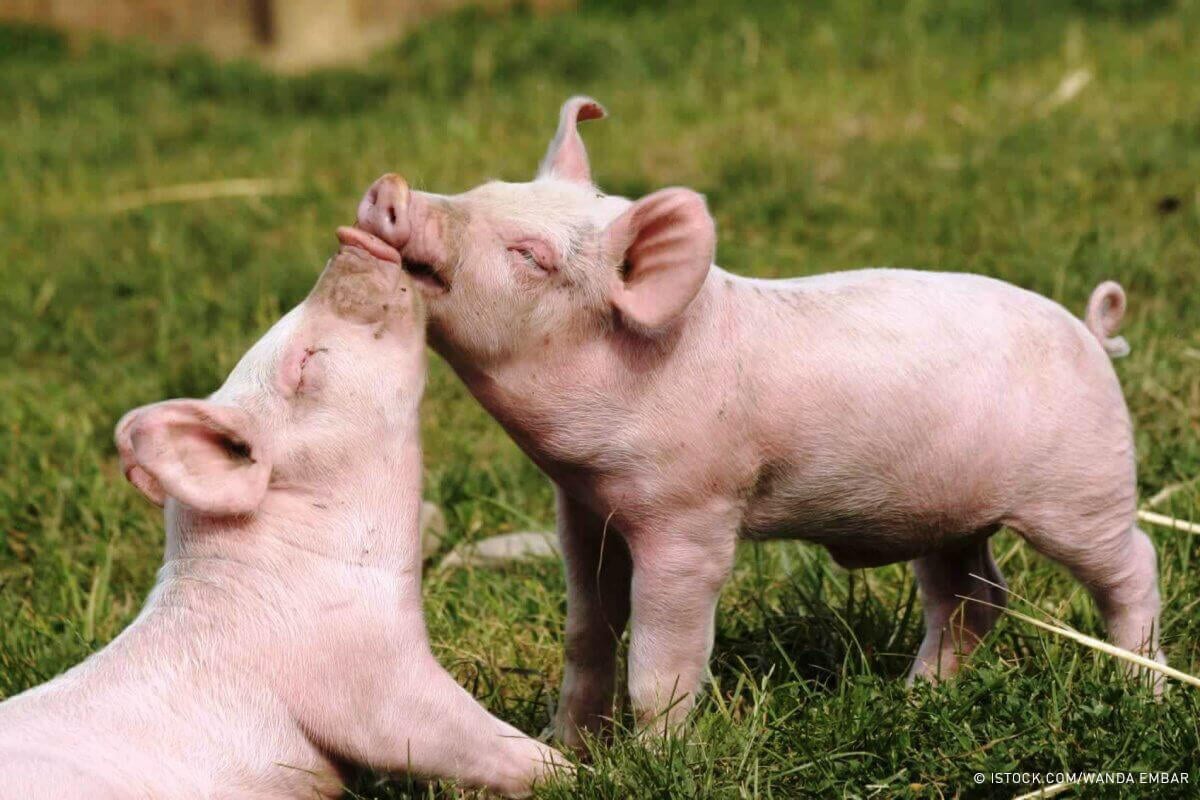
Pigs are playful, friendly, sensitive, and intelligent animals. Much like humans, they are soothed by music, love playing ball, and even enjoy getting massages. If given the choice, pigs would spend their days foraging, playing, and lying in the sun.
Many New Year’s resolutions include eating better, getting healthier, and doing more to make the world a kinder place. The good news is that you can accomplish all these goals by going vegan—and you’ll enjoy delicious, satisfying meals as well. But there’s more good news: Going vegan means you could save nearly 200 animals per year.
Have you considered making a switch to ditch speciesism and go vegan in the new year? A resolution that benefits animals—including humans, the planet, and your own health—is a great way to awaken with more kindness, awareness, and sense of purpose on January 1! And going vegan has never been easier, with all the latest cruelty-free personal-care products, food, fashion, entertainment, and more at your fingertips. Now let’s get you geared up to melt the icy vices of human supremacy and help 2023 be more animal-free.
This New Year, Peruse Our Top Picks for Vegan Personal-Care Products
There are so many options for cruelty-free makeup, shampoos, soaps, and so on. Let us lead you through a few brands whose products will be easy to find. Learn why checking the labels on personal-care products is important before making a purchase, as no animal should ever be used for experimentation or exploited for cosmetics testing.
For further guidance, access our Beauty Without Bunnies page to discover which items are animal-friendly and the companies that make them.
Start Finding Your Vegan Way in the New Year With PETA’s Top Food Pointers
Ready to begin with easy, delectable vegan meals? Here are PETA’s most popular recipes for you to prepare, savor, and share. Once you’ve explored a few of those, treat yourself to the newest animal-friendly options in select stores and restaurants. We got the tasty scoop on vegan innovations while attending Natural Products Expo West in May.
However you begin pursuing plant-based platters, pause when you can and take a fun, reflective quiz that matches animal-free food with your personality: Which vegan recipe are you? Also, download the HappyCow app to help you find the nearest vegan-friendly restaurants. And while all these tips are a solid start, also be sure to keep up with PETA’s regular posts on vegan food and drinks for our take on the latest delights.
Refurbish Your Fashion With Budding Compassion in the New Year
Now that you’ve dipped into delicious vegan food, flip through our animal-friendly fashion tips. As you start to work on updating your wardrobe, consider why animals should never be used for clothing. The cruelty they endure for fleeting fashion is unconscionable, especially as countless vegan fabrics are now available and being developed.
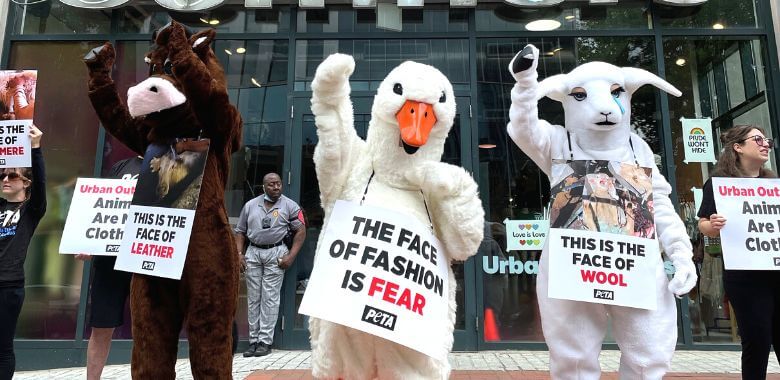
Protesters raised a ruckus outside an Urban Outfitters store in Philadelphia, urging the company to help save animals and the planet by selling products made of only sustainable, vegan materials.
We wish you a stellar start to 2023, as the new vegan you begins to feel ready and steady prioritizing compassion for animals. After all, we’re animals, too, and being kind to our fellow creatures is simple—especially with a reliable guide. If you’re seeking further advice, check out these vegan-friendly apps, which may make all the difference.
Take one last tip from us and order our free vegan starter kit. And for extra motivation in going vegan, team up with a friend and send them one as well.