
The post The Harvard Monkey Horror Story 0:30 appeared first on PETA.
BREAKING: Colombian Officials Shut Down NIH-Funded Animal Testing Campus
Last night, Colombian officials shut down the Caucaseco Scientific Research Center (Caucaseco) campus for 10 days because the facility didn’t meet sanitary and safety regulations.
The center is at the heart of an 18-month PETA investigation that has impelled Colombian authorities and elected leaders to take action. The latest move follows a recent PETA-prompted seizure of 100 monkeys from the Fundación Centro de Primates (FUCEP), a laboratory still funded by the U.S. National Institutes of Health (NIH) on the same campus.
“While NIH bankrolls useless and deadly animal experiments abroad, Colombian officials have moved swiftly to shut these torture centers down,” says Dr. Magnolia Martínez, PETA’s lead projects manager and congressional liaison. “PETA is renewing calls to NIH to end this reckless funding pipeline and urging the city of Cali to immediately rescue the mice and other animals still confined there.”
PETA is pledging U.S. $5,000 toward the care of these animals, once they are transported to the Cali animal shelter.
The group previously filed a complaint with NIH asking that it stop funding FUCEP and Caucaseco and requested that the National Institute of Allergy and Infectious Diseases investigate the experimenters, husband-and-wife duo Sócrates Herrera Valencia and Myriam Arévalo Ramírez, for apparent misuse of funds.
PETA’s investigation into Caucaseco and FUCEP revealed that monkeys were deliberately infected with the malaria parasite and that their spleens were surgically removed. Other monkeys were simply left to die from infected wounds. The investigation also found that the monkeys were held in rusty cages amid their own waste in a makeshift pen made of backyard fencing and plastic sheets and fed dog kibble soaked in sugary water.
Herrera and Arévalo have published papers with leading institutions around the world, including the Centers for Disease Control and Prevention, the Emory National Primate Research Center, the Fred Hutchinson Cancer Research Center, Florida Atlantic University, the Johns Hopkins Bloomberg School of Public Health, the Harvard T.H. Chan School of Public Health, the University of Washington, the Université de Montpellier, the Université de Lausanne, and others.
NIH spent $279 million in 2022 to fund 742 research grants in Colombia and 63 other countries, including Bangladesh, Brazil, China, and Vietnam. The agency has no oversight mechanisms for foreign organizations that receive American taxpayer money.
PETA—whose motto reads, in part, that “animals are not ours to experiment on”—opposes speciesism, a human-supremacist worldview. For more information on PETA’s investigative newsgathering and reporting, please visit PETA.org, listen to The PETA Podcast, or follow the group on Twitter, Facebook, or Instagram.
The post BREAKING: Colombian Officials Shut Down NIH-Funded Animal Testing Campus appeared first on PETA.
F1’s Deadly Dog-Sled Race Tie-Up Draws PETA Stock Purchase
Stockholders, start your engines! PETA has just become a shareholder in Formula 1 (F1) in order to push its locally based owner, Liberty Media, to stop sponsoring the deadly Iditarod dog-sled race, in which more than 150 dogs have died.
Although nearly every other major sponsor—including Alaska Airlines, Chrysler, Coca-Cola, Jack Daniel’s, Wells Fargo, and ExxonMobil—has cut ties with the Iditarod, Liberty subsidiary GCI, an Alaskan internet service provider, is still sponsoring the notoriously cruel race to the tune of more than $250,000 every year.
“There are no wheels on the dogs abused for the Iditarod, so for a thousand miles, their paws pound snow and ice until they become raw and bloody, and their bodies often give out,” says PETA Executive Vice President Tracy Reiman. “PETA is gearing up for F1’s next annual meeting, at which it will point out that brilliant engineering and human skill, not cruelty to dogs, is what the fans want.”
Up to half the dogs who start the Iditarod don’t finish it. Nearly 170 dogs have already been pulled off this year’s trail because of exhaustion, illness, injury, or other causes, leaving the remaining ones to work even harder. The leading cause of death for dogs in the Iditarod is aspiration pneumonia—caused by inhaling their own vomit—and the race’s official death toll doesn’t include countless others who were killed simply because they weren’t fast enough or who died during the off-season while chained next to dilapidated boxes or plastic barrels in the bitter cold, a practice exposed in a PETA undercover investigation.
PETA—which also owns stock in Liberty Broadband, part of the Liberty family of companies—opposes speciesism, a human-supremacist worldview, and its motto reads, in part, that “animals are not ours to use for entertainment.”
For more information, please visit PETA.org, listen to The PETA Podcast, or follow the group on Twitter, Facebook, or Instagram.
The post F1’s Deadly Dog-Sled Race Tie-Up Draws PETA Stock Purchase appeared first on PETA.
PETA Senior Vice President Kathy Guillermo: A Former Polo Player Dedicated to Saving Horses
It all started with an animal far smaller than a horse: a hamster. When I was little, my parents allowed my brother and me to have a hamster, and that taught me two very important things: Be responsible and be kind. Hammy’s needs came first. He always had a rich array of fruit and vegetables, he lived where we lived—in the family room—and every day he had several hours of (supervised) freedom and exercise. When he eventually curled up and went to sleep, I watched my mother gently lift him back into his cage. At friends’ houses, I noticed with sadness that hamsters and gerbils were mostly forgotten in cages that were rarely cleaned and often relegated to the basement. It seemed profoundly unjust.
A Pup Points to My Path Forward
My next exposure to animals came when I was 10 and I found an abandoned puppy. It had never occurred to me that a dog could be abandoned! I went to the library and found—to my amazement and joy—that there were organizations dedicated to helping homeless dogs and cats. I donated a few dollars, and the materials I received were my first lesson on animal neglect and abuse.
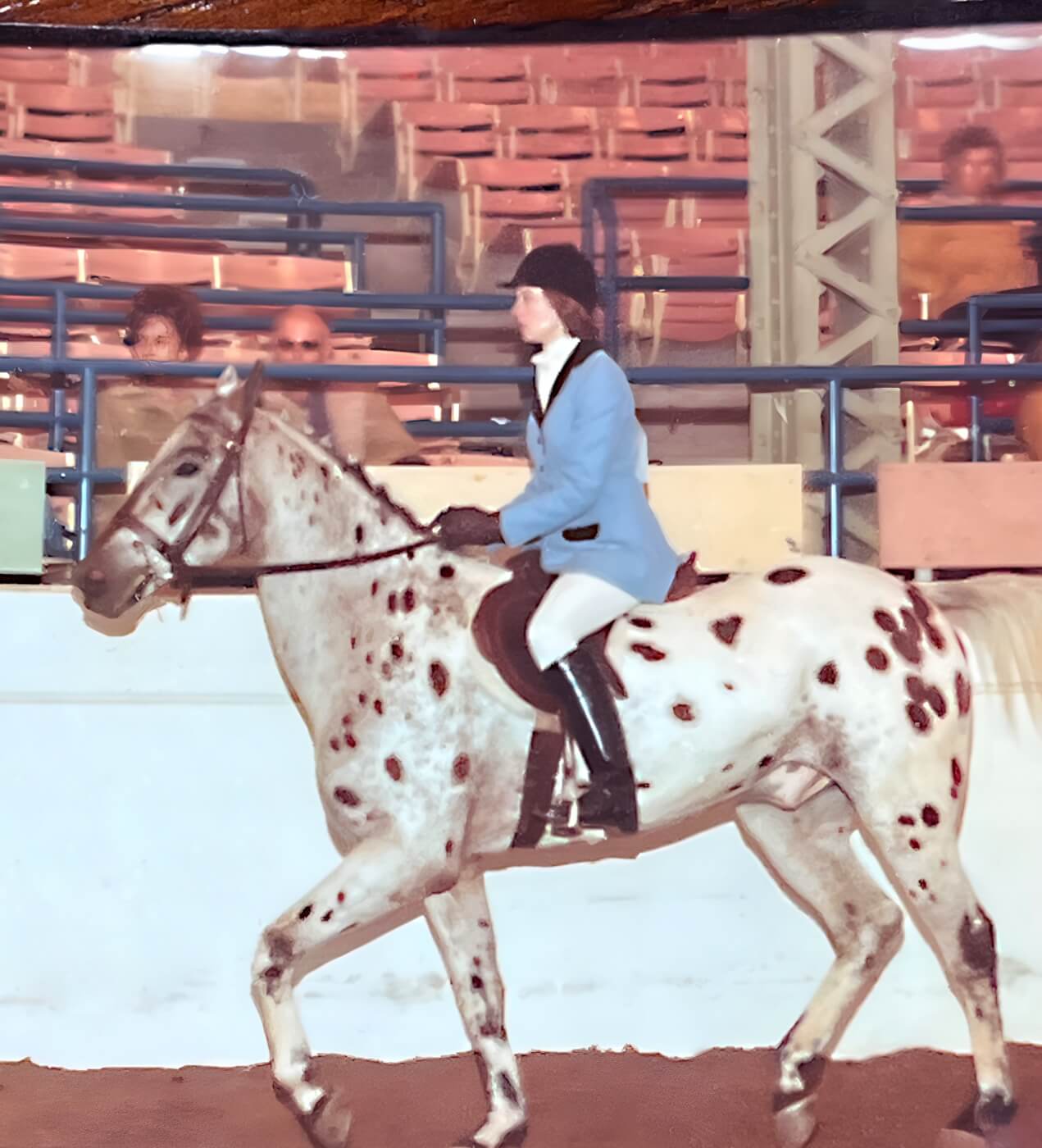
Still not putting two and two together, I began riding horses, and my parents bought me one. His name was Buddy. I showed him in English equitation and hunter jumper classes. I went to races, too, and learned to play polo. I loved horses but somehow didn’t yet see how they were being harmed.
Death on the Track
Then one day, I saw a horse die on a racetrack. Suddenly, all the pieces fell into place. I stopped going to races. I stopped playing polo. And in 1989, I started working for PETA.

A family affair: When I applied to work at PETA, I didn’t want to put my daughter Jilly in day care. Fortunately, Ingrid said, “We let people bring their dogs to work—why not a baby?” Jilly and her siblings are PETA’s most enthusiastic supporters, and my husband, Emil, hosts The PETA Podcast.
My first assignments to help animals in labs included “Get a Saturday Night Live cast member to pretend to vomit into a giant toilet” and “Hang a banner from the Eiffel Tower.” Gulp. I did manage to get both done, and Kevin Nealon remains a loyal PETA friend. I was also charged with persuading cosmetics companies to stop testing on animals. Back then, we had about 10 companies on our cruelty-free list. Now we have more than 6,000!

Fifteen years ago, I began heading up PETA’s Laboratory Investigations Department, and I’m delighted to recall our victories, of which these are just a few:
- PETA shut down the construction of a massive monkey-breeding facility in Puerto Rico.
- We stopped the National Institutes of Health’s barbaric maternal deprivation experiments on baby monkeys.
- We exposed abuse at the hideous product testing facility PLRS, forcing it to close and release hundreds of dogs and cats—all put up for adoption.
Still Saving Horses Big-Time
Horses still hold a place in my heart, so I also lead PETA’s Equine Matters Department, showing the world the atrocities that horses are subjected to. We’ve videotaped trainers as they injected them with performance-enhancing drugs and documented the slaughter of U.S. horses in Canada, Japan, Mexico, and South Korea (and saved some of them just in the nick of time). In 2022, PETA pushed New York state legislators to stop a bill that would have given Belmont Park $450 million in state-backed bonds to build a fancy clubhouse—the first time New York legislators said “no” to the greedy horse racing industry.
 © Jason Allen Photography
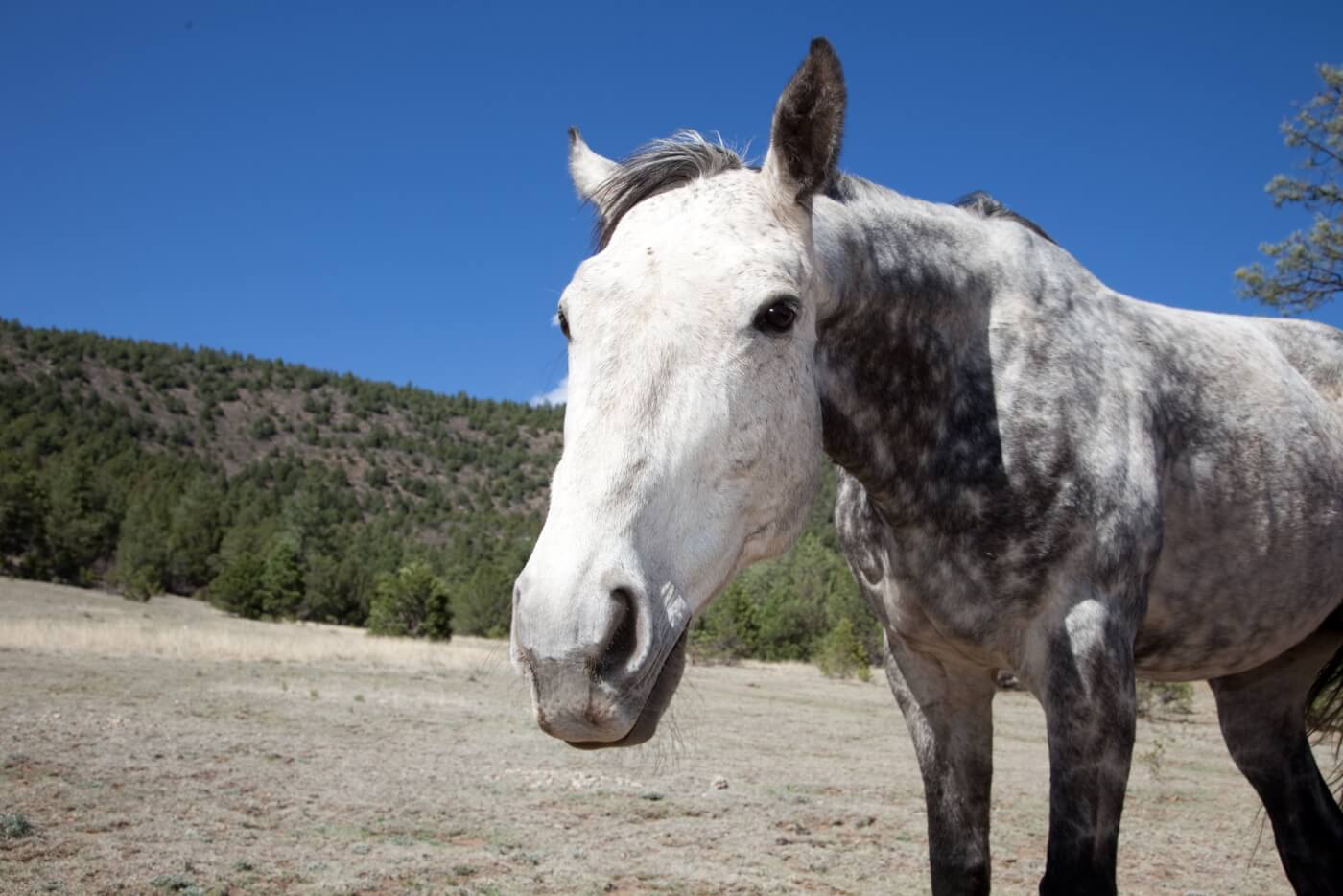
All those years ago, I “loved” horses, but I don’t think I ever really knew who they were. That shift—seeing the world from their point of view—was key. And now I’m dedicated to helping end the abuse of horses—and all animals. If horses hold a special place in your heart, too, please come along with me for the ride of a lifetime.
 © Kip Malone
Take Action Now
Horses shouldn’t be forced to compete for human entertainment. Take action to urge the International Olympic Committee to remove all equestrian events.
Written by Kathy Guillermo, PETA Senior Vice President
The post PETA Senior Vice President Kathy Guillermo: A Former Polo Player Dedicated to Saving Horses appeared first on PETA.
PETA Exhibit Exposes Violent History of Animal Experiments, Including at CU Denver
PETA is set to unveil its eye-opening exhibit “Without Consent,” which explores the troubled history of experiments on nonconsenting animals. The installation challenges institutions, including the University of Colorado–Denver (CU Denver), to rethink this exploitative, expensive, cruel, and archaic concept of science. Watch the trailer here.
Modeled after the Vietnam Veterans Memorial, “Without Consent” will be on display locally for four days as part of a national tour. It features 24 panels with descriptions and photographs of nearly 200 animal experiments conducted at U.S. institutions from the 1920s through today. An interactive virtual exhibit is also available here.
When: March 21–24, 12 noon–6 p.m.
Where: Grant Street (between E. 14th and Colfax avenues), Denver
“‘Without Consent’ tells the true stories of animals harmed and killed in experiments that they did not and could not consent to,” says Senior Vice President Kathy Guillermo. “Humans are only one animal species among many. Having the power to exploit others doesn’t give us the right to do so.”
The 110 million animals killed every year in U.S. laboratories are individuals who experience pain and fear, yet they’re burned, force-fed chemicals, sickened with disease, and robbed of their babies. Experimenters at CU Denver deprived rats of food and gave them heroin, then forced them into withdrawal before injecting them with cocaine and cutting out their brains. Other experimenters stopped and restarted the hearts of infant piglets, then killed them and cut their kidneys out. In another experiment, severe injuries were inflicted on the legs of 6-week-old rabbits, fat was removed from their groin and injected into the injury site, and then they were killed.
“Without Consent” also makes the point that vulnerable humans—including orphans in tuberculosis and psychological experiments, immigrant women in gynecological surgeries, soldiers in LSD and poison gas tests, and impoverished Black men in syphilis experiments—were exploited in experiments. Just as society now understands that these experiments were wrong, “Without Consent” shows that we need to let a similar moral awakening guide our conduct today by extending consideration to other nonconsenting sentient beings who suffer and die in experiments from floor-cleaner product tests to mother-infant separation studies.
PETA—whose motto reads, in part, that “animals are not ours to experiment on”—opposes speciesism, a human-supremacist worldview. For more information on PETA’s investigative newsgathering and reporting, please visit PETA.org, listen to The PETA Podcast, or follow the group on Twitter, Facebook, or Instagram.
The post PETA Exhibit Exposes Violent History of Animal Experiments, Including at CU Denver appeared first on PETA.