
Street Artist Transforms Side of Building Into Animal Rights Mural

Two monkeys, a cow, a sheep, and a rat are making themselves at home on Sunset Boulevard, thanks to acclaimed street artist Praxis, who just completed an animal rights mural on the side of PETA’s Bob Barker building during a three-day painting marathon. The original artwork tackles speciesism, the misguided belief that other animals are inherently inferior to humans. Photos of the artwork are available here, and video footage is available upon request.

Praxis is a Latin American stencil artist who has dedicated his life to animals. His powerful animal rights art has been displayed in Bogotá, Colombia—where he was the first artist to hold an animal rights show—as well as New York, Oregon, Texas, and Washington.

“Compassion and action are the way to liberation,” says Praxis. “Freedom is a right that we all have regardless of species, and I want my art to join the fight for change: human and animal liberation.”

PETA notes that other animals share our capacity for pain, hunger, fear, thirst, love, joy, and loneliness—yet speciesism is used to defend treating them like research tools, fabric, toys, or even food ingredients. Not only does this mentality contribute to the deaths of billions of animals each year, it also accelerates the climate catastrophe and the emergence of zoonotic diseases. To combat speciesism, PETA encourages everyone to support cruelty-free cosmetics companies, eat and wear vegan, avoid roadside zoos and circuses with animal acts, and more.

“This unmissable artwork from Praxis commemorates the many animals killed and abused by the experimentation, food, fashion, and entertainment industries,” says PETA Executive Vice President Tracy Reiman. “PETA invites everyone to view this larger-than-life mural and to open their hearts to its message of compassion, vegan living, and liberation for all.”

The mural is located at PETA’s Bob Barker Building, 2154 W. Sunset Blvd., Los Angeles.

PETA—whose motto reads, in part, that “animals are not ours to abuse in any way”—offers a free vegan starter kit on its website. For more information, please visit PETA.org, listen to The PETA Podcast, or follow the group on Twitter, Facebook, or Instagram.

The post Street Artist Transforms Side of Building Into Animal Rights Mural appeared first on PETA.
PETA Statement re USDA Green-Lights Lab-Grown Meat

Below, please find a statement from PETA Executive Vice President Tracy Reiman in response to the U.S. Food and Drug Administration’s decision to allow companies to sell cultured meat in the U.S.:

Years ago, PETA funded the very first foray into cultured meat research at two U.S. universities, offered a $1 million prize for the first laboratory that could create commercially viable lab-grown chicken meat, and even patented the findings of a scientist who eventually joined UPSIDE Foods before selling the patent to the startup at a very low cost—so we’re over the moon to see “slaughterless meat” becoming a reality. But since billions of animals are still being killed every year for food, animal agriculture is fueling the climate catastrophe, and delicious vegan meats are already widely available, there’s no reason to wait on government approval—everyone can and should go vegan now.

PETA—whose motto reads, in part, that “animals are not ours to wear”—opposes speciesism, a human-supremacist worldview. For more information, please visit PETA.org, listen to The PETA Podcast, or follow the group on Twitter, Facebook, or Instagram.

The post PETA Statement re USDA Green-Lights Lab-Grown Meat appeared first on PETA.

SeaQuest Folsom Cited by USDA

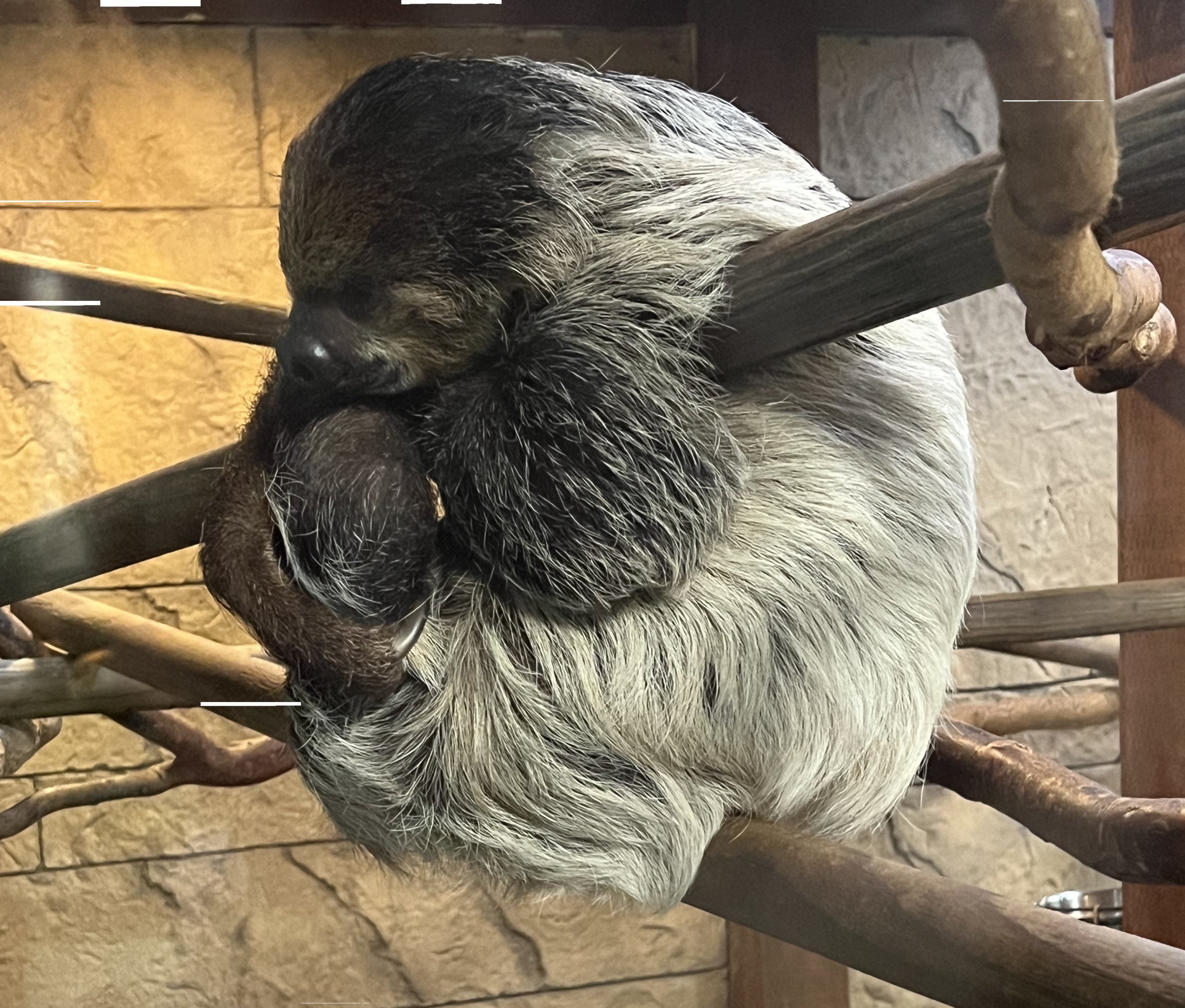
A just-released inspection report shows that SeaQuest was cited again by the U.S. Department of Agriculture (USDA) for violating the federal Animal Welfare Act. On May 1, the USDA inspected SeaQuest Folsom, in California, and found it to be jeopardizing the health and welfare of sloths by failing to provide the correct temperature and humidity in their enclosures. These conditions were also below healthy ranges two weeks before the inspection, according to SeaQuest’s logs.

A drop in temperature and humidity can be deadly for sloths, disrupting their digestion and causing them to starve. And this is far from the first time SeaQuest has failed them: This year, a whistleblower from the SeaQuest in Trumbull, Connecticut, reported that a sloth had fallen to the floor after his nails broke off, likely because they had become dry, cracked, and weakened due to dehydration and an insufficiently humid environment.

In July 2020, a 1-year-old sloth named Flash died at SeaQuest Las Vegas. He was thin when he died and had a history of weakness, twitching, and lack of appetite. Just nine months later, in April 2021, another sloth (also named Flash) died under similar circumstances at the same facility.

a sloth curled around a piece of wood in an enclosure

SeaQuest has a horrible track record with sloths. Why is the chain still allowed to keep them?

SeaQuest Profits While Animals Suffer

Animal suffering appears to be of little concern to the infamous Vince Covino, owner of the SeaQuest chain. While he profits, his businesses regularly rack up USDA citations—SeaQuest was recently slapped with a $4,500 fine over numerous cases in which animals bit members of the public at multiple locations and an incident in which a door crushed a flying squirrel to death.

The recent animal welfare failures of SeaQuest Folsom are just the latest in a years-long pattern of neglect by the facility that has resulted in a string of USDA citations. Incidents include failing to maintain the safety and sanitation of the Bengal cat enclosure, failing to keep adequate records of the animals, and having excessive flies throughout the facility, which poses a risk of disease to the animals.

SeaQuest’s other facilities across the country are no better: Hundreds of animals have died there, and the USDA has issued numerous citations for inadequate animal care, improper maintenance, and injuries to the public. Animals are in danger every minute they’re imprisoned at SeaQuest and at the mercy of animal exploiters who fail to give them even the most basic care. Steer clear of this seedy chain, where animals suffer for the sake of human entertainment and the only thing that runs wild is neglect.

Help Animals at SeaQuest

SeaQuest facilities are plagued by animal welfare issues, animal deaths, legal violations, and injuries to employees and the public from direct contact with animals. Please take a series of rapid actions for the animals imprisoned at SeaQuest:

Help Animals at SeaQuest!

The post SeaQuest Folsom Cited by USDA appeared first on PETA.

CDC Quarantine Fails to Detect TB Outbreak; PETA Urges Immediate Action

PETA is calling on the Centers for Disease Control and Prevention (CDC) to take immediate action to protect humans and animals following confirmation of a tuberculosis (TB) outbreak among imported monkeys in a Michigan laboratory after the agency failed to detect the disease during a 31-day quarantine.

State health officials confirmed to PETA and the Michigan media that an outbreak of TB in the Northern Biomedical Research laboratory led to a reportable disease investigation. Two laboratory workers tested positive for TB and were referred for treatment.

In a letter sent to the CDC today, PETA urges the agency to do the following:

  • Stop all imports of monkeys from Mauritius, an island nation currently experiencing a massive TB outbreak among monkeys destined for U.S. laboratories.
  • Retest all monkeys imported from Mauritius during the past six months using a reliable and sophisticated algorithm that can detect animals exposed to and/or infected with TB.
  • Order the testing of all humans who have handled monkeys from Mauritius.
  • Warn state health departments nationwide, alerting them to recent cases of TB in imported monkeys and the potential for transmission of the disease among people in contact with monkeys in facilities that import and/or maintain primates.

“The CDC has failed in its responsibility to properly monitor the primate importation and quarantine process and is subjecting the public to the risk of zoonotic infections,” says PETA primate scientist and TB expert Dr. Lisa Jones-Engel. “PETA is calling on federal authorities to shut down the cruel and dangerous monkey-importation pipeline before it leads to the next pandemic.”

Yesterday, PETA rushed letters to state veterinarians and public health officials nationwide, urging them to prohibit monkeys from entering their states and to initiate a TB quarantine in all 39 states where facilities have received monkeys during the past six months.

The infected primates, all long-tailed macaques, who are listed as an endangered species, had undergone a 31-day quarantine mandated by the CDC at a facility in Florida before arriving in Michigan. The CDC apparently failed to detect any infections, in part because the test used is notoriously unreliable.

PETA has repeatedly asked the CDC to ban imports of monkeys from Mauritius—where local media recently reported a TB outbreak among monkeys at one export facility—and other countries due to the risk of disease spillover. The CDC recently defied federal recommendations to comprehensively assess and conduct surveillance of the disease risks associated with imported primates.

The CDC’s own documentation reveals an increase in the number of TB-infected monkeys arriving in the U.S. since 2021. PETA has urged the CDC’s National Center for Emerging and Zoonotic Infectious Diseases to take action to mitigate the risk to the public posed by imported monkeys.

The Michigan and CDC records obtained by PETA are available upon request.

PETA—whose motto reads, in part, that “animals are not ours to experiment on”—opposes speciesism, a human-supremacist worldview. For more information on PETA’s investigative newsgathering and reporting, please visit PETA.org or follow the group on Twitter, Facebook, or Instagram.

The post CDC Quarantine Fails to Detect TB Outbreak; PETA Urges Immediate Action appeared first on PETA.

Warning! Turtle Crossing—PETA ‘Shells’ Out Tips for Helping Turtles

Why did the turtle cross the road? To get to the other side, of course! But dodging traffic can be dangerous for these slow-moving animals. So as summer heats up and turtles, including tortoises, are on the move, take action to assist them in their travels.

  • If you spot a turtle on the road, please pull over to a safe location and help them cross quickly. Always escort turtles in the direction they’re heading—otherwise, they’ll turn back into traffic and attempt to reach their destination.
  • Small turtles can be picked up by gently holding their shell with both hands between their front and back legs and carried across the road.
  • Large turtles and snapping turtles should be handled as little as possible. They can be gently encouraged into a cat or dog carrier or onto a solid, flat surface (such as a piece of sturdy cardboard) that can be safely moved a short distance with the turtle on top of it.
  • Never assume that a turtle who has been hit by a car is dead. Turtles have a super-slow metabolism and can suffer for weeks before dying. Test for a reaction by pinching a back toe or gently touching the corner of an eyelid. Injured turtles should be contained and transported to a veterinary clinic or animal shelter right away.
  • This video (warning: graphic) shows turtles who were still alive when PETA’s fieldworkers found them, illustrating how critical it is to check on those who appear dead.

“Lending a helping hand could be the difference between life and death for these slow-moving animals, who deserve to get where they’re going in one piece just as much as we do,” says PETA Vice President Emily Allen. “Roads become turtle killing fields in the summer, and PETA urges everyone to keep their eyes peeled for opportunities to be a hero to turtles.”

More details about helping turtles are available here.

PETA—whose motto reads, in part, that “animals are not ours to abuse in any way”—opposes speciesism, a human-supremacist worldview. For more information, please visit PETA.org, listen to The PETA Podcast, or follow the group on Twitter, Facebook, or Instagram.

The post Warning! Turtle Crossing—PETA ‘Shells’ Out Tips for Helping Turtles appeared first on PETA.