An Open Letter to the Frog I Dissected in High School

Dear Frog,

I’m writing to ask for your forgiveness for what I did to you when I was in high school. I’m sorry for everything. So sorry.
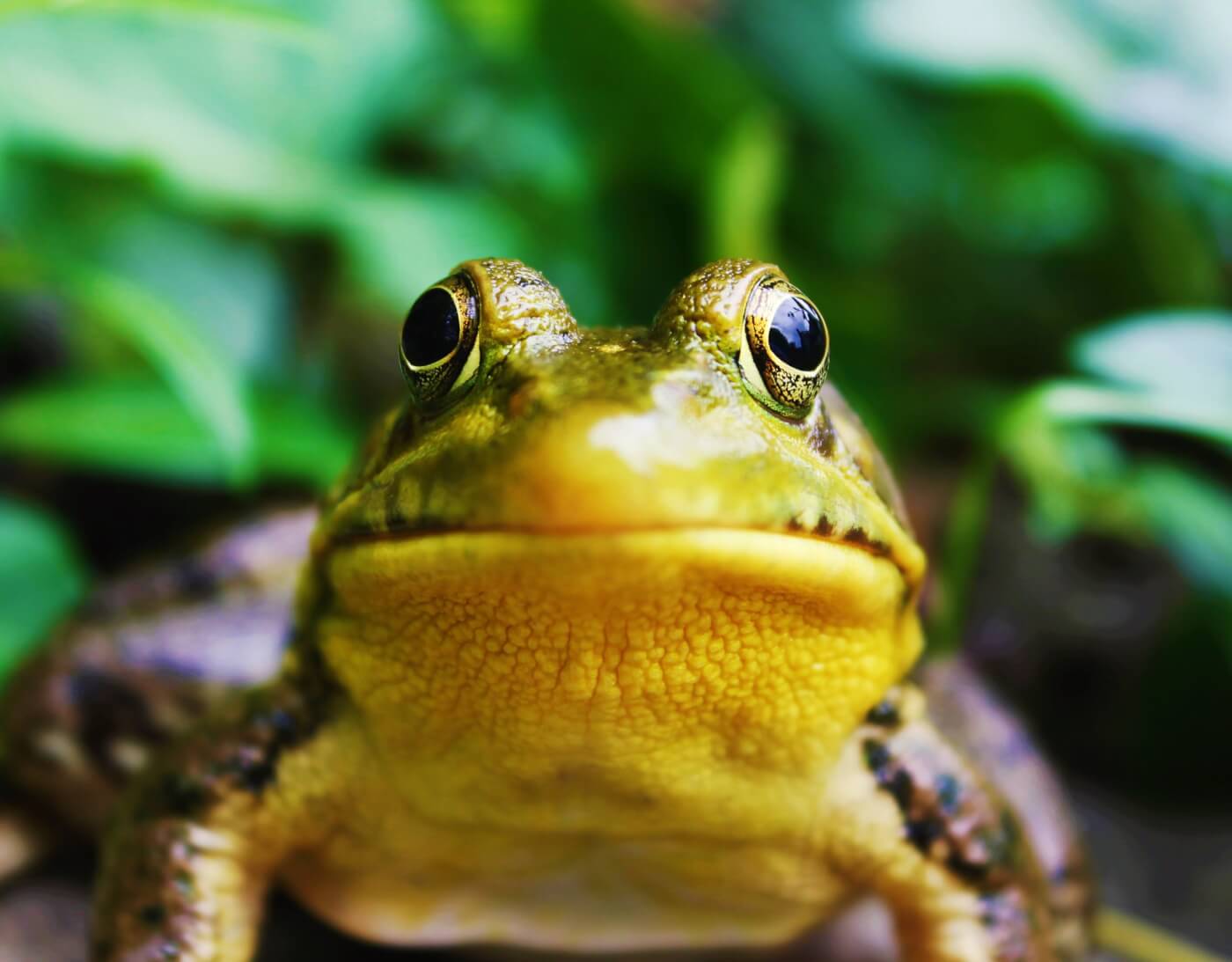
Frog with green background

I don’t know where you came from, but now I know that you were forced to endure the terror of being snatched from your home. I can’t begin to imagine how frightening that was for you. I didn’t realize that millions of frogs are taken from their natural habitat every year, to never again experience raindrops on their skin or lily pads beneath their feet. Then they’re killed and pumped full of chemicals so kids can dissect them.

Even as a child, I knew that animal dissection was wrong. I should have spoken out in your behalf.

If only I had known that many states—including the one where I attended high school—have dissection-choice policies requiring that schools provide students with a humane alternative to dissection, I would have opted out.

What did I learn from the experience?

I learned that some people believe that your life didn’t matter. What a dangerous lesson to teach an impressionable child, especially considering rampant bullying and disturbing cases of young people abusing animals. Schools should be promoting compassion, including teaching kids that dissecting a once-living being is wrong.

I learned to be afraid—afraid to speak up about something that I didn’t feel comfortable doing because of the possibility of being ridiculed or ostracized by my teachers and peers. Looking back now, I realize that the classmates I admire and respect the most are the ones who had the courage to speak up about what was right.

I learned that you felt cold to the touch, that straw-colored liquid spilled from your lifeless body when I cut into you, and that death smells terrible. Really terrible.

I don’t remember what your organs looked like—only that they all had the same gray hue, which wouldn’t have been the way they looked when you were alive.

I learned that your anatomy is very different from mine. Your heart, lungs, and digestive system are all found in one single hollow space. Mine are housed in three distinct cavities. Your heart has three chambers. Mine has four. Your eggs are fertilized externally. Mine are fertilized internally. Oh, and you can breathe through your skin. I wish I could do that!

I still don’t understand the purpose of dissecting animals. I likely never will.

There are lots of modern, educationally superior, and humane replacements to animal dissection, including SynFrog, biosphera, eMind, and Froggipedia. Students prefer these options, and according to studies, they learn better using these methods than by cutting up dead animals. It’s no wonder: Non-animal methods enable students to review the material as many times as they need until they feel confident.
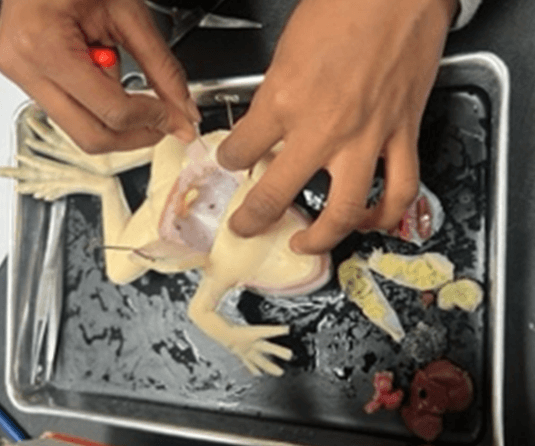
student's hands dissecting a SynFrog in a pan

You helped me realize that my life doesn’t matter more than yours did. That gave me the courage to do the right thing years later, when I studied veterinary technology. During anatomy class, the professor instructed us to perform a cervical dislocation—severing the spinal cord from the brain—on a living mouse, and I refused. I spoke out in behalf of the mouse. I opted out. And you know what? I still passed the class with flying colors.

I wish I could go back and undo what I did to you. I appreciate the preciousness of your life and the significance of treating all sentient beings with respect and kindness. I’m committed to making amends for my past behavior by always honoring the valuable lesson that you taught me.

Through new eyes,

Melissa

Animal-Free Dissection Resources

The post An Open Letter to the Frog I Dissected in High School appeared first on PETA.
Quince Removes False Humane Claims Following Cease and Desist From PETA

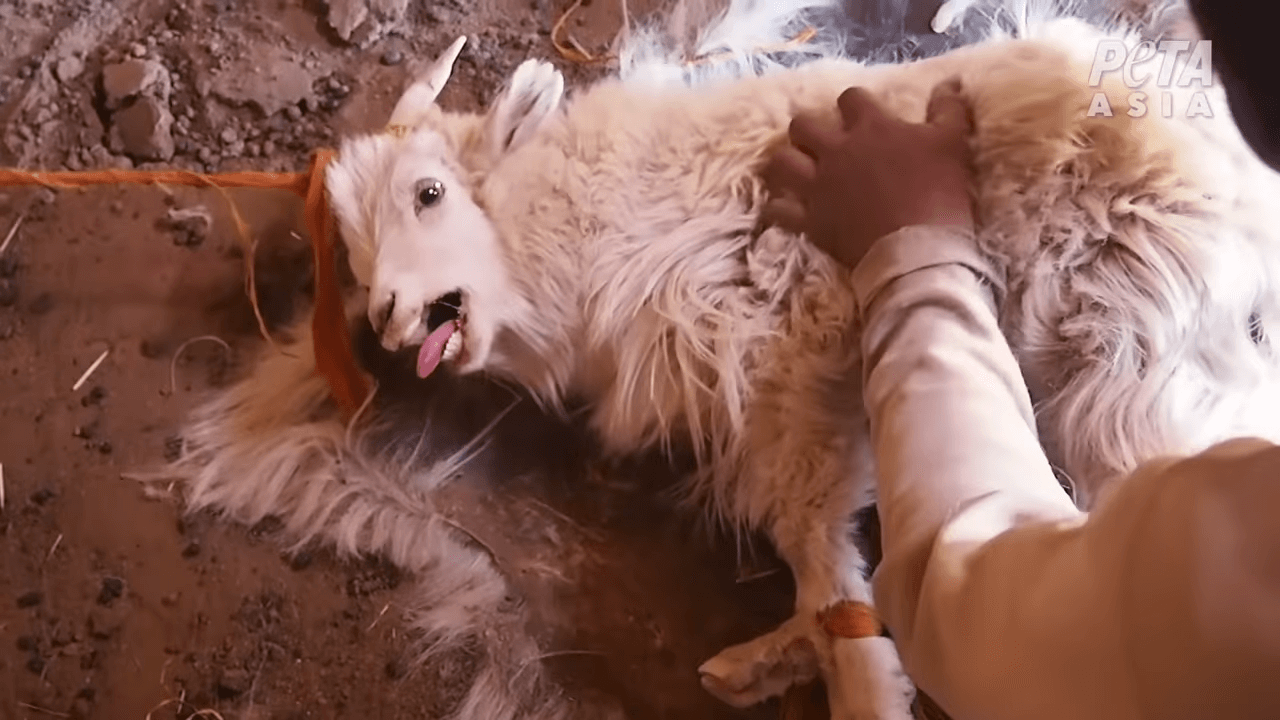
Following PETA’s demand that Quince stop falsely advertising its cashmere products as “non-harmful” to animals and its alpaca wool products as posing “no harm” to animals, the company has removed the misleading claims from its website. The demand came in the wake of a new PETA Asia investigation into cashmere farms, which revealed that workers in the industry violently tear out screaming goats’ hair with sharp metal combs, and a PETA investigation into an alpaca farm where industry workers slam the animals onto tables and shear them so recklessly that they’re often left with gaping wounds.

PETA Exposé Reveals Cruelty Behind Cashmere Sweaters

An image from PETA Asia’s investigation into cashmere farms

“By removing these false claims, Quince acknowledged that goats and alpacas are always harmed when used for its clothing,” says PETA Executive Vice President Tracy Reiman. “Now the company must stop harming them by never selling products that involve cruelty to animals and instead switch to selling items made of luxurious animal-free materials.”

The just-released investigation into 12 cashmere industry operations in Mongolia—the second-largest cashmere producer in the world and where Quince gets its cashmere—shows workers tying goats’ legs together, violently pinning the animals down, and tearing out their hair in a process that can take up to an hour. Once the adult goats were no longer considered profitable, they were sent to slaughter. Workers hit them over the head with a hammer and slit their throats, leaving them to twitch in agony for over four minutes as they bled out. An earlier PETA exposé of the cashmere industry in China—the world’s top cashmere exporter—and Mongolia also documented that goats screamed in pain as workers tore out their hair before slitting their throats.

PETA investigators at the world’s largest privately owned alpaca farm, which is in Peru—the source country for Quince’s alpaca wool—observed workers hitting the animals and crudely sewing up the deep wounds caused by shearing.

Earlier this year, retailer Naadam removed similar false claims about its cashmere from its marketing less than one hour after receiving a cease and desist letter from PETA.

PETA—whose motto reads, in part, that “animals are not ours to wear”—opposes speciesism, a human-supremacist worldview. For more information about PETA’s investigative newsgathering and reporting, please visit PETA.org, listen to The PETA Podcast, or follow the group on Twitter, Facebook, or Instagram.

The post Quince Removes False Humane Claims Following Cease and Desist From PETA appeared first on PETA.

PETA Offers Up to $5,000 for Help Nabbing Killer of Pete the Peacock

PETA is offering up to $5,000 for information leading to the arrest and conviction of the person(s) responsible for fatally shooting Pete, a beloved neighborhood peacock who was struck twice with a bow and arrow near the intersection of W. Charleston Boulevard and S. Cimarron Road on August 21.

That afternoon, a neighbor in the Castlegate gated community found the wounded bird and rushed him to Lone Mountain Animal Hospital, but staff couldn’t save him due to the severity of his injuries.

Las Vegas Animal Protection Services is investigating, but no leads or suspects have been identified yet, so PETA is asking for the public’s help.

“This beloved peacock was shot twice with arrows and left to suffer by a cruel person obviously lacking empathy for others,” says PETA Senior Vice President Colleen O’Brien. “PETA urges anyone with information to come forward so this killer can be held accountable and prevented from harming anyone else.”

Anyone with information should contact Las Vegas Animal Protection Services at 702-229-6444 or via its contact form.

PETA—whose motto reads, in part, that “animals are not ours to abuse in any way”—opposes speciesism, a human-supremacist worldview. For more information about PETA’s investigative newsgathering and reporting, please visit PETA.org, listen to The PETA Podcast, or follow the group on Twitter, Facebook, or Instagram.

The post PETA Offers Up to $5,000 for Help Nabbing Killer of Pete the Peacock appeared first on PETA.

‘Slotherhouse’ Fetches Award From PETA for Puppetry, Anti-Poaching Message

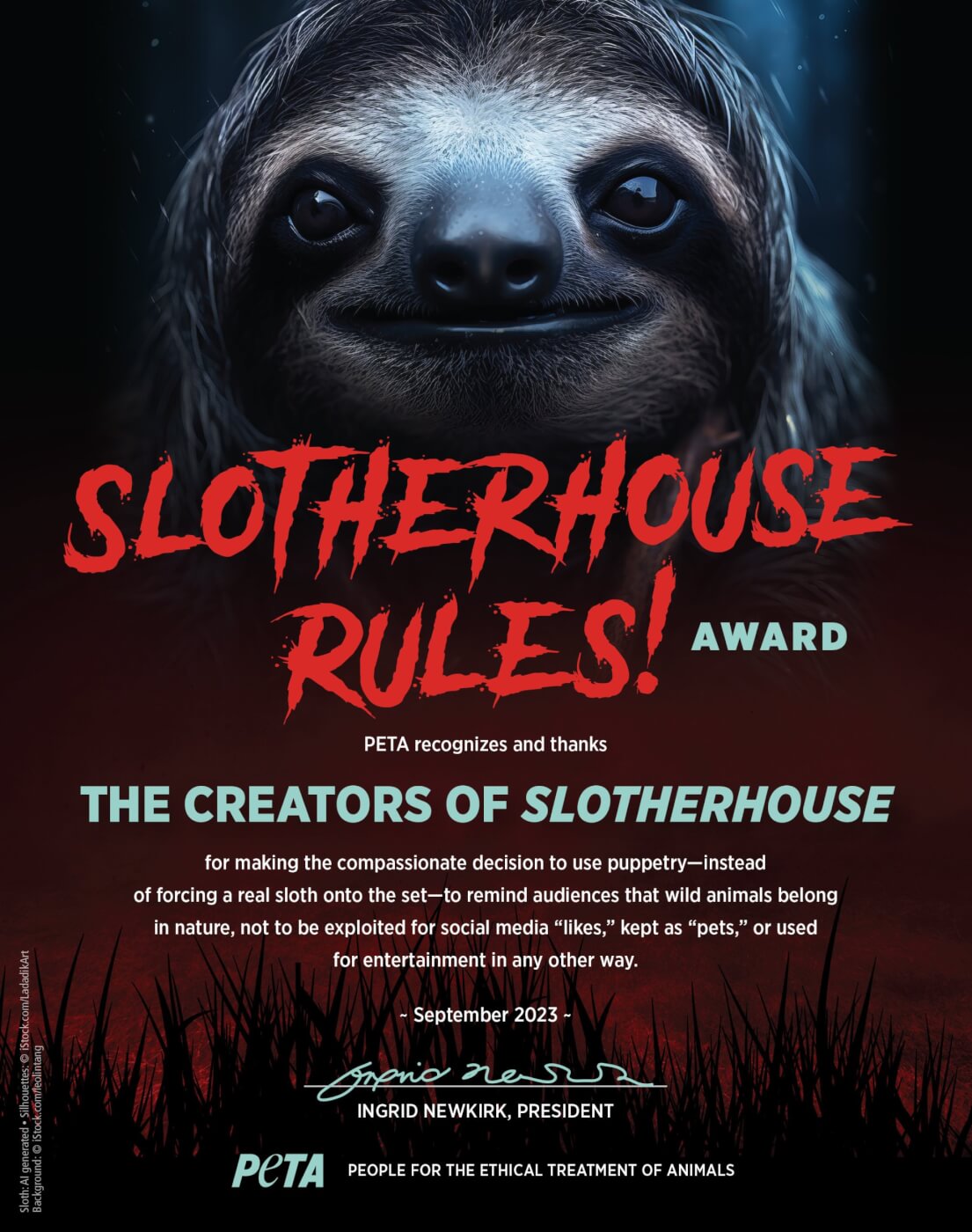
A “Slotherhouse Rules!” Award from PETA is on its way to the creatives behind the new horror-comedy film Slotherhouse, recognizing writers Bradley Fowler and Cady Lanigan and director Matthew Goodhue for using puppetry instead of a real sloth and for sharing a powerful anti-poaching message with viewers.

The campy slasher film tells the story of Alpha, a sloth who rightfully exacts revenge after she’s snatched from her home and forced to live as a sorority mascot in order to draw attention on social media. The few who survive her maniacal killing spree learn their lesson: By the film’s end, the sorority sisters form an activist group called “FETCH” (For Ethical Treatment, Care, and Humanity) to discourage owning exotic animals.

“Slotherhouse is more than funny—it’s an opportunity to side with the frustrated animals who are taken from their habitats and exploited for clout and entertainment,” says PETA Senior Vice President Lisa Lange. “PETA is delighted to honor the film’s creatives for driving home their anti-poaching message by using impressive puppets instead of suffering captive wild animals. Bravo!”

Slotherhouse rules award

PETA’s undercover investigations and law-enforcement probes into animal suppliers for the film and TV industries have documented that animals are often abused and kept in deplorable conditions. PETA urges anyone who sees animals being used for film or television productions to report it at PETA.org/Report or call the whistleblower hotline at 323-210-2233.

PETA—whose motto reads, in part, that “animals are not ours to use for entertainment”—opposes speciesism, a human-supremacist worldview. For more information, please visit PETA.org, listen to The PETA Podcast, or follow the group on Twitter, Facebook, or Instagram.

The post ‘Slotherhouse’ Fetches Award From PETA for Puppetry, Anti-Poaching Message appeared first on PETA.

Fighting Poaching With Puppets: ‘Slotherhouse’ Wins Award From PETA

A “Slotherhouse Rules!” Award from PETA is on its way to the creatives behind the new horror-comedy film Slotherhouse, recognizing writers Bradley Fowler and Cady Lanigan and director Matthew Goodhue for using puppetry instead of a real sloth and for sharing a powerful anti-poaching message with viewers.

Slotherhouse rules award

The campy slasher film tells the story of Alpha, a sloth who rightfully exacts revenge after she’s snatched from her home and forced to live as a sorority mascot in order to draw attention on social media. Spoiler alert! The few who survive her maniacal killing spree learn their lesson: By the film’s end, the sorority sisters form an activist group called “FETCH” (For Ethical Treatment, Care, and Humanity) to discourage owning exotic animals.

“Slotherhouse is more than funny—it’s an opportunity to side with the frustrated animals who are taken from their habitats and exploited for clout and entertainment. PETA is delighted to honor the film’s creatives for driving home their anti-poaching message by using impressive puppets instead of suffering captive wild animals. Bravo!”

—Lisa Lange, PETA Senior Vice President

Using wild animals such as bears, snakes, big cats, monkeys, sloths, wolves, and elephants for entertainment is inherently cruel, and there is never a situation in which it’s acceptable to use them in a movie or on a TV show. PETA’s undercover investigations as well as law-enforcement probes into animal suppliers for the film and TV industries have documented that animals are whipped and kept in deplorable conditions.

While many filmmakers and TV producers understand that animals aren’t ours to exploit for entertainment, some still need to be persuaded—and that’s where viewers come in. By avoiding movies and shows that use live wild animals, the public can send a powerful message to Hollywood that profits won’t come without principles and that we expect producers to keep animals out of their projects.

If you see animals being used for film or television productions, be sure to report it at PETA.org/Report or call the whistleblower hotline at 323-210-2233.

See Something? Say Something!

The post Fighting Poaching With Puppets: ‘Slotherhouse’ Wins Award From PETA appeared first on PETA.