Kenya: Authorities weaponized social media and digital tools to suppress Gen Z protests 

*Names changed to protect identities 

Kenyan authorities systematically deployed technology-facilitated violence as part of a coordinated and sustained campaign to suppress Generation Z-led protests between June 2024 and July 2025 against corruption and the introduction of new tax legislation, a new Amnesty International report shows. 

The report, “This fear, everyone is feeling it”: Tech-facilitated violence against young activists in Kenya, shows how government and allied groups are increasingly weaponizing digital platforms to stifle protests as part of broader repressive measures designed to shut down digitally-organized dissent.  

“Our analysis of online activity throughout several waves of protests in 2024 and 2025 and the interviews we’ve conducted with young human rights defenders, clearly demonstrate widespread and coordinated tactics on digital platforms to silence and suppress protests by young activists, including through online threats, intimidating comments, abusive language, smearing, and targeted disinformation,    

Agnès Callamard, Amnesty International’s Secretary General

“Our research also proves that these campaigns are driven by state-sponsored trolls, individuals and a network of people paid to promote and amplify pro-government messages with the aim of reaching Kenya’s top daily trends on X.”  

Between June and July 2024, Generation Z – young people aged under 28 – led the #RejectFinanceBill protests opposing proposed taxes on essential goods and services. Between June 2024 and July 2025, young people also organized protests on and off-line demanding an end to femicide and corruption.  

Major demonstrations took place across 44 of Kenya’s 47 counties including Nairobi, Mombasa, and Kisumu. Social media played a major role in the organization of protests and amplification of protest voices.  

Kenyan authorities responded with online intimidation, threats, incitement to hatred, and surveillance interfering with rights to freedom of expression and peaceful assembly. Online harassment and smear campaigns became core state tools to undermine the credibility and reach of government critics. Some of these tactics facilitated and were later used to justify arrests, enforced disappearances and killings of notable protest organizers.  

Amnesty International estimates that, across both sets of protests, excessive use of force by security agencies resulted in at least 128 deaths, 3,000 arrests and over 83 enforced disappearances. 

Targeting human rights defenders  

Of the 31 human rights defenders (HRD) interviewed, nine reported receiving violent threats via direct and public messages on X, TikTok, Facebook and WhatsApp during the 2024 protests. 

“I had people coming into my inbox and telling me, ‘You will die and leave your kids. We will come and attack you,” said Mariam*, a 27-year-old Mombasa-based HRD who was forcibly disappeared by police for two nights in 2024. 

Another HRD, Joseph, * received a direct message on X reading: “We are coming for you.”  

The research shows coordinated campaigns against young HRDs through state-supported trolling, and the spreading and amplification of hatred towards them.  

“They want to maintain their social media image, and that means anytime you post something about a certain ministry or individual, they always send what we call the 527 bloggers. These are government paid bloggers whose job is to abuse you, to say very dehumanizing, demeaning things,” said Joshua, a student leader who survived enforced disappearance. 

Much of the online violence is delivered through public posts and comments organized to cause harm. X (formerly Twitter) is central to pro-government networks spreading disinformation and smear campaigns. The networks mass-posted identical messages repeatedly to hijack X’s algorithm and maximize visibility of government sponsored messages. 

Hanifa Adan, a prominent Kenyan journalist and HRD of Somali descent was described in social media posts, as a “foreigner,” a “fool” and “a Somali terrorist.”    

“Having strangers say things about you every single day, being targeted every single day, it’s hard. It took away the spark, the joy. It took away who I was,” she told Amnesty International. 

Coordinated online attacks 

In April 2025, suspected state-supported trolls used the #ToxicActivists campaign to target Hanifa Adan after she gave an interview for BBC’s “Blood Parliament” documentary, which investigated the shooting of several protesters on 25 June 2024 and the alleged Kenyan military involvement.  

Organized trolls posted Islamophobic imagery and repeated posts to discredit her and other prominent Kenyan activists as financially driven and corrupt.  

These campaigns also illustrate X’s failure to adequately address organized threatening campaigns, which are against its own policy. 

“The chilling effects of such harassment and incitement to violence goes far beyond their immediate targets. It must be stopped before it silences critical voices, undermines civil liberties and fosters a culture of fear irreconcilable with our constitutional freedoms,  

Irungu Houghton, Amnesty Kenya Executive Director.

Young women who participated in the Gen Z protests and the #EndFemicideKE campaign reported misogynistic comments, body shaming, threats, doxxing and AI-generated pornographic images produced to shame, threaten and silence them.  

“We are being forced to shut up, it’s an attack on our voice, on our bodies,” said Sarah*. 

False and harmful narratives spread against HRDs included claims that survivors of enforced disappearances had staged their own abductions. 

Paid campaigns, disinformation and manipulating the algorithm  

John*, runs paid coordinated campaigns on X for political and commercial clients. He told Amnesty International that he’s part of a network of around 20 people paid between 25,000 to 50,000 KES (approximately USD $190-390) per day to promote and amplify pro-government messages with the aim of reaching Kenya’s top daily trends on X.  

“Most of the things you see trending in Kenya, I’m among the people doing that,   

John*. 

During large protests, his network created counter-campaigns and hashtags in real time to drown out trending protest hashtags. For example, the popular protest hashtag #RutoMustGo was countered with #RutoMustGoOn.  

In response to Amnesty’s findings, Kenya’s Interior Cabinet Secretary, Kipchumba Murkomen, said, “The Government of Kenya does not sanction harassment, or violence against any citizen. All security agencies are required to operate strictly within the constitution, the National Police Service Act, and all applicable laws and any officer implicated in unlawful conduct bears individual responsibility and is subject to investigation and sanction in accordance with the law.” 

However, Amnesty research indicates otherwise. The failure of both state authorities and corporate actors to investigate credible claims of unlawful tech-facilitated surveillance undermines human rights by fostering widespread chilling effect on the right to expression and peaceful assembly. 

HRDs interviewed by Amnesty International believe that state surveillance was supported by Safaricom, one of Kenya’s biggest telecommunications companies, allowing clandestine police units to track activists involved in the protests. Evidence points to many of them being subsequently forcibly disappeared.  

In response to the allegations, Safaricom said it “only shares customer data through lawful means and for lawful purposes. Our client confirms that their systems are not designed to track the live location of any subscriber, and such functionality does not exist within their operational architecture.”  

Amnesty International also approached X, other Kenyan authorities and key individuals named in this report but did not receive a response. 

Amnesty International calls on the Kenyan government to stop tech-facilitated state violence against peaceful protesters and civil society organizations, troll campaigns and smear narratives that vilify critics as “paid activists” or “foreign agents.” 

Kenyan authorities must also launch an investigation into enforced disappearances, unlawful killings and the reports of unlawful surveillance during the “Gen Z protests.” Victims of unlawful use of force and family members of those killed must be adequately compensated.  

The post Kenya: Authorities weaponized social media and digital tools to suppress Gen Z protests  appeared first on Amnesty International.
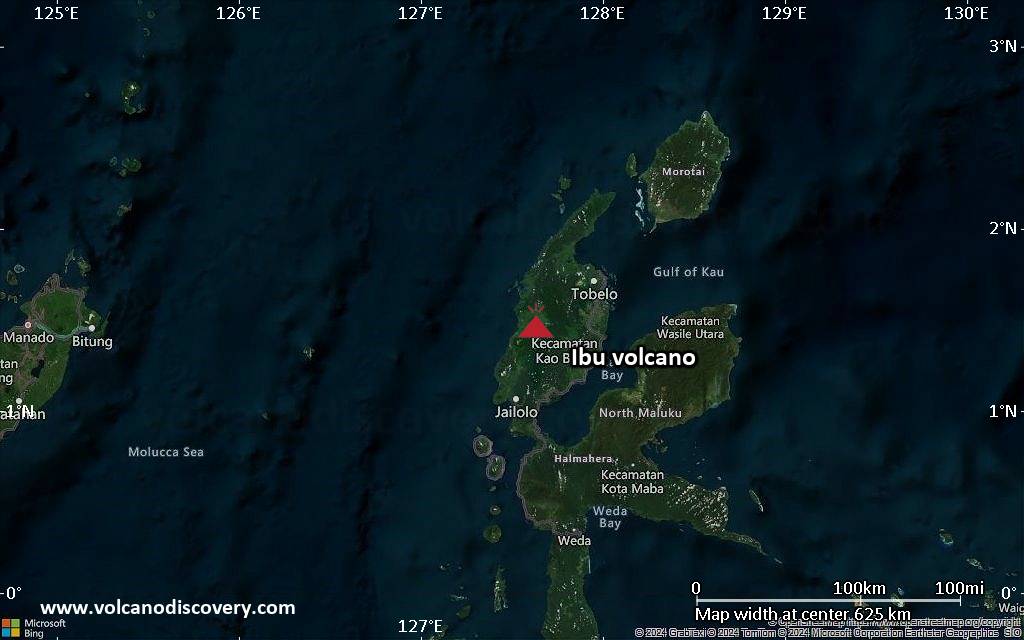
Ibu Volcano Volcanic Ash Advisory: ERUPTION REPORTED AT 18/1430Z EST VA DTG: 18/1430Z

Volcanic Ash Advisory Center Darwin (VAAC) issued the following report:

FVAU01 at 14:56 UTC, 18/11/25 from ADRM
VA ADVISORY
DTG: 20251118/1500Z
VAAC: DARWIN
VOLCANO: IBU 268030
PSN: N0129 E12738
AREA: INDONESIA
SUMMIT ELEV: 1325M
ADVISORY NR: 2025/1295
INFO SOURCE: CVGHM, HIMAWARI-8
AVIATION COLOUR CODE: ORANGE
ERUPTION DETAILS: ERUPTION REPORTED AT 18/1430Z
EST VA DTG: 18/1430Z
EST VA CLD: SFC/FL060 N0130 E12736 – N0131 E12739 – N0120
E12747 – N0116 E12737 MOV SE 10KT
FCST VA CLD +6 HR: 18/2030Z SFC/FL060 N0130 E12736 – N0131
E12739 – N0122 E12749 – N0116 E12740
FCST VA CLD +12 HR: 19/0230Z SFC/FL060 N0129 E12737 – N0130
E12738 – N0127 E12750 – N0119 E12744
FCST VA CLD +18 HR: 19/0830Z SFC/FL060 N0129 E12737 – N0130
E12739 – N0127 E12750 – N0119 E12744
RMK: VA NOT IDENTIFIABLE ON SATELLITE IMAGERY, HOWEVER
GROUND REPORTS INDICATE INTERMITTENT DISCRETE ERUPTIONS ARE
ONGOING. HEIGHT AND MOVEMENT BASED ON GROUND REPORTS AND
MODEL GUIDANCE.
NXT ADVISORY: NO LATER THAN 20251118/2100Z=

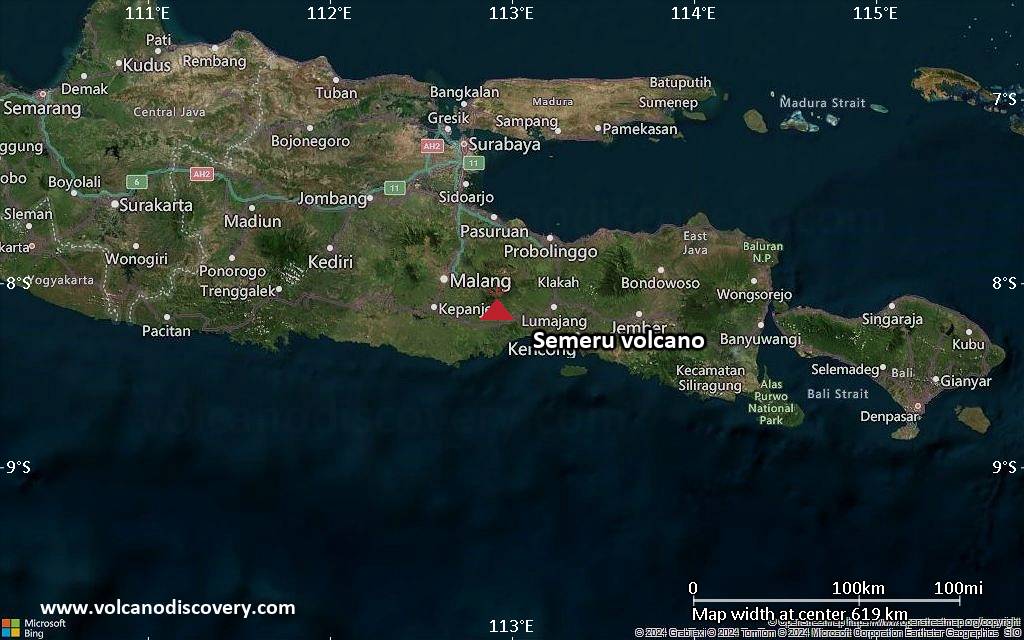
Semeru Volcano Volcanic Ash Advisory: ERUPTION REPORTED AT 18/1136Z EST VA DTG: 18/1250Z

Volcanic Ash Advisory Center Darwin (VAAC) issued the following report:

FVAU02 at 13:16 UTC, 18/11/25 from ADRM
VA ADVISORY
DTG: 20251118/1320Z
VAAC: DARWIN
VOLCANO: SEMERU 263300
PSN: S0806 E11255
AREA: INDONESIA
SUMMIT ELEV: 3657M
ADVISORY NR: 2025/1313
INFO SOURCE: CVGHM, HIMAWARI-8
AVIATION COLOUR CODE: ORANGE
ERUPTION DETAILS: ERUPTION REPORTED AT 18/1136Z
EST VA DTG: 18/1250Z
EST VA CLD: SFC/FL150 S0806 E11253 – S0804 E11256 – S0808
E11311 – S0822 E11309 – S0823 E11254 MOV SE 10KT
FCST VA CLD +6 HR: 18/1850Z SFC/FL150 S0806 E11253 – S0804
E11255 – S0806 E11312 – S0815 E11312 – S0824 E11301 – S0822
E11254
FCST VA CLD +12 HR: 19/0050Z SFC/FL150 S0806 E11253 – S0804
E11256 – S0808 E11309 – S0818 E11309 – S0822 E11253
FCST VA CLD +18 HR: 19/0650Z SFC/FL150 S0806 E11253 – S0756
E11302 – S0800 E11309 – S0806 E11310 – S0808 E11254
RMK: VA NOT IDENTIFIABLE ON SATELLITE IMAGERY DUE TO MET
CLOUD, HOWEVER GROUND REPORTS INDICATE INTERMITTENT DISCRETE
ERUPTIONS ARE ONGOING. HEIGHT AND MOVEMENT BASED ON GROUND
REPORTS AND MODEL GUIDANCE.
NXT ADVISORY: NO LATER THAN 20251118/1920Z=

Strengthening Human Rights Education Together: Meet the HRE Network Advisory Group

We are excited to introduce the Human Rights Education (HRE) Network Advisory Group (NAG), a new collective of HRE practitioners from across Amnesty International who will be working together to strengthen our global HRE network and support HRE as a core capacity within our movement. This group brings together diverse experiences, local knowledge, and creative methodologies to help shape the future of HRE across the organisation. Its role is to support the Global HRE Network by offering ideas, insights, and practical suggestions that reflect the richness of our global community. After initially meeting online, members of the HRE NAG recently gathered in Nairobi, Kenya, for an important strategic moment to:

  • Build relationships in a face-to-face environment.
  • Share experiences of HRE implementation across all regions.
  • Define the role of the Advisory Group moving forward.
  • Plan key actions to help strengthen connections and capacity across the HRE Network.

For most attendees, this amazing opportunity meant a lot of travel (Alonso from Chile won ‘Most Hours/Days in Transit!’). For others, it also meant enormous amounts of preparation, both in the months leading up to the event and on the ground in the Nairobi office itself…but it was worth it! Numerous deep-dive sessions were run with and by participants to explore the untapped potential of our HRE Network and brainstorm how best to support its ongoing evolution.

Here are the top 3 takeaways of this unique intensive:

  1. HRE is more vital than ever

As we currently witness a normalization of authoritarian practices and narratives around the world, Human Rights Education plays an increasingly critical role in empowering activists with the knowledge, skills, and confidence they need to recognize and challenge such practices. Which makes this opportunity to revitalize Amnesty’s global network of HRE practitioners especially timely…and exciting! So, make sure you contribute your own insights and ideas to the future of our Network by completing the survey coming soon.

  1. Quality time is a game-changer

Meeting ‘in real life’ was the highlight for everybody in Nairobi, which is why building stronger connections across the entire HRE Network, and particularly within geographical regions, forms a big part of the long-term vision. Online interactions like webinars are incredibly helpful (and practical!), and the commitment is always to make as many of these as possible, but it’s also true that something special happens when colleagues have the chance to work together in more sustained and meaningful ways. As a network of diverse people having a wide range of experiences in our far-flung corners of the earth we are one thing (i.e. near strangers with HRE in common); but as a group of people who have laughed, listened and learned with one another on a deeper level we are quite another (i.e. unified collaborators with all sorts of things in common!).

  1. There is no such thing as a ‘silly question’

It turns out everybody has felt self-conscious about their level of knowledge or experience in an HRE space at one time or another, and this can limit all our learning. As the bonds of our HRE Network strengthen, increased camaraderie will help everyone to feel safe in speaking up – but, in the meantime, this is a very friendly reminder: we’re all feeling the same way in the same boat!

Meet the Members

Let’s get to know the members of the HRE Network Advisory Group, each bringing their own unique experience and energy to this collective effort. Their mandate runs for 18 months, during which they’ll be actively contributing to key processes and supporting the wider network.

Iván López-Justiniano (he/him/él) is a Human Rights Education Specialist at Amnesty Puerto Rico. His work centers on advocacy and education around LGBTQI+rights. He addresses issues such as gender-based violence, homophobia, and health equity through participatory research, legal frameworks, and intersectional feminism. Iván holds a Master of Human Rights from the University of Minnesota, where he specialized in gender, sexuality, race, and ethnicity.
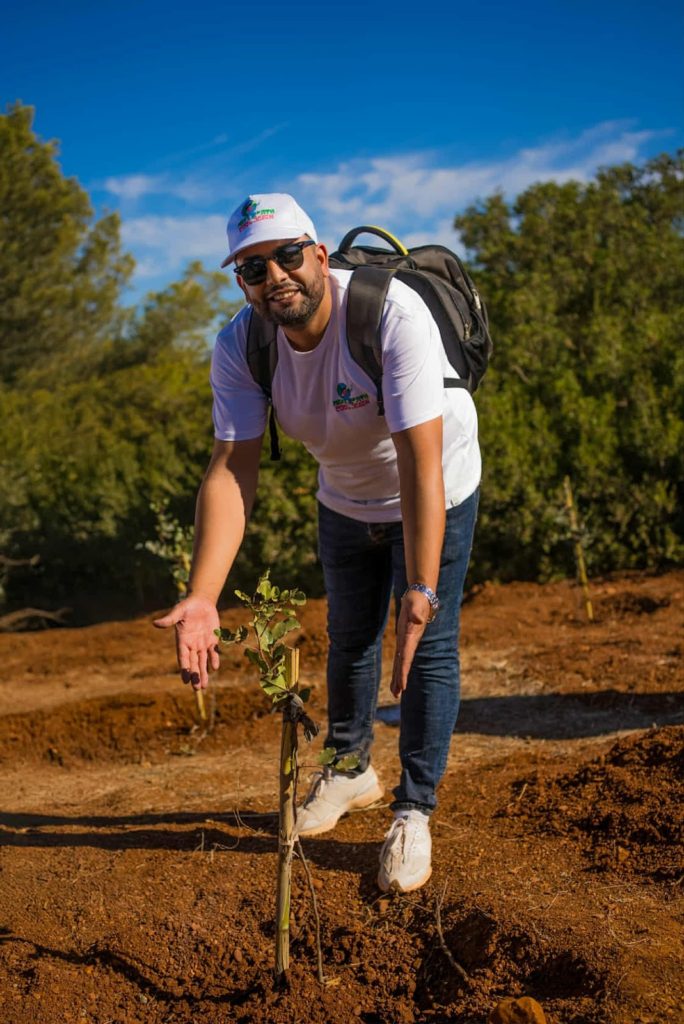
Nassim Oughlissi joined Amnesty Algeria in 2010 as a volunteer member. In 2016, he became part of the staff as the Activism Coordinator. After several years in this role and facing the growing challenges of activism in our context, he realized that Human Rights Education could be a more effective way to promote human rights. When a position in HRE opened within the section, he decided to move into this role. He is now committed to strengthening our work through education and looks forward to achieving great results together.
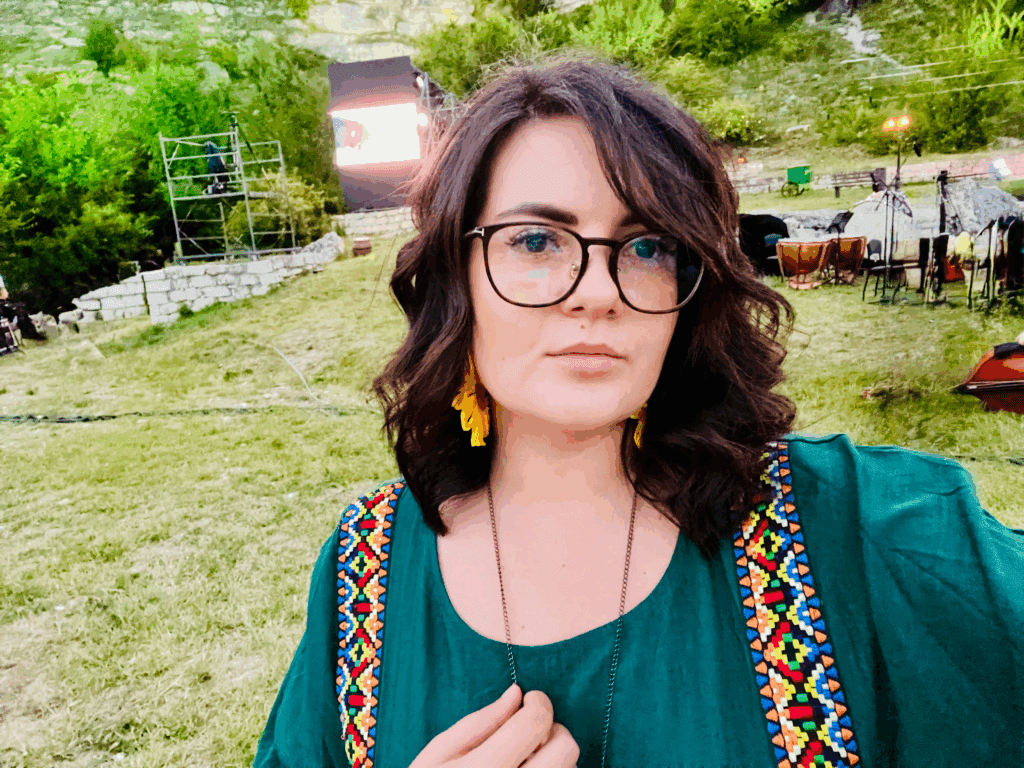
Constanța Botnar has been the HRE Programme Coordinator at Amnesty Moldova since 2020, and her main areas of work are child protection rights and gender justice issues. The core directive of her work is the systemic integration of HRE in formal educational settings on a national level. As a new phase in this initiative, AI Moldova has now begun formalising HRE in the university curricula of the biggest Pedagogical University in the country, ensuring that all future educators will receive HRE training as part of their base educational learning process.
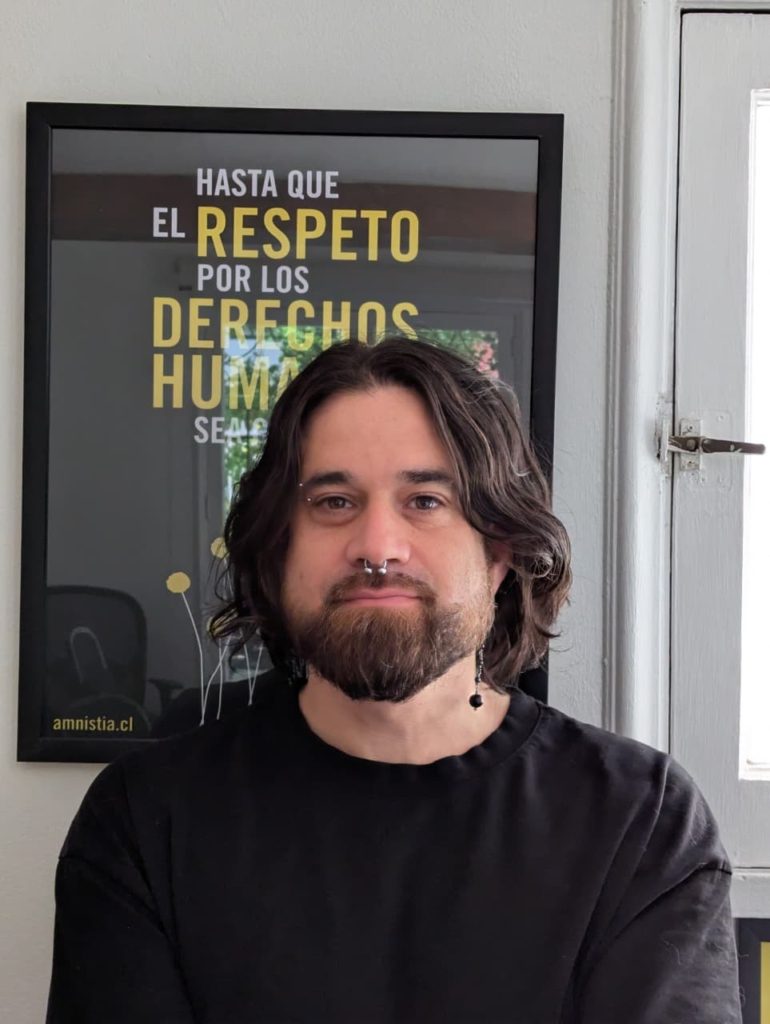
Alonso Serradell Díaz , 40 years old, from Santiago, Chile, at the southern end of the world!! He joined Amnesty Chile in 2019 as the Activism and Youth Officer. Since 2022, he has served as the Human Rights Education (HRE) Coordinator and has been part of various cooperative, community, and popular education initiatives that have deeply shaped his practice in the movement. His work has focused on strengthening a strategic approach to HRE, internal training, participatory methodologies, and topics such as police violence and the right to protest.
Liz Malcolm (she/her) joined Amnesty Australia in 2024 and is responsible for creating a fresh approach to Human Rights Education in Australia. Guided by the People Power Strategy, Liz is currently focused on raising awareness of issues at the heart of the Indigenous Rights campaign and helping to build a rights-respecting society in general. While she brings her own experience and ideas to this role, she deeply values the insights of her colleagues, communities, and HRE peers around the world.
Emily Maranga joined Amnesty Kenya in 2021 as the Human Rights Education and Activism Manager, before the Program transitioned into the Movement Building Program. In her current role, she supports national and community efforts to strengthen human rights awareness, youth leadership, and collective action through evidence-based advocacy and capacity building. Her work also includes coordinating and mentoring Human Rights Friendly School clubs, nurturing a new generation of informed and active citizens. She also oversees impact reporting and learning processes that enhance accountability and inform future action
Adjevi-Zan Lassey is passionate about human rights and knowledge sharing. This passion led him to take on the position of Human Rights Education (HRE) Coordinator at Amnesty Togo in 2018, after having volunteered for the cause a few years earlier. He works in both formal and non-formal education for HRE. Under his leadership, AI Togo has carried out advocacy efforts for the integration of HRE into school curricula. He coordinates the production of educational tools for online training (social media and MOOCs).
Altantuya BATDORJ is passionate about human rights and knowledge sharing. This passion led her to take on the position of Human Rights Education (HRE) Coordinator at AI Mongolia from 1999-2005. She not only works in both formal and non-formal education for HRE in her country, but also plays some role in HRE advocacy works in the region. Under her leadership, AI Mongolia is seen as the leading organization on HRE in Mongolia.

What Next?

The Advisory Group is now working to turn these insights into action. You’ll soon receive a short survey to share your own experiences, needs, and ideas for the future of the HRE Network. Your input will help shape how we support capacity building, resource sharing, and collaboration going forward.

Gratitude

So many people went above and beyond to make the Kenya workshop such a resounding success, but special thanks go to Kate Moriarty, Ruth Zaldibar Garcia, Emily Maranga, Philcollins Omondi, and the entire Amnesty Kenya community. Finally, our sincere gratitude also goes to Sophia Scherer and the extraordinary team of four interpreters who worked tirelessly throughout to translate participants’ every word. The level of selflessness, skill, and patience was exemplary!

Let’s keep building a strong, inclusive, and impactful HRE Network together!!!

The post Strengthening Human Rights Education Together: Meet the HRE Network Advisory Group appeared first on Amnesty International.